 Write to the booksellers
-
Type
Autograph (1)
Book (2540)
Drawings (1)
Magazine (54)
Photographs (2)
-
Latest
Last 3 days (2)
Last month (27)
Last week (20)
-
Language
English (2)
French (2594)
Italian (2)
-
Century
17th (2)
18th (35)
19th (260)
20th (1025)
21st (70)
-
Countries
Belgium (353)
Brazil (1)
Canada (9)
Côte d'Ivoire (6)
Denmark (213)
France (1708)
Switzerland (308)
-
Syndicate
ALAC (9)
CLAM (1)
CLAQ (1)
ILAB (751)
NVVA (133)
SLACES (133)
SLAM (367)
Essais d'un biologiste
1946 Paris, Stock, 1946, In douze, 290 pp, broché,
Annotations au crayon. Traduit par Jules Castier.
Soviet Genetics and World Science. Lysenko and the Measuring of Heredity.
London, Chatto and Windus, 1949. Orig. full cloth with dustjacket. X,245 pp. Fine and clean.
First edition.
L'écrevisse. Introduction à l'étude de la zoologie -- PREMIERE EDITION FRANCAISE
P., Baillière, 1880, un volume in 8 relié en pleine toile éditeur, (rousseurs), 1 frontispice, 11pp., 260pp., 82 figures dans le texte
---- PREMIERE EDITION FRANCAISE ---- "Un pionnier dans l'enseignement pratique de la biologie" ---- "Professeur de zoologie au Collège royal des mines, puis professeur de physiologie et d'anatomie comparée au Collège royal des chirurgiens de Londres, ami de Darwin, T.H. Huxley défendit vigoureusement la théorie de l'évolution. Il fut un pionnier dans l'enseignement pratique de la biologie. Parmi ses oeuvres principales citons... une monographie de l'écrevisse" ---- DSB VI pp. 589/597**2745/A6DE
Cours élémentaire et pratique de biologie. Bibliothèque biologique internationale.
Paris, Octave Doin, 1884. 12 x 19, 387 pp., reliure carton, mauvais état (cachets du Collège jésuite Saint Stanislas à Mons, reliure sans dos).
Traduit sur la dernière édition anglaise par F. Prieur.
De la place de l'homme dans la nature ( et suivi d'un compte rendu des travaux anthropologiques du congrès international d'anthropologie et d'archéologie préhistoriques tenu à Paris, session de 1867, par le dr. E. Dally)
Paris, J.-B. Baillière 1868 xx + 368pp. avec 68 figures dans le texte, 1e édition française, reliure cart. (dos en cuir brun avec titre doré, charnière supérieure partiellement cassée et restaurée, plats marbrés), feuilles de garde marbrées, 22cm., texte frais, bon état, F100377
Cours élémentaire et pratique de biologie traduit sur la dernière édition anglaise par F. Prieur -- PREMIERE EDITION FRANCAISE
P., Doin, 1884, un volume in 8 relié en demi-basane marron, dos orné de fers dorés (reliure de l'époque), (rousseurs), 13pp., 387pp., demi-basane marron, dos orné de fers dorés, (rousseurs)
---- PREMIERE EDITION FRANCAISE ---- "As offshoots of his teaching and often based on his lectures series, Huxley wrote several textbooks...". (DSB VI p. 596) ---- Globules blancs du sang - Bactéries - Moisissures - Fougères - Hydre d'eau douce - ETC**2749/A3
Obituary Notices of Fellows Deceased. [Charles Darwin]. - [HUXLEY'S OBITUARY OF DARWIN]
London, Harrison and Sons, 1888. 8vo. In later full blue cloth with gilt lettering to spine. In ""Proceedings of the Royal Society of London"", vol. XLIV. Entire volume offered. Soiling to extremities, endges of front board torn and upper front hindge with small tear. Library label pasted on to front free end-paper. Vague blindstamp to title-page of volume. Internally fine and clean. [Darwin's orbituary""] I-XXV pp. [Entire volume: viii, 464, XXXV, (1) pp.].
![Obituary Notices of Fellows Deceased. [Charles Darwin]. - [HUXLEY'S OBITUARY OF DARWIN]. "HUXLEY, THOMAS HENRY.](https://static.livre-rare-book.com/pictures/LLX/57931_1_thumb.jpg)
![Obituary Notices of Fellows Deceased. [Charles Darwin]. - [HUXLEY'S OBITUARY OF DARWIN]. "HUXLEY, THOMAS HENRY.](https://static.livre-rare-book.com/pictures/LLX/57931_2_thumb.jpg)
First appearance of Huxley's famous obituary of Darwin. ""While Huxley was composing this and other expositions of technical education in the late 1880s, he was also writing an obituary notice on Darwin for the Proceedings of the Royal Society. Though he undertook this piece in 1883, he did not complete it until five years later. In letters to Foster and Hooker in early 1888, Huxley remarked that he was still rereading Origin of Species, trying to separate the ""substance"" of the theory from its ""accidents,"" with the aim of warding off a generation of ""hostile comments and would-be improvements."". Even though he had written at least a half-dozen abstracts of the work and was reading it, he said, ""for the nth time,"" he was ""getting along slowly"" and finding it ""one of the most difficult books to exhaust that ever was written."" At this juncture in his life, it seemed that Huxley had difficulty concluding what he had always concluded previously about Darwin's theory: that its points of central importance were the facts of variation, the Malthusian principle of overpopulation, and its consequence, universal struggle. As Huxley finally came around to saying once again the obituary article , it was immaterial how organisms differed from each other or why."" (White, Thomas Huxley: Making the 'Man of Science, P. 152)Darwin-Online A344.
Les amphibiens et les reptiles
Lausanne, editions rencontres, collection "La grande encyclopedie de la nature", volume n.10, 1971. Format 17x27 cm, reliure toilee sous jaquette illustree, 383 pages. Tres bon etat.
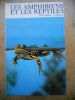
Le monde étrange des bêtes et des plantes. traduction de Renaud Paulian. Avec 285 dessins de l'auteur.
1948 P., Payot (Bibliothèque Scientifique), 1948, in 8° broché, 334 pages ; couverture illustrée.
...................... Photos sur demande ...................


Phone number : 04 77 32 63 69
Tome I, n°1 (1er trimestre 1956) - Tome III, n°4 (4° trim. 1958)
Société de diffusion médicale scientifique 1958 10 fasc. en 1 volume fort in-4 pleine toile, couvertures conservées. Bel exemplaire.
![Tome I, n°1 (1er trimestre 1956) - Tome III, n°4 (4° trim. 1958). [Hydrologie] Archives de biologie thermo-climatique](https://static.livre-rare-book.com/pictures/AVE/17533_1_thumb.jpg)
Bon état d’occasion
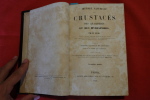
Histoire naturelle des Crustacés, des Arachnides et des Myriapodes
Histoire naturelle des crustacés, des arachnides, et des Myriapodes, Par M. Lucas attaché au muséum d’histoire naturelle de Paris, auteur de plusieurs ouvrages sur l’entomologie. Ouvrage accompagné de 46 planches gravées sur acier représentant plus de 300 sujets. – 600 pages. Bon état général. Quelques frottements sur le plat supérieur, mors supérieur fendu. Dos rond, couverture rigide. In-8.
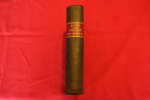
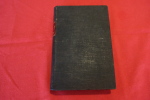
Principes d'analyse et de synthèse en chimie organique - Encyclopédie de science chimique appliquée aux arts industriels
Ch. béranger 1914 in8. 1914. Cartonné.
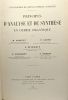
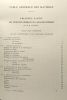
Bon état de conservation couverture défraîchie trnache ternie intérieur propre
Biologie des Menschen in der Geschichte : Beitrage zur Sozialgeschichte der Neuzeit aus Frankreich und Skandinavien
Frommann-Holzboog Cartonné avec jaquette 1978 In-8 (15,7 x 21 cm), cartonné avec jaquette, 421 pages, texte en allemand ; marques de frottement sur la jaquette, par ailleurs assez bon état général. Livraison a domicile (La Poste) ou en Mondial Relay sur simple demande.
INGEN-HOUSZ (INGENHOUSZ), JOHN. - DISCOVERY OF PHOTOSYNTHESIS - THE CLASSIC OF ECOLOGY.
Reference : 53319
(1780)
Expériences sur les Végétaux, spécialement sur la Propriété qu'ils possèdent à un haut degré, soit d'améliorer l'Air quand ils sont au foleil, soit de corrompre la nuit. ou lorsqu'ils sont à l'ombre" auxquelles on a joint unde Méthode nouvelle...
Paris, Théophile Barrois, 1780. 8vo. Fine cont. full mottled calf, richly gilt spine and gilt titlelabel in red leather. Edges gilt. LXVIII,333,(3) pp. and 1 folded engraved plate (showing his experimental apparatus). Light browning to margins of title-page, otherwise clean and with broad margins. A fine copy.
First French edition of perhaps the most important work in plant physiology. It is in this work that Ingen-Housz for the first time expounds the ideas and experiments that lead to his discovery of Photosynthesis in plant life, and as such it is of fundamental importance in the economy of living things. ""His Experiments upon vegetables was published in the autumn of 1779 and was at once recognized as a very important advance. In brief he showed, that oxygen evolution by plant is absolutely dependent on light and that it only occurs from those parts which are green...The proof that light and green tissues are both essential for oxygen production finally cleared up the apparent contradictions and variable results of earlier experiments. Priestly was ""much pleased"" with Ingen-Housz's experiments and pointed immediately to the salient facts that he had established."" (A.G. Morton: History of Botanical Science. p. 332.). Dibner: Heralds of Science No. 29. - Garrison & Morton No. 103. - Horblit No. 55. (All the English edition of 1779).
Expériences sur les végétaux spécialement sur la propriété qu'ils possèdent à un haut degré, soit d'améliorer l'air quand ils sont au soleil, soit de le corrompre la nuit ou lorsqu'ils sont à l'ombre auxquelles on a joint une méthode nouvelle de juger du degré de salubrité de l'atmosphère - Traduit de l'anglais PAR L'AUTEUR -- Deuxième édition REVUE ET AUGMENTEE -- 2 VOLUMES (COMPLETE SET)
P., Barrois, 1787/1789, 2 volumes in 8 reliés en demi-basane à coins, dos ornés de filets dorés (reliures de l'époque), (petit accroc à une coiffe, quelques rousseurs), T.1 : 112pp., 384pp., (1), 1 PLANCHE DÉPLIANTE, T.2 : (2), 56pp., 509pp., (1pp.), (1)
---- Deuxième édition française REVUE et AUGMENTEE ---- "Inghen-Housz'further studies on plant assimilation and respiration" ---- "Ingen-Housz showed that the green parts of plants, when exposed to light, fix the free carbon dioxide of the atmosphere, but that in darkness plants have no such power. Thus he proved that animal life is dependent ultimately on plant life, a discovery of fundamental importance in the economy of the world of living things". (Garrison N° 103 & 145.52 1st english ed.) ---- Norman N° 1142 : "The second volume contains the results of Ingen-Housz's further studies on plant assimilitation and respiration, which led him to believe that plants and animals are mutually supportive, the animals consuming oxygen and producting carbon dioxide, and the plants doing exactly the reverse. The volume also contains Ingen-Housz's rebuttals to the criticisms of Priestley and Senebier, who disputed his claim to the discovery of photosynthesis and plant respiration" ---- Dibner N° 29 & Horblit N° 55 1st english ed**2758/A2
Vermischte Schriften physisch=medizinischen Inhalts. Uebersetzt und herausgegeben von Niklas Karl Molitor, nebst einigen Bemerkungen über den Einfluss der Pflanzen auf das Thierreich. Mit Kupfertafeln.
Wien, Johann Paul Krauss, 1782. Cont. boards. Titlelabel with gilt lettering on back. Some repairs to back and lightly rubbed. Stamp on title. LXVI,(2),415,(1) pp. and 4 large folded engraved plates. Broad margins. Internally fine and clean.
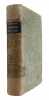
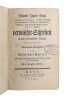
Scarce first German edition of 17 tracts and memoirs by the discoverer of Photosynthesis. The tracts relates to plant-physiology, chemistry, metallurgy, medicine etc.
Mémoires de l'Institut scientifique de Madagascar. 1951. Série B. Biologie vegetale -fac.1 tome III
1951 INSTITUT SCIENTIFIQUE DE MADAGASCAR- 1951. Broché. 201 pages.,dos et 2e plat abscents,dans l'etat
Remise de 20% pour toutes commandes supérieures à 200 €
Isaac Asimov Martin H. Greenberg & Charles G. Waugh
Reference : 9967
(1985)
ISBN : 290418418X
Biologie & Science-Fiction Invariant
Londreys 1985 261 pages in8. 1985. broché. 261 pages. Il s'agit d'une anthologie de nouvelles de science-fiction compilée par Isaac Asimov Martin H. Greenberg et Charles G. Waugh publiée par les éditions Londreys dans la collection 'Science & fiction'. Le recueil est spécifiquement consacré au thème de la biologie
Bon état
Atlas microphotographique des bactéries. Traduit par le Dr. Samuel BERNHEIM -- PREMIERE EDITION FRANCAISE
P., Maloine, 1895; un volume in 4 relié en cartonnage éditeur (défraîchi, dos frotté), 21pp., (1), 146pp., (1), figures dans le texte, 21 PLALNCHES hors texte
---- PREMIERE EDITION FRANCAISE ---- L'appareil microphotographique - Le tirage - Les variétés bactériennes pathogènes - Les variétés saprophytes - Moisissures et cryptogames - Bactéries pléomorphes**2771/B5DE
La logique du vivant. [première édition en S.P. avec envoi].
Paris: Gallimard, 1970 in-8, 345 pages. Broché, première édition en SP, avec envoi, bon état. "Bibliothèque des sciences humaines.
La logique du vivant. [première édition en S.P. avec envoi]. (Paris: Gallimard, 1970) [M.C.: biologie]
Recherches embryologiques sur l’ephedra helvetica. Diss.
Lausanne, impr. Corbaz 1894, 210x150mm, 45pages, broché.
8 planches dont 2 dépl., Pour un paiement via PayPal, veuillez nous en faire la demande et nous vous enverrons une facture PayPal
La logique du vivant Une histoire de l'hérédité
Gallimard "Bibliothèque des sciences humaines" 1970, in-8 broché, couverture blanche à rabats, 354 p. (très bon état) Première édition ; index des noms. Analyser l'hérédité conduit ce célèbre généticien, prix Nobel de médecine en 1965, à revisiter toute l'histoire de la biologie ; un classique de la pensée scientifique au XX° siècle.
Le jeu des possibles. Essai sur la diversité du vivant.
P., Fayard, 1981, in 8° broché, 137 pages.
PHOTOS sur DEMANDE. ...................... Photos sur demande ...................
Phone number : 04 77 32 63 69

