 Write to the booksellers
-
Type
Art print (2)
Book (5909)
Magazine (20)
Manuscript (1)
Old papers (1)
Photographs (3)
-
Latest
Last 24h (1)
Last 3 days (1)
Last month (33)
Last week (5)
-
Language
English (10)
French (5921)
German (1)
Greek (1)
Italian (1)
Latin (2)
-
Century
16th (2)
17th (11)
18th (258)
19th (889)
20th (2963)
21st (132)
-
Countries
Belgium (277)
Canada (3)
Côte d'Ivoire (13)
Denmark (1367)
France (3975)
Switzerland (301)
-
Syndicate
ALAC (3)
CLAM (3)
ILAB (4127)
NVVA (139)
SLACES (139)
SLAM (2598)
SNCAO (15)
MEMENTO D'OPTIQUE. CLASSE DE PREMIERE.
PUBLICATIONS MEMENTO USEL, LA BAULE. 1954. In-8. Broché. Etat d'usage, Couv. partiel. décollorée, Dos satisfaisant, Intérieur frais. Dépliant cartonné de 8 pages illustré de schémas en rouge, noir et vert. Nom à l'encre sur le premier plat.. . . . Classification Dewey : 530-Physique
Classification Dewey : 530-Physique
Traité de la chaleur considérée dans ses applications. 4e édition, publié par A. Hudelo. En 3 volumes.
Paris, G. Masson, 1878, in-4to, VIII + 624 p. / 2 leaves + 583 p. / 2 leaves + 618 p., with over 700 illustrations some of which on plates (one in coulour), some rare foxing in places, generally crisp, reliure en d.-cuir, dos à cinq nerfs, titre et tomaison dorés au dos, bel exemplaire bien relié. / bordeaux red half calf on raised bands, gilt title vol. numbers on spine.
The fourth edition of the main work by the French physicist Jean Claude Eugène Peclet, on heat considered in its applications. Peclet's publications were famous for their clarity of style, sharp-minded views and well performed experiments.Peclet was one of the first scholars of the Ecole Normale at Paris (Gay-Lussac and Dulong being his teachers). He was elected professor at the Collège de Marseille in 1816, teaching physical sciences there until 1827. He returned to Paris when he was nominated Maitre de Conferences at the Ecole Normale and was elected Professor at the important Ecole Centrale des Arts et Manufactures. Vgl. Poggendorff II/386 (only 1st of 1828, and 3rd ed.).

(SLACES, NVVA)
Phone number : 41 (0)26 3223808
Traité de la chaleur considérée dans ses applications [3 volumes]
Paris, C. Masson 1878 3 volumes. In-4 25 x 16 cm. Reliures demi-chagrin vert-émeraude, dos à nerfs encadrés de fers dorés, VII-624-583-618 pp., 702 figures en pagination continue, tables des matières. Reliures légèrement frottées, vol. 3 avec accroc en tête de dos, intérieur frais. Exemplaires en bon état.
![Traité de la chaleur considérée dans ses applications [3 volumes]. PéCLET, Eugène](https://static.livre-rare-book.com/pictures/AVE/120472_1_thumb.jpg)
![Traité de la chaleur considérée dans ses applications [3 volumes]. PéCLET, Eugène](https://static.livre-rare-book.com/pictures/AVE/120472_2_thumb.jpg)
![Traité de la chaleur considérée dans ses applications [3 volumes]. PéCLET, Eugène](https://static.livre-rare-book.com/pictures/AVE/120472_3_thumb.jpg)
Bon état d’occasion
Que sais-je? N° 1573 La physique des matériaux
Presses Universitaires de France Edition originale Première édition 4ème trimestre 1974. 1974. In-12. Broché. Bon état, Couv. convenable, Dos satisfaisant, Intérieur frais. 128 pages illustrées de quelques dessins en noir et blanc. . . . Classification Dewey : 530-Physique
La première encyclopédie de poche fondée en 1941 par Paul Angoulvent, traduite en 43 langues, diffusée, pour les éditions françaises, à plus de 160 millions d'exemplaires, la collection Que sais-je? est l'une des plus importantes bases de données internationnales, construite pour le grand public par des spécialistes. 3800 titres ont été publiés depuis l'origine par 2500 auteurs. Classification Dewey : 530-Physique
Physique Temrinale D.
Fernand Nathan. 1987. In-4. Broché. Bon état, Couv. convenable, Dos satisfaisant, Intérieur frais. 366 pages - petite annotation sur la page de titre - quelques illustrations en noir et blanc dans le texte - quelques figures en couleurs dans le texte.. . . . Classification Dewey : 530-Physique
Classification Dewey : 530-Physique
Que sais-je? N° 244 Les mesures physiques
Presses Universitaires de France Edition originale Première édition 2ème trimestre 1947. 1947. In-12. Broché. Bon état, Couv. convenable, Dos satisfaisant, Intérieur frais. 128 pages illustrées de quelques dessins en noir et blanc. . . . Classification Dewey : 530-Physique
La première encyclopédie de poche fondée en 1941 par Paul Angoulvent, traduite en 43 langues, diffusée, pour les éditions françaises, à plus de 160 millions d'exemplaires, la collection Que sais-je? est l'une des plus importantes bases de données internationnales, construite pour le grand public par des spécialistes. 3800 titres ont été publiés depuis l'origine par 2500 auteurs. Classification Dewey : 530-Physique
Histoire des sciences matémathiques et physiques chez les Belges
Bruxelles, Hayez 1864 479pp.+ tableau dépliant, 1e édition, 24cm., belle reliure cart. (plats marbrés, dos en cuir avec titre, nerfs et décorations dorées), peu de rousseurs, B77235
Soziale Physik oder Abhandlung über die Entwicklung der Fähigkeiten des Menschen. Erster Band. Nach der vAusgabe letzter Hand (1869) übersetzt von Valentine Dorn und eingeleitet von Prof. Dr. Heinrich Waentig.
Jena, Gustav Firscher 1914, in-8vo, XXVI + 1 Bl. + 529 S. + 1 Bl., Pappband (bezogen mit Leinen, etwas fleckig).
Image disp.
(SLACES, NVVA)
Phone number : 41 (0)26 3223808
Aide memoire de Physique du Taupin - electrostatique, electroncinetique, electronique, magnetostatique, induction electromagnetique, ondes electromagnetiques, milieux dielectriques, milieux magnetiques, optique geometrique, optique physique, mecanique ...
BREAL. 1990. In-8. Broché. Etat d'usage, Couv. convenable, Dos satisfaisant, Intérieur frais. 240 PAGES - quelques figures en noir/blanc, dans le texte - tampon en page de titre. . . . Classification Dewey : 530-Physique
Classification Dewey : 530-Physique
THEORIE ET PRATIQUE DES AMPLIFICATEURS / EXPOSE POUR LE CALCUL DES IMAGINAIRES MIS A LA PORTEE DE TOUS AVEC DE NOMBREUX EXEMPLES NUMERIQUES / DEUXIEMEE EDITION.
DUNOD. 1946. In-8. Broché. Etat d'usage, Couv. convenable, Coiffe en tête abîmée, Intérieur acceptable. 395 pages illustrées de nombreuses figures dans le texte - Coiffe en pied abimée.. . . . Classification Dewey : 530-Physique
Classification Dewey : 530-Physique
LE MAGNETISME
Librairie Hachette et Cie. 1875. In-12. Broché. Etat d'usage, Plats abîmés, Dos abîmé, Quelques rousseurs. 328 pages. Illustré de nombreuses gravures en noir et blanc dans et hors texte.. . . . Classification Dewey : 530-Physique
'Bibliothèque des Merveilles', sous la dir. de Ed. Charton. Illustré de 104 gravures dessinées sur bois par B. Bonnafoux, A. Jahandier, etc. Classification Dewey : 530-Physique
Le magnétisme - 2éme édition - bibliothèque des merveilles
Hachette et Cie. 1881. In-12. Broché. Bon état, Couv. convenable, Dos satisfaisant, Intérieur frais. 328 pages. Recouvert d'un fillm plastique. Illustré de nombreuses gravures en noir et blanc dans et hors texte. Certaines pages ne sont pas coupées.. . . . Classification Dewey : 530-Physique
104 gravures d'après les dessins de B. Bonnafoux, A. Jahandier,... Classification Dewey : 530-Physique
L'acoustique ou les phénomènes du son
Paris, Hachette 1870 327pp., illustré de 116 vignettes, 2e édition revue et augmentée, reliure cart. (plats marbrés, dos en cuir avec titre doré), 18cm., cachet sur la page de titre, rousseurs mais le texte est toujours bien lisible, dans la série "Bibliothèque des merveilles", bon état, W101080
SCIENCES PHYSIQUES 3e, 20 ETAPES POUR REUSSIR
Belin. 1996. In-4. Broché. Bon état, Couv. légèrement passée, Dos satisfaisant, Intérieur frais. 279 pages. Illustré de schémas en noir et blanc dans le texte.. . . . Classification Dewey : 530-Physique
Guides plus. tensions et courants alternatifs. Forces. L'atome... Classification Dewey : 530-Physique
TELECOMMUNICATION PIONEERS ---- EDITION ORIGINALE -- BEL EXEMPLAIRE
N.Y., Radio Engineering laboratories, 1963, un volume in 8 relié en cartonnage éditeur, 15pp., 61pp., nombreux portraits,
---- EDITION ORIGINALE ---- BEL EXEMPLAIRE ---- Notices biographiques sur Ampère, Gauss, Fresnel, Faraday, Baudot, Bell, Davy, Edison, Hertz, Kelvin, Kirchhoff, Lorenz, Lodge, Marconi, Maxwell, Morse, Popov, Strutt, Weber - ETC **4371/P6DE
Union Minière du Haut Katanga. L'utilisation du Radium en gammagraphie pour le contrôle non destructif des métaux.
Bruxelles, 1950, petit in 8° broché, 80 pages ; illustrations ; cachets sur le titre.
PHOTOS SUR DEMANDE. ...................... Photos sur demande ...................

Phone number : 04 77 32 63 69
Que sais-je? N° 1337 Le gyroscope
Presses Universitaires de France Edition originale Première édition 2ème trimestre 1969. 1969. In-12. Broché. Bon état, Couv. convenable, Dos satisfaisant, Intérieur frais. 128 pages illustrées de quelques dessins en noir et blanc. . . . Classification Dewey : 530-Physique
La première encyclopédie de poche fondée en 1941 par Paul Angoulvent, traduite en 43 langues, diffusée, pour les éditions françaises, à plus de 160 millions d'exemplaires, la collection Que sais-je? est l'une des plus importantes bases de données internationnales, construite pour le grand public par des spécialistes. 3800 titres ont été publiés depuis l'origine par 2500 auteurs. Classification Dewey : 530-Physique
Die Entwicklung der Elektronenlawine in den Funkenkanal. - [THE RAETHER LIMIT]
Berlin, Springer, 1939. 8vo. In contemporary halv cloth with gilt lettering to spine. In ""Zeitschrift für Physik"", Bd. 112, 1939. Entire volume offered. Stamp to front free end-paper. Fine and clean. Pp. 464-489. [Entire volume: VIII, 772 pp.].
First appearance of Raether's paper in which he presented his theory of discharge - the first based on experimental observation - including what later was to be known as the Raether limit" the physical limiting value of the multiplication factor (M) or gas gain in an ionization avalanche process.
Les systèmes asservis échantillonnés
Dunod. 1962. In-8. Relié. Bon état, Couv. convenable, Dos satisfaisant, Intérieur frais. 352 pages augmentées de quelques figures en noir et blanc dans texte.. . . . Classification Dewey : 530-Physique
Etiquette sur coiffe en pied. Tampon bibliothèque. Traduit par un groue de travail de aection genevoise de l'Association suisse pour l'Automatique (ASSPA). Préface de Gerecke Edouard. Classification Dewey : 530-Physique
APPAREILS ET METHODES DE MESURES MECANIQUES
Armand Colin. 1928. In-16. Broché. Etat d'usage, Couv. légèrement passée, Manque en coiffe de tête, Intérieur acceptable. 214 pages. Illustré de nombreuses figures en noir et blanc dans le texte. Couverture partiellement jaunie.. . . . Classification Dewey : 530-Physique
Collection Armand Colin, Physique, n° 99. Classification Dewey : 530-Physique
"L'agence internationale de l'énergie atomique - ""Relations et institutions internationales"""
Armand Colin. 1970. In-12. Broché. Etat d'usage, Couv. légèrement pliée, Dos satisfaisant, Intérieur frais. 237 pages.. . . . Classification Dewey : 530-Physique
Classification Dewey : 530-Physique
Etude des forces électromotrices des éléments voltaïques.
Thèse de Doctorat es-Sciences Physique. P. Mallet-Bachelier, 1863. In-4 (27/21cm), 100 pages. Broché. Couvertures imprimées.
"Importante thèse de ce célèbre physicien français (1830-1901) dont le principal titre de gloire est l'étude des solutions qui le conduisit aux ""lois de Raoult"" et à la cryoscopie. 2 planches dépliantes in fine contenant 11 figures. Bon état."
Sur les Potentiels explosifs et la rigidité diélectrique de l'air. Thèse présentée à la faculté des sciences de l'Université de Fribourg (Suisse) pour obtenir le Grade de Docteur ès-sciences par Ulrich Rappel de Chicago.
1 vol. in-8 br., Imprimerie Saint-Paul, Fribourg, 1909, 99 pp.
Etat moyen (ancienne cote de bibliothèque au dos en queue, couv. débrochée). Thèse de doctorat par un religieux marianiste (Société de Marie) américain, Ulrich J. Rappel (1880-1940). Après sa thèse, il retourna aux U.S.A.. Il devint Head of the Departement of Electrical Engineering à l'Université de Dayton (Ohio), l'une des plus grandes universités catholiques américaines, fondée par les pères Marianistes en 1850. Peu courant désormais. - Fair condition (old library shelf mark on the back at the foot of the spine, detached cover). Doctoral dissertation by an American Marianist religious (Society of Mary), Ulrich J. Rappel (1880–1940). After his thesis, he returned to the U.S.A. He became Head of the Department of Electrical Engineering at the University of Dayton (Ohio), one of the largest American Catholic universities, founded by the Marianist Fathers in 1850. Scarce nowadays.
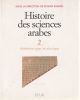
Histoire des Sciences Arabes2 - Mathématique et Physique
Seuil, 1997 - Fort In-8, broché, couverture souple sobre ill, 429 pages, index, bibliographie, très agréable exemplaire.
Bel Exemplaire Mise à jour du Samedi 27 Juin 2026. Paiement PayPal immédiat, Mondial Relay pour : France, Allemagne, Autriche, Belgique, Espagne, Italie, Portugal, Luxembourg, Pays-Bas, Pologne (Communiquer votre point ou locker si connu). Une participation supplémentaire peut être demandée pour les colis lourds hors France où les envois compris entre 5 et 25 kg sont dégressifs : 2 à 4 kilogrammes - 7.99 / 5 à 10 kg - 15.99 / 15 -25 kg - 25.99. Certaines de nos collections ( Vian, Céline, Camus (...) peuvent être expédiées en Franco de port. Pour linternational hors Europe (Suisse, Canada, Japon, Etats-Unis, les frais dexpéditions peuvent varier selon le poids (mise à jour : 1 juin 2026).
L'oscillographie cathodique et ses applications.
Couverture souple. Broché. 128 pages.
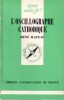
Livre. Editions P.U.F (Collection : Que sais-je? N° 1297), 1977.

