 Write to the booksellers
-
Type
Any type (2)
Art print (7)
Book (32018)
Disk (1)
Drawings (7)
Engraving (9)
Magazine (126)
Old papers (1)
Photographs (14)
Posters (4)
-
Latest
Last 24h (4)
Last 3 days (56)
Last month (705)
Last week (105)
-
Language
Dutch (1)
English (55)
French (32088)
German (6)
Italian (17)
Japanese (2)
Portuguese (9)
Spanish (11)
-
Century
16th (16)
17th (52)
18th (212)
19th (1552)
20th (9478)
21st (1733)
-
Countries
Belgium (10216)
Brazil (7)
Canada (108)
China (3)
Côte d'Ivoire (59)
Denmark (213)
France (18537)
Germany (1)
Greece (1)
Switzerland (3044)
-
Syndicate
ALAC (99)
CLAM (43)
CLAQ (94)
CNE (3)
ILAB (10689)
NVVA (1153)
SLACES (1153)
SLAM (8179)
SNCAO (9)
MARCEL MARI N Le sentiment photographique
Bruxelles, Edition Les Levres Nues, 1984 Couverture originale de l' diteur, 21 x 14,5 cm, 48 pages. Illustration : photos en noir et blanc.
MARCEL MARI N Le sentiment photographique
MARCEL MARI N R trospective et Nouveaut s 1937-1967 *SIGNED
, Galerie Defacz, 1967 diteurs originaux, couverture, 21 x 14,5 cm, 156 pages.***Avec une d dicace de Marcel Mari n. Edition originale .
***Avec une d dicace de Marcel Mari n /// Catalogue publi l'occasion de l'exposition la Galerie Defacqz du 18 avril au 5 mai 1967. Textes de Louis Scutenaire et Marcel Mari n, entretien avec l'artiste par Christian Bussy
MARCEL MARI N SAHARA SEED
, Edition Les Levres nues , 1982 diteurs originaux, couverture 21 x 14,5 cm, feuillet pli , 8 feuilles non num rot es. En feuilles, sous couverture imprim e rose. Non coup . dition originale .
11 po mes illustr s par deux photographies noir et blanc avec les interventions graphiques caract ristiques du style de Mari n.
Le Château d'Anet
Firmin-Didot et Cie 1952 in12. 1952. Broché. Ouvrage de Marcel Mayer consacré au Château d'Anet monument historique français. Il s'agit d'une monographie érudite publiée dans une nouvelle édition mise à jour en 1980 par la Société des amis d'Anet avec des contributions pour les textes et les photographies
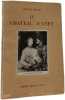
Bon Etat bords frottés intérieur propre
Gegoten voor de eeuwigheid. Bronzen meesterwerken uit Indi en de Himalaya in Belgische en Nederlandse collecties
, Etnografisch Museum Antwerpen 2005, 2005 Hardcover, 235 pagina's, Nederlands, 295 x 225 mm, boek in goede staat, met illustraties in kleur, .NIEUW in folie! ISBN 9789077069080.
Sedert zowat tweeduizend jaar is brons een van de meest geliefkoosde materialen van beeldhouwers in Azi . Het cultureel en religieus erfgoed van India, Sri Lanka, Nepal en Tibet weerspiegelt de weergaloze kwaliteit die op het vlak van bronsgieten werd bereikt. Religies als het hindoe sme, het jainisme en het boeddhisme hebben deze kunstvorm aangewend om hun voorstellingen van goden en helden te vereeuwigen. De kunstenaars lieten zich leiden door gespecialiseerde handboeken met precieze voorschriften over iconografie en afmetingen. Zij gebruikten hoofdzakelijk de methode van de ?verloren-was' of cire-perdue . Het originele beeld in was werd in een omhulsel van klei gevat. De was werd weggesmolten en in de plaats werd het brons gegoten. Het kunstwerk bleef op die wijze uniek. Soms werd het beeld ook gedreven of gehamerd in koperplaat, zilver of goud.
Chairs. Catalogue of the Delft Faculty of Architecture Collection
Rotterdam, 010 Publishers, 2008 Softcover, b/w cardboard dito paperjacket in colour, 170 x 240mm., 270pp., all colour illustration. **Little stain on top of front** ISBN 9789064506192.
Comprising the effort of more than a century of collecting chairs, the Faculty of Architecture of the TU Delft can pride itself on having one of the major furniture collections in the Netherlands. Set up as an educational tool, the collection has offered knowledge about materials, construction and typology to students and designers. In the catalogue, the entire collection of over 240 chairs is presented for the first time. Each object is accompanied by images and a thorough description. Also, the book offers comprehensive texts on key designs in the collection, showing the diversity of the collection which consists of world famous designs, 17th, 18th and 19th century designs, everyday household chairs and rare pieces of furniture that have never been published before. Among the designers presented are Verner Panton, Gerrit Th. Rietveld, Hendrik Petrus Berlage, Jean Prouve, Marcel Breuer and Droog Design. New book.
"Villa de Madame Vv Duvoisin"
"1952. 4 plans( 1 : Fondations-Implantation-Toiture ; 2 : Façades Nord-Ouest et Sud-Ouest ; 3 : Façades Nord-Est et Sud-Est ; 4 : Plans de rez-de-chaussée et étage) de la Villa de Madame Vv Duvoisin rue de la Paix n°12 La Redoute (commune de Birmandreis) à l'échelle : 2 cm de Marcel Pankhauser Alger 30 juin 1952- Pliés 44 cm x 95 cm - Très bon état"
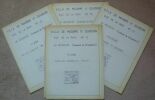
"Ville d'Aumale - étude d'un immeuble dans le cadre H.L.M. de 16 logements"
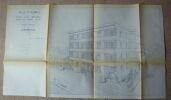
"1954. 6 plans( 1 : Avant-projet - Perspective; 2 : Coupe A-B; 3 : Coupe C-D (2 plans dont 1 hachuré ; 4 : Plan de rez-de-chaussée ; 5 : plan des étages ; 6 : Plan des Fondations) de l'étude d'un immeuble dans le cadre H.L.M. de 16 logements pour la ville d'Aumale (Sour el Ghoziane) à l'échelle : 2 cm de Marcel Pankhauser Alger 30 avril 1954 pour l'avant projet et 28 décembre 1954 pour les plans Office Public H.L.M. du département d'Alger - - Pliés 42 cm x 73 cm et 56 cm x 73 cm - Très bon état"
Corneille or the sensuality of the sensible
, Vincent Vlasbom / Philip Morris, 2000 Original publishers paper-covered boards, 29 pages, illustrated.
La Recherche Du Temps Perdu, Vol.1
, GALLIMARD, 1987 Couverture rigide, dans cassette, 1728 pages, 17.5 x 11 cm. FR. *En tr s bon tat. ISBN 9782070111268.
Marcel Proust "Valentin Louis Georges Eug ne Marcel Proust (/pru?st/; French: [ma?s?l p?ust]; 10 July 1871 ? 18 November 1922), known as Marcel Proust, was a French novelist, critic, and essayist best known for his monumental novel la recherche du temps perdu (In Search of Lost Time; earlier rendered as Remembrance of Things Past), published in seven parts between 1913 and 1927. He is considered by critics and writers to be one of the most influential authors of the 20th century.Marcel Proust "Valentin Louis Georges Eug ne Marcel Proust (/pru?st/; French: [ma?s?l p?ust]; 10 July 1871 ? 18 November 1922), known as Marcel Proust, was a French novelist, critic, and essayist best known for his monumental novel la recherche du temps perdu (In Search of Lost Time; earlier rendered as Remembrance of Things Past), published in seven parts between 1913 and 1927. He is considered by critics and writers to be one of the most influential authors of the 20th century.
Cahier 7. Edition critique
, Brepols, 2022 Paperback, 304 pages, Size:225 x 295 mm, Illustrations:8 col., Language: French. ISBN 9782503575629.
Summary La pr sente dition comprend la transcription diplomatique int grale du Cahier 7, une introduction et une annotation d velopp es qui replacent le cahier dans son contexte g n tique et culturel, ainsi qu'une analyse de contenu, le diagramme des unit s textuelles et des index. R dig en grande partie en 1909 en parall le avec le Cahier 6, le Cahier 7 fait partie du projet pr coce d'un Contre Sainte-Beuve la fois narratif et critique. On y trouve ainsi, outre des descriptions de l' glise de Combray et de l'abbaye de Guermantes, les premi res r dactions d' pisodes qui deviendront centraux dans la recherche du temps perdu - pr sentation du petit noyau des Verdurin , rencontre du h ros et de Guercy (le futur Charlus), soir e chez la princesse de Guermantes, tirade sur la race maudite - mais aussi une conversation entre le h ros et sa m re sur Guermantes, puis sur Sainte-Beuve et Baudelaire .
Marcel Taton 15 ans d'expositions.
, Marcel Taton, 2002 hardcover-. In-4 cartonnage et jaquette d' diteur, photographies couleurs, textes quadrilingues (FR../ENG../NL/all.), 128 pages . En tr s bonne condition. .
NEUF !!!!
Tradities
, Davidsfonds, 2011 Paperback, 175 pag. NL, 245 x 190 mm, in prima staat, met illustr. in kleur. ISBN 9789058267771.
?Ieder jaar zetten we een schoentje klaar voor de Sint, doen we een wens als we de kaarsjes op onze verjaardagstaart uitblazen, eten we zoetigheden op het Suikerfeest en zetten we met Allerheiligen chrysanten op het graf. Pannenkoeken horen dan weer bij Lichtmis zoals suikerbonen bij een geboorte. En jaarlijks vieren we carnaval en Valentijn. Vele momenten in een mensenleven zijn verbonden met typische gewoontes en gebruiken. Het zijn tradities van onze (voor)ouders die we zelf graag voortzetten. Elke generatie geeft zo een stukje cultuur door aan de volgende. Volkskunde Vlaanderen vzw ging op zoek naar de tradities die een bijzondere rol spelen in ons leven en onderzocht waarom ze zo belangrijk voor ons zijn. In dit fotoboek brengt fotograaf Nick Hannes dertig tradities in beeld. Zijn foto?s tonen de levendigheid en diversiteit van tradities in Vlaanderen. De inhoudelijke bijdragen van Volkskunde Vlaanderen vzw, Marcel Van den Berg, Katrijn D?hamers en Rik Torfs geven informatie over de achtergrond en de betekenis van tradities vandaag
Jef Van Tuerenhout, Olieverfschilderijen
Knokke, Posseidon Press, 1985 Linnen binding met stofwikkel, 50 pagina's, rijkelijk ge llustreerd, 20.5 x 20.5 cm. Nederlandstalige tekst. ISBN 198529331.
Jef Van Tuerenhout, Olieverfschilderijen
Mariette Teugels.
Lier, Epida, 2005 Gebonden, linnen met stofomslag, 207pp., 26x30cm., ills. in kleur, tweedehands ex. ISBN 9789075463651.
MONOGRAFIE
Paul SMOLDERS (1921-1997)
, Arte - Press Willemstad, 1977 Map met 32 losse bladen, tekst in NL / FR, 560 x 380 mm, Oplage beperkt tot 99 exemplaren, tekeningen in kleur / z/w, in zeer goede staat !, . ISBN X.
Paul Smolders (1921 - 1997) was een kunstschilder uit een lange Vlaamse traditie. Na het behalen van de licentiaatstitel Germaanse talen, schreef hij zich in voor een artistieke opleiding aan de Koninklijke Academie voor Schone Kunsten van Antwerpen. Isidore Opsomer, Julien Creytens en Albert Van Dyck werden zijn leraars. Hij had ook Frans Van Giel als mentor en leraar. Hij leerde er dat achter het schilderen van het uiterlijke, of het nu gaat om een landschap of een model, een mens en een ziel aanwezig zijn. Smolders was aanhanger van het intimisme en had een voorliefde voor het tekenen en schilderen van kinderen, ballerina's, jonge vrouwen en soms ook landschappen. Ook terrasjes en het moederschap zijn terugkerende thema's. Zijn werk heeft een dromerige sfeer maar is niet anekdotisch. Hij maakte veel schetsen en wordt beschreven als 'een buitengewoon knap tekenaar'. "Tekenen was voor hem essentieel en betekende bij uitstek de spontane verwerking van zijn denken." Smolders bleef steeds trouw aan zijn stijl. Hij was geen vernieuwer maar een gepassioneerd observator. Zijn werk werd onder andere tentoongesteld in Antwerpen, Brugge, Brussel en Knokke, maar ook in Den Haag, Rotterdam en New York. In 1952 ontving Smolders de prijs Appel van het Comit voor Artistieke Werking. Het Provinciaal Centrum Arenberg in Antwerpen organiseerde in 1991 een huldetentoonstelling.
Guy Van den Bulcke
, Edipa Antilope 2005, 2005 Softcover, 71 pages, ENG, 280 x 210 mm, apart for some scratches on the cover, is this catalogue further in fine condition, fabulous coloured illustrations , Surrealistic juxtaposition of female nudes with popular culture.. ISBN 9789075463736.
In his long career as a painter, Guy Van den Bulcke ( Antwerp 1931) is always looking for the sublime in nature. That nature is therefore prominent on a large part of his canvases. Humans appear in and next to these landscapes: men, but especially women from all continents. He often adds abstract fragments. Guy's works are flawlessly painted in a very personal style. Hundreds of thousands of visitors have already admired his paintings, in exhibitions and exhibitions in Europe and the US and at the last three Venice Art Biennales.
Guy Van Den Bulcke : His Presence in the United States.
BE - , Antilope Art Books, 2003 Hardcover ; 96 pages, ENG. edition, 300 x 260 x 15 mm, NEW !, illustrated dustjacket, with colored illustrations, ISBN 9789075463439.
For Guy Van den Bulcke ( Antwerp 1931), the importance of painting is linked to the meaning of our existence, but also to our insignificance in relation to nature and the cosmos. Fascinated by oil paint and canvas, he has been investigating the creation of images for decades with the aim of penetrating deeper into the reality around us. The tradition of painting offers him an adequate response to the complexity that the world faces today. This artist synthesizes styles. He has developed a grammar of painting with some elements of surrealism, pop art and hyperrealism, but this does not imply easy categorization. Moreover, he can be classified as both abstract painters and realists. Parts of his paintings are meticulously rendered, with unique virtuosity and meticulous detail, while other parts are painted in a more abstract manner. The artist provides the images he derives from reality with his own stamp. He shapes his realism through a distinctive choice of image, composition, framing, shape and color. His figurative tableaus are based both on photos he took during his intercontinental travels and on existing photos that he distorts and interprets.
Moerzeke van Edward Pas.
, De Nederlanden, 1985 Gebonden, Hardcover,111 pagina's. 22x30cm. met prachtige illustraties. ISBN 9065830553.
Edward Pas werd in 1904 te Londerzeel (Belgie??) geboren en hij stierf in 1980 te Moerzeke aan de Schelde, waar hij in 1923 onderwijzer was geworden en sinds zijn huwelijk in 1930 was komen wonen. "Meester" Pas is zo'n typische Vlaamse zondagsschilder, een streekgebonden kunstenaar van het Scheldelandschap in de vier seizoenen en vooral van zijn Moerzeke. Dit aan hem gewijde liber amicorum bevat een korte lyrische inleiding van de schrijfgrage Anton van Wilderode, een met foto's gei??llustreerde biografie, en negental summiere "getuigenissen", vier gedichten (twee van Christina Guirlande en twee van Anton van Wilderode). Maar het pie?ce de re?sistance wordt gevormd door de "Wandeling door Moerzeke met Edward Pas": een honderdtal reproducties (waarvan 16 in kleur) naar de schilderijen van de bescheiden, traditionele Edward Pas. Wie dit boek bekijkt, kent voortaan de stille poe??zie van Moerzeke. Nederland kan hier leren, hoe Vlaanderen zijn cultuurpatrimonium koestert. ? NBD Biblion
Picasso 90
Brussel, Galerie Veranneman, 1972 Softcover, 172 pagina's, 27 x 21 cm, FR/NL. *Prima staat.
Picasso 90. 29 januari 1972 - 26 februari 1972. Galerie Veranneman Louisalaan 137 Brussel.
Ardenne de Maringer. Le peintre des gens d'Ardenne, sa vie, son oeuvre.
Bruxelles, Didier Hatier, 1990 Couverture souple, 160 pages, 120 reproductions en couleurs, 31 x 23 cm. *bel tat. ISBN 2870887271.
Omer Marchal ne se lassait jamais de raconter l'Ardenne. La rencontre de sa plume avec le pinceau de Lucien Maringer, qui ne cessa de la peindre durant 50 ans et dont il fut l'ami et le confident, nous donne de la vie des Ardennais des g n rations 1930-1980 des images qu'il tait urgent de fixer pour la post rit . C'est chose faite gr ce aux photos de Stanilas Marchal, qui a d busqu jusque dans les greniers, pour nous les pr senter ici en tout couleur, les tableaux du peintre, d sormais promis l'immortalit , qui y cachaient leur beaut . L'ouvrage, fruit d'une longue qu te de l' crivain dans l'oeuvre et la vie du peintre, constitue en m me temps un excellent portrait biographique de Lucien Marigner, le peintre imagier de l'Ardenne qui refusait absolument d' tre appel na f.
Lorraine vivante. Hommage à Jean Lanher
PUN - Presses Universitaires de Nancy 1993 In-8 broché 24 cm sur 16. 481 pages. Couverture légèrement défraîchie. Intérieur frais. Bon état d’occasion.
Bon état d’occasion
Chronologie de l'histoire de la
Editions Jean-Paul Gisserot 127 pages Sans date. Broché. 127 pages.
Bom estado
LE PALAIS-BOURBON DES ORIGINES A NOS JOURS.
DESFOSSES. 1949. In-12. Broché. Etat d'usage, Tâchée, Coiffe en tête abîmée, Intérieur frais. 112 pages. Quelques photos en couleur monochrome dans et hors texte. Dos renforcé à l'intérieur.. . . . Classification Dewey : 720-Architecture
Préface du Président Edouard Herriot. Classification Dewey : 720-Architecture


Maisons du Viêt Nam
Editions Alternatives 2001 In-4 relié 29 cm sur 21,4. 92 pages. Très bon état d’occasion.
Très bon état d’occasion

