 Write to the booksellers
-
Type
Any type (2)
Art print (7)
Book (32121)
Disk (1)
Drawings (7)
Engraving (9)
Magazine (126)
Old papers (1)
Photographs (14)
Posters (4)
-
Latest
Last 24h (16)
Last 3 days (8)
Last month (647)
Last week (148)
-
Language
Dutch (1)
English (55)
French (32191)
German (6)
Italian (17)
Japanese (2)
Portuguese (9)
Spanish (11)
-
Century
16th (16)
17th (52)
18th (214)
19th (1557)
20th (9529)
21st (1737)
-
Countries
Belgium (10216)
Brazil (7)
Canada (108)
China (3)
Côte d'Ivoire (59)
Denmark (213)
France (18639)
Germany (1)
Greece (1)
Switzerland (3045)
-
Syndicate
ALAC (99)
CLAM (43)
CLAQ (94)
CNE (3)
ILAB (10682)
NVVA (1153)
SLACES (1153)
SLAM (8171)
SNCAO (9)
Chalets e ville di montagna.
Milano, Görlich Editore, 1966, in-4to, 157 p. riccamente illustrato in bianco e nero (168 ill.) et a colori (14 ill.), rilegatura cartonata illustrata.
Image disp.

(SLACES, NVVA)
Phone number : 41 (0)26 3223808
Votre Chalet
Plaisir de France. 1966. In-4. Cartonnage d'éditeurs. Etat d'usage, Couv. légèrement passée, Dos fané, Intérieur bon état. 157 pages avec de nombreuses photographies en noir et blanc et en couleurs et des plans de chalets. Dos décollé. Coins frottés. 2ème plat frotté. Couverture ilustrée d'un photographie en couleurs. Photos de René Bersier.. . . . Classification Dewey : 720-Architecture
Classification Dewey : 720-Architecture

Votre CHALET. Photos René Bersier. 3-Sprache Dt.-Engl.-Fr. Deuxième édition.
Fribourg, Office du livre, (éd. orig. 1966), 1972, oblong, 157 p., + 1 double feuille (légendes), richement ill. de photos en couleurs et de plans de constructions, cartonnage original. Jaquetee ill. en couleurs. Bel exemplaire
(SLACES, NVVA)
Phone number : 41 (0)26 3223808
Joz. De Loose. Een leven vatbaar voor herhaling. autobiografie.
, Joz. De Loose, 2005 Gebonden, Hardcover met stofomslag compleet.247 Pagina's, afbeeldingen.
Een autobiografie is er gekomen door mijn Familie, vrienden en kennissen die mijn leven grondig kennen, drongen er al jaren op aan. Ik besefte dat het een niet te onderschatten karwei was. Ik ben op mijn tachtigste verjaardag, op 10 januari 2005 beginnen schrijven. Gelukkig had ik een berg documenten en notities uit het verleden op zolder liggen. Het schrijven is voor mij een intens ontroerende herbeleving van de goede n de harde momenten geweest.
Pieter Jennes Gezelligheid op een druilerige dag.
, Posture editions 43, 2021 Gebonden, Hardcover, 144 pag. ILLUSTR. 28x21cm. NL/ENG. ISBN 9789491262449.
Inspired by painting, cinema and his own neighbourhood, Pieter Jennes is the creator of a highly unique oeuvre. His very recognisable personal style draws on the work of Flemish painters from the 1920s, such as Jean Brusselmans and Gustave De Smet, but also Ensor, Otto Dix or Georg Grosz, African masks and folklore, the cinema of David Lynch and Werner Herzog. While his work is clearly rooted in the history of painting, it is equally clear that it is made in the present note the disposable Starbucks coffee cup, the sign on a shop door that reads mondmasker verplicht (face mask obligatory), the pair of Adidas socks, the ad for Ola-brand ice creams. From: Bittersweet theatre on canvas, Jozefien Van Beek. * The artist is represented by Gallery Sofie Van de Velde.
Jozefien Van Beek ; Pieter Jennes ; translation : Jonathan William Beaton
Reference : 62358
POSTURE 43: GEZELLIGHEID OP EEN DRUILERIGE DAY // Warm company on a dreary day
, BU-POST, 2021 Hardcover, 144 pag., NL / ENG, 300 x 210 x 16 mm, New / Nieuw, illustrated in colour / b/w. ISBN 9789491262449.
'Inspired by painting, cinema and his own neighbourhood, Pieter Jennes is the creator of a highly unique oeuvre. His very recognisable personal style draws on the work of Flemish painters from the 1920s, such as Jean Brusselmans and Gustave De Smet, but also Ensor, Otto Dix or Georg Grosz, African masks and folklore, the cinema of David Lynch and Werner Herzog. While his work is clearly rooted in the history of painting, it is equally clear that it is made in the present - note the disposable Starbucks coffee cup, the sign on a shop door that reads mondmasker verplicht ('face mask obligatory'), the pair of Adidas socks, the ad for Ola-brand ice creams.' From: Bittersweet theatre on canvas, Jozefien Van Beek The artist is represented by Gallery Sofie Van de Velde
Santini - architecte 1677-1723
Damase in8. Sans date. Broché.
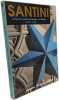
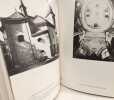
proche du très bon état intérieur propre bonne tenue circa 1990
Rik Slabbinck.
Anvers, De Sikkel, 1953 softcover, 15pp + 24 ills. n/b. hors-texte, 18x24.5cm., bon etat. Dos peu ambimee. Text en francais.
Rik Slabbinck.
Rik Slabbinck. SIGNE !!!
Anvers, De Sikkel, 1953 Relie, 15pp + 24 ills. n/b. hors-texte, 18x24.5cm., bon etat. Dos peu ambimee. Text en francais.
** MET HANDGESCHREVEN OPDRACHT EN GESIGNEERD DOOR RIK SLABBINCK
Jozef Nadj Miniaturen/ Les Miniatures
Antwerpen , Stockmans - Devos , 2007 map losbladig compleet met 54 miniatuurtekeningen. ISBN 9789077207161.
In parallel to his show Les Philosophes (The Philosophers), inspired by the life and work of Bruno Schulz, Josef Nadj drew these Miniatures. 55 India ink drawings that can each be seen as a snapshot, a still frame. All of Josef Nadj?s drawings are in a 6 8 cm format, probably to emulate the original format on which he drew his first sketches: rolling paper. Easily transportable in a pocket, these drawings could be Josef Nadj?s personal diary, written with ink and quill. They display the minutiae, constance and composition that are central elements in his choreographies. The drawings are small windows opened onto an an imagination, that of Josef Nadj, that takes us from one world to another, in which no rest can be had, where every being, human or animal, can keep hidden, under a table, onto himself or behind a wall, another reality In deze exclusieve uitgave op 350 exemplaren publiceert Stockmans 54 miniatuurtekeningen van Jozef Nadj op origineel formaat (6 x 8 cm). Deze werkjes werden gecre?erd met de dunst mogelijke pen en Chinese inkt in 2000-2002. De zeer intieme miniatuurtekeningen weerspiegelen sc?nes uit het universum van Josef Nadj, steeds begrensd in een kader of een venster, net zoals het universum - van de choreograaf Jozef Nadj - zich op het podium binnen bepaalde grenzen afspeelt.nnDans cette ?dition limit?e et exclusive en 350 copies, Stockmans publie 54 miniatures de Jozef Nadj sur format original (6 x 8 cm). Cr??s en 2000-2002, et r?alis's l'encre de Chine, ces dessins pourraient faire penser au journal intime de Jozef Nadj, dans lequel il crirait la plume. De petites fen'tres ouvertes sur un imaginaire qui nous transporte d'un univers ? un autre, comparable l'univers cr?? par Jozef Nadj
Averbode, Zes eeuwen orgelbouwkunst in Brabant. 3 volumes. (Six centuries of organ building art)
Averbode , Van Osta, 2019 600 bladzijden, 3 delen gebonden met harde kaft, vierkleurendruk, drie delen in gekartonneerd foedraal. Nederlandse tekst met een samenvatting in het Frans, Engels en Duits. //// 600 pages, 3 volumes hardcover, four-colour printing, three volumes in hardcover. Dutch text with a summary in French, English and German. *new ISBN 9782960236309.
volume 1 ; Acien R gime / Volume 2 ; vanaf de oprichting 1834 tot en met vandaag. / Volume 3; Archivalia, Bijlagen, Bibliografie, Index. / De Norbertijnenabdij van Averbode kent een unieke orgelbouwgeschiedenis. Vanaf de vijftiende eeuw tot vandaag heeft de orgelcultuur er een eminente plaats gekregen. Het rijke abdijarchief getuigt van de bouw en het onderhoud van verschillende opvallende instrumenten : het laatgotisch instrument, het renaissance-orgel en zijn verbouwingen tot barokorgel, het barokorgel uit de achttiende eeuw, de overgang van de klassieke periode naar de romantiek met de bouw van het monumentaal romantisch orgel tot het huidige orgel dat dateert uit het begin van de eenentwintigste eeuw. Gebaseerd op grondig archiefonderzoek en literatuur-studie beschrijft norbertijn Jozef Van Osta in dit driedelige werk de volledige orgelgeschiedenis van de abdij. De verschillende instrumenten worden gedetailleerd voorgesteld. Ook de orgel- bouwers krijgen ruime aandacht. Voorafgaand aan de barok- periode werkte een schare aan gerenommeerde orgelbouwers in Averbode : Willem Boets van Heyst, Anthonis Toers, Gielis Brebos, Martin Posselius, Jan Dillingen, Jan van Weert en Jan Dekens. Het barokorgel van Guillaume Robustelly vormt een hoogtepunt dat door de troebelen tijdens en na de Franse tijd te snel uit de abdij verdween. In de periode van de romantiek werd het kleine orgel van Arnold Graindorge vervangen door het massief instrument van Hippolyte Loret. Het koororgel van Bernard Pels en het transeptorgel van L on III Verschueren laten vandaag opnieuw barokke klanken horen in de abdijkerk.
verhaal van een klok en haar abdij Sint-Michielsabdij in de Sint-Andrieskerk te Antwerpen
, Abdij van 't Park vzw, 2025 hardcover, 128 pag. met illustraties in kleur, 27 x 19.5 cm. beperkte oplage. *Nieuw. ISBN 9789090398013.
Verhaal en details over de Herontdekte Hemonyklok (1655) van de Sint-Michielsabdij in de Sint-Andrieskerk te Antwerpen; We wisten tot nu toe namelijk zeer weinig over de klok in deze toren. Nu weten we dat het om een Hemonyklok uit 1655 gaat, afkomstig uit de beiaard van de verdwenen Sint-Michielsabdij! De klok kreeg een nieuwe klokkenstoel en een touw zodat ze nu manueel geluid kan worden. Verder werden de 6 houten stijlen van de vieringtoren, met tussenliggende bogen, vervangen naar het bestaand model. In het atelier van de dakdekker werd de koepel van de toren voorzien van een nieuwe koperen dakbedekking. En de windhaan kreeg een nieuw kogellager zodat deze nu met de wind meedraait. Beide windhanen (toren en vieringtoren) staan voortaan dus met hun neus in dezelfde (wind)richting. Puur vakmanschap.
Romeinsche munt, beschouwd als kunstvoortbrengsel van af haar ontstaan tot haar verval
, , 1920 Oorpsronklijk uitgeversomslag, 104 pagina's + 35 platen met 750 afbeeldingen, NL. *rug ernstig beschadigd en binding losjes.
De Romeinsche munt, beschouwd als kunstvoortbrengsel van af haar ontstaan tot haar verval
Dieu et les dieux dans le theatre de la Renaissance,
Turnhout, Brepols, 2007 Paperback, 666 p., 18 b/w ill., 156 x 234 mm. ISBN 9782503516530.
Du mystere et de la moralite a la tragedie et a l'auto et au spectacle de cour, le theatre de la Renaissance subit une mutation profonde que la figuration et le role de la divinite font apparaitre avec une evidence particuliere. Les auteurs de mysteres n'eprouvent aucun scrupule a confier a des acteurs le role de Dieu - du Fils bien sur, souvent aussi du Pere et parfois meme de la Trinite ; cet anthropomorphisme delibere s'appuie sur la reflexion theologique preetablie et contribue a la prolonger, il rencontre la tradition iconographique sans se confondre avec elle. Dans la tragedie, Dieu occupe le dialogue mais s'absente de la scene. Les dieux ne le remplacent pas. Ils signifient toujours autre chose qu'eux-memes et se plient aux desseins religieux et politiques des dramaturges, a leurs preoccupations civiques, astrologiques, scientifiques etc. Les trente-quatre communications rassemblees dans ce volume, precedees d'un essai de F. Boespflug, s'interessent a la fois aux modalites sceniques de la presence divine et a ses enjeux litteraires, spirituels et sociaux. Portant sur toutes les aires linguistiques de l'Europe occidentale, du Portugal a l'Allemagne, de l'Angleterre a l'Italie sans oublier les oeuvres latines, elles rappellent que le theatre est un moyen de communication de masse en meme temps qu'un divertissement artistique. Elles renouvellent la dialectique de la continuite et de la rupture que l'historiographie de la Renaissance ne cesse de remodeler. Language : French, English.
Ornements pour l'architecture Catalogue de 1906
catalogue de l'entreprise J. PEILLON à Lyon, 92 rue de la Part-Dieu pour l'année 1906 ornements pour l'architecture en zinc, cuivre, tôle et plomb. Format : 14 x 19 cm, couverture toilée, 288 pages de représentations de modèles et 32 pages de tarifs couverture salie sinon bon état
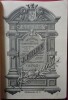
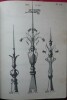
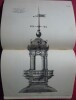
Prévoir 5 euros d'envoi en colissimo pour la France métropolitaine
dans om het Gouden Kalf van Lucas van Leyden
, Nieuw Amsterdam / Rijksmuseum, 2008 Softcovern 68 pagina's, illustraties, 24 (hoogte) x 17. ISBN 9789086890354.
Op de tentoonstelling Vroege Hollanders, Schilderkunst van de late Middeleeuwen in Museum Boijmans van Beuningen (tot 25 mei 2008) is het triptiek De Dans om het gouden kalf een van de topstukken. Jan Piet Filedt Kok is onbetwist de kenner van dit schilderij: al jarenlang is hij erdoor gefascineerd en nog steeds vertelt hij er vol passie over. Over hoe het in de jaren vijftig werd teruggevonden in een duister Parijs' appartement en hoe onlangs de zeventiende-eeuwse, fraai gedecoreerde ebbenhouten lijst werd teruggevonden waarin het toen moet hebben gezeten maar toen werd vervangen door een nagemaakte zestiende-eeuwse lijst. Na restauratie van de ebbenhouten lijst is het schilderij nu in zijn volle glorie in Rotterdam te bewonderen. De achtergronden van het schilderij die in het boek wordt gegeven en de vele detailafbeeldingen, voegen veel toe aan de beleving ervan. Lucas van Leyden (1494-1533) betekende voor zijn tijd wat Rembrandt was voor de Gouden Eeuw. Met veel succes introduceerde hij de renaissance in Holland. Zijn schilderijen zijn levendig, kleurrijk en verhalend en zijn prenten verfijnd en speels. Een van de bekendste schilderijen van de kunstenaar is het drieluik met de Dans om het gouden kalf uit circa 1530, dat zich in de collectie van het Rijksmuseum bevindt. Met zichtbaar plezier verbeeldt Van Leyden het oudtestamentische verhaal. Niet de dans zelf en Mozes die de tafelen met tien geboden woedend kapot smijt staan centraal in het drieluik, maar het volk dat zich overgeeft aan zondig gedrag. Jan Piet Filedt Kok beschrijft het werk van Lucas van Leyden en zijn Dans in het bijzonder. Hij laat ook de tekening zien die zich nder de verflaag bevindt en verschaft inzicht in Lucas' werkwijze en tekentalent.
Encyclopédie Nationale des Sciences, des Lettres et des Arts ou Résumé Complet des Connaissances Humaines
PARIS, chez J.Bry - 1851 - Complet en 4 volumes - Grand In8 - 1/2 Reliure, coins frottés - - Dos lisse à filets dorés - Figures dans le texte - Textes sur 2 colonnes - 627, 684, 639 & 651 pages - frais intérieurement - bon exemplaire
Conformément à nos conditions générales de vente :Les frais de port sont affichés à titre indicatif. Il se peut que nous devions vous contacter pour vous informer du coût de laffranchissement supplémentaire en fonction du poids et du nombre de livres, surtout pour les envois internationaux Cependant vu l'augmentation des tarifs postaux à l'internationale, nous pouvons expédier les ouvrages en point relais MONDIAL RELAY pour les pays suivants : Allemagne, Autriche, Belgique, Espagne, Italie, Luxembourg, Pays-Bas, Pologne, et Portugal. Merci de nous indiquer en retour le point relais choisi ainsi que votre numéro de téléphone mobile & adresse Courriel pour assurer le suivi du colis.N'hésitez pas à nous interroger.In accordance with our general terms and conditions of sale:Shipping costs are displayed for informational purposes only. We may need to contact you to inform you of the additional postage costs depending on the weight and number of books, especially for international shipments.However, given the increase in international postal rates, we can ship books via Mondial Relay to the following countries: Germany, Austria, Belgium, Spain, Italy, Luxembourg, Netherlands, Poland, and Portugal. Please provide us with your chosen Mondial Relay point, as well as your mobile phone number and email address to ensure package tracking.Please feel free to contact us with any questions
VIEUX LOGIS DU CALVADOS
Éditions Anciennes Demeures Françaises, Paris, 1973 – Ouvrage de la collection « Les vieux logis de France », collection qui présente l'architecture et l'histoire des châteaux, vieilles demeures et manoirs d'un département. Album de 12 planches, dessins de Rémy Brault, de couleur noire ou sienne brûlée. Avec un envoi signé Jean-Pierre (l'auteur?). Auquainville, Honfleur, Bretteville-sur-Laize, Bellou, Orbec-en-Auge, Coupesarte, Saint-Germain-de-Livet, Cambremer, Burcy, Notre Dame de Courson, Biéville -sur-Orne, Brécy.
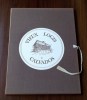
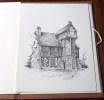
Feuilles dans une chemise cartonnée toilée fermée par des liens, format 25 x 34 - Très bon état, dos insolé - Les frais d'envoi sont en sus, les envois se faisant en recommandé ou avec un suivi.
Nederlandse zeehavens tussen 1500-1800
, Uitgeverij de Bataafsche Leeuw B.V. 1989, 1989 Hardcover, 262 pagina's, Nederlands, 290 x 225 mm, boek in goede staat, met illustraties in z/w,. ISBN 9789067072106.
Met behulp van cartografisch materiaal en fraaie illustraties wordt de ontwikkeling van de zeehavens in beeld gebracht.
J rgen Brodwolf : Stationen - ein_kunstlerbuch
, Radius Verlag, 2002 Hardcover, 120 seiten, Deutsch, 285 x 215 x 18 mm, in sehr guten kondition, ill. in s/w. ISBN 9783871732324.
Brodwolf ist ein bedeutender deutscher K nstler. Er fertigt haupts chlich r umliche Arbeiten, in denen ?R hrenfiguren? und Schatten eine wichtige Rolle spielen. Brodwolf ging 1948 an die Kunstgewerbeschule in Bern, um eine Ausbildung zum Lithografen zu absolvieren. Nach seinem Abschluss im Jahr 1953 blieb er in Paris und erlernte die Malerei autodidaktisch. 1955 erhielt er ein Bundesstipendium f r Malerei, lie sich in Vogelbach im Schwarzwald nieder und arbeitete als Freskenrestaurator und Glasmaler. Mit einem neuen Stipendium konnte er 1968 an der Akademie der K nste in Berlin beginnen. Und 1976 wurde er Professor f r Zeichnung an der Fachhochschule f r Gestaltung Pforzheim Ab Sommer 1982 wurde er als Nachfolger von Rudolf Hoflehner Professor f r Bildhauerei an der Akademie der Bildenden K nste Stuttgart. Seit seiner Pensionierung im Jahr 1995 lebt und arbeitet er in Kandern.
Mausoleum bei Tor de' Schiavi in Rom.
Mainz am Rhein, Zabern Verlag, 1993 Verlagsneu Leinen, 106 Textseiten, sowie 88 Tafeln mit 276 Abbildungen und 3 Falttafeln, 26 x 35 cm. GER. ISBN 9783805313582.
Das Mausoleum bei Tor de' Schiavi in Rom. Mit einem Beitrag von Harald Mielsch. Institut f r Baugeschichte der Universit t Karlsruhe und Deutsches Arch ologisches Institut. Sp tantike Zentralbauten in Rom und Latium Band 2.
Reading the Church Fathers with St. Thomas Aquinas. Historical and Systematical Perspectives
, Brepols - Ecole Pratique des Hautes Etudes, 2021 Paperback, 520 pages, Size:156 x 234 mm, Illustrations:1 b/w, 4 tables b/w., Language(s):English, French. ISBN 9782503593203.
Summary In his richly documented and still valuable study of Aquinas and the Church Fathers, published in 1946, Gottfried Geenen, o.p. noted that the study of this aspect of Thomas Aquinas's thought was just beginning to take place. More than seventy years later considerable progress has been made, both historically and doctrinally, not at least due to the technological advances in the area of the study of Aquinas' writings. It has been argued both that Aquinas had a remarkable knowledge of a wide range of the Church Fathers and that he was actively engaged in acquiring new material from hitherto unknown Fathers. Due to Thomas' profound commitment to both Latin and Greek patristic sources he was not only able to draw on the rich tradition of the past but also explore new possibilities and solutions. This commitment and interaction between tradition and speculative reason has led some to claim tentatively that one might characterize Thomas Aquinas' theology as being ad mentem patrum. The goal of this volume is to explore ways to corroborate this claim. In order to do so, the contributions investigate the presence and use of the Church Fathers in Aquinas' thought both historically and systematically. TABLE OF CONTENTS Piotr Roszak, J rgen Vijgen, Introduction Gilbert Dahan, J r me dans les commentaires bibliques de Thomas d'Aquin Carmelo Giuseppe Conticello, Theophylactus Latinus. La r ception m di vale de Th ophylacte de Bulgarie, source majeure de Thomas d'Aquin Piotr Roszak, How is the Patristic Method Shaping Sacra Doctrina in Aquinas? Serge-Thomas Bonino o.p., Saint Thomas d'Aquin et les P res de l' glise. Le cas de l'ang lologie dans la prima pars de la Summa theologiae Ezra Sullivan o.p., The Church Fathers' Influence on Aquinas's Account of Habitus Cajetan Cuddy o.p., Isidore and Augustine in Aquinas's Teaching on the Essence and Kinds of Law (ST I-II, qq. 90-91) Joseph Wawrykow, The Fathers in the Summa's Teaching about Grace Anton ten Klooster, Aquinas and Augustine on the Gifts of the Holy Spirit Andrew Hofer o.p., Aquinas's Use of Patristic Sources in His Theology of Religious Life Franklin T. Harkins, Christ's Perfect Grace and Beatific Knowledge in Aquinas: The Influence of John Damascene Conor McDonough o.p., Is Christ Head of the Church as Man? The History of a Problem between St. Augustine and St. Thomas J rgen Vijgen, The Patristic Sources of Thomas' Treatise on Penance Bryan Kromholtz o.p., Reditus: The Eschatology of St. Thomas Aquinas and Eastern Patristic Sources Bibliography Indices
Myth, Magic, and Memory in Early Scandinavian Narrative Culture. Studies in Honour of Stephen A. Mitchell
, Brepols, 2021 Hardback, 456 pages, Size:156 x 234 mm, Illustrations:17 b/w, 19 col., 5 tables b/w., Language: English. ISBN 9782503589879.
Summary Myth, magic, and memory have together formed important, and often intertwined, elements to recent studies in the narrative culture of Viking-Age and Medieval Scandinavica. Analytical approaches to myth (prominent in the fields of history of religion, archaeology, language, and literature, and central to studies of visual cultures up to modern times), magic (drawing on a wealth of Norse folkloric and supernatural material that derives from pre-modern times and continues to impact on recent practices of performance and ritual), and memory (the concept of how we remember and actively construe the past) together combine to shed light on how people perceived the world around them. Taking the intersection between these diverse fields as its starting point, this volume draws together contributions from across a variety of disciplines to offer new insights into the importance of myth, magic, and memory in pre-modern Scandinavia. Covering a range of related topics, from supernatural beings to the importance of mythology in later national historiographies, the chapters gathered here are written to honour the work of Stephen A. Mitchell, professor of Scandinavian Studies and Folklore at Harvard University, whose research has heavily influenced this multi-faceted field. TABLE OF CONTENTS List of Illustrations Foreword Part I - Myth and Legend Same Place, Different Time: Temporal Aspects of Imagined Landscapes in Some Northern Contexts - JOHN LINDOW Jarl, Konr, and inn in R gs ula - JENS PETER SCHJ DT 'I remember giants': Mythological Remembering through V?lusp - CAROLYNE LARRINGTON AND JUDY QUINN On Rereading Oddr nargr tr - JOSEPH HARRIS The Agency in F?r Sc rnis - Subjects, Objects, and Diff rance. A Subversive Reading - LUKAS R SLI The Threat of Induced Desire in Sk rnism l - RICHARD COLE Part II - Magic and Folklore Enchantments, Spells, and Curses: The Sorcery of Stories and the Magic in Them - MARIA TATAR Trolls in the Mill: The Supernatural Stakes of Waterpower - MERRILL KAPLAN A Prophylactic Pig, a Long-Lost Hunter, and the Recording of Oral Tradition - JOSEPH FALAKY NAGY A Male Cinderella and a Sea-Serpent's Teeth: Scandinavian Echoes in an Orkney Folk-Tale - SARAH K NZLER Axe on the Water. A Unique Magical Ritual in Lj svetninga saga - TERRY GUNNELL 'In the Name of the 7 fatherless devils?': Pain, Fear, Anger and Revenge in Magical Practice - ANE OHRVIK Lessons in Magic: Making Use of Early Twentieth-Century Accounts of Magical Procedures in the Folklore Classroom - THOMAS A. DUBOIS A Conspiracy of Witches - TIMOTHY R. TANGHERLINI Part III - Memory and Reception Metaphors for Forgetting and Forgetting as Metaphor in Old Norse Poetics - KATE HESLOP Olavifications. Spatial and Temporal Formations of Trondheim as a Memory Place - LENA ROHRBACH The Middle Ages in the Construction of Nineteenth-Century Norway - ARNE BUGGE AMUNDSEN History and Cultural Memory in the Icelandic Annals 1400-1800 - AGNES S. ARN RSD TTIR Assembling Memory: The Questionnaire of 1817 from Den kongelige Commission til Oldsagers Opbevaring and the Origins of Icelandic Romantic Nationalism - SHAUN F. D. HUGHES The 'Asgard' Superphylum and Lokiarcheaota: Mythic Relapse in Evolutionary Biology - KIMBERLEY C. PATTON Part IV - Influence and Interaction OGu vergildi and V lde in Etelhem, Gotland - STEFAN BRINK The Judensau in Uppsala - ANDERS ANDR N The Devil is Awake. Pre-Reformation Church Murals in Post-Reformation Danish Churches - LOUISE NYHOLM KALLESTRUP A Female Job and a Witch. High and Low in Leonora Christina Ulfeldt's Jammers minde - PERNILLE HERMANN O'Brazile: The Short Textual Life of a Floating Island in Seventeenth-Century Scandinavian Book History - J RG GLAUSER Geijer och Eddornas 'sinnebildsspr k' - LARS L NNROTH List of Stephen A. Mitchell's Selected Publications Index
Porsche Model Cars. 70 Years of Sports Car History.
, Delius Klasing, 2019 Hardcover , 320 pages, 25x19cm fine!. ISBN 9783667116567.
#PorschePur ... That's the hashtag that marked the start of this project. From the 356 to the 911 GT2 RS, from Porsche no. 1 to the Panamera Turbo S E-Hybrid Executive, from Le Mans to the Nurburgring, from the Rallye Monte Carlo to Dakar, from James Dean and Hans Herrmann to Mark Webber and Neel Jani - this book retraces the rich and varied history of the Porsche brand and its models. Included in this book are all the sports car models as well as the race cars with which the brand has earned its laurels in sporting competitions. The visual story is told by means of unique photography of highly detailed miniatures in 1:43 scale, photographed in the actual surroundings be it at the Nurburgring, in Hong Kong, Los Angeles, Paris or any other place on earth. The camera used in all cases is an iPhone. The photos and the fascinating text were originated by long-standing motoring journalist, book author and communications professional Joerg Walz. His 'Instagram car park' has grown to become a unique automotive museum with space for more than 1,000 cars. A large proportion of this collection is showcased here in this unique book.
J.R.J. van Asperen de Boer, Jeltje Dijkstra, Roger Van Schoute, C.M.A. Dalderup, Michael Hoyle
Reference : 67440
Underdrawing in paintings of the Rogier van der Weyden and Master of Fle?malle groups
, Waanders, 1992 Hardcover with dusjacket, 328 pages . 27 cm. Illustrated, . *good. ISBN 9789066303508.
Part 41 of the Dutch Art History Yearbook is dedicated to the two most renowned painters of the Netherlands in the fifteenth century: Rogier van der Weyden and the anonymous Master of Fl malle. The paintings attributed to these two masters are unsigned. The division of the paintings into two groups, with some attributed to Rogier and others to his anonymous teacher, is therefore based on attributions. Using infrared reflectography, ..etc.

