 Write to the booksellers
-
Type
Any type (2)
Art print (7)
Book (32018)
Disk (1)
Drawings (7)
Engraving (9)
Magazine (126)
Old papers (1)
Photographs (14)
Posters (4)
-
Latest
Last 24h (4)
Last 3 days (56)
Last month (705)
Last week (105)
-
Language
Dutch (1)
English (55)
French (32088)
German (6)
Italian (17)
Japanese (2)
Portuguese (9)
Spanish (11)
-
Century
16th (16)
17th (52)
18th (212)
19th (1552)
20th (9478)
21st (1733)
-
Countries
Belgium (10216)
Brazil (7)
Canada (108)
China (3)
Côte d'Ivoire (59)
Denmark (213)
France (18537)
Germany (1)
Greece (1)
Switzerland (3044)
-
Syndicate
ALAC (99)
CLAM (43)
CLAQ (94)
CNE (3)
ILAB (10689)
NVVA (1153)
SLACES (1153)
SLAM (8179)
SNCAO (9)
Ange-Jacques GABRIEL, premier architecte du Roi, d'après des documents inédits. 2eme ed.
1924 P. Laurens 1924, in-8, IV, 281pp., 24 planches h.t., br. (dos renforcé).
Phone number : 33 (0)6 77 77 12 33
Terre de France : Vauban
Gallimard Gallimard 1932, In-12 broché, couverture à rabats, 140 pages. Numéroté sur alfa mousse lafuma. Quelques rousseurs néanmoins bon exemplaire.
Toutes les expéditions sont faites en suivi au-dessus de 25 euros. Expédition quotidienne pour les envois simples, suivis, recommandés ou Colissimo.
Architektur und Landschaft als Orte christlicher Ikonographie. Eine Untersuchung zur niederrheinischen Tafelmalerei des 15. Jahrhunderts
Aachen, 1987 v + 429pp. + 12pp. with bl/w ills., 21cm., softcover, text in German, Doctoral dissertation (Dissertation zur Erlangung des akademischen Grades eines Doktors der Philosophie, Philosophischen Fakultät der Rheinisch-Westfälischen Technischen Hochschule Aachen), stamp at verso of title page, text is clean and bright, good condition, S109212
Places du monde
WS 2007 Format à la française, 20x37,50, cartonné, 216 pp. 40 exemples célèbres, dont certains ont été déclarés Patrimoine de l’humanité par l’Unesco, illustrent l’évolution du modèle de la place à travers quatre continents : l’Europe, l’Amérique, l’Asie et l’Océanie.

Bon état d’occasion
VIEILLES MAISONS FRANCAISES N°174 - Préface - Henry Féral Avant-propos - Gérard Gaudin .La vie rurale à Banizette-Entretien avec François Robert-Gorsse.Les hameaux du terroir - Patrice Trapon.•Les maçons de la Creuse - Roland Nicoux.
VIEILLES MAISONS FRANCAISES. OCT 1998. In-12. Broché. Bon état, Couv. convenable, Dos satisfaisant, Intérieur frais. 115 pages. Nombreuses photos en couleur et noir et blanc dans et hors texte.. . . . Classification Dewey : 720-Architecture
Sommaire : Préface - Henry Féral Avant-propos - Gérard Gaudin .La vie rurale à Banizette-Entretien avec François Robert-Gorsse.Les hameaux du terroir - Patrice Trapon.•Les maçons de la Creuse - Roland Nicoux.•Dormir plus près des étoiles - Jean-Guy Soumy. Fermes de pierre - Paul-Édouard Robinne.Clefs, serrures et lustres d’art .Jean-Claude Bertin.Et Malraux sauva les centres urbains.., Pierre de Lagarde.La « rose de France » en périlFrançois Joyaux.Rectificatif.La France restaurée..Prix de sauvegarde VMF 1998.Vertigineux vestiges - Patrick Gironnet. Demeures seigneuriales-Benoît-Henry Papounaud.•Saint-Germain-Beaupré Marie-Emmanuelle Desmoulins.Expositions.Patrimoine .Livres L’Europe..Sous les voûtes médiévales-Claude Andrault-Schmitt.Des murs mis en scène - Géraldine Thévenot. Des églises aux allures de forts-Catherine Combrouze-Lafaye.Au fil des pierres - Gilles Rossignol. Au fil des tapisseries - Lucien Blondeau.•Le musée départemental de la Tapisserie Le pays des petites villes - Robert Guinot. Pinceaux et plumes - Christophe Rameix.•Quand Guéret fut baptisé Chaminadour-Jacques Jourquin.VMF Jeunes.Friends of VMF.BrèvesActivités départementalesListe des délégués adjoints .CarnetListe des déléguésAnnonces Guide détachable de 8 pages entre les pages 40 et 41. Classification Dewey : 720-Architecture


Souvenirs religieux des églises de la Haute-Provence. Suite et complément Histoire, Géographie et Statistique du Département des Basses-Alpes.
Vial, Imprimeur-Libraire Digne 1879 In-8 ( 230 X 145 mm ) de 346 pages, broché sous couverture imprimée. EDITION ORIGINALE. Couverture jaunie, bon exemplaire de cet ouvrage qui retrace l'histoire religieuse de cette région de basse montagne à travers ses anciennes communautés religieuses, telles que celle des moines de Lérins, de ceux de l'abbaye de Saint Victor, de l'abbaye de Boscodon, de l'abbaye de Montmajour, Villeneuve-les-Avignon, sans oublier les hospitaliers de Saint-Jean, les religieux templiers et tous les ordres présents dans cette région. Puis, c'est autour des églises les plus importantes de la région que l'historien nous donne, non seulement les origines, mais aussi la nomenclature des évêques et celle des prévôts. Nous citerons Digne, Riez, Sisteron, Senes et Glandèves. L?ouvrage se termine par la description des lieux de pèlerinages.
Architecture intérieure et décoration en France. Des origines à 1875.
Paris, Berger-Levrault, 1997 Fort in-4, cart. éd., jaquette ill. en coul., 399 pp., nombreuses ill. en coul. et en n/b. in-t., bibliographie. Etiquette ex-libris.
Jaquette lég. défraîchie, très bon ex. par ailleurs. - Frais de port : -France 8,45 € -U.E. 13 € -Monde (z B : 23 €) (z C : 43 €)
Architecture intérieure et décoration en France des origines à 1875.
Berger-Levrault / Caisse Nationale des Monuments historiques et des Sites. 1988. In-Folio. Relié. Etat d'usage, Couv. convenable, Coiffe en pied abîmée, Quelques rousseurs. 399 pages, jaquette conservée frottée en coiffes, nombreuses photos et illustrations en noir et blanc et en couleur dans et hors texte, texte en 2 colonnes.. Avec Jaquette. . . Classification Dewey : 720-Architecture
Classification Dewey : 720-Architecture
[ Berger-Levrault, Caisse Nationale des Monuments historiques et des Sites] - FERAY, Jean
Reference : 64109
(1988)
Architecture intérieure et décoration en France des origines à 1875
1 vol. in-4 cartonnage éditeur sous jaquette illustrée, Berger-Levrault, Caisse Nationale des Monuments historiques et des Sites, Paris, 1988, 399 pp.
Bon exemplaire (lég. rouss. sur tranche sup., très bon état par ailleurs)
1218-1793-1938 Abbaye de Nostre Dame des Pretz en Douay - Presses de l'imprimerie Douaisienne 1938
in8 agrafé sous jaquette, 47 pp, illustrations nb in et ht. Jaquette gravée sur cuivre par Omer Legrand, artiste de Douai.

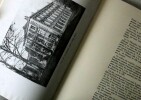
Couverture jaunie et un peu frottée, intérieur impeccable. NORD - ABBAYE - ARCHITECTURE - RELIGION - DOUAI - REGIONALISME
En Indo-Chine, Mes chasses, mes voyages
Paris, Pierre Lafitte & Cie, 1912 Couverture rigide lin, IX + 179 pages, 26 x 18.5 cm, 38 planches double face, FR. *le livre est en bon tat .
En Indo-Chine, Mes chasses, mes voyages
Vergessene Zeiten - Mittelalter im Ruhrgebiet: Katalog zur Ausstellung Band 1 und 2.
Essen, Peter Pomp, 1990 kartoniert, 2 B nde, 263 Seiten., 344 Seiten. *NEU. ISBN 9783893550524.
Katalog zur Ausstellung im Ruhrlandmuseum Essen, 26. September 1990 bis 6. Januar 1991.
NOTICE SUR DIEPPE, ARQUES et quelques monumens circonvoisins.
A Dieppe chez Marais Fils Aîné A Paris chez Béchet Aîné 1824. In-8 VII 202pp. Demi basane tête de nègre, dos lisse orné de filets dorés, de frises à froid, fleurons dorés, frise et chaînette dorées en queue, pièce de titre maroquin rouge, tranches marbrées, rel époque. Orné d'un frontispice, 5 gravures hors texte, 2 plans dont 1 replié.
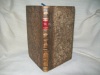
Bel exemplaire. Rare ouvrage sur l'histoire, les industries, les célébrités, les monuments de Dieppe et de ses environs.
History of Indian and Eastern Architecture. Revised and edited, with Additions Indian Architecture by James Burgess and Eastern Architecture by R. Phené Spiers. With numerous Illustrations. 2 vols.
London, John Murray, 1910. 2 orig. full cloth. Top edge gilt. A few tiny wornholes in front and at end. Small tear in one hinge. XIV,450,XVI,523 pp. Numerous textillustr. and plates.
Monuments mégalithiques du monde entier
E-dite 2008 In-8 broché 27,5 cm. Très bon état d’occasion.
Recherche sincèrement la vérité dans la question discutée de l’âge et de l’usage des monuments en pierre brute. Ce qui ressort le plus clairement de son argumentation, c’est que l’architecture mégalithique est un style au même titre que l’architecture gothique, grecque, égyptienne, boudhiste ou autre. Elle a eu un commencement, un milieu et une fin... Très bon état d’occasion
La Bataille de Paris. Des Halles à la Pyramide. Chroniques d'urbanisme.
Gallimard, 1991, in-8°, 396 pp, 21 illustrations hors texte, broché, couv. illustrée, bon état
Recueil des articles parus dans "Le Nouvel Observateur" et dans "Le Monde" par un grand critique d'architecture.
Reinhold Koehler 1919-1970. New Realism - D collage an Matter Painting 1948-1970. 24.October-29 November 2019, Whitford Fine Art, London
London, Whitford Fine Art, 2019 Hardcover 72 S. With 43 mostly full-page color illustrations and 10 partly color illustrations in the text 27X22CM ENGLISH. ISBN 9781999659332.
Architecture of the british empire
Weidenfeld and Nicolson 1986 In-4 à l’italienne relié 26 cm sur 26,5. 224 pages. Photographies en couleur. Jaquette en bon état, dos insolé. Bon état d’occasion.
Bon état d’occasion
Arquitectura y cine en el concejo de Mieres : Estudio historico-artistico de los cinematografos de la villa y concejo de Mieres
Real Instituto de Estudios Asturianos, Principado de Asturias Dos carré collé 2000 In-4 (21 x 27 cm), dos carré collé, 243 pages, texte en espagnol ; mors supérieur un peu abîmé en queue, par ailleurs très bon état général. Livraison a domicile (La Poste) ou en Mondial Relay sur simple demande.
L'Héroïsation Équestre
Éditions Ophrys 1956 146 pages Gap. in-8. 1956. broché. 146 pages. Avec 28 planches en noir in-fine
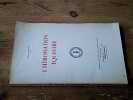
Bon état avec le dos de la couverture un peu bruni
stille Brugge 100 jaar Bruges-la-Morte
Brugge, Stichting Kunstboek, 1992 Linnen binding onder stofwikkel, 143 pagina's, 31 x 24 cm, Nederlandstalig. *goede staat. ISBN 9074377017.
Het stille Brugge 100 jaar Bruges-la-Morte
Histoire générale de Paris - La Bastille,Histoire et descriptions des bâtiments, Administration, régime de la prison, événements historiques, Par Fernand Bournon
1893 Paris, Imprimerie Nationale, 1893 - In-folio, cartonnage ( accroc en queue) éditeur vert clair, titre encadré de filets noirs et d'écoinçons avec médaillon central représentant en noir le siège de la Bastille sur le plat supérieur, dos lisse au titre orné de filets noirs, du blason de Paris - , coiffes frottées - Catalogue de l'éditeur encadré de filets noirs et d'écoinçons sur le 4 ème plat - XIV + 364 pages non coupées, 12 planches hors-texte dont certaines sur double page - frais , sans rousseurs - Bon exemplaire - envoi rapide et soigné - Réf. 45861
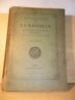
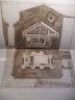
La série nombreuse de publications dont la Bastille avait été l'objet depuis 1889 se termina avec cet important ouvrage. L'histoire de la célèbre forteresse dont le rôle, puis la chute, ont été l'objet de nombreuses discussions est bien ce qu'on devait attendre d'un érudit, ancien élève de l'École des chartes, rompu aux travaux historiques ; elle est forte et impartiale. La première partie du volume est consacrée à l'histoire et à la description des bâtiments de la « Bastille-Saint-Antoine » depuis le 22 avril 1370, date où le prévôt Hugues Aubriot en posa la première pierre, jusqu'à la veille de la prise de la forteresse par les Parisiens. Le texte, solidement étayé de pièces d'archives, est illustré par divers plans, reproduits en héliogravure par Duardin. La deuxième partie contient l'histoire de l'administration de la Bastille, budgets et fonctions de la garnison et du personnel depuis le capitaine-gouverneur jusqu'aux humbles porte-clés. On y rencontre (p. 76-95) une liste, accompagnée de notices sommaires, des capitaines-gouverneurs du château depuis le premier en date, Jean La Personne, vicomte d'Acy, jusqu'à Jourdan de Launey, massacré par les Parisiens, le 14 juillet 1789. La troisième partie est consacrée au régime de la prison, la quatrième et dernière aux événements historiques Conformément à nos conditions générales de vente :Les frais de port sont affichés à titre indicatif. Il se peut que nous devions vous contacter pour vous informer du coût de laffranchissement supplémentaire en fonction du poids et du nombre de livres, surtout pour les envois internationaux Cependant vu l'augmentation des tarifs postaux à l'internationale, nous pouvons expédier les ouvrages en point relais MONDIAL RELAY pour les pays suivants : Allemagne, Autriche, Belgique, Espagne, Italie, Luxembourg, Pays-Bas, Pologne, et Portugal. Merci de nous indiquer en retour le point relais choisi ainsi que votre numéro de téléphone mobile & adresse Courriel pour assurer le suivi du colis.N'hésitez pas à nous interroger.In accordance with our general terms and conditions of sale:Shipping costs are displayed for informational purposes only. We may need to contact you to inform you of the additional postage costs depending on the weight and number of books, especially for international shipments.However, given the increase in international postal rates, we can ship books via Mondial Relay to the following countries: Germany, Austria, Belgium, Spain, Italy, Luxembourg, Netherlands, Poland, and Portugal. Please provide us with your chosen Mondial Relay point, as well as your mobile phone number and email address to ensure package tracking.Please feel free to contact us with any questions
Fernand BRAUDEL, Tephen BANN, David CANNADINE, Gérard LABROT, Jean-Marie GIBBAL, Jean GAUTEGNO, Anthony REID, Ivan SZELENYI, Alain SARFATI, Philippe ARIES, Arlette FARGE, Bernard LASSUS, Anson RABINBACH, Gottfried KORFF, Jean-Luc PIVETEAU, Michel CONAN, Bernard LEPETIT, William TAYLOR, etc, etc...
Reference : 2522
(1979)
URBI I, URBI II, URBI III, URBI IV, Arts, histoire, ethnologie des villles
1979 Revue Urbi, Paris, 1979 - 1980. 4 volumes in 4° brochés de 143, 127, 127 et 147 pages, très bon état.
Remises possibles sur les achats en lot, achetez plusieurs objets à la fois ! Reçoit sur rendez-vous pour consultation des ouvrages.
La Arquitectura Mozarabe.
EDICIONES POLIGRAFA. 1972. In-4. Relié toile grenée. Bon état, Couv. convenable, Dos satisfaisant, Intérieur frais. 281 pages. Nombreuses photos en couleurs et en noir et blanc, dans le texte et hors-texte. Textes en français, espagnol, anglais et allemand. Déchirure sur la jaquette.. Avec Jaquette. . . Classification Dewey : 720-Architecture
Classification Dewey : 720-Architecture
La Arquitectura Mozarabe.
EDICIONES POLIGRAFA 1972 In-4 relié. Bon état d’occasion.
Bon état d’occasion

