 Write to the booksellers
-
Type
Any type (2)
Art print (7)
Book (32081)
Disk (1)
Drawings (7)
Engraving (9)
Magazine (126)
Old papers (1)
Photographs (14)
Posters (4)
-
Latest
Last 24h (7)
Last 3 days (56)
Last month (705)
Last week (105)
-
Language
Dutch (1)
English (55)
French (32151)
German (6)
Italian (17)
Japanese (2)
Portuguese (9)
Spanish (11)
-
Century
16th (16)
17th (52)
18th (212)
19th (1552)
20th (9478)
21st (1734)
-
Countries
Belgium (10216)
Brazil (7)
Canada (108)
China (3)
Côte d'Ivoire (59)
Denmark (213)
France (18600)
Germany (1)
Greece (1)
Switzerland (3044)
-
Syndicate
ALAC (99)
CLAM (43)
CLAQ (94)
CNE (3)
ILAB (10690)
NVVA (1153)
SLACES (1153)
SLAM (8180)
SNCAO (9)
Rome ses églises, ses monuments, ses institutions . Lettres à un ami
,Tours, Mame 1870, 344 pp., 1 vol. in 8 relié demi-chagrin, dos à nerfs orné de caissons dorés, tranches dorées, rousseurs, 4 gravures sur acier hors-texte gravées par Raffet et Rouargue.
Architectures rurales en Picardie - Le Soissonnais
Nonette, Editions Créer, 1998, in-4 br. (21 x 30), 252 p., préface de Yves Martial, 187 illustrations, couverture à rabats, très bon état.

Une étude très détaillée des éléments du bâti et des éléments architecturaux du Soissonnais, petite région très typée par la particularité de ses maisons rurales, pays des pierres des bâtisseurs des cathédrales. Cet ouvrage constitue le meilleur guide pour appréhender les architectures du Soissonnais, qui résultaient d'une étroite symbiose entre l'homme et la nature, en des temps où le monde rural était un monde de productions agricoles et où la maison rurale était l'outil de travail du paysan. L'harmonie des villages résultait de cette proximité de l'homme et de la nature et de l'utilisation de matériaux provenant des terroirs mêmes où l'on vivait et travaillait. Voir le sommaire sur photos jointes.
Architectures rurales en Picardie. Le Soissonnais
Créer 1998 In-4 broché. 252 pages. Très bon état d’occasion.
Très bon état d’occasion
ARCHITECTURES RURALES EN PICARDIE LE SOISSONNAIS
NONETTE CREER 1998 1 volume in-4 broché de 252 pages , couverture à rabats en couleurs , très nombreuses illustrations en noir et blanc et en couleurs , très bon exemplaire . Très bon Couverture souple
Phone number : 04.71.02.85.23
"Glanum; les antiques et les fouilles de Saint-Rémy de Provence."
Paris, Editions Colbert, 1949. 21 x 27, 16 pp., 56 planches en N/B, 1 grand plan dépliant, broché, très bon état.
Gallia, XXXIème supplément : L'arc de Glanum (Saint-Remy-de-Provence)
Editions du Centre National de la rechercher scientifique. 1977. In-4. Broché. Bon état, Couv. partiel. décollorée, Dos satisfaisant, Intérieur frais. 72 pages + 77 planches de croquis et photos monochromes. Quelques croquis monochromes dans et hors-texte.. . . . Classification Dewey : 720-Architecture
Relevés d'architecture et dessins de J. Bruchet. Ouvrage publié avec le concours du Ministère de la Culture et de l'Environnement, Service des Fouilles et Antiquités. Classification Dewey : 720-Architecture


"L'Arc de Glanum (XXXIe supplément à ""Gallia"")"
Centre national de la recherche scientifique Dos carré collé 1977 In-4 (22 x 28 cm), dos carré collé, 72 pages + 76 planches in fine ; dos et bords des plats brunis, trace d'étiquette au quatrième plat, par ailleurs assez bon état général. Livraison a domicile (La Poste) ou en Mondial Relay sur simple demande.
Les églises paroissiales de Tournai (Ars Belgica, V)
Bruxelles, Nouvelle Société d'Editions 1936 34pp. (texte) + 72 planches hors-texte (avec description), 33x26cm., Edition originale, tirage limité à 550 exemplaires, imprimé sur papier de luxe, belle reliure en demi-cuir bleu, plats décoré, titre doré au dos, feuilles de garde marbrées, brochure originale conservée et reliée, texte et intérieur sont frais, avec ex-libris héraldique, très bon état, poids: 2.2 kg., B115940
L'église Saint-Quentin à Tournai (avec annexe: Objets romains trouvés sous l'église saint-Quentin)
Antwerpen, De Sikkel 1946 61pp.avec 36 ills., 25cm., br.orig., dans la série "Recueil des travaux archéologiques en liaison avec la restauration du pays" vol.6, bon état, B85234
L'architecture à l'ère industrielle : industrie et architecture. Idéale et indispensable collaboration
Sans lieu ni date Sans lieu ni date, 1963. In-4 oblong (à l'italienne) relié pleine toile grège, titre en noir sur le plat, non paginé (plus de 120 pages) avec nombreux croquis et notices techniques. Bon état.

Toutes les expéditions sont faites en suivi au-dessus de 25 euros. Expédition quotidienne pour les envois simples, suivis, recommandés ou Colissimo.
Jean-Christophe (5 volumes) Frans Masereel
Paris, Albin Michel, 1925 Couverture souple de l' diteur, Cinq volumes in-4 (20,5 x 26,5 cm), broch s, ensemble complet, 281, 345, 270, 290 et 333 pages, illustr de bois grav s de Frans Masereel, texte encadrement rouge, 1 de 400 exemplaires sur Madagascar (ici le n CDIV) . tres bon etat
illustr de bois grav s de Frans Masereel
TRAITE DE GEOMETRIE DESCRIPTIVE - ENCYCLOPEDIE THEORIQUE ET PRATIQUE DES CONNAISSANCES CIVILES ET MILITAIRES
E. LAINE ET CIE. NON DATE. In-4. Relié demi-cuir. Etat d'usage, Couv. convenable, Dos satisfaisant, Intérieur frais. 288 pages illustrées de gravures dans le texte. Titre et fleurons dorés.. . . . Classification Dewey : 720-Architecture
Classification Dewey : 720-Architecture
De Notre-Dame à Saint-Germain [ Edition originale - Exemplaire sur Japon dédicacé avec un dessin en couleurs original signé ]
Texte, eaux-fortes et bois de l'auteur, Préface par Edmond Haraucourt, Un des 20 Exemplaires sur Japon extra-nacré numérotés de I à XX (n° II pour le docteur Louis Devraigne) contenant la suite des états des Eaux-Fortes et la suite des Bois sur Japon extra-nacré et un croquis original, tous signés de l'artiste, 1 vol. in-4 raisin en feuillets sous chemise illustrée, Chez l'Artiste, Paris, 1932, avec 27 bois dans le texte, 12 eaux-fortes hors texte , une suite des bois, une double suite des eaux fortes (en 1er état et en 2e état), et une eau-forte en état unique (Notre-Dame, reprise de fait en 2e état en couverture), prospectus conservé
![De Notre-Dame à Saint-Germain [ Edition originale - Exemplaire sur Japon dédicacé avec un dessin en couleurs original signé ]. ROLLET, Maurice ; ...](https://static.livre-rare-book.com/pictures/CDL/68457_thumb.jpg)
![De Notre-Dame à Saint-Germain [ Edition originale - Exemplaire sur Japon dédicacé avec un dessin en couleurs original signé ]. ROLLET, Maurice ; ...](https://static.livre-rare-book.com/pictures/CDL/68457_2_thumb.jpg)
![De Notre-Dame à Saint-Germain [ Edition originale - Exemplaire sur Japon dédicacé avec un dessin en couleurs original signé ]. ROLLET, Maurice ; ...](https://static.livre-rare-book.com/pictures/CDL/68457_3_thumb.jpg)
Rare exemplaire du tirage de tête, l'un des 20 exemplaires sur japon avec un croquis de Maurice Rollet (avec un exemplaire unique). Merveilleux ouvrage illustré par le médecin, graveur et écrivain Maurice Rollet, "souvenirs écrits et gravés d'une lente promenade à travers les rues et carrefours du plus vieux Paris, douze séances d'une flânerie où se révèle la tendresse de l'auteur pour des sites et même pour des pierres tièdes d'histoire..." comme l'écrit Edmond Haraucourt en préface. Bon état pour cet exemplaire méritant d'être établi dans une reliure de qualité (sans étui, qq. rouss., très bon état par ailleurs).
Habiter Danser Penser : Edition bilingue français-anglais
Jean-Michel Place 2005 12 6x0 8x17 2cm. 2005. Broché.
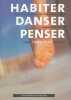
Très bon état
HISTOIRE ANCIENNE des Egyptiens, des Carthaginois, des Babyloniens, des Mèdes et des Perses, des Macédoniens et des Grecs. TOME 11 PREMIERE PARTIE.
A Paris chez les Frères Estienne 1757. In-12 VIII 394pp 3 feuillets non chiffrés. Pleine basane havane marbrée, dos à nerfs orné de compartiments dorés, pièce de titre grenat et de tomaison tabac, tranches brique, reliure de l'époque. Orné d'une planche dépliante (les 5 ordres d'architecture). manque sur la coiffe supérieure mais bel exemplaire bien complet.
Tome XI, 1re partie contenant la fin du Livre 22 sur l'architecture et le début du Livre 23 sur la science militaire. (3423)
Tattoo Nation: Portraits of Celebrity Body Art
, Bulfinch, 2002 Linnen binding with dustjacket, pages not numbered, 70 colour photo's, 31 x 26 cm, english text. *Fine condition. ISBN 9780821227817.
Synopsis: One hundred photographs from "Rolling Stone" magazine celebrate the art of the tattoo in shots of musicians, actors, and other pop icons, including Drew Barrymore, Eminem, Melissa Etheridge, and Ozzy Osborne. About the Author: David Ritz is a three-time winner of the Ralph J. Gleason Music Book Award and has coauthored a number of best selling biographies, including those of Ray Charles, Marvin Gaye, Aretha Franklin, and the Neville Brothers.

Phone number : 0033 (0)1 42 23 30 39
Primatiale Saint-Jean - Lyon. Le temps d'un échafaudage.
1985 Editions La Manufacture, Collection "Les Travaux et Les Jours" - 1985 - In-8, broché, format à l'italienne, couverture illustrée - 63 p. - Iconographie hors texte en N&B
assez Bon état - Légers plis et frottements sur la couverture - Couverture légèrement jaunie assez bon
Femmes politiques et autres filles de rues
Knokke, Guy Pieters Gallery, 2013 Hardcover, pagina's niet genummerd, 26 x 19.5 cm, kleurenreproducties. *prima staat.
Expocatalogus: Romain Barelier, Femmes politiques et autres filles de rues
Romain Brun, Alexandra Dubourg, Bernard Dulon, Julien Volper; translation : Jacob Bromberg
Reference : 61797
R sonance : Jean-Michel Basquiat et l'Univers Kongo.
, Galerie Gradiva, 2022 Hardcover, 168 pages, ENG / FR, 300 x 250 x 25 mm, NEW / NOUVEAU, illustrations in colour. ISBN 9788829600939.
Du 7 septembre au 19 novembre 2022, la galerie Gradiva propose, sous le titre de l'exposition R sonance, Jean-Michel Basquiat et l'Univers Kongo, une exp rimentation esth tique in dite. Dans ses espaces situ s 9 quai Voltaire, elle invite le visiteur se laisser guider par l' motion face au dialogue formel qu'elle tablit entre les dessins de Jean-Michel Basquiat (1960-1988) et de puissantes figures de pouvoir nkisi nkonde de la sph re culturelle kongo provenant du Mus e royal de l'Afrique centrale de Tervuren. L'exposition offre une plong e au c?ur des ?uvres et de leur me.
Meaux cité De Bossuet
1952 In 8 Préface de Marcel Aubert . Exemplaire sur hélio blanc Johannot, belle iconographie . -110 p. , 300 gr.
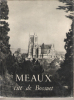
Couverture rigide Très bon 1ère Édition
Knock ou le triomphe de la médecine. Comédie en trois actes.
Paris, les éditions du Valois, 1953. 4°. 192 (8) S. Mit 36 (davon 8 ganzs.) farb. Illustr. im Text von Dubout mit Suite, 35 (von 36) farb. Tafeln. Farb. illustr. Orig. franz. Broschur in Kartonumschlag und Schuber.
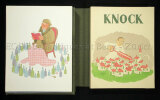
Monod 9858. - Nr. 105 von 120 Ex. mit farb. Suite (GA 2'000 Ex.). - Es fehlt die 33. Tafel der Suite. Der kart. Umschlag und der Schuber berieben.
Hugo Verriest: biografie
Tielt, Lannoo, 2014 Gebonden, hardcover, 618 pagina's, 25 x 17.5 cm. NL. *staat; tweedehands ISBN 9789401409896.
Langverwachte biografie van een kernfiguur uit de Vlaamse Beweging Met Hugo Verriest heeft Romain Vanlandschoot de definitieve biografie geschreven van een lang onderschatte sleutelfiguur in de geschiedenis van de Vlaamse beweging. In deze monumentale studie vol nieuwe inzichten komt de priester-dichter tot leven als een unieke verbindingsfiguur die niet enkel geliefd was bij katholieken, maar evengoed bij overtuigde socialisten, vrijzinnigen en liberalen. Verriest bouwde daarnaast bruggen tussen andere milieus: tussen Vlaanderen en Nederland, en tussen zijn eigen gegoede afkomst en het gewone volk uit zijn parochie. Zijn strijdvaardige en emotionele persoonlijkheid zorgde echter ook regelmatig voor botsingen, waarbij die tussen zijn katholicisme en flamingantisme de opvallendste - en meest tragische - was. Zijn consequente strijd voor de Vlaamse zaak bracht hem in conflict met zijn katholieke oversten, die hem daarvoor straften. Dit boek is tegelijk meer dan de biografie van n figuur; het is ook de biografie van een heel tijdperk. Zowel de toenmalige maatschappelijke context - met het flamingantisme en de blauwvoeterij, de onderwijshervormingen en de strijd voor het algemeen stemrecht - als collegaliteratoren zoals Guido Gezelle, Albrecht Rodenbach en Stijn Streuvels passeren de revue. Het maakt van Hugo Verriest een bijzonder rijk en meeslepend naslagwerk.
VIEILLES MAISONS FRANCAISES N°52 - Les châteaux privés, par A. ROMAN .Le Paysage Breton..Le dessin de DON La chronique de Beaumesnil (Eure), par Jean FURSTENBERG ..Pouzauges (Vendée), par P. FLettre de Mon Moulin, par Philippe JULLIAN
VIEILLES MAISONS FRANCAISES. AVR 1972. In-12. Broché. Bon état, Couv. convenable, Dos satisfaisant, Intérieur frais. 125 pages. Nombreuses photos en noir et blanc dans et hors texte.. . . . Classification Dewey : 720-Architecture
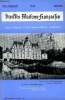
Sommaire : Les châteaux privés, par A. ROMAN .Le Paysage Breton..Le dessin de DON La chronique de Beaumesnil (Eure), par Jean FURSTENBERG ..Pouzauges (Vendée), par P. FLettre de Mon Moulin, par Philippe JULLIAN .Château de Magnitot (Val d'Oise), par L. de MAGNITOTNotre concours des Erreurs La Houssaye près de Sens (Yonne), par Arthus de BUSSET .La belle histoire du Moulin de la Galette, par D. DONZETCadrans Solaires Le Parc Naturel du Haut-Languedoc et les Vieilles Maisons Françaises, par OlivierCEBE Préservons l'esprit du Languedoc, par Georges HIRTZ ..Les deux châteaux de Fages (Dordogne), par Louis DURAND ..Nuisement-aux-Bois (Marne), par LA CHARIE MACHET Ces vieux murs de feuilles vêtus, par René PECHERAT..La Journée des Vieilles Maisons Françaises rLa Galerie des Cerfs du Palais de Fontainebleau, par R. de CIDRAC Programme de la Journée ..Le nouveau concours V.M.FRubrique Juridique et Fiscale, par B. DUMAS de RAULY :Les droits de succession et de donation sur les Monuments Historiques . .Le château et l'exploitation agricole Prix d'architecture de la Chambre Syndicale des Agents immobiliers de Paris,par J. SERRUYS ..Procédure d'obtention de la carte « Patrimoine Historique » ..Activités Régionales .Carnet La critique de Jacques de RICAUMONT, ouvrages reçus, sociétés, revuesRubrique Immobilière, divers .. Classification Dewey : 720-Architecture

