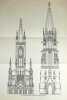
s.l., s.d. (début XXème), 1 br., couverture illustrée. in-12, titre frontispice, 44-(2) pp., illustrations, plan ;
Phone number : 06 80 15 77 01
Paris Librairie encyclopédique de Roret, coll. "Manuels-Roret" 1845 2 vol. relié 2 vol. in-16, reliés demi-chagrin cerise, dos lisses ornés de filets et fleurons dorés, tranches jaunes, VIII + 306 et 330 pp., complet des 12 planches en 10 feuillets dépliants. Nouvelle édition revue, corrigée et augmentée. Parfaitement conservé dans une jolie reliure d'époque.
, Brepols - Harvey Miller, 2025 softcover, Pages: iv + 358 p.Size:216 x 280 mm, Illustrations:89 col., Language French, *neuf. ISBN 9782503610122.
Summary F te et j suites : s'agit-il d'une tautologie du Grand Si cle, d'un oxymore antij suite ou, a contrario, de l?accordance de la mission de la Compagnie de J sus avec un langage universel qui est celui du spectaculaire ? Le livre met jour le soubassement historique et culturel de l?image convenue des j suites comme sp cialistes de la f te travers une enqu te men e partir d?archives in dites, relations imprim es et documents iconographiques. L?auteur retrace l?implication des J suites dans le d veloppement du langage festif en France, entre la fin du XVIe et la premi re moiti du XVIIe si cle en proposant une approche renouvel e de l? tude de la f te, attentive aux vis es spectaculaires des dispositifs ph m res ? les architectures, la d coration - et de ses composantes immat rielles ? le son, la lumi re, l?odeur - qui ont laiss une trace durable dans la culture visuelle de l? poque moderne. TABLE OF CONTENTS Pr face Introduction PARTIE I. La f te j suite et ses vis es p dagogiques, apostoliques et politiques Les r gles du jeu : la ratio studiorum et la f te j suite Portes ouvertes : le coll ge et ses publics J suites, sp cialistes de la f te. Du coll ge vers la ville PARTIE II. L?exp rience de l? ph m re La peinture spirituelle de la f te j suite De la pens e l?expression symbolique : embl matiquement j suite P renniser l? ph m re : du merveilleux au m morable PARTIE III. La fabrique de l? ph m re. Le triomphe l?antique au service de la gloire moderne Les dispositifs Richesse, savoirs et pratiques locales pour l? clat de la f te j suite Le langage du triomphe Conclusions Synth se des f tes j suites (1588-1645) Index locorum Index rerum Index nominum Bibliographie
, Brepols, 2020 Hardback, 389 pages, Size:178 x 254 mm, Illustrations:140 col., Language: English. ISBN 9782503586335.
Summary This is the first monograph devoted to manuscripts illuminated by the mid-fifteenth-century artist known as the Wavrin Master, so-called after his chief patron, Jean de Wavrin, chronicler and councillor at the court of Philip the Good of Burgundy. Specializing in the production of pseudo-historical prose romances featuring the putative ancestors of actual Burgundian families, the artist was an attentive interpreter of these texts which were designed to commemorate the chivalric feats of past heroes and to foster their emulation by noble readers of the day. Integral to these heroes' deeds is the notion of justice, their worth being measured by their ability to remedy criminal acts such as adultery, murder, rape, and usurpation. In a corpus of 10 paper manuscripts containing the texts of 15 romances and over 650 watercolour miniatures, the stylized, expressive images of the Wavrin Master bring out with particular clarity the lessons in justice which these works offered their contemporary audience, many of whom, from the Burgundian dukes downwards, would have been responsible for upholding the law in their territories. Chapters are devoted to issues such as the nature of just war and how it is linked to good rulership; what forms of legal redress the heroines of these tales are able to obtain with or without the help of a male champion; and what responses are available in law to a spouse betrayed by an adulterous partner. The book will be of interest to scholars of medieval art, literature, legal and cultural history, and gender studies. TABLE OF CONTENTS List of figures Foreword and acknowledgements Introduction This chapter sets out the rationale for the monograph. First, it situates its approach to study of the works of the Wavrin Master in relation to past and current scholarship in the field of Burgundian manuscript illlumination. Second, it explains and briefly illustrates the methodology it adopts, this being the analysis of the interplay between text and image in manuscripts of these prose romances, from the particular perspective of how this interplay inflects the issues of justice that are raised in the narrative. Third, it outlines in detail the precise research questions that will be addressed in the monograph and explicates the order of the chapters, justifying which texts have been selected from the corpus for detailed treatment. Chapter 1: Artist, Corpus, Patrons, Court This chapter provides a detailed context for analysis of the manuscripts in the Wavrin Master corpus by outlining who the artist was, what his body of work consisted of, who his chief patrons were, what books they held in their libraries, and how these texts contributed to the wider ideological project of legitimising the Burgundian polity as a personal union between the lord and his subjects, particularly during the reigns of the third and fourth dukes, Philip the Good and Charles the Bold. It thus sees these romances as forming part of a "literature of statecraft" teaching princely virtues, especially on matters of justice, alongside moralising works such as mirrors for princes, military treatises, and the many different types of historiographical texts that found favour at the Burgundian court. Chapter 2: Justice, Warfare, and Rulership in Florimont, the Seigneurs de Gavre and Saladin This chapter focuses on three texts whose presentation of the hero's military exploits can be read as a demonstration of medieval just war theory in action and of the link between just war and just rulership. It argues that the first two tales, Florimont and the Seigneurs de Gavre, can be seen as paradigmatic of the Wavrin Master's corpus in depicting an unequivocally exemplary hero as a just warrior and later ruler pitted against a series of antagonists whose illegitimate wars destroy their credibility as governors of their lands. By contrast, the third text, Saladin, is much more ambivalent in its portrayal of a hero whose undoubted status as a model of just conduct in war is fatally undermined by his reasons for going to war in the first place, being chiefly motivated by an insatiable desire for conquest, a lesson which may well have had a particular pertinence for Charles the Bold whose territorial ambitions far outstripped those of all three of his ducal predecessors. Translating these texts' often abstract ideas about just war and just rulership into the realm of the visual, the Wavrin Master plays with the extent to which the hero as a chivalric leader can be contrasted with his opponents in terms of both his appearance and his physical domination of space as a way of underlining the rightfulness or wrongfulness of the military causes he espouses. Chapter 3: Poor Judgements: Righting Wrongs against Women in G rard de Nevers, the Fille du comte de Pontieu, and Florence de Rome This chapter examines three romances that deal with the righting of wrongs perpetrated by men against women and the ways in which these female victims of injustice find legal redress. In the first of these texts, G rard de Nevers, justice for the wronged heroine is obtained by the male figure who had endangered her in the first place, as he fights a series of judicial duels to clear her name. Nevertheless, the heroine herself is not simply a passive receiver of this justice but herself has to use the workings of the law in order to regain her rightful place in society, in particular through her eloquence in pleading in court. The doubly wronged heroine of the second text, the Fille du comte de Pontieu, victim of a gang-rape and of her own father's punishment of her for having supposedly dishonoured her family, gains legal redress through her own efforts, pardoning the father who had wronged her but also making him swear a solemn oath never to reproach her again for her misfortune. Finally, in Florence de Rome, the heroine is abducted by her brother-in-law and subjected to multiple attempts at rape but eventually attains justice through herself exercising judgement over her transgressors. In his treatment of these women in relation to justice, the Wavrin Master places particular emphasis on representing scenes of crimes so as to establish the heroine's innocence and the different forms of judicial process by which she regains her honour and status. Valorising women in relation to justice through their demonstration of eloquence as well as through their capacity to make just judgements, these romances play their part in legitimising the role that high-status women such as the duchesses in particular were playing de facto in the good governance of the Burgundian polity. Chapter 4: Domestic Betrayals: Adultery and the Problem of Lawful Response in the Chastellain de Coucy and the Comte d'Artois This chapter, which deals with two romances that focus on the question of adultery, seeks to correct a scholarly misconception about the prevalence of extramarital relationships in Burgundian chivalric literature being a reflection of the licence that members of the male elite, particularly Philip the Good himself, allowed themselves in their own adulterous relations. It argues that, in fact, rather than celebrating extramarital love, the Chastellain de Coucy and the Comte d'Artois are concerned to teach their noble readers, both male and female, about the dangers of adultery. In particular, the way in which the domestic betrayals within these romances are treated textually and visually rejects the idea of adultery as an ennobling passion (as found in the Tristan legend, for example) and instead examines the lawful or unlawful response on the part of the betrayed spouse to the fact of their betrayal, thus addressing the wider social and legal repercussions of such extramarital passions. In his treatment of these two texts, the Wavrin Master draws on multiple pictorial traditions and runs a gamut of emotions from the courtly to the bathetic and from the erotic to the tragic in order to show that adultery, as an act of private domestic betrayal, can only lead to further forms of injustice. Conclusion: Text, Image, Ideology, Justice This chapter summarises the case made for seeing the Wavrin Master as a highly original interpreter of an unusually homogeneous body of works, ones in which the interplay of text and image is integral to the way that its lessons in statecraft, particularly on the issue of justice, would have been received at the court of Burgundy by both a male and a female audience. Appendix 1: Corpus of manuscripts Bibliography Index
, Brepols, 2022 Paperback, 349 pages, Size:170 x 240 mm, Illustrations:26 b/w, 136 col., 2 tables b/w., Language(s):French, English. ISBN 9782503603988.
Summary Cet ouvrage rassemble dix contributions qui proposent des perspectives originales pour l'analyse conjointe des modes d'expression figur e de l'Occident m di val. Men es tant par des historiens de l'art que par des historiens , elles abordent la question de l'image-objet, des signes alphab tiques et iconiques, du lieu peint, de la liturgie et de la pr dication. Documents d'archives, ex g se biblique, sermons et r cits hagiographiques sont exploit s de mani re fine et exhaustive pour rendre compte, au plus pr s, du contexte d'ex cution des ?uvres, qu'elles soient inconnues ou c l bres. Ce sont alors les angles d'approches adopt s, comme l'anthropologie des images ou les tudes transgenre, mais aussi les relations complexes entre art, architecture et rites, qui enrichissent ici l'exploration et d'objets de culte - les lipsanoth ques catalanes, les linges de l'autel ou les ex-voto - et de panneaux peints - comme la Flagellation du Christ de Piero della Francesca - et des cycles de peintures d corant la Tour Ferrande Pernes-les-Fontaines, San Pellegrino Bominaco, et cinq chapelles de la Ligurie et du Pi mont. TABLE OF CONTENTS Rosa Maria Dess et Didier M hu : Avant-propos : Images, signes et paroles dans l'Occident m di val Marc Sureda i Jubany : Lipsanoth ques, reliques et autels en Catalogne romane. Vincent Debiais : L' criture sur le tissu de l'autel. Une liturgie dans les plis. Lucy Donkin : Marking the Ground in Liturgy, Scripture, and Learning. Vinni Lucherini : San Pellegrino Bominaco : un programme iconographique pour une salle capitulaire. Clovis Chlo Maillet : Le genre d'une image : tude comparative du frontal de Santa Eug nia de Saga (XIIIe si cle). Giulia Puma : Mis en abyme dans la peinture italienne du XVe si cle : La Manne de saint Andr de C. Braccesco (vers 1490). Thomas Golsenne : Anthropologie des attributs hagiographiques. Germain Butaud : Recherches sur les peintures de la Tour Ferrande de Pernes-Les-Fontaines (c. 1309 ?). Oc ane Acquier : Les capitaines de l'Enfer : de la pr dication aux peintures murales. Images, textes et paroles dans les lieux de culte de Ligurie et du Pi mont la fin du XVe si cle. Rosa Maria Dess : Convenerunt in unum dans l'ex g se et les images : la Flagellation du Christ avec triade de Piero della Francesca.
, La Fabrica, 2015 Hardcover, 208 pages, ENG / CAT, 310 x 230 x 20 mm, NEW, illustrated in colour / b/w. ISBN 9788415691969.
Ai Weiwei: On the Table surveys the full scope of Weiwei's career, from his early days in 1980s New York to his present-day status as the best-known and most influential Chinese artist in the world. Work by this media-savvy activist calling for greater freedom in China can now be found in leading contemporary art museums and collections worldwide; the image of his taunting, irreverent middle finger imposed atop touristy monuments and landscape photos has become ubiquitous, his sunflower seed installations iconic. This volume includes previously unseen new work, as well as a range of key pieces from the past 35 years, presented in a beautiful clothbound format. Ai Weiwei (born 1957) spent his youth in exile, returning to Beijing at the end of the Cultural Revolution in 1976. He lived in the US, mostly in New York, from 1981 to 1993, and in the wake of his exposure to the work of Warhol, Duchamp and Johns, began altering readymade objects and creating conceptually driven art. In 2008 he was commissioned as the artistic design consultant for the Beijing National Stadium built for the Summer Olympics. The artist has openly criticized the Chinese government and was famously incarcerated for 81 days in 2011 on no official charges.
, Brepols, 2023 Hardback, 196 pages, Size:178 x 254 mm, Illustrations:15 b/w, Language: English. ISBN 9782503605623.
Summary Migrations of Concepts brings together the results of an experimental research on the migration of philosophical concepts into the languages of the arts. The monograph explores the intersection of philosophy, literature and art and presents a theoretical-performative investigation on the transposition of philosophical contents into theatrical and musical performance. Starting with Giambattista Vico and Samuel Beckett, a first part elaborates the paradigm of the ?Disbelonging' of the I - which is the condition of the I who realizes that it is both its own and foreign at the same time -, shows how this is transposed into the language of sounds, and reflects on the significance of public performance of a philosophical work. The second and third parts further explore the transposition of philosophical thought into art by presenting the theatrical performances written and directed by the author. More specifically, the book contains the text of two theatre readings on Vico and Gorgia, and the libretto of two melologues dedicated to Hegel and the Prince of Sansevero, with the corresponding scores of music composed by Rosalba Quindici. By exploring the boundaries of adaptation studies this monograph radically proposes a new and innovative way to study and communicate philosophical concepts. Introduction First Part. Beckettian Migrations De-powering of the Cartesian Cogito and ?Disbelonging? of the I: In the margin of De antiquissima of Giambattista Vico Conceit and Collapse of the I: Becket and Geulincx The Ontopoietic Eye: Becket and Berkeley Percipi. For Soprano, Clarinet in B Flat, Viola, Cello, Percussions, Piano. Musical Score by Rosalba QuindiciVoices from a Life: A Performance of Passages from the Life of Giambattista Vico Written by Himself (1723-28). Contribution to the Theoretical Justification of an Audio-Video Second part. From Oratory to Word Music The Heroism of the Scholar: Reading in Concert Form of Giambattista Vico's Oration De mente heroica (1732) for solo reciters and chorus of readers. Texts by Plato, Pseudo-Longinus, Giambattista Vico freely adapted An Encomio in Two Speakers: Theatre-reading on Enconium of Helen by Georgias de Leontini Third Part. From Philosophy to Melologues Offshoots of Hegel: From the Autobiography of a Servant. Melologue in Two Scenes and Ten Stanzas for Reciting Voice and Prepared Piano (Libretto) Offshoots of Hegel: From the Autobiography of a Servant. Musical Score for Prepared Piano by Rosalba Quindici. The Veiled Thought: A Nocturnal Meditation by the Prince of Sansevero. Melologue in Four Scenes for Reciting Voice, Recorded Voices and Percussions (Libretto) The Veiled Thought: A Nocturnal Meditation by the Prince of Sansevero. Musical Score for Percussions by Rosalba Quindici
, Biblioteca Nacional de Espana, 2002 Softcover, 495 paginas, Spanish, Illustraciones en color y b/n, 280 x 240 x 40 mm, en condiciones excelentes ISBN 9788495486561.
Amore nell'arte -- Esposizioni -- 2002-2003 Amore nella letteratura -- Esposizioni -- 2002-2003 Guerra nell'arte -- Esposizioni -- 2002-2003
1 brochure in-8, Imprimerie de A. Chauvin, Toulouse, 1862, 48 pp.
Etat très satisfaisant (initiales manuscrites HB - Hermann Bazin - en couv., deux petites piq. de vers en marge, bon état par ailleurs)
A compte d'auteur Album cartonné 1997 Grand in-4 (49 x 23 cm.), format à l'italienne, album cartonné, couverture illustrée, 95 pages, photographies noir et blanc ; menus incidents aux plats, légers frottements aux coins et coiffes, bel état. Livraison a domicile (La Poste) ou en Mondial Relay sur simple demande.
, Victoria and Albert Museum, 1986 Hardcover, 142 pages, ENG, 260 x 225 x 20 mm, in very good condition, dustjacket, illustrated in colour /b/w. ISBN 9780948107177.
This text describes the production of porcelain of the Qing Dynasty, setting it against a wider historical and political background. Information on techniques and on kiln construction is linked with descriptions of the personalities behind the industry and photographs of makers' marks are included. Technological advances led to many manufacturing and decorating innovations, which are illustrated by pieces from the V&A collection.
Edizioni Plurigraf, 1984. Format 20x24 cm, broche, non pagine. Edition en francais.Bon etat, petites traces d'usage sur un livre d'occasion.
2007 / 601 pages. Relié avec jaquette. Editions Penguin Books.
Very good condition.
Assouline 2012 in8. 2012. Cartonné.
frais
Paris, Devambez, 1927. Grand in-4° en feuilles, couverture rempliée imprimée noir et or, portefeuille cartonné d'éditeur. 6 reproductions de lithographies originales hors-texte, collées sur papier fort teinté, dont deux en couleurs par Raoul SERRES et LAURO, et d'un calque contenant le plan des arcades des Champs-Elysées.
Minimes défauts au portefeuille, intérieur en parfait état, exemplaire non coupé.
Leipzig, Verlag F.C.W. Vogel, 1925. 4°. 42 S. Mit 102 Tafeln. Illustrierter Orig.-Halbleinenband
Einband fleckig, angestaubt und beschabt.
, , Oorspronkelijk uitgevers omslag, 148 PAG. ILLUSTR.
Rijksmuseum Meermanno-Westreenianum/Museum van het Boek [La Haye] [Museum Meermanno/Huis van het Boek [Den Haag]] Biblioth que Albert I [Bruxelles] [Koninklijke Bibliotheek Albert I [Brussel]]
Paris, Typographie de E. Plon , Nourrit et Cie, 1894 ; brochure grand in-8°, couverture grise imprimé en noir, dos muet; 64pp. Portrait en frontispice et illustrations hors texte.Petits manques en bordure de la couverture, papier un peu jauni.
Ce Mémoire a été lu à la réunion des Sociétés des Beaux-Arts des départements, tenue dans l' hémicycle de l' Ecole des Beaux-arts à Paris, le 30 mars 1894 . Il a été tiré à 54 exemplaires, celui- ci N°34. Justification manuscrite monogramée A.R. ( Roserot) au verso du titre. ( CO1)
E. de Boccard, Paris, 1966-70, 2 volumes in-8, XI-277 et XV-301pp., brochés.
Tome 1: construction, tome 2: décoration et ameublement. Illustrations photographiques et index analytique.
Zürich, Manesse Verlag, 1981. Folio. 28 n.n. S. (Text) und 32 Faksimile-Lichtdrucke nach Zeichnungen und Aquarellen von Walter Roshardt. Illustrierte Orig.-Leinenschachtel.
Mit Beiträgen von Kurt Meissner, Mark Buchmann und Werner Sumowski sowie Pressestimmen über W. Roshardt.
, Brepols, 2019 Hardback, xvii + 640 pages, Size:156 x 234 mm, Illustrations:17 b/w, 28 tables b/w., 15 Maps, Language: English. ISBN 9782503509778.
Summary This book is a history of Milan in the early medieval period. It investigates the political, social, and economic aspects of the transformation of the Roman world in one of its major centres. Its main theme is the role of monastic communities in this transformation. In the case of Milan a single monastery can be studied in great detail: the Benedictine community founded by Charlemagne, c. 789, next to the basilica in which St Ambrose himself was buried. Surprisingly, the impact which this important Carolingian foundation had upon the existing society of Milan has been underestimated by historians, partly because the history of the monastery has been studied apart from the history of the city. The book shows how successive generations of monks helped to change the social organisation of the city and much of its hinterland, largely through their substantial dealings in property as recorded in one of the most important surviving collections of early medieval charters. This thesis challenges the views of earlier generations of scholars who downplayed the role of the monastery in the mechanisms of social change, in favour of a 'new' mercantile class. TABLE OF CONTENTS Acknowledgements Abbreviations Part One: Small and Large Worlds Introduction to Part One Chapter 1. Evidence Chapter 2. Interpretation Chapter 3. Roman Milan Transformed Chapter 4. Sant'Ambrogio and its Patrons Chapter 5. Cityscape Part Two: Dossiers Introduction to Part Two Chapter 6. Campione Chapter 7. Gnignano and Cologno Chapter 8. Valtellina Chapter 9. Limonta and Inzago Part Three: Conclusion Introduction to Part Three Chapter 10. Hinterland Select Bibliography Index
, Norma ditions, 2023 HB, 280 x 220 mm, 208 pages, 250 illustrations, EN-FR edition, NEW / NOUVEAU, . ISBN 9782376660750.
From the end of the 19th century, jewelry became an important vector of formal experimentation and plastic innovation of its time, thanks to the development of knowledge of stone, cutting and setting techniques. Books and exhibitions allow us to highlight this leading decorative art which accompanies Romanticism in its final stages before adopting the emerging Art Nouveau repertoire. The landscapes of the soul, the dreams and nightmares of symbolism imagined by Lalique, Fouquet or Carabin, as well as the forms and motifs borrowed from the Renaissance of Eug ne Grasset or Lucien Gaillard give way to a fauna and flora from a new biological, aquatic and underwater imagination, nourished by the popularization of great scientific discoveries and evolutionary thought. To better represent nature, Vever, Lalique, Boucheron, Fouquet and Nocq introduced new materials: horn, feather, a more diverse range of semi-precious stones. The study of plants as well as minerals and crystals, notably thanks to the magnificent plates created by the biologist Ernst Haeckel, also opened the way, from the 1900s, to a new decorative order revealing the crystalline structure of microorganisms. This restrained geometrization opens the field of abstraction and the Art Deco movement which will assert itself from the 1910s before triumphing in the 1920s. Accompanied by a glossary of materials and techniques and biographical notes of the main actors of period, this work allows us to understand the richness and stylistic evolution of jewelry and to place it in the art of its time.
, Brepols, 2023 Hardback, 234 pages, Size:216 x 280 mm, Illustrations:49 b/w, 58 col., 3 tables col., Language: French. ISBN 9782503599953.
Summary Pourquoi collecter et exposer textiles, verreries, c ramiques, meubles ou bijoux, t moins d'un pass pr industriel, au moment m me o l'av nement de la machine et l'expansion des march s bouleversent les processus de fabrication et de commercialisation? Suivant quelles modalit s la pr sentation de ces artefacts a t articule aux productions contemporaines, dans un contexte de concurrence internationale stimule par les expositions universelles ? Pens s au d part comme des ensembles vocation p dagogique, mais int grant souvent des vises conservatrices, les muses d'art industriel et d'art d coratif sont porteurs d'identit s multiples, ce qui explique l' volution des d nominations, leurs vicissitudes et leur existence parfois ph m re. Les travaux d sormais nombreux sur la mus ologie, et sur les arts d coratifs placent ces institutions au c?ur du questionnement autour de l'origine et des finalit s des collections publiques, en tant que lieux de formation pratique et de d bats thoriques sur les relations entre l'art, l'industrie et le march . Cet ouvrage est le premier en France consacr l'histoire des muses d'art industriel et d coratif. Il entend offrir un large panorama de cette typologie telle qu'elle s'est d cline dans l'Europe enti re, depuis son apparition dans les ann es 1830, jusqu' son puisement dans les premi res d cennies du XXe sicle. Seule une enqu te collective pouvait rendre compte des sp cificit s des situations nationales et de la diversit des processus de valorisation d'objets au statut intrins quement incertain, entre fonction d'usage, valeur patrimoniale et mod les d'apprentissage. TABLE OF CONTENTS Introduction g n rale 1-Aziza Gril-Mariotte, Les enjeux du mus e d'art industriel entre th ories et pratiques 2-Rossella Froissart, Pr misses aux mus es d'arts industriels et d coratifs : une id e fran aise Premi re partie Un mus e pour difier le go t et diffuser des mod les 3-Jean-Fran ois Luneau, Le r ve d'un mus e industriel chez Claude Aim Chenavard 4-H l ne Bocard et C line Trautmann-Waller, Alexander von Minutoli : de la collection au mus e, du mus e l'album photographique 5-Marion Falaise, Le mus e d'Art et d'Industrie de Lyon et le mod le du South Kensington Museum dans le projet de Natalis Rondot 6-Isaline Del derray-Oguey, Les mus es d'art industriel en Suisse et de la seconde r forme des arts appliqu s 7-Malgorzata Dabrowska, Les collections du Mus e technique et industriel Cracovie, entre exposition et ducation 8-Lada Hubatov -Vackov , Les mod les londonien et viennois des deux mus es de um?leck pr?mysl de Prague 9-Daniela N. Prina, La cr ation d'un South Kensington belge ou l'histoire d'un mariage imparfait entre le beau et l'utile 10- lise K?ring et Elke Mittmann, Un mus e du temps pr sent pour une production moderne : le Deutsches Museum f r Kunst in Handel und Gewerbe de Karl-Ernst Osthaus 11-Mark Gregory d'Apuzzo, Le Mus e d'art industriel Davia Bargellini de Bologne : cr er des ensembles pour mieux transmettre les savoirs Deuxi me partie De la collection au mus e. Nouveaux regards sur les arts d coratifs 12- lodie Baillot, Le Louvre contre S vres, S vres contre les ogres du Louvre : l'affaire du legs Davillier 13-Lucie Chopard, Les collections chinoises de l'Union centrale des arts d coratifs entre inspiration technique et valorisation esth tique 14-Mathieu Caron, Le mus e du Garde-Meuble (1879-1901) ou l'aboutissement d'une politique de patrimonialisation du mobilier fran ais au XIXe si cle 15-Camille Mestdagh, Du chef-d'?uvre de mus e au mod le d'atelier : les collections publiques de mobilier et la vogue des copies 16-Beno t Coutancier, Marie Labadi (Grobet) et ses poux : collectionneurs moyens ou architectes d'int rieur autodidactes ? 17-Paola Cordera, Les arts d coratifs mis en sc ne l'Exposition r trospective de Milan de 1874 18-Daniele Galleni, La Galleria degli arazzi Florence : un nouveau regard sur la tapisserie 19-Nadia Barrella, Le mus e Correale de Carlo Giovene, un livre facile pour red couvrir les arts appliqu s napolitains 20-Agnieszka Kluczewska-W jcik, Il n'y a qu'un seul art? . Feliks Jasie?ski et sa collection d'arts d coratifs au Mus e national de Cracovie 21-B nedicte Gady, Paris-New York : la cr ation du Cooper Union Museum for the Arts of Decoration au miroir du mus e des Arts d coratifs
, Silvana Editorale, 2025 Hardback, Dimensions 285 x 245 mm, 240 Illustrations col.ill. 360 Pages, Language; English ed. *new. ISBN 9788836659227.
The dramatic events of the troubled life of Caravaggio, one of the most formidable painters in the history of art of all time, are retraced in this volume, updated in the light of the latest discoveries, published on the occasion of the 450th anniversary of his documented birth in Milan in 1571. Examined here are the most significant circumstances that shattered, in just fourteen years, the brief course of the great Lombard genius' professional life.
, Brepols, 2023 Hardback, 544 pages, Size:220 x 280 mm, Illustrations:120 col., Language(s):English, Italian. ISBN 9782503594507.
Summary This book addresses the artistic reception of Dante's Divine Comedy in mural painting from the Trecento to the Cinquecento, created by some of the greatest fresco painters of this period, and presented here for the first time in its articulated and composite totality. Well-known specialists address each of the epochs and each of the artists studied, analyzing in particular the different moments in which the painters of these centuries have placed the figuration of the afterlife and of the universal judgment in the light of the Dante experience. La ricezione artistica della Commedia nella pittura murale realizzata tra il Trecento e il Cinquecento da alcuni dei pi grandi artisti di questo periodo, affrontata per la prima volta in questo volume nella sua articolata e compo - sita totalit . Per ciascuna delle epoche e per ciascuna delle opere dei secoli presi in esame sono intervenuti noti specialisti che hanno analizzato in particolare i diversi momenti in cui questi pittori hanno raffigurato l'aldil e il giudizio universale alla luce dell'esperienza dantesca.? TABLE OF CONTENTS Rossend Arques Corominas, Silvia Maddalo, Laura Pasquini Introduzione Sonia Chiodo Il Giudizio universale del battistero di San Giovanni a Firenze Marcello Ciccuto Pittura, poesia, scienza. La Cappella degli Scrovegni come crocevia di culture Alessandro Tomei Un "nuovo" Giudizio universale. Giotto nella Cappella Scrovegni a Padova Clario Di Fabio Dante e la scultura "nuova" Chiara Paniccia Un Giudizio notarile. Il ciclo escatologico di Santa Maria Maggiore a Tuscania Laura Pasquini Ravenna Alessandro Tomei Cristo e il diavolo a Torcello Serena Romano Il Paradiso al Bargello: Firenze 1336-1337 Vittoria Camelliti Il Giudizio universale e l'Inferno del Camposanto di Pisa Silvia Maddalo Il Dante murale di Santa Maria Novella: l'Inferno Salvatore Sansone Taddeo di Bartolo a San Gimignano Leon Jacobowitz-Efron Sulle influenze dantesche nell'arte religiosa Fabio Massacesi "L'inferno" del Grande Scisma a Bologna. La Cappella Bolognini in San Petronio Gerardo de Simone Al suon de l'angelica tromba. Echi danteschi nei Giudizi universali del Beato Angelico Rossend Arques Il pi noto cenotafio di Dante a Firenze. Il Dante di Domenico di Michelino (1465) Gianluca Ameri Dante in Liguria. Il Giudizio finale di San Giorgio a Campochiesa Fulvio Cervini L'Inferno organizzato dei fratelli Biasacci a Montegrazie Rossana Torlontano Il peccato nelle arti e nei mestieri. L'Inferno ?didascalico' del santuario di Santa Maria dei Bisognosi a Pereto Giovanna Saroni Salvezza e dannazione nel Piemonte sud-occidentale Claudia Cieri Via La Commedia nei monocromi di Luca Signorelli nella Cappella Nova a Orvieto Enrico Fenzi Michelangelo e Dante. La Pelle di San Bartolomeo Liana de Girolami Cheney Giorgio Vasari e Dante. L'occhio divino nella cupola di Santa Maria del Fiore Marco Tanzi Tracce di iconografia dantesca nel Giudizio universale di Orazio Lamberti in San Pietro al Po a Cremona Translations by Nicola di Nino Bibliografia a cura di Elisa Orsi Indici a cura di Elisa Orsi Luoghi danteschi Luoghi Manoscritti e incunaboli Nomi