 Write to the booksellers
-
Type
Any type (2)
Art print (7)
Book (32282)
Disk (1)
Drawings (7)
Engraving (9)
Magazine (126)
Old papers (1)
Photographs (13)
Posters (1)
-
Latest
Last 24h (12)
Last 3 days (232)
Last month (858)
Last week (7)
-
Language
Dutch (4)
English (43)
French (32357)
German (6)
Italian (17)
Japanese (2)
Portuguese (9)
Spanish (11)
-
Century
16th (16)
17th (52)
18th (221)
19th (1562)
20th (9353)
21st (1842)
-
Countries
Belgium (10306)
Brazil (7)
Canada (108)
China (3)
Côte d'Ivoire (63)
Denmark (213)
France (18566)
Germany (1)
Greece (1)
Switzerland (3181)
-
Syndicate
ALAC (99)
CLAM (19)
CLAQ (94)
CNE (3)
ILAB (10649)
NVVA (1153)
SLACES (1153)
SLAM (8163)
SNCAO (9)
Georges De Meerschman : overzichtstentoonstelling
Antwerpen , SD WORX, 2012 Softcover, 79 pagina's,Met handgeschreven opdracht en gesigneerd, gedateerd door de kunstenaar, 25 x 19 cm.
CATALOGUE Georges De Meerschman : overzichtstentoonstelling
Cylinder 1 Joris Van de Moortel
, MER Paper Kunsthalle, 2012 Original publishers paper-covered boards, SC / 48 pages / 29,7 x 21 cm. ISBN 9789490693664.
Joris Van de Moortel had the idea of working with the structure of a comic book a long time ago; he experimented with a few things but nothing worked so far. Comics were Vandemoortel?s first love: his first drawings, his first stories. It was all a dwelling of fantasies and lack of reality: he ate them as a child. His first publication with MER. Paper Kunsthalle ?Cylinder?, is not a real comic book, but the idea is based on the structure of it. It fits perfectly to get Van de Moortel?s work published. The sketches, the colouring, the humour that feels close to the practice: it?s a work in itself and not just a representation of images. You read the images ? no need to explain ? you?re having a laugh, thinking... don?t understand - as a kid reading the figures and not the lines; it?s all part of it. Joris Van de Moortel will print one new cahier of about 48 pages on the occasion of every new project or exhibition. Each cahier has a unique design and cover. Each will be published separately at first; becoming after 10 editions one book that will be published as a whole. Every edition is a new adventure having the same basic players, added, transformed. It?s one big playground: like a show.
Cylinder 2, Joris Van de Moortel
, MER Paper Kunsthalle, 2013 Original publishers paper-covered boards, SC / 48 pages / 29,7 x 21 cm. ISBN 9789490693954.
Joris Van de Moortel had the idea of working with the structure of a comic book a long time ago; he experimented with a few things but nothing worked so far. Comics were Vandemoortel?s first love: his first drawings, his first stories. It was all a dwelling of fantasies and lack of reality: he ate them as a child. His publications with MER. Pa978 94 9069 395 4per Kunsthalle ?Cylinder?, are not real comic books, but their idea is based on the structure of it. It fits perfectly to get Van de Moortel?s work published. The sketches, the colouring, the humour that feels close to the practice: it?s a work in itself and not just a representation of images. You read the images ? no need to explain ? you?re having a laugh, thinking... don?t understand - as a kid reading the figures and not the lines; it?s all part of it. Joris Van de Moortel prints one new cahier of about 48 pages on the occasion of every new project or exhibition. Each cahier has a unique design and cover. Each is published separately at first; becoming after 10 editions one book that will be published as a whole. Every edition is a new adventure having the same basic players; added, transformed. It?s one big playground: like a show. This issue is the second volume of Cylinder.
Cylinder 3 Joris Van de Moortel
, MER Paper Kunsthalle, 2013 Original publishers paper-covered boards, SC / 32 pages / 30 x 21 cm. ISBN 9789491775017.
Comics were Van de Moortel?s first love: his first drawings, his first stories; a dwelling of fantasies and a lack of reality: he devored them as a child. His first publications with MER. Paper Kunsthalle, the Cylinder Series, is not a real comic book series, but the idea is based on the structure of it. It fits perfectly to get Van de Moortel?s work published. The sketches, the colouring, the humour that feels close to the practice: it?s a work in itself and not just a representation of images. The artist prints one new Cylinder issue on the occasion of each new project or exhibition. Each cahier has a unique design and cover. Each will be published separately at first; becoming one book after 10 editions that will be published as a whole. Every edition is a new adventure having the same basic players, added, transformed. It?s one big playground: like a show. This is the sequel to Cylinder # 2. It is the third issue in the Cylinder Series.
Cylinder 4, Joris Van de Moortel & Paul Schwer
, MER Paper Kunsthalle, 2013 Original publishers paper-covered boards, SC / 32 pages / 29,7 x 21 cm. ISBN 9789491775062.
Comics were Van de Moortel's first love: his first drawings, his first stories; a dwelling of fantasies and a lack of reality: he devored them as a child. His first publications with MER. Paper Kunsthalle, the Cylinder Series, is not a real comic book series, but the idea is based on the structure of it. It fits perfectly to get Van de Moortel?s work published. The sketches, the colouring, the humour that feels close to the practice: it?s a work in itself and not just a representation of images. The artist prints one new Cylinder issue on the occasion of each new project or exhibition. Each cahier has a unique design and cover. Each will be published separately at first; becoming one book after 10 editions that will be published as a whole. Every edition is a new adventure having the same basic players, added, transformed. It?s one big playground: like a show. This is the sequel to Cylinder # 3. It is the fourth issue in the Cylinder Series.
DÜRER IN ANTWERPEN Meesterwerken uit de collectie van KBR - DÜRER IN ANTWERP Masterpieces from the KBR collection - DÜRER À ANVERS Chefs-d'?uvre de la collection du KBR
, DE REEDE, 2024 softcover, 225 pages Illustrated. Texte en Francais /NL / English. .
Op twee augustus 1520 kwam Albrecht Dürer in Antwerpen aan. Hij werd er als een beroemdheid onthaald. Door de prachtige gravures, houtsneden en etsen die hij in de voorgaande decennia op de markt bracht waren zijn naam en zijn werk overal in Europa bekend. Dürer gold al tijdens zijn leven als de belangrijkste prentmaker van zijn tijd. Zijn persoonlijke monogram was een bekend handelsmerk. ------ On August 2, 1520, Albrecht Dürer arrived in Antwerp. He was welcomed there as a celebrity. Thanks to the beautiful engravings, woodcuts, and etchings he had brought to market in previous decades, his name and work were known throughout Europe. Even during his lifetime, Dürer was considered the most important printmaker of his time. His personal monogram was a well-known trademark.
Joris van Grieken, Ger Luijten. Van Der Stock ; traduction : Catherine Warnant
Reference : 41082
Hieronymus Cock : La gravure a la Renaissance.
, mercaterfonds - fondsmercator, 2013 Hardback, 416 pages, FR., 315 x 250 x 40 mm, Tres bien Condition !, illustrations en couleur / n/b. ISBN 9789061536659.
Peintre et graveur, Hieronymus Cock (Anvers 1518-1570) fut un des premiers artistes du nord de l'Europe a creer, avec son epouse Volcxken Diericx, une maison d'edition d'estampes. Des 1548, 'Aux Quatre Vents' publia des centaines d'eaux-fortes et de gravures. Inspirees des fresques et des tableaux de Raphael et de Bronzino, des ruines classiques et des sculptures antiques, mais aussi des dessins d'artistes septentrionaux comme Maarten van Heemskerck et Frans Floris, elles furent diffusees dans toute l'Europe, ou elles contribucrent a repandre les ideaux de beaute de la Renaissance. Ayant discerne le talent de Pieter Bruegel, Cock lui commanda une soixantaine de planches. De sa propre initiative, il realisa egalement des gravures a partir des compositions monumentales et debordantes d'imagination de Jerome Bosch. Dans ce livre, qui va de pair avec une exposition organisee a Louvain et Paris, les activites de Cock et de son epouse ont ete minutieusement reconstituees et analysees. Les auteurs veulent rendre justice a l'esprit d'entreprise des protagonistes, tout en sensibilisant le lecteur au role capital joue par l'editeur d'estampes dans l'histoire de l'art.
Joris van Grieken, Jan Van der Stock, Maarten Bassens, Lieve Watteeuw e.
Reference : 52961
BRUEGEL IN ZWART EN WIT Het Complete Grafische Werk
Brussel, Royal Library of Belgium, / Hannibal, 2019 Hardcover, 300 x 270 mm, 288 pages, Nederlandstalig edition. ISBN 9789463887182.
Pieter Bruegel de Oude (1525/30-1569) is een van de beroemdste schilders van de Nederlanden. Hij is vooral bekend omwille van zijn schilderijen over het alledaagse boerenleven, maar daarnaast maakte hij ook uitzonderlijk grafisch werk, dat al in de zestiende eeuw internationaal gelauwerd werd. De Koninklijke Bibliotheek van België (KBR) voert al jarenlang onderzoek naar dat minder bekende werk van Bruegel en brengt nu voor het eerst de volledige prentencollectie samen in een tentoonstelling, ter gelegenheid van het Bruegel-jaar. De expo vindt plaats van 15 oktober 2019 tot en met 16 februari 2020 in het Paleis van Karel van Lotharingen in Brussel, dat voor deze gelegenheid opnieuw zijn deuren opent na een lange renovatie. Rond het midden van de zestiende eeuw werd Vlaanderen het internationale productie- en handelscentrum voor grafiek. Samen met zijn uitgever, Hieronymus Cock, speelde Bruegel een sleutelrol in deze bloeiperiode. De tentoonstelling focust op het unieke vakmanschap en de ondernemerskwaliteiten van beide heren en toont aan de hand van verschillende staten en edities het lange maakproces dat grafisch werk ondergaat, van ontwerptekening tot afgewerkte prent. De onderwerpen van Bruegels tekeningen en prenten zijn ontzettend rijk. Steeds weer roept hij imaginaire werelden op, bevolkt door zonderlinge figuren, en verrast hij de kijker met vele uitzonderlijke details. De luxueuze catalogus bij deze unieke tentoonstelling reproduceert de werken op ware grootte en geeft de lezers zo de kans om van heel dichtbij kennis te maken met de beroemde prenten van Bruegel. Gespecialiseerde kunsthistorici, verbonden aan de KU Leuven en de Koninklijke Bibliotheek, geven in vijf essays een boeiend inzicht in de fascinerende wereld van Bruegels grafische werk. Author Maarten Bassens is a curator at the Royal Library of Belgium in Brussels. Joris Van Grieken Author Joris Van Grieken is a curator at the Royal Library of Belgium in Brussels. Lieve Watteeuw Author Lieve Watteeuw is head of the Book Heritage Lab at the University of Leuven. Jan Van Der Stock Author Jan Van der Stock is a professor at the University of Leuven.
Joris Vanpoecke - Paradigmata (13/50)
Antwerpen , DMW Gallery, 2017 Softcover, genummerd en gesigneerd door de kunstenaar (13/50), 30 pagina's, 23 x 15.5 cm, NL. *Prima staat.
Joris Vanpoecke - Paradigmata (13/50)
JORY architecte, WILLIAM & FARGE, arch. directeurs, DUCHER et Cie, éditeur
Reference : 4426
VILLA A TROUVILLE - DEAUVILLE Calvados (LE RECUEIL D'ARCHITECTURE)
Paris Ducher et Cie 19° 46 x 31 cm Le Recueil d'Architecture, Architecture Civile, 11ème section, Constructions privées suburbaines, villas, planches 1, 2 et 3. Trois planches gravées de 46 x 31 cm. Ducher et Cie, Librairie Générale de l'architecture et des travaux publics, imprimerie Dejey, Paris Venez consulter l'ensemble de mes objets sur mon site antharedeschuyter.fr !
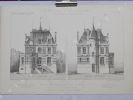
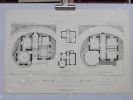
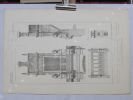
Envoi sous carton plat par lettre recommandée avec assurance ; pour plusieurs gravures (ou ensembles de gravures) les frais d'envoi ne sont comptés qu'une seule fois. Remise possible pour l'achat de plusieurs lots. Bon état Remises possibles sur les achats en lot, achetez plusieurs objets à la fois ! Reçoit sur rendez-vous pour consultation des ouvrages.
Ruimte in het beeld
, Van Spijk, 1991 Paperback, 240 pag. NL. 295 x 215 x 20 mm, als Nieuw, illustraties in z/w. ISBN 7423629559514.
Regard sur l'art mozarabe
Societe Francaise du Livre, 1978. Format 25x32 cm, reliure editeur sous jaquette illustree avec rhodoid de protection, 111 pages.Bon etat, petites traces d'usage sur un livre d'occasion, rhodoid abime.
CATHEDRALES.
SILVA ZURICH. 1973. In-4. Relié toilé. Etat d'usage, Couv. convenable, Dos satisfaisant, Intérieur frais. 108 pages - nombreuses illustrations en couleurs dans et hors texte contre collées - jaquette légèrement abîmée.. Avec Jaquette. . . Classification Dewey : 720-Architecture
Classification Dewey : 720-Architecture

Goya
, Harry N. Abrams, 1985 Hardcover, 128 pages, ENG, 310 x 235 x 20 mm, dustjacket, illustrated in colour / b/w, in good condition. ISBN 9780810909922.
With black-and-white and over forty color plates, accompanied by a scholarly commentary on Goya's development as a man and an artist.
JOSEP MARIA JUJOL
156 PAGES-GRAND IN 4-TEXTE EN ALLEMAND ANGLAIS ET FRANCAIS-COUVERTURE A RABATS-(22B)
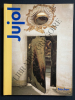
TASCHEN COUVERTURE SOUPLE ETAT COMME NEUF
Velazquez : The Complete Works
, Taschen, 2014 Hardcover, 418 pages, ENG, 405 x 300 x 45 mm, as New !, dustjacket, XX Large Edition, Heavy, Full Page Illustrations in colour / b/w, for protection in a Illustrated sturdy cardboard box ISBN 9783836550161.
Text in English. With a foreword by Guy Wildenstein. This newly-updated catalogue brings together Velazquez's complete works with a selection of enlarged details and brand-new photography of recently restored paintings, achieved through the joint initiative of Taschen and the Wildenstein Institute. The book's dazzling images are accompanied by insightful commentary from Jose Lopez-Rey on Velazquez's interest in human life and his equal attention to all subjects, from an old woman frying eggs to a pope or a king, as well as his commitment to colour and light, which would influence the Impressionists over two centuries later, amongst numerous other artists.
Arte y diplomacia : de la monarquía hispánica en el siglo XVII
, Fernando Villaverde Ediciones, 2003 Hardcover, 484 pages, Spanish / English / French, 290 x 225 x 40 mm, Illustrated in colour / b/w, dustjacket, Good Condition !. ISBN 9788493340308.
Fernando Villaverde Ediciones edita este libro. Fue fundada en 2002 en Madrid. Dicha editorial tiene en su haber más de veinte textos en catalogo. El fondo editorial de Fernando Villaverde Ediciones se distribuye en colecciones como El Jardín Ameno y Letra Redonda. Autores destacados como Carmen Calvo, Julián Santos Guerrero, Luis Peñalver Alhambra, Gonzalo Suárez y Virginia Frieyro han publicado sus textos en la editorial Publicado en: Castellano, portugués, francés, inglés, e italiano. Tradicionalmente propicia a la historia política, la diplomacia de la Monarquía ha suscitado en los últimos años un fecundo interés por parte de los historiadores del arte y de la sociedad de corte. Los agentes de la política exterior (gobernantes y virreyes, embajadores y cardenales) actuaron no sólo como intermediarios de los intereses artísticos de los reyes de España, sino también como protagonistas de un intenso coleccionismo personal que emulaba el modelo real. Los estudios sobre el arte y diplomacia vienen a demostrar que, junto a los creadores de las obras, desempeñaron también un papel determinante los aficionados que las encargaron, coleccionaron, vendieron e intercambiaron: desde su posición de riqueza y poder, se erigieron en directores del gusto y de las modas en el terreno artístico, y su intervención fue capital para la difusión o la cotización de determinadas escuelas y artistas.
Luces de Peregrinación
, Xunta de Galicia, 2003 Paperback, 468 paginas, 260 x 210 x 30 mm, Illustraciones en color y b/n, en buena condición ISBN 9788445337004.
El texto Luces De Peregrinación forma parte del catálogo de Xunta De Galicia. y tiene su sede en Galicia. Tiene más de cuatro mil sesenta títulos publicados. Artes Y Costumbres Populares, Antropología Gallega, Literatura Gallega, Publicaciones Oficiales, Historia Gallega... son las especialidades de dicha editorial. El catálogo de Xunta De Galicia cuenta con las siguientes colecciones: Guias Culturais, A Nosa Diáspora. Estudios, Biblioteca De Clásicos Agrarios Galegos, Colección Científica, Arquivos De Galicia. Serie Arquivo Do Reino De Galicia... En la editorial han publicado textos Ramón De La Sagra, Alejandro Nieto, Manuel Colmeiro, Eduardo José Pardo De Guevara Y Valdés, Vicente Peña Saavedra... Otros libros de S. A. de Xestión do Plan Xacobeo son Compostela Y El Colegio De San Clemente De Pasantes, El Viaje A Compostela De Cosme Iii De Médicis, Camino De Santiago, Patrimonio Mundial, El Hospital Real De Santiago De Compostela Y La Hospitalidad En El Camino De Peregrinación y Sentimientos De Camino.
Memoria de la escritura: manuscritos literarios de la Biblioteca Nacional, del Poema de Mío Cid a Rafael
, Electa, 1995 Softcover, 173 paginas, Spanish, Illustraciones,. ISBN 9788481560985.
Biblioteca Nacional de Espan?a. Manuscritos -- Exposiciones. Literatura espan?ola -- Manuscritos -- Exposiciones.
PALENCIA MONUMENTAL, LOS MONUMENTOS CARDINALES DE ESPANA XVII
EDITORIAL PLUS-ULTRA. 1954. In-8. Cartonné. Etat d'usage, Couv. légèrement passée, Dos frotté, Intérieur frais. 155 pages. Jaquette illustrée en noir et blanc. Nombreuses illustrations en noir et blanc dans et hors texte.Texte en espagnol. Jaquette abîmée.. Avec Jaquette. . . Classification Dewey : 720-Architecture
Classification Dewey : 720-Architecture
Les Maisons Paysannes Des Vieilles Provinces De France
Paris C. Massin 1945 In-4 relié 27,5 cm sur 22. 263 pages. Jaquette en état moyen. Bon état d’occasion.
Bon état d’occasion
Nouvelles de nulle part. Utopies urbaines 1789-2000
RMN - Musée de Valence 2026 in4. 2026. Broché.
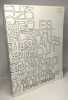
Bon état couverture défraîchie trace d'étiquette sur le permier plat
Muse?e des beaux arts de Gand : notice historique par Joseph Casier
Ghent, Belgium, Editions A.H., Museum voor Schone Kunsten, 1922 Origineel uitgeversomslag, 39 pagina's, : ill., plan ; 32 cm. FR. *redelijke staat.
Le Muse?e des beaux arts de Gand : notice historique par Joseph Casier
Geschichte der Architektur Italiens von ältesten Zeiten bis zur Gegenwart.
Leipzig, Baumgärtner’s Buchhandlung, 1907, gr. in-8vo, XVIII + 550 S., reich ill. mit 350 s./w. Abb. im Text, Original-Leinenband.

(SLACES, NVVA)
Phone number : 41 (0)26 3223808
Histoire de la Belgique
Anvers, G. Van Merlen, 1834 Halfleder met goudopdruk, 239 pagina's, 17.5 x 11 cm, FR, met illustraties. *goede staat.
Histoire de la Belgique par Joseph Delin, instituteur. Secretaire de la Commission de Surveillance des écoles Communales d'Anvers.

