 Write to the booksellers
-
Type
Any type (2)
Art print (7)
Book (32303)
Disk (1)
Drawings (7)
Engraving (9)
Magazine (126)
Old papers (1)
Photographs (13)
Posters (1)
-
Latest
Last 24h (11)
Last 3 days (90)
Last month (721)
Last week (33)
-
Language
Dutch (45)
English (53)
French (32325)
German (6)
Italian (18)
Japanese (2)
Portuguese (9)
Spanish (12)
-
Century
16th (16)
17th (51)
18th (210)
19th (1546)
20th (9378)
21st (1850)
-
Countries
Belgium (10416)
Brazil (7)
Canada (108)
China (3)
Côte d'Ivoire (67)
Denmark (213)
France (18594)
Germany (1)
Greece (1)
Switzerland (3060)
-
Syndicate
ALAC (99)
CLAM (85)
CLAQ (94)
CNE (3)
ILAB (10741)
NVVA (1153)
SLACES (1153)
SLAM (8173)
SNCAO (9)
CESAR BAILLEUX. make believes 1988 - 1990
Bruxelles, l'impasse verte, 1990 Original publishers paper-covered boards, oblong 30 pages, colour illustrations, Texte en Francais / English / Nederlands.
Expo make believes 1988 - 1990
CESAR BAILLEUX. make believes 1988 - 1990 ****GESIGNEERD
Bruxelles, l'impasse verte, 1990 Original publishers paper-covered boards, oblong 30 pages, colour illustrations, Texte en Francais / English / Nederlands.
Expo make believes 1988 - 1990 GESIGNEERD EN OPDRACHT VAN BAILLEUX AAN FREDDY DE VREE. 1991.
Etienne de Smet : Kunstpocket nr 23
, kunst forum schelderode 1974, 1974 Paperback, 64 pagina's, Nederlands, 225 x 140 mm, met illustraties in z/w, .
Antwerpse les en Antwerpse humor en topliedjes van de Strangers.
, Freddy Michiels, 2020 Gebonden, Hardcover 528 pagina's, ill. 215 x 125 x 5 cm. ISBN 9789464204407.
Verklarend woordenboek over de Antwerpse taal, onderverdeeld in vijf hoofdstukken: 1. Antwerps is een wereldtaal 2. Vuistregels voor de uitspraak van het Antwerps 3. Verklarende woordenlijst van de Antwerpse taal 4. Voorbeelden van Antwerpse humor 5. Twintig topliedjes van De Strangers met QR-code waarmee naar de muziek kan geluisterd worden Alle Antwerpse woorden worden alfabetisch gerangschikt op uitspraak met tussen haakjes het Nederlands equivalent. Voorbeeld: nievrans (nergens). De meeste woorden worden ook toegelicht door een zin om de context waarin het woord kan gebruikt worden, verduidelijkt wordt. Wat er zo specifiek is aan de ?Antwerpse humor? wordt verklaard door enkele voorbeelden van bekende en minder bekende Sinjoren zoals Rik Coppens, Gaston Berghmans, Luc Caals, Charles Janssens, Axl Peleman en nog vele anderen. Van twintig liedjes van De Strangers wordt de volledige tekst weergegeven, samen met een QTR-code. Via deze QR-code kan men deze tekst beluisteren zoals De Strangers deze nummers vertolken.
Antwerpse les en Antwerpse humor en topliedjes van de Strangers. +++ Antwerpse Humor & Straffe verhalen - Handboek +++ Ontdekkingstocht door Antwerpen +++ De Schelde van bron tot monding 4 BOEKEN SAMEN VOOR 1 PRIJS !!!!!!
, Freddy Michiels, 2020 4 boeken Gebonden, Hardcover 528 +221 +256 + 78 pagina's, ill. 215 x 125 x 5 cm. normale verkoopprijs 80.00 euro nu dus voor 50.00 euro !! *** actie geldig tot 31/12/2022 ISBN 9789464204407.
4 BOEKEN SAMEN VOOR 1 PRIJS !!!!!! (1) Antwerpse les en Antwerpse humor en topliedjes van de Strangers. +++ (2) Antwerpse Humor & Straffe verhalen - Handboek +++ (3) Ontdekkingstocht door Antwerpen +++ (4) De Schelde van bron tot monding Verklarend woordenboek over de Antwerpse taal, onderverdeeld in vijf hoofdstukken: 1. Antwerps is een wereldtaal 2. Vuistregels voor de uitspraak van het Antwerps 3. Verklarende woordenlijst van de Antwerpse taal 4. Voorbeelden van Antwerpse humor 5. Twintig topliedjes van De Strangers met QR-code waarmee naar de muziek kan geluisterd worden Alle Antwerpse woorden worden alfabetisch gerangschikt op uitspraak met tussen haakjes het Nederlands equivalent. Voorbeeld: nievrans (nergens). De meeste woorden worden ook toegelicht door een zin om de context waarin het woord kan gebruikt worden, verduidelijkt wordt. Wat er zo specifiek is aan de ?Antwerpse humor? wordt verklaard door enkele voorbeelden van bekende en minder bekende Sinjoren zoals Rik Coppens, Gaston Berghmans, Luc Caals, Charles Janssens, Axl Peleman en nog vele anderen. Van twintig liedjes van De Strangers wordt de volledige tekst weergegeven, samen met een QTR-code. Via deze QR-code kan men deze tekst beluisteren zoals De Strangers deze nummers vertolken.
ONTDEKKINGSTOCHT DOOR ANTWERPEN.
, Freddy Michiels, Het boek (256 bladzijden) is uitgegeven in handig zakformaat (125 breed x 215 hoog) met harde kaft en leeslint. Makkelijk mee te nemen tijdens de wandelingen. ISBN 9789464204438.
Met 5 uitgestippelde wandelingen in historisch Antwerpen Met verrassende verhalen en interessante weetjes. Ideaal om op een nuttige, leerzame en ontspannende manier kennis te maken met alles wat Antwerpen zo aantrekkelijk maakt. Elke wandeling toont het traject ook op plan. Aanvullend verrassende achtergrondverhalen over 60 standbeelden in Antwerpe
Excursion en Sicile
in 8 reliure éditeur, demi-chagrin vert à nerfs,titre, fers,filets dorés,percaline chagrinée verte,filets à froid en encadrement,lycée Louis Legrand sur le premier plat.Faux-titre,titre,221 pages,1 page de table des matières, illustrations dans et hors-texte de Ginos,Lix,Specht etc. Librairie Ch.Delagrave 1888

LES LOGEMENTS D'OUVRIERS. LOYERS A BON MARCHE.
Paris Imprimerie de la Paris Imprimerie de la Société de Publications Périodiques 1884, plaquette In-8 brochée de 16 pages + 2 plans en couleurs dépliant. Non coupé, trés bon état.
Toutes les expéditions sont faites en suivi au-dessus de 25 euros. Expédition quotidienne pour les envois simples, suivis, recommandés ou Colissimo.
Eugeen Van Mieghem, het verhaal van een (her)ontdekking?
Gent, Universiteit Gent, 2008 Oorspronkelijke uitgeversomslag, 190 pagina's, 29 x 21 x 2.5 cm,.
Masterproef in de kunstwetenschappen, promotor: Claire Van Damme.
English architecture at a glance - a simple review in pictures of the chief periods of english architecture with historical notes by Frederick Chatterton - 4th edition
Architectural press 2026 in8. 2026. Cartonné.
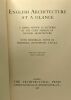
couverture ternie bords un peu frottés intérieur propre
Emblems of Monarchy. Royal Portraiture in Yorkist and Early Tudor England
, Brepols - Harvey Miller, 2024 Hardback, xx + 314 pages, Size:220 x 280 mm, Illustrations:24 b/w, 103 col., Language: English. ISBN 9781912554355.
Summary Edward IV, Richard III, Henry VII and Henry VIII: four kings whose reigns spanned a pivotal period in English history, from the Wars of the Roses to the Reformation. It is well recognized that, in this era of personal monarchy, kings used visual means, chiefly heraldry and pageantry, to represent themselves in the eyes of their subjects. This book focuses on the use of portraits as 'emblems' designed to function in a similar way in the elite circles of court and government. Frederick Hepburn explores the distinctive iconography of the portrait images that were devised to represent each of these four kings. In so doing he adds a fascinating new dimension to the study of these monarchs, and in particular sheds unexpected light on the character of the first of the Tudors, Henry VII. Here too is in-depth consideration of the portraits of other members of the early Tudor royal family - Prince Arthur and his sisters the princesses Margaret and Mary, Lady Margaret Beaufort and Katherine of Aragon. The author also looks at the occurrence of royal portraits in media other than painting in order to present as complete a picture as possible of the role played by such images during this period of transition from the Middle Ages to the Renaissance. TABLE OF CONTENTS Preface Part 1: Burgundian dukes, Yorkist kings and the courtly context The painted portrait in the Burgundian Netherlands Burgundian influence on English court culture under Edward IV Paired images of Edward IV and Richard III Richard III: the Royal Collection portrait Series of images of English kings The viewing audience for portraits Painted portraits of earlier rulers: Henry V, Charlemagne, Arthur, Julius Caesar and Alexander the Great Part 2: Henry VII An imperial ruler: the new monarch as heir of the ancient British kings Henry VII and Elizabeth of York: the union of the red rose and the white Variant forms: Elizabeth of York; pearls and the gillyflower; the artist Meynnart Wewyck Variant forms: Henry VII; the apple/orange and the pomander Henry alone: his portrait on the coinage, plans for his tomb, and votive figures in silver and gold Henry alone: marriage negotiations and a revised portrait image "There's such divinity doth hedge a king": further examples of Henry's revised image Henry and Elizabeth in sculpture: Pietro Torrigiani and the royal tomb The limits of likeness: the royal family in other media Lady Margaret Beaufort: the king's mother at prayer; Wewyck and Torrigiani Prince Arthur Princesses Margaret and Mary Rose Part 3: Henry VIII From prince to king: paired images of the young Henry and his father A European ruler: Henry in rivalry with Francis I of France, and as a loyal son of the Catholic Church Henry in other media: with and without a beard Head of church and state: workshop portraits of Henry for popular consumption, and two masterpieces by Hans Holbein Appendix 1: Works misidentified as portraying members of the royal family Appendix 2: Portraits of Anne Boleyn Bibliography
Studies in Hellenistic Architecture
Toronto, University of Toronto Press, 2006 Linnen binding under dustjacket, 460 pages, 28 x 21 cm, English text. *fine condition . ISBN 9780802039149.
Studies in Hellenistic Architecture is a detailed analysis of the development of the major building-types of the Hellenistic age ? the mid-fourth century B.C. to the time of the Roman conquest of the Eastern Mediterranean. In this meticulous work, Frederick E. Winter reveals how the architects of the period went beyond anything achieved by their Classical Greek predecessors, and how these impressive skills prepared the way for many of Rome's later architectural achievements. Geographically, the monuments included in this volume extend from Spain to Afghanistan and from Provence to North Africa. Winter discusses the architectural achievements of the various regional styles of the Eastern Mediterranean, and takes a detailed look at Hellenistic developments west of the Adriatic. While the interrelationship of these regional developments is often unclear, especially in cases where there are no explicit criteria for dating, Winter makes excellent use of the advance in scholarship over the past fifty to sixty years, offering the first real attempt at a synthesis of this vast subject. Studies in Hellenistic Architecture is an invaluable resource, containing a wealth of illustrations of the various types of Hellenistic building and the most comprehensive scholarship to date on the topic.
Sud-Est asiatique. Ses temples, ses sculptures. Introduction de Jeannine Auboyer.
Paris: Arts et Métiers Graphiques, 1964 in-4, 434 pages + un cahier de 12 pages in fine (table des photographies), 454 illustrations, 44 cartes, plans et figures. Bibliographie, lexique. Reliure toile défr., mouillure sur le 2ème plat, bon état intérieur. Table des matières: Ceylan, Royaumes indianisés de l'Ouest, Royaumes birmans, Royaumes des iles (Malaisie, Java, Bali), Royaumes orientaux (Cambodge), Royaumes thaïs.
Sud-Est asiatique. Ses temples, ses sculptures. Introduction de Jeannine Auboyer. (Paris: Arts et Métiers Graphiques, 1964). [M.C.: Asie, architecture, archéologie, sculpture]
Italia. IIa. Roma entro le mura. Regiones I-IV
, Brepols, 2021 Hardback, 342 pages, Size:200 x 280 mm, Illustrations:146 b/w, 219 col., 1 maps b/w, 5 maps color, Languages: English, Italian, French. *new ISBN 9789538250033.
TABLE OF CONTENTS Premessa Introduzione Indice REGIO I - Porta Capena S.Sisto Vecchio (F. Guidobaldi) S.Giovanni a Porta Latina (A. Miele, F. Guidobaldi) S.Maria in Tempulo (A. Miele) S.Leo de Urbe (A. Miele) S.Laurentius post S. Gregorium (A. Miele) S.Nicolaus in septem viis iuxta vipera (C. Cecalupo) REGIO II - Caelimontium S.Stefano Rotondo al Celio (A. Miele) SS.Quattro Coronati (F. Guidobaldi) SS.Giovanni e Paolo al Celio (F. Guidobaldi) Titulus Byzanti (F. Guidobaldi) S.Maria in Domnica (F. Guidobaldi) S.Gregorio al Celio (C. Cecalupo) S.Tommaso in Formis (F. Guidobaldi) S.Herasmus (C. Cecalupo) S.Maria in Michahele (F. Guidobaldi) S.Agatha (?) in Capud Africi (A. Miele) S.Stephanus in Capite Africes (A. Miele) S.Nicolaus de Formis (C. Cecalupo) SS. Cosma et Damianus ubi dicitur asinum frictum (C. Cecalupo) REGIO III - Isis et Serapis S.Clemente (F. Guidobaldi) S.Pietro in Vincoli (F. Guidobaldi, C. Cecalupo) S.Lucia in Selci (A. Miele) SS. Andrea e Bartolomeo (A. Miele, F. Guidobaldi) S.Pastor prope S. Clementem (F. Guidobaldi, C. Cecalupo) C.d. S. Felicita in Thermis (A. Miele) C.d. Oratorio di Papa Formoso (A. Miele) S.Maria in Monasterio (C. Cecalupo) S.Agapitus (?) iuxta titulum Eudoxiae (C. Cecalupo) S.Salvator a S. Maria in Monasterio (C. Cecalupo, F. Guidobaldi) S.Sergius de formis (F. Guidobaldi) S.Daniel (F. Guidobaldi) S.Laurentius super S. Clementem (F. Guidobaldi) S.Salvator de insula (F. Guidobaldi) REGIO IV - Templum Pacis SS.Cosma e Damiano (C. Cecalupo, F. Guidobaldi) S.Francesca Romana (C. Cecalupo) SS.Petrus et Paulus (C. Cecalupo) Indice alfabetico delle chiese nelle varie denominazioni documentate
WOLF - Frederik Buyckx
, Hannibal Books, 2024 Hardcover - 22 x 30 cm, 380 pagina's; Tweetalige editie NL-ENG - FINE! . ISBN 9789464941159.
Photographer Frederik Buyckx captures his wanderings in nature in awe-inspiring, intriguing photographs Photographer Frederik Buyckx (b. 1984) is invariably drawn to places where people still live in close proximity to nature. Far from our overly comfortable society where everything is at our fingertips and we have it all under control. What does a bond with nature mean? And what if freedom, rather than luxury, was central to people?s lives? Buyckx abandoned all creature comforts to make WOLF. Over the past decade, he has spent long periods of time in the mountains, in search of answers and inner peace. His wanderings were reflected in a handmade book that he received from his grandfather almost thirty years ago. It contains a fable with accompanying drawings in which Buyckx recognised his own quest for freedom and his affinity with nature. In a series of outstanding images, he captures both its splendour and ruthlessness. Nature doesn?t come to order and cannot be tamed; it cuts and it kills. /////Fotograaf Frederik Buyckx legt zijn omzwervingen in de natuur vast in ontzaglijke, intrigerende foto?s Telkens opnieuw wordt fotograaf Frederik Buyckx ( 1984) aangetrokken tot plaatsen waar mensen nog dicht bij de natuur leven. Weg van onze te comfortabele maatschappij waar alles altijd binnen handbereik ligt en waar we alles onder controle hebben. Wat betekent in verbinding staan met de natuur? En wat als niet luxe maar vrijheid centraal zou staan in een mensenleven? In WOLF gooit Buyckx alle comfort overboord. Gedurende lange periodes verspreid over tien jaar verbleef hij in de bergen op zoek naar antwoorden en innerlijke rust. Zijn omzwervingen worden weerspiegeld in een handgemaakt boekje dat hij bijna dertig jaar geleden van zijn grootvader kreeg. In die fabel en de bijbehorende tekeningen herkent Buyckx zijn persoonlijke zoektocht naar vrijheid en connectie met de natuur. Enerzijds is er de niet te beschrijven pracht, die op weergaloze wijze wordt gevat in Buyckx? beelden, maar tegelijk is de natuur meedogenloos. Ze komt niet op bestelling, ze laat zich niet temmen, ze snijdt en ze doodt.
Antwerpen : Bezienswaardige gebouwen
, Aug. Bossaerts 1945, 1945 Hardcover, 152 pagina's, NL, 240 x 160 mm, in prima staat, veel info en mooie foto's in z/w, .
Antwerpen bezienswaardige gebouwen
Antwerpen 1945 Aug. Bossaerts Hardcover No Jacket 1st Edition
Langue: néerlandais. Bâtiments remarquables d'Anvers, 24x16 cm, 152 pages, illustré avec des photos en noir et blanc. Bon état [Cette description peut avoir été traduite par une IA.]

Vermeer-schetsen kijk mee over de schouder van de grote Hollandse meester
Uithoorn, Karakter Uitgevers BV, 2012 Hardback, 190 pagina's, 24.5 x 17 cm, Nederlandstalig. Prima staat. . ISBN 9789045201764.
Vermeer-schetsen kijk mee over de schouder van de grote Hollandse meester
Frederik Leen, Dominique Marechal, Sophie van Vliet ; vertaling Walter Meeus
Reference : 44647
Fernand Khnopff. (1858-1921). NL- EXPO Koninklijke Musea voor Schone Kunsten
Schoten, BAI, 2004 Hardcover, stofomslag, 287pp., NL, 310 x 250 x 25 mm, rijkelijk geillustr., ISBN 9789076704418.
De Koninklijke Musea voor Schone Kunsten van Belgie te Brussel organiseert een belangrijke retrospectieve tentoonstelling gewijd aan Fernand Khnopff (1858-1921), een van de voornaamste vertegenwoordigers van het Belgische symbolisme. Deze manifestatie biedt een unieke gelegenheid om talrijke nooit gepubliceerde en totaal onbekende kunstwerken voor de eerste maal aan het publiek te tonen.Fernand Khnopff geldt als de belangrijkste vertegenwoordiger van het symbolisme in Belgie en zijn werk wordt in de belangrijkste musea ter wereld tentoongesteld en bewaard in de belangrijkste binnenlandse en buitenlandse prive-collecties. Alle belangrijke werken zijn in een sluitend overzicht samengebracht, waarin met meer dan 200 werken en een uitgebreid documentair gedeelte alle aspecten van de veelzijdige artistieke productie van Khnopff aan bod komen. De catalogus bevat verscheidene wetenschappelijke bijdragen van nationale en internationale Khnopffspecialisten, een volledig iconografisch overzicht van de werken in de tentoonstelling en verklarende teksten bij een groot aantal individuele werken.
Frederiksborgs Slots Beskrivelse. Efter ældre og nyere Kilder, med derhos afbenyttede, Collegiale og Archiv=Documenter.
Kbhvn., 1832. Smukt privat hldrbd. i oaseged (Axel Jensen). VI,240 pp.
Edouard De Jans Brugs genre en portretschilder van de Antwerpse school. Monografie en beredeneerde catalogus.
, Wiele Brugge, 2022 Gebonden, Hardcover, 280 pag. NL, 290 x 250 x 25 mm, Monografie en beredeneerde catalogus, Nieuw !, illustraties in kleur / z/w, ISBN 9789076297873.
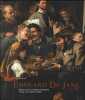
Edouard De Jans was schilder van portretten figuren genretaferelen en muurschilderingen. Zijn opleiding doorliep verschillende stadia: de Academies van Brugge en van Antwerpen waar hij studeerde bij Nicaise De Keyser Polydore Beaufaux en Charles Verlat en Parijs waar hij 7 maanden werkte onder Cabanel. Zijn reizen voerden hem naar Duitsland Oostenrijk en Itali . Met het schilderij 'De terugkeer van de verloren zoon' (1878) de tegenhanger van dit werk won hij de Prijs van Rome. Als gevolg daarvan verbleef hij twee en een half jaar in deze stad. Hij werd onderscheiden met de gouden medaille te Brussel (1884) en te Parijs (1882). In 1889 werd hij benoemd tot leraar aan de Antwerpse Academie. Twee jaar later stond hij mee aan de wieg van de 'XIII'. Hij stelde veel tentoon in het buitenland o.a. in Engeland en in Amerika waar hij zich een solide reputatie opbouwde. Het werk van De Jans rangschikt zich in de categorie van het conventioneel academische wat niet verhindert dat de afgebeelde personages getuigen van een eigen karakter.
Guillaume Geefs statuaire du roi, leermeester, ondernemer, liberaal politicus en uitvinder van de beeldhouwkunst in de jonge Belgische natie
, Tinck Frederik, 2026 Paperback, 224 pagina's, 28.5 x 23 cm, NL, ge llustreerd. *Nieuw . ISBN 9789090411743.
Guillaume Geefs bepaalt, samen met zijn broers en zijn leerlingen, het sculpturaal landschap van de jonge Belgische natie tot laat in de negentiende eeuw. Hij laat zijn leerstoel beeldhouwen aan de Antwerpse academie achter en bouwt een villa met atelier in Schaarbeek - een gedurfde onderneming. Het wordt een succes. De cenotaaf van de Merode, het standbeeld van Belliard en het monument Pro Patria liggen aan de basis van een innovatie die het neoclassicisme verlaat voor een romantische vormentaal. De realiteit en expressie krijgen voorrang op de Grieks-Romeinse ge dealiseerde sculptuur. Herkenbare helden uit de eigen nationale geschiedenis vervangen de mythologische figuratie. Guillaume bouwt een indrukwekkend netwerk uit tot in de hoogste politieke, literaire en artistieke kringen in Belgi en daarbuiten. De koninklijke familie, hun entourage, de adel en de kapitaalkrachtige bourgeoisie, maar ook de kerkelijke overheden zijn opdrachtgevers van beelden, bustes, kerkmeubilair en grafmonumenten die tot op vandaag het straatbeeld bepalen ? een onge venaarde prestatie.
Les Maisons de Paris. Types courants de l'architecture mineure parisienne de la fin de l'époque médiévale à nos jours, avec l'anatomie de leur construction.
Paris, Editions de l'encyclopédie des nuisances, 2003, 3 volumes in-4° (25 x 35 cm), 313 pages, 164 et 213 planches, coffret.
Un volume de texte et deux volumes de planches de plans, dont 48 dépliantes. Index, glossaire, chronologie et bibliographie à la fin du volume de texte. Bon exempalire malgré un accroc au cartonnage.
JAN DAVIDSZ. DE HEEM, The complete catalogue of de Heem's oeuvre / catalogue raisonne.
, Waanders Uitgevers, 2024 Hardcovers, 2 VOLUMES BOXED, 290 x 240 mm, 760 pages, throughout colour illustrations, ENG. edition, FINE!. ISBN 9789462625563.
Jan Davidsz. de Heem (1606-1684) was one of the best still-life painters of the seventeenth century. His work, which is enchanting to the eye, has always enjoyed international fame. Throughout his painting career of nearly sixty-years, de Heem continued to search for new and better ways to depict his subjects. He trained several pupils and had countless followers and imitators, in the Netherlands as well as abroad, and throughout the centuries. The fact that he was active in both the Northern and Southern Netherlands enhanced his success and fame. He worked successively in Leiden, (presumably) in Amsterdam, in Antwerp, in Utrecht and again in Antwerp. De Heem is perhaps best known for his exuberant floral still lifes, which, however, were mainly created after 1660. By then, already for decades, he had painted still lifes of many themes and motifs, and in a variety of sizes, modest as well as luxurious. In Antwerp he had developed the large, rich still lifes which earned him part of his renown. This comprehensive monograph written by Fred G. Meijer, contains the complete catalogue of de Heem's oeuvre. Volume 1 includes an introduction, a biography and description of the development of his work. Volume 2 contains the catalogue raisonn of all paintings now known by de Heem, as well as several appendices. Fred G. Meijer (1955) graduated from the Reinwardt Academie in 1980 and shortly after started at the RKD, Netherlands Institute for Art History, in The Hague, where he worked until mid-2017, lastly as Senior Curator in the department of Old Netherlandish Painting. Subsequently, he founded Fred G. Meijer Art History providing art-historical advice and texts. His main field of interest is still-life painting from the 17th and 18th centuries, but his specialist knowledge concerns many areas of painting and drawing from c.1600-1850, and related subjects. He published numerous articles, (contributions to) catalogues of exhibitions and collections, and wrote the catalogues of still-life collections in Rotterdam (1989) and Oxford (2003) and published A Dictionary of Dutch and Flemish Still-life Painters [.] with A. van der Willigen (2003). In 2016 he was awarded the degree of doctor for his research concerning Jan Davidsz. de Heem on which this book is based
Lessen in goed wonen, Woonvoorlichting in Belgie 1945-1958 / lessons in modern living
, , 2010 Ringmap , 200 pages, nieuwstaat. Text in NL / ENG. . ISBN 9789058677990.
Lessen in goed wonen werpt een licht op een bijzondere vorm van woonadvies, eigen aan de naoorlogse periode in Belgie. Het boek introduceert de lezer in een breed debat over zogenaamd 'goed' of 'beter' wonen. Een hele reeks geengageerde gesprekspartners waren bij dit debat betrokken: overheidsinstellingen, architecten, designers, beroepsorganisaties, socioculturele verenigingen, producenten en bouwmaatschappijen. Talrijke tentoonstellingen, boeken, artikels, lezingen en lessenreeksen waren bedoeld om de bezoeker, lezer of toeschouwer te informeren en ?op te voeden' inzake wooncultuur

