 Write to the booksellers
-
Type
Autograph (1)
Book (53395)
Magazine (288)
Manuscript (2)
Maps (1)
New book (1)
Old papers (1)
Photographs (1)
-
Latest
Last 24h (23)
Last 3 days (60)
Last month (895)
Last week (70)
-
Language
Dutch (2)
English (32)
Finnish (1)
French (53579)
German (16)
Greek (5)
Italian (19)
Japanese (2)
Latin (21)
Polish (1)
Portuguese (2)
Spanish (8)
Swedish (2)
-
Century
16th (64)
17th (200)
18th (1275)
19th (3655)
20th (22765)
21st (3899)
-
Countries
Belgium (6750)
Brazil (28)
Canada (6)
China (2)
Côte d'Ivoire (31)
Denmark (1017)
France (41072)
Germany (4)
Greece (3)
Netherlands (281)
Switzerland (4496)
-
Syndicate
ALAC (6)
CLAM (5)
CNE (6)
ILAB (21849)
NVVA (1010)
SLACES (918)
SLAM (19557)
SNCAO (41)
LES JUMEAUX LE COUPLE ET LA PERSONNE - TOME PREMIER L'INDIVIDUALISATION SOMATIQUE - BIBLIOTHEQUE SCIENTIFIQUE INTERNATIONALE
PUF. 1960. In-8. Broché. Bon état, Couv. convenable, Dos satisfaisant, Non coupé. 273 pages.. . . . Classification Dewey : 100-PHILOSOPHIE ET DISCIPLINES CONNEXES
Classification Dewey : 100-PHILOSOPHIE ET DISCIPLINES CONNEXES
L'Optimisme de Schopenhauer. Etude sur Schopenhauer.
Paris, Félix Alcan, 1908. In-12, rel. post. demi-chagrin chocolat, dos à 5 nerfs, pièce de titre noire, titre doré, monogramme doré, couv. conservée, 178 pp. Ex-libris armorié de la Princesse Ghika.
Petits frottements au dos, bon ex. par ailleurs. - Frais de port : -France 4,95 € -U.E. 9 € -Monde (z B : 15 €) (z C : 25 €)
Krishnamurti et la pensée occidentale --- suivi d'un appendice sur KRISHNAMURTI ET L'EXISTENTIALISME par René Fouéré
Être libre 1951 in16. 1951. Broché.
couverture marquée de rousseurs intérieur propre
Sage comme une image - figures de la philosophie dans les arts
DU FELIN PHILOSOPHIE. 1992. In-8. Broché. Bon état, Couv. convenable, Dos satisfaisant, Intérieur frais. 212 pages - nombreuses illustrations couleurs et noir/blanc, dans et hors texte.. . . . Classification Dewey : 100-PHILOSOPHIE ET DISCIPLINES CONNEXES
Classification Dewey : 100-PHILOSOPHIE ET DISCIPLINES CONNEXES
I.F. suite et fin
Gallimard | Paris 2000 | 14 x 20.50 cm | broché
Edition originale pour laquelle il n'a pas été tiré de grands papiers. Bel exemplaire. Envoi autographe signé de Régis Debray à sonami le philosophe Dominique Lecourt : "A Dominique avec l'amitié complice de Régis D." - Photographies et détails sur www.Edition-Originale.com -


Phone number : 01 56 08 08 85
LA CRITIQUE DES ARMES 1
1974 / 323 pages. Broché Editions Seuil Collection combats

Couverture d'usage, frotté avec quelques rousseurs. Intérieur trés frais.
La puissance et les rêves
Gallimard | Paris 1984 | 15 x 21.50 cm | broché
Edition originale pour laquelle il n'a pas été tiré de grands papiers. Dos ridé, taches sur la tranche inférieure. Annotations au crayon de papier sur la dernière garde et en pied d'une garde par Max Gallo. Envoi autographe signé de Régis Debray àl'historien Max Gallo : "A Max, toujours aux avant-postes de notre commune défense." - Photographies et détails sur www.Edition-Originale.com -
Phone number : 01 56 08 08 85
LE POUVOIR INTELLECTUEL EN FRANCE.
1979 / 280 pages. Broché. Editions Ramsay.
Tête et pied de dos très légèrement frottés (peu signifiant). Bel état.
LOUES SOIENT NOS SEIGNEURS. Une éducation politique.
1996 / 591 pages. Broché Editions Gallimard

Couverture d'usage légèrement jaunie, intérieur frais sans rousseur. Bon état.
A l'ombre des lumières - Débat entre un philosophe et un scientifique
Odile Jacob | Paris 2003 | 14.50 x 22 cm | broché
Edition originale pour laquelle il n'a pas été tiré de grands papiers. Bel exemplaire. Envoi autographe signé de Régis Debray à sonami le philosophe Dominique Lecourt : "A Dominique Lacourt avec le salut amical de Régis D." enrichi de la signature manuscrite de Jean Bricmont. - Photographies et détails sur www.Edition-Originale.com -
Phone number : 01 56 08 08 85
Introduction à Kierkegaard
Éditions de Fontenelle 1946
Bon état Ouvrage broché en bel état . philosophie - largeur/hauteur : 14x23 cm - poids : 340 g - nombre de pages : 251 p. - langue : Français
Traité de Philosophie. Tome III : Métaphysique
Emmanuel Vitte. 3ème édition, 1946. Broché.
Dos frotté et recollé.
Vocabulaire de la philosophie
Emmanuel Vitte 1942 in8. 1942. Broché.
Etat correct charnières fendues couverture défraîchie intérieur propre
Système de philosophie, contenant la logique, la métaphysique, la physique et la morale [Tomes 1 & 2, sur 3]
Anisson, Posuel & Rigaud 1690 2 volumes in-4 sur 3, plein veau, dos à nerfs, caissons ornés. 20 ff. n.ch.- 480 pp.- 44 ff.n.ch.- 7 ff.n.ch.- 648 pp.- 23 ff.n.ch. Titre noir et rouge, figure d’en-tête, bandeaux, lettrines et culs de lampes. Nombreuses figures dans le texte optique, médecine, métaphysique, etc. Carte repliée Vents. Table aux deux volumes. Sans le portrait de Régis en frontispice. Reliure usée : mors fendillés, coiffes et coins usées, restauration avec reprise de cuire en pied. Intérieur frais.
![Système de philosophie, contenant la logique, la métaphysique, la physique et la morale [Tomes 1 & 2, sur 3]. RÉGIS (Pierre Sylvain)](https://static.livre-rare-book.com/pictures/AVE/20809_1_thumb.jpg)
![Système de philosophie, contenant la logique, la métaphysique, la physique et la morale [Tomes 1 & 2, sur 3]. RÉGIS (Pierre Sylvain)](https://static.livre-rare-book.com/pictures/AVE/20809_2_thumb.jpg)
Edition originale. Les deux premiers volumes seuls (le troisième traitant de la Morale) du principal ouvrage de l’auteur (1632- 1707) qui professa, avec grand succès, à Toulouse et Paris le cartésianisme jusqu’à l'interdiction prononcée contre son l'enseignement. Bon état d’occasion Livres anciens
Œuvres de Mathurin Régnier
1869 À Paris, chez Alphonse Lemerre, 1869.
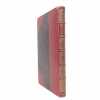
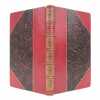
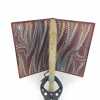
1 volume in-12 (16 cm x 8,5 cm), demi-maroquin rouge à coins (reliure de l’époque), dos à nerfs orné de motifs dorés, fleurs mosaïquées vertes, tête dorée. [4]-xxviii-306-[1]-1 bl. pages (complet). Frottements à la reliure, rousseurs éparses. État très correct. Nouvelle édition illustrée d’un portrait en frontispice gravé à l'eau-forte par Bracquemont. Tirage à 171 exemplaires, celui-ci 1/116 sur papier Whatman (n°71), ici ENRICHI d'un état supplémentaire du portrait avant la lettre. Mathurin Régnier, (1573-1613), est un poète satirique français. Les Œuvres complètes de Régnier, publiées par ses amis l'année même de sa mort, comprennent, pour l'essentiel, outre des élégies et des épîtres, les fameuses satires, au nombre total de dix-neuf. Satires psychologiques ou philosophiques, la sagesse de Régnier réside en quelques traits : maîtrise de soi, amour passionné de la vie et confiance totale en la nature, une philosophie proche de celle de Montaigne et exprimée sans aigreur, avec grâce et facilité. Mais c'est surtout dans la peinture de mœurs que Régnier excelle, lorsqu'il se fait le peintre de son temps, abondant en détails pittoresques et finement observés sur la vie quotidienne à Paris sous le règne de Henri IV. Bel exemplaire.
LInstructeur du Monde : Krishnamurti - Editions Les Tables dHarmonie Nice 1934
in-8° broché, 347 pages, état correct, couverture et dos défraîchis, annotations sur pages de garde, en frontispice un portrait de Krishnamurti avec le tampon du précédent propriétaire -
Les prophéties de Saint Malachie - Mort des Papes et Apocalypse
France Loisir. 1980. In-8. Relié. Bon état, Couv. convenable, Dos satisfaisant, Intérieur frais. 182 pages. Nombreuses annotations au stylo dans le texte.. Avec Jaquette. . . Classification Dewey : 210-Philosophie et théorie
Classification Dewey : 210-Philosophie et théorie
ABELARD. Drame inédit
Paris Calmann Lévy, Editeur. Ancienne Maison Michel Lévy Frères 1877 in 8 (23x14) 1 volume reliure demi basane maroquinée marron de l'époque, dos à nerfs, XXII et 488 pages [1], quelques rousseurs sur les premières et les dernières pages. Publié avec une préface et des notes par Paul de Rémusat, son fils. Charles de Rémusat, 1797-1875. Paul de Rémusat, 1831-1897. Bel exemplaire ( Photographies sur demande / We can send pictures of this book on simple request )
Très bon Reliure
ABELARD. Drame inédit
Paris Calmann Lévy, Editeur. Ancienne Maison Michel Lévy Frères 1877 in 8 (21,5x14,5) 1 volume reliure demi basane marron de l'époque, dos à nerfs, XXII et 488 pages [1], quelques rousseurs sur les premières et les dernières pages. Publié avec une préface et des notes par Paul de Rémusat, son fils. Charles de Rémusat, 1797-1875. Paul de Rémusat, 1831-1897. Bon exemplaire ( Photographies sur demande / We can send pictures of this book on simple request )
Très bon Reliure
Abélard (2 volumes)
Paris, Librairie philosophique de Ladrange Relié 1845 Deux volumes in-8 (14 x 21,2 cm), reliure demi-peau, dos lisses ornés de filets dorés, xxij-509 et 563 pages ; épidermures sur le cuir, coupes frottées, quelques rousseurs à l'intérieur,par ailleurs assez bon état général. Livraison a domicile (La Poste) ou en Mondial Relay sur simple demande.
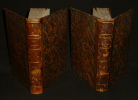
Bacon, sa vie, son temps, sa philosophie et de son influence jusqu'à nos jours.
P., Didier, 1858, in-12, xv-464 pp, seconde édition, reliure demi-chagrin noir, dos à 4 nerfs soulignés à froid, titres dorés (rel. de l'époque), bon état
Par le comte de Rémusat (1797-1875), la première biographie en langue française du moine philosophe et alchimiste anglais (1214-1294), figure tutélaire de la méthode scientifique. En philosophie, Charles de Rémusat fut un spiritualiste de l'école de Victor Cousin. — Livre I. Sa vie. Ses expéditions en Espagne - Expédition d'Essex en Irlande - Avènement de Jacques Ier - Sa conduite à la chambre des communes - Première édition du Traité de l'avancement des sciences - conflit avec E. Coke - Composition des Cogitata et visa - Publication du De sapientia veterum - Bacon Procureur général - Bacon ministre - Bacon après sa chute - Ecrits divers - Sa maladie et sa mort - Livre II. Analyse des ouvrages et de la philosophie de Bacon - Examen de la philosophie de Bacon - Histoire de la philosophie et de l'influence de Bacon - etc.
BACON, SA VIE, SON TEMPS, SA PHILOSOPHIE, et son influence jusqu'a nos jours
Paris Didier et Cie, Libraires-Editeurs 1857 in 8 (23x14,5) 1 volume reliure demi basane maroquinée verte de l'époque, dos à nerfs, XV et 464 pages, quelques rousseurs. Avec la signature ex-libris du Marquis de Forbin d'Oppède, (Saint-Marcel, Bouches-du-Rhône), sur le faux-titre. Charles François Marie, comte de Rémusat, 1797-1875. Bel exemplaire ( Photographies sur demande / We can send pictures of this book on simple request )
Très bon Couverture rigide
De la Philosophie allemande. Rapport à l'Académie des Sciences morales et politiques. Précédé d'une Introduction sur les doctrines de Kant, de Fitche, de Schelling et de Hegel.
P., Librairie philosophique de Ladrange, 1845, in-8°, clviii-209 pp, reliure demi-basane havane, dos lisse avec titres et quadruples filets dorés (rel. de l'époque), dos lég. frotté, coins émoussés, bon état. — Rare, mais il manque un cahier de 4 pp, oublié par le relieur, entre les pages cl et clv de l'introduction
Par Charles de Rémusat (1797-1875). Il collabora aux Tablettes, au Courrier français, à la Revue des Deux-Mondes, au Globe, et signa la protestation contre la loi sur la presse ; il écrivit des traductions de Gœthe et de Cicéron et un roman dramatique, Abélard. En philosophie, Charles de Rémusat fut un spiritualiste de l’école de Victor Cousin ; en politique, ce fut un doctrinaire, ami de Royer-Collard, Thiers et Guizot. Sous Louis-Philippe, il fut député en 1830 et ministre de l'Intérieur en 1840 ; il appartint ensuite aux Assemblées Constituante et Législative. Proscrit au Coup d’État en 1851, il rentra en août 1852 ; il se rallia à l'Empire libéral, fut ministre des Affaires étrangères sous le gouvernement de Thiers en 1872 et refusa les ambassades de Londres et de Vienne. Son échec à la députation à Paris en 1873 entraîna la chute de Thiers ; il fut élu député dans la Haute-Garonne.
LA SAINT-BARTHÉLEMY. Drame inédit
Paris Calmann Lévy, Editeur. Ancienne Maison Michel Lévy Frères 1878 in 8 (22,5x14,5) 1 volume reliure demi maroquin marron de l'époque, dos à nerfs, IX et 391 page. Reliure signée de Belz-Niedrer. Publié par Paul de Rémusat. Charles de Rémusat, 1797-1875. Paul de Rémusat, 1831-1897. Bel exemplaire ( Photographies sur demande / We can send pictures of this book on simple request )
Très bon Reliure
Lord Herbert de Cherbury, sa vie et ses oeuvres ou Les Origines de la philosophie du sens commun et de la théologie naturelle en Angleterre.
Didier et Cie, Paris, 1874
... Un volume petit in-8° (12,2 x 18,5 cm), broché, reliure souple, plats de couleur grise avec lettrage noir, dos imprimé, introduction (VIII), 310 ppnon coupées.L’auteur, écrivain anglais fut une homme de forte personnalité, guerrier, musicien, philosophe, ayant joué un rôle au plus haut niveau dans les affaires entre l’Angleterre, l‘Ecosse et l’Irlande. On dit que son ouvrage le plus connu: “De la Vérité en tant qu’elle est distincte de la Révélation, du vraisemblable, du possible et du faux” serait la première étude métaphysique écrite par un Anglais. Il serait également considéré comme le père du Déisme anglais.Hormis les bords quelque peu frottés des deux plats, et quelques taches de rousseurs ici et là, notre exemplaire est en bon état.

