 Write to the booksellers
1832 books for « wilson v e r »Edit
-
Type
Any type (1)
Autographs (1)
Books (1830)
Magazines (1)
Music sheets (16)
New books (2)
Postcards (7)
Records (1)
-
Latest
Last month (21)
Last week (1)
-
Language
Dutch (1)
English (21)
French (1827)
German (1)
Italian (2)
Russian (6)
Spanish (1)
-
Century
14th (1)
16th (1)
18th (14)
19th (42)
20th (906)
21st (165)
-
Countries
Belgium (102)
Canada (20)
China (1)
Côte d'Ivoire (4)
Denmark (20)
France (1533)
Germany (2)
Greece (1)
Netherlands (7)
Switzerland (157)
United Kingdom (6)
United States of America (6)
-
Syndicate
ALAC (16)
CLAM (7)
CLAQ (11)
ILAB (870)
NVVA (14)
SLACES (14)
SLAM (790)
SNCAO (1)
Topics
- Anticipation (11)
- Archaeology (16)
- Architecture (20)
- Army (9)
- Australia (6)
- Belgium (6)
- Biography (8)
- Buddhism (6)
- Chemistry (6)
- Children’s books (28)
- China (7)
- Christianity (8)
- Cinema (5)
- Civilisation (6)
- Collections (7)
- Comic strip (78)
- Cooking (58)
- Culinary art (53)
- Detective novels (13)
- Dickens charles (8)
- Drawings (25)
- Drink (7)
- Economics (6)
- Egypt (9)
- England (15)
- English (60)
- Entomology (12)
- Esotericism (9)
- Ethic (5)
- Ethnology (9)
- Europe (10)
- Fantastic (11)
- Fantasy (9)
- Fine arts (20)
- First edition (26)
- Flora (7)
- Gastronomy (10)
- Geography (8)
- Germanic languages (6)
- Germany (5)
- Grey-wilson christopher (5)
- Hackney (16)
- History (56)
- Humour anecdotes (6)
- Industrial arts & crafts - fine arts (5)
- Jazz (11)
- Joyce james (11)
- Linguistics (5)
- Literature (65)
- Medicine (8)
- Military arts (6)
- Mitchell margaret (12)
- Museums (10)
- Navigation (5)
- Navy (9)
- New caledonia (5)
- Pacific (8)
- Painters (4)
- Painting (6)
- Paris (6)
- Philippines (5)
- Philosophy (26)
- Photography (21)
- Physics (9)
- Poetry (7)
- Policy (6)
- Postcards (7)
- Posters (4)
- Psychology (12)
- Quebec (12)
- Religions (19)
- Review (9)
- Reviews (6)
- Rock (10)
- Rock (10)
- Science fiction (22)
- Sciences (12)
- Scores (21)
- Shipwreck (6)
- Sociology (4)
- Songs (17)
- Spain (6)
- Spying (7)
- Tahiti (5)
- Tea (11)
- Testimonies / stories (7)
- Theatre (9)
- Theology (12)
- Translation (12)
- Travel (7)
- United kingdom (15)
- United states (14)
- Various (18)
- Vocabulary (6)
- War (29)
- Williams tennessee (12)
- Wilson edmund (16)
- Wilson nelly (4)
- Youth (19)
- Zen (6)
La revanche
Filipacchi Denoël 1978 IN4. 1978. Album. La revanche est un recueil illustré par Gahan Wilson mêlant dessins humoristiques et textes inédits (poèmes prose récits). L'ouvrage explore des thèmes d'angoisse existentielle et de monstruosité avec un humour noir caractéristique dans un style grotesque rappelant Charles Addams
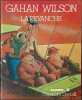
Bon état
La L.B.J. Brigade
Julliard 1967 209 pages in8. 1967. Reliure Editeur avec jaquette. 209 pages. Le narrateur qui utilise le pseudonyme de William Wilson raconte comment sa vie dans une école de campagne anglaise est bouleversée par l'arrivée d'un nouveau venu. Il exprime une profonde honte associée à son véritable nom qu'il refuse de révéler
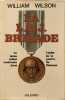
Etat correct jaquette abimée légères rousseurs ensemble bon
Le Suaire de Turin
Albin Michel 1979 313 pages in8. 1979. Broché couverture rempliée. 313 pages. Ian Wilson spécialiste reconnu du Saint Suaire de Turin présente une contre-enquête approfondie remettant en cause la datation au carbone 14 de 1988. Il examine les analyses scientifiques des 150 dernières années et retrace l'histoire supposée du linceul sur 2000 ans offrant une étude complète et documentée de cette relique controversée
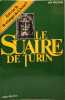
Bon état
SATURNALES et autres nouvelles
Stock / Bibliothèque cosmopolite 1984 1984. Poche. Recueil de dix nouvelles caractérisées par un humour noir et une verve cruelle où Angus Wilson déploie sa maîtrise technique pour aborder les tabous sociaux et sexuels de la bourgeoisie et la violence des "teddy boys" des années 1950
Bon état
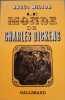
Le Monde de Charles Dickens
Gallimard 1972 277 pages in8. 1972. Broché couverture rempliée. 277 pages. Cet essai biographique d'Angus Wilson explore comment Charles Dickens a reflété l'ère victorienne à travers ses contradictions et ambiguïtés. L'auteur utilise les lettres et papiers privés de Dickens pour analyser les transpositions de son expérience personnelle qui ont donné naissance à ses personnages emblématiques
Reports of Brigadier General James H. Wilson, U.S. V. commanding the Department of Matanzas and Santa Clara for the calendar year of 1899.
Matanzas, Cuba, 1899. In-8, binding of the time half blue percaline, tittle on back, IX-258pp., 2 folding tables. Rare Original Edition.
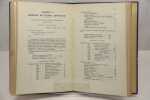
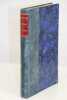
Special report on the industrial, economic and social conditions existing in the Department at the date of American occupation, and at the present time, Sept. 7, 1899, Annual report, dated Aug. 1, 1899, and reports of various officers. James Harrison Wilson (September 2, 1837 – February 23, 1925) was a United States Army topographic engineer and a Union Army Major General in the American Civil War. Discolored back, light foxing, good condition. - Frais de port : -France 6,8 € -U.E. 9 € -Monde (z B : 14 €) (z C : 24 €)


La Revanche
Filipacchi Denoël 1978 non paginé pages grand in 8. 1978. Cartonnage editeur. non paginé pages.
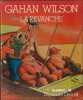
Très bon état
Général Dwight D. Eisenhower Général Sir Maitland Wilson Maréchal Vicomte Montgomery
Reference : 12766
(1947)
Les opérations en Europe du Corps expéditionnaire allié
ÉDITIONS BERGER-LEVRAULT 1947 363 pages in8. 1947. broché. 363 pages. Ce livre rassemble les rapports officiels adressés par le général Dwight D. Eisenhower commandant suprême des forces expéditionnaires alliées aux chefs d'état-major combinés couvrant la campagne victorieuse en Europe occidentale du 6 juin 1944 au 8 mai 1945. Il inclut également les rapports du général Wilson sur les opérations dans le sud de la France et du maréchal Montgomery. L'ouvrage est publié en français par les éditions Berger-Levrault en 1947 avec des traductions de Robert de Lignerolles et J.-P. Gosset
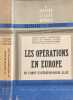
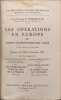
Bon état couverture légèrement usagée et déchirée intérieur propre
L'étude de marché industriel
ÉDITIONS EYROLLES - LES ÉDITIONS D'ORGANISATION 1973 230 pages in8. 1973. broché. 230 pages. Ouvrage de référence sur la méthodologie de l'étude de marché industriel publié en 1973 par les éditions Eyrolles et Organisation. Adapté en français par G. Schaufelberger et A. Singer il aborde la direction l'organisation et les techniques spécifiques aux études de marché en contexte industriel


couverture légèrement usagée intérieur propre première de couverture partiellement déchirée ensemble solide et propre
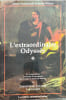
L'extraordinaire Odyssée
Les éditions Quisqueya-Québec 1991 342 pages in8. 1991. broché. 342 pages. Il y a cinq siècles l'aventure du navigateur qui changea le destin du Monde. CHRISTOPHE COLOMB 1492 1992
Très bon état
A History of British Quadrupeds including the cetacea. Second edition revised an partly re-written bin the author, assisted by Robert F. Tomes and Edward Richard Alston.
London, John van Voorst 1874. Gross-8°. XVIII, 474 S., 2 n.n. S.Anzeigen. Mit 160 Xylographien im Text. Dunkelgrüner Originalleinwandband.
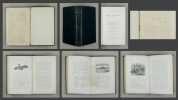
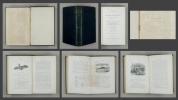
Überarbeitete Fassung der Ausgabe von 1837. - Wellcome 2, 138 (dort mit 1836 und only part III) des erfolgreichen populären zoologischen Werkes. - Auf dem fliegenden Vorsatz mit dem handschriftlichen Besitzvermerk "Edward A. Wilson. Oct. 1905", auf dem fliegenden Vorsatz, darunter von anderer Hand in Bleistift "Scott's last expedition. This book was taken to the Antarctic by E.A.Wilson 1910 - 1913". Obwohl die Innenfälze des Vorder- und Hinterdeckels angebrochen sind, das obere Kapital leicht angerissen und der Einbandbezug leicht fleckig, scheint mir persönlich der Zustand des Exemplares zu gut erhalten für einen Artefakten der berühmten Geschichte von Scotts 2. Antarktik Expedition, bei der Edward A. Wilson, zusammenn mit Scott und Henry „Birdie" Bowers am 29. März 1912 verstarb. Wilson (1872-1912), Mediziner und Zoologe, war bereits an der Discovery-Expedition von 1901-1904 als wissenschaftlicher Leiter beteiligt. Zurück von der mehrjährigen Reise erholte er sich im Sommer 1905 in Irland von den Strapazen der unzähligen öffentlichen Auftritten, Vorträgen und Einladungen. Dabei kam er in Kontakt mit dem Naturalisten Barrett-Hamiltonn der ihn als Illustrator für eine neue Monografie der " A History of British Mammals" engagierte. Wilson lebte im Herbst 1905 in Bushey, einem Künstlerort in der Nähe von London. Obwohl er keine akademische Kunstausbildung besass, wurden seine zoologischen Illustrationen zu Standards der Naturgeschichte Grossbritanniens. Über den Verbleib seiner Bibliothek scheint nichts bekannt zu sein. - Revised version of the 1837 edition - Wellcome 2, 138 (there with 1836 and only part III) of the successful popular zoological work. - With the handwritten ownership note 'Edward A. Wilson. Oct. 1905', on the flyleaf, underneath in another hand in pencil 'Scott's last expedition. This book was taken to the Antarctic by E.A.Wilson 1910 - 1913'. Although the inner folds of the front and back cover are cracked, the upper capital slightly torn and the cover slightly stained, the condition of the copy seems to me personally too well preserved for an artefact of the famous history of Scott's 2nd Antarctic expedition, during which Edward A. Wilson, together with Scott and Henry 'Birdie' Bowers, died on 29 March 1912. Wilson (1872-1912), a physician and zoologist, had already been involved in the Discovery Expedition of 1901-1904 as scientific director. After travelling for several years, he returned to Ireland in the summer of 1905 to recover from the strain of countless public appearances, lectures and invitations. He came into contact with the naturalist Barrett-Hamiltonn, who engaged him as an illustrator for a new monograph of 'A History of British Mammals'. In the autumn of 1905, Wilson was living in Bushey, an artists' village near London. Although he had no academic art training, his zoological illustrations became standards in the natural history of Great Britain. Nothing seems to be known about the whereabouts of his library.
"WILSON, C.T.R. - THE MOST ORIGINAL AND WONDERFUL INSTRUMENT IN SCIENTIFIC HISTORY - WILSON'S CLOUD CHAMBER.
Reference : 45816
(1913)
Über die Expansionsapparat zur Sichtsbarmachung der Bahnen ionisierender Teilchen in Gasen, und über einige mittels dieses Apparats gewonnene Ergebnisse. Mit 23 Figuren im Text und auf 5 Tafeln. (Eingegangen 6. Oktober 1912). (On an Expansion Apparatu...
Leipzig, S. Hirzel, 1913. 8vo. Orig. printed wrappers, no backstrip. Wrappers loose. In ""Jahrbuch der Radioaktivität und Elektronik"", 10. bd., Heft 1. Pp. 1-138 (entire issue offered). Wilson's paper: pp. 34-54, textillustrations, showing apparatus and 5 photographic plates, showing ionizing by Alpha-, Beta- and Röntgen- radiation).
Together with the English version - published 1912 in the Proceedings of the Royal Society - this is Wilson's main paper relating ""that the track of an ionizing particle might be made visible and photographed by condensing water of the ions which is liberated"". The first trails were obtained in 1911 where he submitted a short note of this to the Proceedings. In the offered paper he published the first tracks made by the ionizing particles of alpha, beta and Röntgen-rays. This, Wilson Cloud-Chamber, became an extremely valuable instrument of fundamental research, the discovery of the positron in 1932 and the kaon in 1963 were made by using cloud chambers as detectors.""But the whole course of the particle appears infinitely more clearly by the method invented by C.T.R. Wilson in 1911 and named after him. The radiation is allowed to enter an expansion-chamber, containing a gas saturated with water vapour. A sudden expansion of the chamber cools the gas, and cloud-drops are then formed instantly around the ions produced along the tracks of the particles. By suitable illumination these tracks can be made to stand out clearly as if they had been described by luminous projectiles. The ""Altmeister"" of modern nuclear physics, Lord Rutherford, once called the Wilson chamber ""the most original and wonderful instrument in scientific history"".""Thomson Rees Wilson (1869-1959), a Scottish physicist, is credited with inventing the cloud chamber. Inspired by sightings of the Brocken spectre while working on the summit of Ben Nevis in 1894, he began to develop expansion chambers for studying cloud formation and optical phenomena in moist air. Very rapidly he discovered that ions could act as centers for water droplet formation in such chambers. He pursued the application of this discovery and perfected the first cloud chamber in 1911. In Wilson's original chamber the air inside the sealed device was saturated with water vapor, then a diaphragm is used to expand the air inside the chamber (adiabatic expansion). This cools the air and water vapor starts to condense. When an ionizing particle passes through the chamber, water vapor condenses on the resulting ions and the trail of the particle is visible in the vapor cloud. Wilson, along with Arthur Compton, received the Nobel Prize in Physics in 1927 for his work on the cloud chamber. (Wikipedia).
Powys and the kundalini serpent
The Contemporary Review 1978 19 pages in8. 1978. agrafé. 19 pages.
Bon état
Time Tunnel: The Complete Series
Hermes Press 2009 96 pages 18 4x0 6x25 2cm. 2009. broché. 96 pages.
Très bon état
The Ultimate Motorcycle Book
DK 1993 192 pages IN4. 1993. relie jaquette. 192 pages.
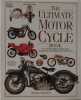
Très bon état
Persecución implacable
Ediciones Junior S.A 1991 48 pages IN4. 1991. Reliure editeur cartonnée. 48 pages. Premier tome de la collection 'La Juventud de Blueberry' scénarisé par Corteggiani qui suit les aventures du lieutenant Blueberry un héros charismatique du Far West créé par Charlier et Giraud. L'album fait partie d'une série qui explore trois lignes narratives couvrant toute la vie du personnage

Bon état
Jesus: The Evidence
Weidenfeld & Nicolson 1984 208 pages 18 4x2 4x23 6cm. 1984. cartonné avec jaquette. 208 pages.
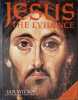
jaquette légèrement frottée aux extrémités
The Vikings and Their Origins: Scandinavia in the First Millennium
Thames & Hudson Ltd 1989 144 pages 14 605x20 955x0 8382cm. 1989. Broché. 144 pages.
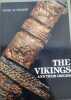
Jesus: The Evidence
MacMillan 1985 186 pages 13x1 4x19 4cm. 1985. Broché. 186 pages.

couverture usagée intérieur en très bon état
Manet, Monet. La gare Saint-Lazare.
P., RMN, 1998. In-4 carré broché, 209 pp., 89 oeuvres commentées et reprod. en noir et coul., nbr. ill. photogr. en noir dans le texte, bibliographie.
Manet : "Le Chemin de fer" et son histoire. - Caillebotte et Monet dans le Paris d'Haussmann. - Manet et la rue de Saint-Petersbourg. - Liste des oeuvres exposées. - Bibliographie. Bonne condition. - Frais de port :
Manipulations de Chimie Physique.
P., Gaultheir-Villars, 1964. In-8, br., XII-323pp.
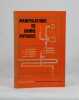
Dos légèrement insolé, bonne condition. - Frais de port : -France 6,8 € -U.E. 9 € -Monde (z B : 14 €) (z C : 24 €)
Cities of the delta, Part II. MENDES.
Malibu, Undena Publications, 1982. In-4 paperback, 43pp, 3 fig. in-texte, 35 plates, fig. and B/W phot. illustrations. (Preliminary Report on the 1979 and 1980 seasons; American research center in Egypt Reports, volume 5)
Very good condition. - Frais de port : -France 7,15 € -U.E. 9 € -Monde (z B : 14 €) (z C : 24 €)
Vie et Oeuvre de FRANCISCO GOYA.
Paris, Vilo, 1970. Fort in-4 carré, reliure d'édition pleine-toile beige, jaquette illustr. en couleurs, étui cartonné ; 400 pp., plus de 2000 reprod. en noir et en couleurs, dans le texte ou à pleine-page, bibliogr., index.
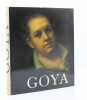
L'oeuvre complet illustré : Peintures, Dessins, Gravures. Dos de la jaquette jaunie, bel exemplaire. - Frais de port : -France 13,5 € -U.E. 13 € -Monde (z B : 24 €) (z C : 52 €)

