 Write to the booksellers
224 books for « willard c »Edit
-
Type
Book (227)
Magazine (1)
Music sheets (2)
-
Latest
Last month (10)
Last week (1)
-
Language
English (2)
French (226)
Russian (2)
-
Century
19th (1)
20th (137)
21st (20)
-
Countries
Belgium (9)
Canada (1)
Denmark (8)
France (202)
Switzerland (8)
United States of America (2)
-
Syndicate
ALAC (1)
CLAM (1)
ILAB (122)
NVVA (1)
SLACES (1)
SLAM (109)
Topics
- Amazon river (1)
- Amazonia (3)
- Architecture (1)
- Army (2)
- Bibliophilism (1)
- Biography (1)
- Bourderon roger (3)
- Bush willard c (3)
- Chemistry (1)
- Children’s books (2)
- Christianity (1)
- Communism (4)
- Communism (1)
- Detective novels (1)
- Detention (1)
- Dufy raoul (4)
- Economics (2)
- Education (1)
- Elleinstein jean (1)
- English (8)
- Ethic (1)
- Family (1)
- Fine arts (1)
- First edition (1)
- Flora (2)
- Freemasonry (1)
- French literature (1)
- Genealogy (1)
- Geography (4)
- Geometry (1)
- Gold (1)
- Helvética (1)
- Historical general points (6)
- History (13)
- Humanitarian sciences (1)
- Industrial arts & crafts - fine arts (1)
- Judaism (judaica) (1)
- Lefevre jean (1)
- Literature (30)
- Logic (1)
- Marriage (1)
- Masterpiece (1)
- Mathematics (5)
- Newspaper (2)
- Newspapers press (2)
- North america (2)
- Pacific (1)
- Painting (1)
- Paris (3)
- Philosophy (8)
- Photography (1)
- Poetry (3)
- Policy (3)
- Political economy (1)
- Proletariat (1)
- Psychoanalysis (1)
- Psychology (4)
- Reading vocabulary (2)
- Religions (1)
- Religions & spirituality (1)
- Review (3)
- Reviews (1)
- Saint lambert (1)
- Science fiction (1)
- Sciences (1)
- Scores (3)
- Socialism (4)
- Sociology (1)
- Songs (2)
- South-east asia (1)
- Sports (1)
- Spying (1)
- Switzerland (1)
- Telephone - telegraph (1)
- Theatre (2)
- Theology (1)
- Trade unionism (2)
- Travel (1)
- Trial (1)
- Various (5)
- War (12)
- War 39/45 (1)
- Willard claude (13)
- Willard germaine (1)
- Youth (2)
Babeuf Franºois-Nol Willard Claude Willard Germaine
Reference : 015178VPSH
ISBN : B0018JD4N2
Babeuf. Textes choisis : . Prface commentaires et notes explicatives par G. Germaine et C. Claude Willard
Gnrique Broch D'occasion bon tat 01/01/1951 150 pages
De la Guerre à la Libération. La France de 1939 à 1945.
Editions Sociales, 1972, in-12, 128 pp, broché, bon état
Les contradictions de la drôle de guerre (Germaine Willard) ~ La collaboration et les origines de la Résistance (Victor Joannès) ~ La classe ouvrière et la nation dans la Résistance (François Hincker) ~ La Libération. Espoirs et déceptions (Jean Elleinstein). Désormais les frais d'envoi sont de 6 € seulement pour les livres jusqu'à 1 kg (colissimo suivi), pour la France métropolitaine.
Germaine et Claude Willard,... Formation de la nation française, du Xe siècle au début du XIXe siècle [Unknown Binding] Willard, Claude and Willard, Germaine
exemplaire broché
Merci de nous contacter à l'avance si vous souhaitez consulter une référence dans notre boutique à Authon-du-Perche.
Pahang. Quatre années d'aventures dans la jungle de Malaisie.
Payot Paris 1941 Softcover 1 vol In-8 Broché 272 p Ex. en bon état 1 carte
petit manque bas dos,ex dono Remise de 20% pour toutes commandes supérieures à 200 €
[REVUE] Jean Burles, Serge Wolikow, Danielle Tartakowsky, Jacques Choukroun, Yves-Claude Lequin, Germaine Willard, Jean-Paul Scot, Pierre Barral, Hubert Desvages, Jacques Girault, Lilly Marcou, Antoine Olivesi, Jean Sagnes, François Platone, Jean Ranger, Pierre Gaborit, Roger Martelli, Claude Willard, Robert Romano, Jacques Annequin, Jean-Louis Robert, Marie-Luce Hazebrouq, Jean Gacon, Jean Charles.
Reference : 11275
Etudier le parti communiste français.
Cahiers d'histoire de l'institut Maurice Thorez, n° 29-30, 1979. In-8, broché.
Petit accident au premier plat. [11275]


Princesse Friponne et la cadillac maudite (Princess Naughty and the Voodoo Cadillac)
Editions du ROCHER (2003) - Broché de 328 pages - Couverture en couleurs - Traduit de l'anglais (Etats-Unis) par Nathalie MEGE - Très bon état
Les inondations de Paris en 1910. Le Quinzième arrondissement.
P., Société historique et archéologique du XVe arrondissement, 2004, in-4°, 48 pp, 76 photographies légendées (dont 75 cartes postales anciennes), un plan, broché, couv. illustrée, bon état
Désormais les frais d'envoi sont de 6 € seulement pour les livres jusqu'à 1 kg (colissimo suivi), pour la France métropolitaine.
Les Guesdistes. Le mouvement socialiste en France (1893-1905). (Thèse).
Editions Sociales, 1965, fort gr. in-8°, 770 pp, cartes et graphiques, notices biographiques des militants guesdistes, biblio, index, broché (trace de pli au 1er plat), bon état. Rare
Désormais les frais d'envoi sont de 6 € seulement pour les livres jusqu'à 1 kg (colissimo suivi), pour la France métropolitaine.
Formation de la nation française (du Xe siècle au début du XIXe siècle).
Editions Sociales, 1955, in-8°, 315 pp, broché, bon état, envoi a.s.
Désormais les frais d'envoi sont de 6 € seulement pour les livres jusqu'à 1 kg (colissimo suivi), pour la France métropolitaine.
Le Socialisme, de la Renaissance à nos jours.
PUF, 1971, in-12, 163 pp, biblio, index, broché, bon état, envoi a.s. (Coll. Sup - L'historien)
Désormais les frais d'envoi sont de 6 € seulement pour les livres jusqu'à 1 kg (colissimo suivi), pour la France métropolitaine.
La France ouvrière. Histoire de la classe ouvrière et du mouvement ouvrier français. Tome 1 : des origines à 1920.
Editions Sociales, 1993, gr. in-8°, 493 pp, chronologie, broché, bon état
Tome 1 seul (sur 3) : Des origines à 1871 (Maurice Moissonier). 1871-1914 (Rolande Trempé). 1914-1920 (Jean-Louis Robert). L'ouvrier à travers les arts et la littérature (Madeleine Rebérioux). Désormais les frais d'envoi sont de 6 € seulement pour les livres jusqu'à 1 kg (colissimo suivi), pour la France métropolitaine.
Peculiarities of American cities.
Philadelphie : Hubbard Brothers, 1886. In-8 de [3 ff.], xv pp., pp. 26 à 570, frontispice et 32 planches hors texte, percaline illustrée de l'éditeur.
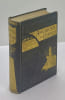
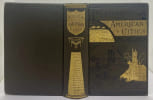

Bel exemplaire ce cet ouvrage dans lequel le Capitaine Willard Glazier (1841-1905), explorateur et soldat américain qui participa à la guerre de Cécession détaille les particularités des grandes villes du continent américain telles que : New York, Pittsburg, Washington, Montréal, Portland, Boston, Quebec, Chicago, Buffalo, San-Francisco... Exemplaire bien complet du portrait-frontispice de l'auteur et des 32 gravures hors texte décrites dans la table des illustrations.
Le Génie et la folie au dix-huitième siècle.
Paris, Presses universitaires de France, 1963 in-8, 170 pp., [2] ff. n. ch., broché.
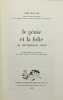
Édition originale, rédigée directement en français : originaire de New York, Nedd Willard (1926-2018) passa une grande partie de sa vie en France et à Genève.I. La folie et le génie vus par Diderot à travers ses oeuvres. - II. L'homme en tant que fou dans l'Encyclopédie. - III. Le génie et la folie vus par les autres auteurs (Mercier, La Mettrie, Sade). - - VENTE PAR CORRESPONDANCE UNIQUEMENT - LIEN DE PAIEMENT, NOUS CONSULTER.
1940 : de la défaite à la Résistance [Board book] BOURDERON/WILLARD
Inscription sur la première page.
Merci de nous contacter à l'avance si vous souhaitez consulter une référence dans notre boutique à Authon-du-Perche.
FORMATION DE LA NATION FRANCAISE. DU X SIECLE AU DEBUT DU XIX SIECLE. [Paperback] WILLARD GERMAINE ET CLAUDE.
broche
Merci de nous contacter à l'avance si vous souhaitez consulter une référence dans notre boutique à Authon-du-Perche.
Chroniques de Los Angeles [Paperback] Lévy-Willard, Annette
Grasset PHOTOS SUR DEMANDE
Merci de nous contacter à l'avance si vous souhaitez consulter une référence dans notre boutique à Authon-du-Perche.
Pièges dans la jungle Price, Willard
Gallimard PHOTOS SUR DEMANDE
Merci de nous contacter à l'avance si vous souhaitez consulter une référence dans notre boutique à Authon-du-Perche.
Moya zhizn' sredi indeytsev. In Russian /My life among Indians
Short description: In Russian. Schultz, James Willard. My life among Indians. Moscow: Thought, 1965. You are welcome to reach out to us for a detailed description of the copies currently available. Delivery of this book may take longer than usual including extended processing and pre-shipping time, no expedited shipping is available. Please advise us if you have a set date or a deadline to receive your order.SKU6369124
Elleinstein (Jean), ed. - Claude Willard - Jacques Chambaz - Jean Bruhat - Georges Cogniot et Claud
Reference : A1006
ISBN : B0000DOL81
Le Front populaire. La France de 1934 à 1939. [Paperback] Elleinstein (Jean), ed. - Claude Willard - Jacques Chambaz - Jean Bruhat - Georges Cogniot et Claude Gindin
pliures sur couverture, notamment au coin supérieur droit recto, proche rainure, ligne centre inférieur verso.
Merci de nous contacter à l'avance si vous souhaitez consulter une référence dans notre boutique à Authon-du-Perche.
Elleinstein (Jean), ed. - Claude Willard - Jacques Chambaz - Jean Bruhat - Georges Cogniot et Claud
Reference : P7098C
ISBN : B0000DOL81
Le Front populaire. La France de 1934 à 1939. [Paperback] Elleinstein (Jean), ed. - Claude Willard - Jacques Chambaz - Jean Bruhat - Georges Cogniot et Claude Gindin
POCHE EN BON ETAT.COINS CORNES. INTERIEUR PROPRE
Merci de nous contacter à l'avance si vous souhaitez consulter une référence dans notre boutique à Authon-du-Perche.
Jules Guesde l'apôtre de la loi
Les Editions Ouvrières | Paris 1991 | 13 x 22.50 cm | broché
Edition originale. Agréable exemplaire, iconographie. Envoi autographe signé de Claude Willard à Jacques Zwirn. - Photographies et détails sur www.Edition-Originale.com -
La Drôle de guerre et la trahison de Vichy. (septembre 1939-juin 1941)
Paris, Editions Sociales, 1960 in-8, 176 pp., broché. Petit manque de papier au dos. Cachet D. Diamant.
Germaine Willard (1921-2003) était enseignante, historienne et militante communiste. Résistante, elle passa dans la clandestinité suite à l'arrestation et la déportation de ses parents en mai 1944. En août de la même année, elle devint agent de liaison des FFI et participa à la libération de Paris. - - VENTE PAR CORRESPONDANCE UNIQUEMENT - LIEN DE PAIEMENT, NOUS CONSULTER.
Chroniques de Los Angeles
0 Paris, Grasset, 2003 14 x 23 cm, 468 pp broché
état: neuf service de presse.
Reading the Natural World in the Middle Ages and the Renaissance. Perceptions of the Environment and Ecology
, Brepols, 2020 Hardback, xxi + 232 pages, Size:156 x 234 mm, Illustrations:7 b/w, 9 col., Language: English. ISBN 9782503590448.
Summary The environment - together with ecology and other aspects of the way people see their world - has become a major focus of pre-modern studies. The thirteen contributions in this volume discuss topics across the millennium in Europe from the late 600s to the early 1600s. They introduce applications to older texts, art works, and ideas made possible by relatively new fields of discourse such as animal studies, ecotheology, and Material Engagement Theory. From studies of medieval land charters and epics to the canticles sung in churches, the encyclopedic natural histories compiled for the learned, the hunting parks described and illustrated for the aristocracy, chronicles from the New World, classical paintings from the Old World, and the plays of Shakespeare, the authors engage with the human responses to nature in times when it touched their lives more intimately than it does for people today, even though this contact raised concerns that are still very much alive today. TABLE OF CONTENTS Abbreviations Introduction: Reading the Book of Nature - THOMAS WILLARD, University of Arizona Part I: Perspectives Reading Early Medieval Landscape and Environment: Materially Engaged Approaches to Documentary Sources - MICHAEL BINTLEY, Birkbeck College, University of London Rivers as Critical Boundaries in Wolfram von Eschenbach's Parzival and Titurel: Ecocritical Perspectives in Medieval German Literature - ALBRECHT CLASSEN, University of Arizona Part II: The Medieval World Feathers and Figuration: Ravens in Old English Literature -TODD PRESTON, Lycoming College Nature as Worshiper: Reading "The Song of the Three Children" in Daniel and Azarias - EMMA KNOWLES, University of Sydney The Exemplary Environment of Bartholomeus Anglicus - MICHAEL W. TWOMEY, Ithaca College Field Notes on the Inferno: Snakes (and Cords) - LORI J. ULTSCH, Hofstra University Corruption and Redemption: An Ecotheological Reading of Ála Flekks saga -TIFFANY NICOLE WHITE, University of California at Berkeley Visualizing the Medieval Park: Real Spaces and Imagined Places in Le livre de chasse - REBEKAH L. PRATT-STURGES, Northern Arizona University Part III: The Early Modern World Nature as Book and Stage in Gonzalo Fernández de Oviedo's Chronicles of Nicaragua -SARAH H. BECKJORD, Boston College Saul and Paul in the Wilderness: Two Religious Landscapes of Pieter Bruegel the Elder - CATHERINE SCHULTZ MCFARLAND, Independent Scholar "I on my horse, and love on me": Contextualizing the Equestrian Metaphors of Philip Sidney's Astrophil and Stella - JENNIFER BESS, Goucher College Shakespeare's Savage Trees - GRACE TIFFANY, Western Michigan University How to do Things with Birds: The Radical Politics of Nature's Speech Acts in Macbeth - SETH SWANNER, Northwestern University Notes on Contributors

