 Write to the booksellers
2087 books for « rostand j »Edit
-
Type
Autograph (3)
Book (2074)
Disk (1)
Magazine (2)
Music sheets (2)
Old papers (2)
Photographs (3)
-
Latest
Last 3 days (1)
Last month (37)
Last week (37)
-
Language
French (2070)
Russian (17)
-
Century
19th (94)
20th (1124)
21st (12)
-
Countries
Belgium (100)
Canada (6)
Côte d'Ivoire (1)
Denmark (1)
France (1893)
Germany (7)
Greece (2)
Switzerland (59)
United States of America (18)
-
Syndicate
ALAC (5)
CLAM (6)
CLAQ (2)
CNE (4)
ILAB (1065)
NVVA (6)
SLACES (6)
SLAM (1037)
SNCAO (9)
Topics
- Academy (4)
- Animals (8)
- Autographs (21)
- Barber (4)
- Bernhardt sarah (6)
- Bibliophilism (8)
- Biography (16)
- Biology (130)
- Carpenter (9)
- Children’s books (5)
- Chromosome (4)
- Classical music (3)
- Coeuroy andré (3)
- Comedy (5)
- Dedication (18)
- Drama (9)
- Dubout (5)
- Encyclopaedia (5)
- English channel (4)
- Entomology (10)
- Epistemology (24)
- Essays (9)
- Eugenics (6)
- Fine arts (11)
- First edition (23)
- French literature (25)
- Gascony (4)
- Genealogy (7)
- Genetics (23)
- Guide books (3)
- Heredity (13)
- History (44)
- Illustrated books (15)
- Illustrators (3)
- Industrial arts & crafts - fine arts (5)
- Laurens publishing (7)
- Leisure (4)
- Leroux auguste (4)
- Liszt (4)
- Lydis mariette (5)
- Manuscripts (6)
- Marriage (3)
- Marseilles (7)
- May 1968 (5)
- Medicine (34)
- Modern comic (4)
- Montherlant henry de (17)
- Mucha (3)
- Music (36)
- Musicology (4)
- Napoleon i (8)
- Normandy (6)
- Paris (9)
- Pauwels (6)
- Philosophy (47)
- Photography (5)
- Piano (4)
- Pléiade & album de la (6)
- Poetry (42)
- Policy (4)
- Psychology (8)
- Regionalism (5)
- Religions (5)
- Reliure (22)
- Review (6)
- Rostand edmond (1462)
- Rostand jean (329)
- Rostand maurice (89)
- Sciences (94)
- Scores (5)
- Shapes & colours (4)
- Social sciences (4)
- Sociology (5)
- Songs (3)
- Speeches (3)
- Theatre (387)
- Various (18)
- Woods & woods’ price lists (4)
- Zola emile (8)
- Zoology (10)
Cyrano de Bergerac. Comédie héroïque en cinq actes en vers. Représentée à Paris, sur le Théâtre de la Porte Saint-Martin, le 28 décembre 1897. 136e mille. - [""ONE OF THE CENTURY'S GREATEST SMASH HITS""]
Paris, 1898. 8vo. Contemporary half calf with five raised bands, gilt spine. Single gilt lines to boards. Capitals and corners worn. Inner hinges a bit weak. With Eugen Zabel's book plate to inside of front board, a postcard depicting Edmond Rostand's residense at Cambo, obviously posttamped on verso, pasted on to front free end-paper, contemporary newspaper-clipping about the numerous performances of ""Cyrano von Bergerac"" around the world pasted in to hinge of fly-leaf, where the presentation-inscription (for Eugène Zabel) is written, and finally, the original handwritten address in Rostand's hand, cut out from the envelope in which the book was sent to Zabel, is pased into hinge of half-title. Internally nice and clean.
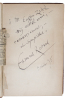
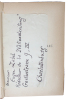
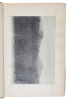
First edition, 136th thousand (same year as the first), presentation-copy ""à M. Eugène Zabel/ très cordial envoi, -/ remerciement, -/ et sympathie./ Edmond Rostand/ Octobre 98"" of Rostand's masterpiece, which against all odds became one of the most popular plays of the century and an overnight success throughout Europe.At the end of the 19th century in France, as well as in the rest of Europe, the industrialization was the force that dominated almost all aspects of society, i.e. everything from politics and sociology to science, art, philosophy, etc. And thus, also literature and theatre in this period were products of this new power. This meant that the trend that became prevailing within literature and drama was that of realism, which in France soon developed into naturalism. In the midst of this all-encompassing emphasis on objective documentation of everyday life which rejected romance, idealization and dreaming of any kind, emerged suddenly a work that no one could believe would have any success whatsoever, but which against all odds became the hugest dramaturgical success of the period and a theatrical monument that has been remembered ever since and which still stands as thus: Rostand's ""Cyrano de Bergerac"", the unlikely play about romantic heroes, fairy-tale like maidens, medieval-inspired sword-fights, about poetry, love, and art. The play had been taken on already in 1897, when the manuscript was finished, but the directors of the theatre regretted their decision immediately, not least due to the public reaction to the ""outdated"" romantic comedy-drama, which nobody would want to go see, and thus they severely cut the budget so that Rostand had to pay for all the costumes himself. Even the actor playing the main part, a leading actor at the time, regretted having taken the part, and Rostand is reported to have apologized to him for involving him in this ""disastrous adventure"". ""Therefore, when the curtain rose on ""Cyrano de Bergerac"" for the first time on December 28, 1897, expectations were low. The audience, however, was about to be pleasantly surprised. From the hero's last first majestic entrance to his last farewell, he transfixed his viewers. Theatergoers cheered Cyrano's triumphs, sighed at his suffering, laughed at his witty wordplay, and cried as his fate became known. A full hour after the curtain fell, the audience was still applauding thunderously. It is not easy to explain why Rostand's play confounded everyone by becoming one of the century's greatest smash hits. Perhaps the answer lies in ""Cyrano de Bergerac's"" stark contrast to the grimly realistic plays of its day, which often focused on modern society's darkest problems. The figure of the swashbuckling Cyrano dueling his way across the stage and stunning his compatriots with his verbal cleverness took Paris by storm. In fact, many critics, both of Rostand's time and later, attributed the play's tremendous success to its romanticism, or emphasis on idealism and heroism."" (Glencoe Literature Library, Study Guide for Cyrano de Bergerac).The work immediately became a huge success and within a very short amount of time, it had been translated into almost all European languages and was performed at theatres throughout Europe.Eugen Zabel was a famous literary critic and author, who at the time of ""Cyrano de Bergerac"" was editor of the ""Nationalzeitung"". He was born in Königsberg in 1851 and died in Berlin in 1925. In his youth he wrote poems, and after his move to Berlin, he worked as a journalist, critic, and writer. He did a lot of work on Russian themes, both political, historical, topographical, and literary, and he became closely connected to the country. He was highly respected for his liiterary criticism and his opinions, though often controversial, played an important role in public opiniation.

N Paris. 1891-1968. Fils d Edmond Rostand. Pote, romancier et auteur dramatique franais. L.A.S. Maurice Rostand Chre Amie . 27 Avenue Foch [Paris], s.d. 1 p. in-8. Papier grav aux lettres P.S.T. et aux motifs asiatiques.
Maurice Rostand na pas & oubli la charmante Marie que vous tiez et je vous recevrai avec plaisir votre mari et vous& Il lui demande & Voulez-vous le lundi 12 5h ?...On joint 2 L.A.S. Maurice Rostand Chre Madame . S.l.n.d. 2 pp. in-8 sur papier lettre dcor dune armoirie. : & Voici les preuves o je ne vois presque rien. Et, avec elles, un petit conte que je trouve gentil et que je vous recommande, car on continue menvoyer de la copie comme si jtais toujours directeur de Seduction & Dans la seconde lettre, Maurice Rostand prvient sa correspondante quil ny a & rien signaler dans les 2 numros que vous mavez envoys& Personnalit trs en vue durant lentre-deux-guerres, Maurice Rostand crit de nombreux pomes, pices de thtres et romans. Ses mmoires, Confession dun demi-sicle, sont publis en 1948. Il est galement directeur littraire de lhebdomadaire Sduction, en 1933.

Le page de la vie.
Paris, Charpentier et Fasquelles, 1913. In12°, br., 253 pp., Edition Originale , l'un des 60 exemplaires sur Japon ( n°39). Très belle tenue et propreté.
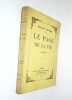
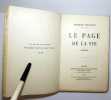
Maurice Rostand (18911968) fils aîné d'Edmond Rostand (auteur de Cyrano de Bergerac) et de la poétesse Rosemonde Gérard, a hérité d'un nom célèbre qui a compliqué son parcours littéraire, son père Edmond Rostand étant mort en 1918 à 50 ans; Figure homosexuelle très en vue de l'entre-deux-guerres, décrite comme une flamboyante figure de la scène gay de la première moitié du XX siècle, les portes des grandes scènes parisiennes s'ouvraient facilement pour lui. Sarah Bernhardt (Sarah, la grande Sarah) crée sa pièce en vers La Gloire sur sa propre scène. Engagé pacifiste après la Première Guerre mondiale, signataire de manifestes contre la guerre et contre les iniquités sociales ou raciales, Maurice Rostand était un homme généreux, serviable, "d'un commerce exquis", recevant dans son salon de la chaussée de la Muette. Il fréquenta des célébrités de la Belle Époque : d'Annunzio, Henri de Régnier, Paul Bourget, Pierre Loti, Jean Richepin, etc. Mise à jour du Samedi 27 Juin 2026. Paiement PayPal immédiat, Mondial Relay pour : France, Allemagne, Autriche, Belgique, Espagne, Italie, Portugal, Luxembourg, Pays-Bas, Pologne (Communiquer votre point ou locker si connu). Une participation supplémentaire peut être demandée pour les colis lourds hors France où les envois compris entre 5 et 25 kg sont dégressifs : 2 à 4 kilogrammes - 7.99 / 5 à 10 kg - 15.99 / 15 -25 kg - 25.99. Certaines de nos collections ( Vian, Céline, Camus (...) peuvent être expédiées en Franco de port. Pour linternational hors Europe (Suisse, Canada, Japon, Etats-Unis, les frais dexpéditions peuvent varier selon le poids (mise à jour : 1 juin 2026).
Les Pipeaux.
Paris, Charpentier, 1932. In-12. Envoi de Rosemonde Gérard à Mlle Dupin sur la couverture. Broché, bon état.
L'édition originale est de 1889. Son prénom de scène, Rosemonde, lui vient de sa grand-mère, Rosemonde de Valence, fille du comte de Valence et épouse du maréchal Gérard. Dans son ascendance, elle comptait aussi la célèbre Mme de Genlis. Orpheline de père, elle avait dans son conseil de famille Alexandre Dumas et Leconte de Lisle. Le 8 avril 1890, Edmond Rostand épouse Rosemonde Gérard à Paris en l'église Saint-Augustin. Cette dernière, qui demeurait alors avec sa mère, 107, boulevard Malesherbes a pour témoin Jules Massenet. Le jeune ménage vient tout d'abord habiter 107, boulevard Malesherbes et peu après 2, rue Fortuny. C'est là qu'allaient naître Maurice Rostand, puis Jean Rostand. En 1897, les Rostand achetaient, 29, rue Alphonse de Neuville, un petit hôtel qu'ils devaient abandonner en 1900 et vendre ensuite pour se fixer à Cambo-les-Bains. Rosemonde Gérard, si elle n'avait pas épousé Edmond Rostand, eût été connue et célèbre pour sa valeur personnelle ; la gloire de son mari a éclipsé sa propre réputation. Plus que femme de théâtre au sens d'actrice, elle fut surtout poète. Elle joua la comédie rarement, dont une fois dans le rôle de Roxane de Cyrano de Bergerac, avec Sarah Bernhardt qui lui donnait la réplique en Cyrano.
LA SAMARITAINE. Evangile en trois tableaux, en vers. Représenté pour la première fois, à Paris, sur le Théâtre de la Renaissance, le mercredi saint (14 avril 1897).
Paris, Librairie Charpentier et Fasquelle, 1897 1 volume in-4 (27,2 x 19 cm) broché de (6)-120 pages. Couverture illustrée d'une lithographie par Mucha (réduction de l'affiche originale de la pièce) tirée par l'imprimerie F. Champenois. Parfait exemplaire non coupé, jamais lu, très peu manipulé. Léger empoussiérage de la tranche inférieure. Exemplaire en grande partie non coupé. Edition originale. Un des rares 25 exemplaires imprimés sur papier du Japon avec double état de la couverture (également imprimée sur Japon) dont un premier état avant la lettre (également imprimé sur Japon).
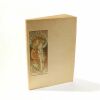
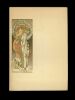
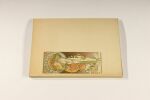
C’est après le succès des Romanesques à la Comédie-Française que Sarah Bernhardt demande à Edmond Rostand de lui écrire une pièce. Cette pièce religieuse s’est jouée le Mercredi Saint, 14 avril 1897. Sarah Bernhardt, âgée de 53 ans, y crée le rôle-titre de la Samaritaine alias Photine. Sarah Bernhardt était la Directrice et la propriétaire du Théâtre de la Renaissance dans lequel la pièce fut jouée. La musique est de Gabriel Pierné. En Samarie, les ombres d’Abraham, Isaac et Jacob viennent annoncer la venue du Messie… Jésus demande alors aux habitants, persécutés à la fois par les Romains et les Juifs de Jérusalem, d’aimer ces gens et leur conte l’histoire du bon samaritain. La belle Photine, qui d’abord se moque de Jésus, tombe à genoux lorsque celui-ci se révèle et lui offre sa chanson d’amour, qu’il accepte. Tandis que Jésus explique à Photine comment se rendre digne du royaume de Dieu. Puis, Photine ameute la foule d’un marché, répétant des textes saints qu’elle n’a pourtant pas pu lire et supplie ses concitoyens de la suivre à la rencontre de Jésus. Buvant l’eau de la cruche oubliée par Photine, les disciples sont stupéfaits de la trouver délicieuse. La Jeune femme, conduisant toute la ville, dit comment, inspirée par Jésus, elle lui a conquis tous les cœurs. La pièce se découpe en trois tableaux. Premier tableau : le puits de Jacob. Les apôtres quittent Jésus pour se rendre à Sichem, afin d’acheter des vivres. Le Christ reste assis sur la margelle du puits de Jacob. Photine vient puiser de l’eau, son amphore sur l’épaule. Jésus lui demande à boire. Elle refuse parce qu’il est juif. S’engage un long dialogue tiré des Evangiles. Deuxième tableau : la Porte de Sichem. Pierre et les disciples tentent d’acheter des vivres mais ils sont raillés par les marchands. Les apôtres s’éloignent sous les huées. Ariel est inquiet de ne pas voir revenir Photine. Elle arrive transformée et s’exprime en citation. Elle convainc petit à petit la foule. Troisième tableau : Salvator Mundi. Jésus est sur la margelle du puits. Les apôtres s’étonnent de la discussion avec Photine. On entend alors la foule des Samaritains qui approche menée par Photine. Succédant à La Princesse lointaine (1895), La Samaritaine est le premier grand succès de Rostand, la même année que Cyrano de Bergerac (représenté pour la première fois le 28 décembre 1897 au théâtre parisien de la Porte Saint-Martin). Référence : Edmond Rostand, La Samaritaine, édition postfacée, établie et annotée par Philippe Bulinge, L’Harmattan, 2004. Philippe Bulinge, « L’héritage de La Samaritaine dans Cyrano de Bergerac d’Edmond Rostand ». ; Lire également Une trilogie d'Edmond Rostand : La Princesse lointaine, La Samaritaine, Cyrano de Bergerac par Jean Bourgeois Les Belles lettres | « L'information littéraire » 2008/2 Vol. 60 | pages 27 à 38. Très bel exemplaire broché du rarissime tirage de tête sur Japon à 25 exemplaires seulement, bien complet des deux couvertures ornées de la lithographie de Mucha, tel que paru.
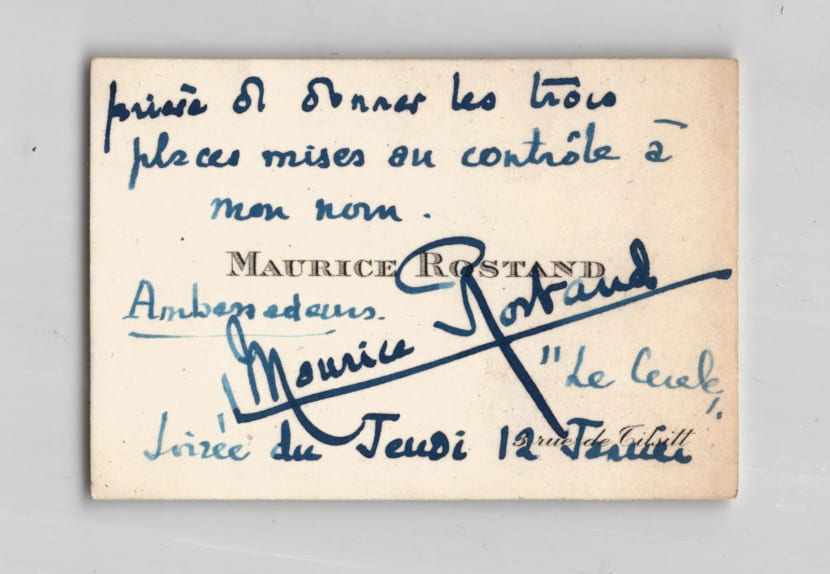
Maurice Rostand - Carte de visite autographe signée - Théâtre des Ambassadeurs
Lettre autographe signée de Maurice Rostand, dramaturge et poète français. La lettre n'est pas datée. Rédigée à l'encre bleue sur feuillet de papier cartonné ivoire au format carte de visite avec en-tête imprimé "Maurice Rostand". Dans cette lettre, Maurice Rostand donne pour instruction au personnel de contrôle d'un théâtre de délivrer trois places de faveur qui avaient été mises de côté à son nom. Dimensions : 7,7 x 5,2 cm. Nombre de pages : 1 page. Etat : Très bon état de conservation, présence de légères salissures d'usage au verso. Voir photos pour plus de détails.
N Paris. 1894-1977. crivain, biologiste et acadmicien franais. L.A.S Jean Rostand Monsieur [Auguste Dupouy]. S.l., 9 novembre 1925. 3/4 p. in-
Jean Rostand remercie son correspondant de larticle paru dans le journal Dmocratie Nouvelle : & Je ne lis quaujourdhui le trs aimable article que vous avez bien voulu, dans la Dmocratie Nouvelle, consacrer mon dernier livre. Croyez que la fidlit de votre sympathie mest particulirement prcieuse& Fils du dramaturge Edmond Rostand et de la potesse Rosemonde Grard, Jean Rostand fut un crivain, moraliste, biologiste, historien des sciences et acadmicien franais. galement fministe, il contribuera avec Simone de Beauvoir, Christiane de Rochefort et quelques autres crer le mouvement Choisir la cause des femmes. Il est membre du Comit de patronage de la Fdration franaise contre larmement atomique. La science a fait de nous des dieux, a-t-il dit, avant mme que nous mritions dtre des hommes .Auguste Dupouy,1872-1967, est lun des premiers tudier la gographie humaine des littoraux. Il rdige la premire histoire de Bretagne Rpublicaine. Il collabore aussi des revues parisiennes o il apparait comme un critique de qualit.
Manuscrit autographe, 270 x 210, 7 pages, sur papier taupe.
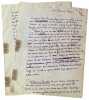
Très intéressant manuscrit d’un discours prononcé par Maurice Rostand lors de la présentation de la pièce de Vandéric (pseudonyme de Georges Van Hove) intitulée Les Mauvais anges, adaptation du roman d’Emily Brontë Wuthering Height (Les hauts de Hurlevent).La pièce fut représentée pour la première fois le 13 octobre 1937 au Théâtre des deux masques dans une mise en scène de Jean Servais. Dans ce discours Maurice Rostand confirme être à l’origine de l’idée de cette adaptation, la première du célèbre roman : « Depuis le jour de ma jeunesse où je l’ai lu, ce livre m’a hanté de son accent mortel, de sa fièvre dont on ne saurait guérir et l’idée d’en tirer une pièce, de faire vivre sur scène les personnages immortels d’Emily m’avait toujours poursuivi. C’est pourquoi, ayant jugé à sa valeur le talent dramatique de Vanderic, je lui suggérais un sujet si bien en accord avec ses dons et que mes travaux personnels ne me donnaient pas le temps de traiter moi-même. Je lui indiquais, quelle forme dramatique il me semblait qu’on pût donner aux amours de Catherine et d’Heathcliff : là s’arrête ce qu’on voulût trop appeler ma collaboration. »La création de Vanderic fit à l’époque couler beaucoup d’encre, d’autant que la Comédie Française qui avait prévu de monter elle aussi une adaptation s’était fait prendre de cours !Tout au long de ce discours, la plume de Maurice Rostand laisse éclater une admiration sans faille pour une autrice de génie trop peu reconnue : « En décembre 1847 elle avait publié Wuthering Height : un an après elle mourut sans se savoir immortelle, mais en le pressentant tout de même. » Ratures et corrections qui abondent dans ce manuscrit ne sont que témoignages de la passion de Maurice Rostand pour celle qu’il décrivait comme la « Merveilleuse et tragique Emily en qui semblaient se concilier les extrêmes de la vigueur et de la douceur. Si dure pour elle-même que jusque dans son agonie elle conserva une si déchirante maîtrise qu’on ne pouvait la regarder sans pleurer… ».Quelques déchirures sans manques aux pliures, avec traces de scotch ancien. Déchirure importante au dernier feuillet, sans perte.
Lettre autographe signée à Léo Poldès
Maurice Rostand (1891-1968), poète, écrivain. L.A.S., sd [1952], 1p in-8. A l'écrivain, militant socialiste puis communiste, fondateur du Club du Faubourg, Léo Poldès (1891-1970). « Cher ami, À mon vif regret, je ne pourrai assister au début sur "La Lettre à Dieu". Excusez-moi, je souhaite que les débats soient intéressantes et que ceux qui ont lu ce petit livre soient ou finissent par être d'accord avec moi. À une autre fois ! Bien sympathiquement vôtre. Maurice Rostand ». La Lettre à Dieu est un livre publié par Rostand en 1952. [560]
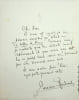
Jean Rostand - Note autographe signée de remerciement
Jean Rostand - Note autographe signée de remerciement Dimensions : 11,8 x 18,4 cm Nombre de pages : 1 page Jean Rostand, né le 30 octobre 1894 à Paris 17ᵉ et mort le 4 septembre 1977 à Ville-d'Avray, est un écrivain, moraliste, biologiste, historien des sciences et académicien français.
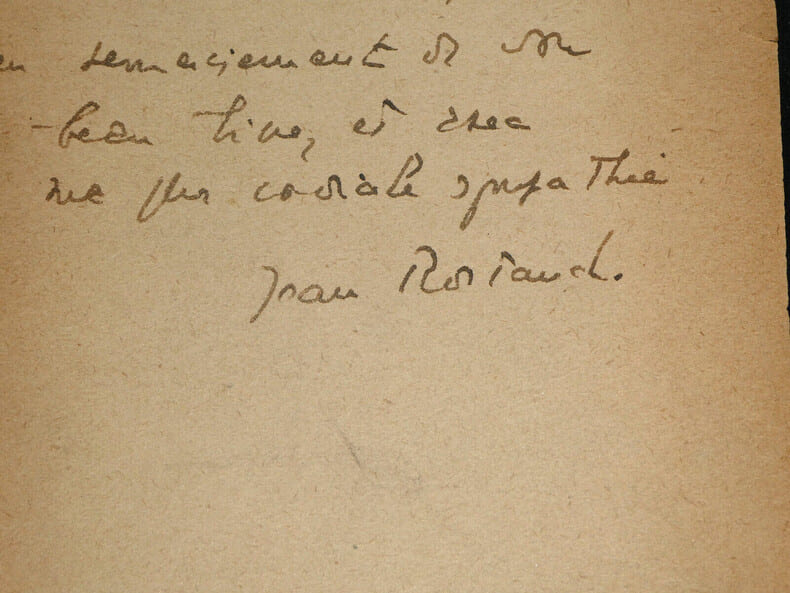
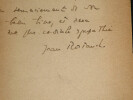
N Paris. 1894-1977. Biologiste et crivain franais. Fils d'Edmond Rostand. Il fut lu l'Acadmie franaise en 1859. L.A.S. "Jean Rostand" Pierre Bornecque. Ville d'Avray, 2 juin 1965. 1 page in-folio
02/06/1965 Pierre Bornecque souhaite rencontrer Jean Rostand, ....Le plus simple serait que vous me tlphoniez (926-43 31) quand vous serez Paris. Nous fixerons alors la date d'une rencontre...
1894-1977. Biologiste et crivain. L.A.S. "Jean Rostand" un ami (Bernard Grasset ?). Ville d'Avray, 14 fvrier 1930. 1/2 page in-4.
SS...Je vous fe?licite de tout mon c?ur pour cette croix dont il me plai?t de penser qu'elle ne va pas seulement au grand e?diteur, mais au moraliste et a? l'e?crivain...Fils du dramaturge Edmond Rostand, Jean Rostand s'orienta vers les sciences plus que les lettres. Il travailla pendant la Premie?re Guerre mondiale dans le laboratoire du professeur Vincent sur le vaccin anti-typhique.Ayant participe? en 1936 a? la cre?ation de la section de biologie au Palais de la De?couverte, il organisa a? Ville dAvray son propre laboratoire, ou? il devait se consacrer sur les amphibiens a? de nombreuses recherches, touchant notamment au domaine de la parthe?nogene?se et de la gynogene?se, ou? il fit dimportantes de?couvertes. Il est lauteur dune ?uvre scientifique exceptionnellement abondante.
ROSTAND LA PRINCESSE LOINTAINE SOIXANTE-QUATORZIEME MILLE [Hardcover] [Jan 01... [Hardcover] Rostand. E
ROSTAND LA PRINCESSE LOINTAINE FASQUELLE 1921 Relié tres bon état,
Merci de nous contacter à l'avance si vous souhaitez consulter une référence dans notre boutique à Authon-du-Perche.
L'aiglon - Drame en 6 actes en vers /1950 / Rostand, Admond / Réf 11587 [Paperback] Rostand, Admond
BROCHE BON ETAT . EX. NUMEROTE 3880/4000. COUVERTURE REMPILEE . INTERIEUR PROPRE . L'aiglon ADMOND Rostand
Merci de nous contacter à l'avance si vous souhaitez consulter une référence dans notre boutique à Authon-du-Perche.
Les musardises - Le bois sacré - précédées de La vie & l'oeuvre d'Edmond Rostand - Collection Oeuvres complètes illustrées de Edmond Rostand.
Pierre Lafitte et Cie. 1911. In-4. Relié demi-cuir. Etat d'usage, Coins frottés, Dos satisfaisant, Quelques rousseurs. 19 + 193 + 19 pages en un volume, contreplats et garde jaspés, nombreuses illustrations et photos en couleur et en noir et blanc dans et hors texte - papier jauni, petit accro sur une page en fin d'ouvrage ne génant pas la lecture.. . . . Classification Dewey : 792-Théâtre

Collection Oeuvres complètes illustrées de Edmond Rostand. Illustrations de Brouillet, Calbet, Gorguet, Lelong, Macchiati, Orazi et Zier. Classification Dewey : 792-Théâtre
Les grands courants de la biologie
Gallimard | Paris 1951 | 12.50 x 20 cm | broché
Edition originale sur papier courant, mention d'édition, tampon imprimé de service de presse en tête du second plat. Papier jauni. Très précieux envoi autographe signé de Jean Rostand à son ami et voisin Boris Vian : "Pour Boris bien amicalement. Jean Rostand." Jean Rostand qui fut le voisin de Boris Vian à Ville d'Avray, l'introduisit chez Gallimard et fit découvrir à Raymond Queneau ses oeuvres. - Photographies et détails sur www.Edition-Originale.com -
Les origines de la biologie expérimentale et l'abbé Spallanzani
Fasquelle | Paris 1951 | 12.50 x 20 cm | broché
Edition originale, un des 60 exemplaires numérotés sur alfa, seuls grands papiers. Agréable exemplaire. Très précieux envoi autographe signé de Jean Rostand à son ami et voisin Boris Vian : "Pour Boris dont la curiosité s'étend jusqu'aux origines de la biologie expérimentale. En cordial souvenir. Jean Rostand." Jean Rostand qui fut le voisin de Boris Vian à Ville d'Avray, l'introduisit chez Gallimard et fit découvrir à Raymond Queneau ses oeuvres. - Photographies et détails sur www.Edition-Originale.com -
Nouvelles pensées d'un biologiste
Stock | Paris 1947 | 11.50 x 17.50 cm | relié
Edition originale pour laquelle il n'a pas été tiré de grands papiers, un des exemplaires du service de presse. Agréable exemplaire. Reliure à la bradel en plein papier peint, pièce de titre de chagrin noir, plats de couverture conservés, reliure signée Goy & Vilaine. Très précieux envoi autographe signé de Jean Rostand à son ami et voisin Boris Vian : "Pour Boris, bien amicalement.Jean Rostand." Jean Rostand qui fut le voisin de Boris Vian à Ville d'Avray, l'introduisit chez Gallimard et fit découvrir à Raymond Queneau ses oeuvres. - Photographies et détails sur www.Edition-Originale.com -
"Elvire - Casanova".
1919 1 Aquarelle en couleurs, rehauts d'or, (1919), papier collé sur carton, 26.5 x 20 cm., encadrée.
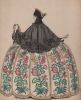
Maquette pour Casanova d'après Maurice Rostand représentant une jeune vénitienne portant une robe fleurie à panier dans un style XVIIIe. George BARBIER confectionna les costumes de la pièce de théâtre de Maurice Rostand (fils aîné d'Edmond Rostand) "Casanova" qui fut jouée aux Bouffes-Parisiens le 22 février 1919. Il fut publié en 1921, chez Lucien Vogel, un recueil composé de 24 planches en couleurs illustrant les Décors et les Costumes. Barbier s'est très tôt intéressé au théâtre, et ses dessins témoignent de l'influence des Ballets Russes. Personnages de comédie (1922) et Vingt-cinq costumes pour le théâtre (1925) témoignent de ce goût (article Barbier et le théâtre, par Alain Stoeffler, in George Barbier, La Nascita del Deco, 2008, pages 62-83). Très légères taches, infimes grattages et plis.
Cyrano de Bergerac. Comédie héroïque en cinq actes en vers. Représentée à Paris, sur le Théâtre de la Porte Saint-Martin, le 28 décembre 1897. L’édition originale de Cyrano, l’un des 50 exemplaires de tête imprimés sur papier du Japon.
C’est l’œuvre la plus populaire du théâtre français de la fin du XIXe siècle. Paris, Charpentier et Fasquelle, 1898. In-8 de 225 pp. et (3) pp. bl. Bradel soie brodée verte à recouvrements, dos lisse, pièces de titre de maroquin havane, tête dorée (P. Goy & C. Vilaine). 193 x 134 mm.


Edition originale du chef d’œuvre de Rostand. Rahir, La Bibliothèque de l’amateur, 621; Bibliothèque de Backer, n°2502. «Comédie héroïque en cinq actes en vers, représentée à Paris, au Théâtre de la Porte Saint-Martin, le 28 décembre 1897». Précieux exemplaire, l’un des 50 de tête imprimés sur papier du Japon, non justifié. Le 28 décembre 1897, la comédie héroïque de Rostand devient le plus grand succès théâtral depuis Hernani. Un succès sans précédent : quarante rappels! La pièce sera jouée 400 fois jusqu’en 1900 et Coquelin, présenté à l’auteur l’année précédente par Sarah Bernhardt, reprendra le rôle jusqu’à sa mort, soit 950 fois. Rostand fut élu à l’Académie française en 1901 : il y est reçu à trente-trois ans, soit le plus jeune académicien d’alors. «C’est l’œuvre la plus populaire du théâtre français de la fin du XIXe siècle […] Du point de vue lyrique et dramatique, cette comédie est parfaite […] on ne peut qu’admirer sa qualité poétique, souple et étincelante, à travers laquelle se cristallise toute une tradition littéraire française qui va d’Honoré d’Urfé jusqu’à Dumas père et Richepin, en passant par Scarron et Regnard. Cyrano, le héros au grand nez et au cœur d’enfant, terrible spadassin et amant ingénu, est un personnage cher à l’esprit français et que chaque siècle a représenté sous une forme ou sous une autre. Il incarne ici, dans sa plénitude, le héros romantique du XIXè siècle». (Dictionnaire des Œuvres, II, p. 190). Très bel exemplaire de cette originale littéraire, conservé dans une jolie soie brodée à motif floral. Ex-dono manuscrit d'un conservateur du Musée de la Légion d'honneur daté 1926 sur une garde, annotation au crayon p. 135, tache sur 2 ff. de texte et 2 ff. de garde.
Poèmes
Paris Bibliothèque-Charpentier, Eugène Fasquelle Editeur 1911
In-8, 212p. Couverture jaune imprimée. :: Édition originale du premier livre du fils d'Edmond Rostand. Il fut l'un des auteurs célèbres - à l'homosexualité reconnue - de l'entre-deux-guerres. Tirage sur vélin couché après 60 Japon. :: Reliure de l'époque, demi-veau noir, dos orné, 5 nerfs, couverture conservée. Coins et nerfs frottés. AVEC la carte de visite de Maurice Rostand. -- ON JOINT: ROSTAND, Maurice. Le Page de la vie, poèmes, 3e mille. Paris, Bibliothèque-Charpentier, Eugène Fasquelle Editeur, 1913. Reliure similaire, sans les couverture. Ces 2 volumes :
[Librairie du petit Journal , N. Scheuring,] - CHATILLON, Auguste de ; ROSTAND, Eugène
Reference : 66246
(1866)
Les Poésies d'Auguste de Chatillon [ Suivi de : ] Ebauches [ Edition originale ]
1 vol. in-12 reliure de l'époque demi-basane rouge, dos à 4 nerfs, Les Poésies d'Auguste de Chatillon. 3e édition très-augmentée, Librairie du petit Journal, Paris, 1866, 1 f., 342 pp. [ Suivi de : ] Ebauches, N. Scheuring, Imprimerie Louis Perrin, Lyon, 1865, 115 pp. et 1 f.
![Les Poésies d'Auguste de Chatillon [ Suivi de : ] Ebauches [ Edition originale ]. CHATILLON, Auguste de ; ROSTAND, Eugène](https://static.livre-rare-book.com/pictures/CDL/66246_thumb.jpg)
![Les Poésies d'Auguste de Chatillon [ Suivi de : ] Ebauches [ Edition originale ]. CHATILLON, Auguste de ; ROSTAND, Eugène](https://static.livre-rare-book.com/pictures/CDL/66246_2_thumb.jpg)
![Les Poésies d'Auguste de Chatillon [ Suivi de : ] Ebauches [ Edition originale ]. CHATILLON, Auguste de ; ROSTAND, Eugène](https://static.livre-rare-book.com/pictures/CDL/66246_3_thumb.jpg)
Imprimé par Louis Perrin à 200 exemplaires, "Ebauches" est l'oeuvre d'Eugène Rostand. Le futur père d'Edmond Rostand était alors âgé de 20 ans. Eugène Rostand sera plus tard président de l'Académie des Sciences, Arts et Lettres de Marseille. A propos des Poésies du sculpteur Auguste de Chatillon, Théophile Gautier écrit en préface qu'il "concilie la simplicité et l’art, et ses chansons peuvent se brailler au cabaret et se soupirer au salon". Etat très satisfaisant (petit travail de vers à un mors en queue, petit trou sur les 3 premiers ff., bon état par ailleurs, ex-libris en garde). Vicaire, VI, 1199
Inquiétudes d’un biologiste.
Paris, Stock, 1967 ; in-8, broché ; 128 pp.
Exemplaire en très bon état.
COQUELIN Constant, préface d'Edmond Rostand de l'académie Française
Pierre LAFITTE 1910 ,in -folio: 46.5 x 33 cm, en feuilles sous chemise et emboitage, tirage numéroté à 500 ex/hollande N°127; , 32 planches ht sous serpentes legendées, coloriées imprimées en chromotypographie, des tableaux de peintres célébres de l'époque l'ayant pris pour modéle ,discours d'E.ROSTAND en double,et 5 planches de souvenirs et autographes des célébrités de l'époque, complet-


rare ,bon éxemplaire Remise de 20% pour toutes commandes supérieures à 200 €
LE CANTIQUE DE L'AILE - LA DERNIERE NUIT DE DON JUAN
LAFITTE PIERRE. NON DATE. In-4. Relié cuir dos-coins. Bon état, Coins frottés, Dos abîmé, Intérieur frais. 215 pages augmentées de nombreuses illustrations en couleur et en noir et blanc hors texte. Dos partiellement arraché mais conservé - Auteur, titre, filet et ornements dorés au dos. Plats et contre-plats jaspés - Tranches de tete dorées.2 PHOTOS DISPONIBLES -. . . . Classification Dewey : 840.091-XX ème siècle
"COLLECTION ""OEUVRES COMPLETES ILLUSTREE DE EDMOND ROSTAND"". NOTA : Edmond Rostand, né à Marseille le 1er avril 1868 et mort à Paris, 7e, le 2 décembre 1918 (à 50 ans), est un écrivain, dramaturge, poète et essayiste français.Il est l'auteur de l'une des pièces les plus connues du théâtre français, Cyrano de Bergerac. Il est, par ailleurs, le père de l'écrivain, biologiste et académicien français Jean Rostand // COPYRIGHT 1905. Classification Dewey : 840.091-XX ème siècle"

