 Write to the booksellers
17 books for « pomponius mela »Edit
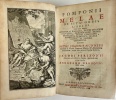
Dionysii Alex. et Pomp. Melae Situs orbis descriptio. Aethici Cosmographia. C.I. Soloni Polyistor. In Dionysii poematium commentarii Eustathii; interpretatio eiusdem poematii ad verbum, ab Henr. Stephano scripta; necnon annotationes eius in idem, & quorundam aliorum. In Melam annotationes Ioannis Olivarii; in Aethicum scholia Iosiae Simleri; in Solinum emendationes Martini Antonii Delrio.
N.pl., (Geneva), Excudebat Henricus Stephanus, 1577.


4to. 3 parts in 1: (VIII),158 (recte 160),(24),47,(1 blank); 152 p. Limp vellum 25 cm (Ref: GLN-2627; Hoffmann 1,592, Schweiger 2,690; Renouard p. 145 & 410; Ebert 6199; Graesse 2,401; Brunet 2,729) (Details: Printer's Olive tree device of the Stephanus family on the title, motto: 'Noli altum sapere', short for 'Noli altum sapere, sed time', in Greek 'mê hupsêlophronei, alla phobou', or in English 'Donot be high-minded, but fear'. (Epistola Beati Pauli ad Romanos 11,20) (Condition: Vellum very worn: it is soiled and wrinkled, and shows 4 small holes in the upper board. Small piece of the vellum on the right upper corner of the upper board gone. Left upper corner of lower board also gone. Back damaged at the head & the tail of the spine. Old ownership entries on the title. Some faint and small ink curls on the title. Title soiled and thumbed. Corners of first 5 gatherings dog-eared. Paper slightly foxed. Some faint waterstains) (Note: For this edition of 1577 the publisher, the French humanist scholar Henricus Stephanus (1528/31-1598), brought together 3 geographical works, of which 2 had been published recently. Part 1 contains Dionysius' 'Periêgêsis' ('orbis descriptio'). Stephanus added to the Greek text his own literal translation into Latin. The text is further accompanied by 2 colums of Greek scholia. At the end of this first part, p. 143/58 are Stephanus' notes to the 'orbis descriptio', and to the scholia and the notes of the Byzantine commentator Eusthatius. Part 2 contains a Latin translation of Mela's 'orbis descriptio', now with notes by Petrus Johannes Olivarius. Part 3 contains Gaius Julius Solinus' 'Collectanea rerum memorabilium' in the edition of Martinus Antonius Delrio, and Iosias Simler's edition of Aethicus of Istria's 'Cosmographia', together with his notes. Even today the author and date of the 'Situs orbis descriptio' or 'De situ orbis', also known as 'Orbis descriptio', a didactic poem in Greek of 1187 hexameters, which served as a poetic guide of the known world in antiquity (periêgêsis tês oikoumenês), seems a riddle. (See the fuzzy information about Dionysius Alexandrinus in Wikipedia, the English article is the worst), This riddle was solved already in 1884. 'Much ink was spilt over the question of his (Dionysius') age and country, until G. Leue (Philologus 42 (1884), p. 175 ff) had the perspicacity to notice that the poem is signed and dated; lines 113-134 (Müller) and 522-532 are acrostics, informing us respectively that the work is 'Dionusiou tôn entos pharou', by 'Dionysios, one of those inside Pharos', i.e. in Alexandria, and 'epi Hadrianou', 'of the time of Hadrian'. (H.J. Rose, 'A handbook of Greek literature', London 1965) The poem opens with an introduction (1-26), then the Ocean is treated (27-169), followed by Africa (170-269), Europe (270-446), the islands (447-619), and Asia (620-1165). The pleasant and clear Callimachean versification and its comprehensibility made it an ideal Byzantine schoolbook. The work was much read in antiquity, the Middle Ages, and well into the 19th century. It was loosely translated into Latin in the 4th century by Avienus and in the 5th century by the grammarian Priscianus, and was commented thoroughly by the Byzantine scholar Eustathius. The second part of this collection contains the commentary of the Spanish humanist Petrus Johannes Olivarius (Olivarez) of Valenzia, regarding Mela's ancient sources, style and methods. His Mela edition, together with his commentary was first published in Paris in 1536. The third part opens with Solinus' 'Collectanea rerum memorabilium' in the edition of the Spanish scholar Martinus Antonius Delrio, or Martín Antonio del Rio (1551-1608), Antwerp 1572. It is a geographical summary of parts of the world, their origins, history and customs. Its sources are Pliny's 'Historiae Naturales' and Pomponius Mela. At the end of this last part we find 'Aethici Cosmographia', probably 8th century. This title was coined by its editor, the Swiss theologian, historian and classical scholar Josias Simler (1530-1576), in his edition of the 'Cosmographia', Basel 1575. It succinctly describes the Roman world, and is divided in 2 parts, the first part contains names of seas, rivers, islands, mountains, cities, peoples etc., the second part contains a description of the 3 parts of the world, Asia, Europe and Africa. The sources of the further unknown Aethicus Ister are Pliny, Mela Pomponius, the Bible and Isidorus of Sevilla) (Provenance: At the upper margin of the title: 'Ex libris Gabr. Bergonhon, Can. B. Moz'. Erased have been the name of 2 previous owners. The Benedictine editor Dionysus Sammarthanus of the second volume of 'Gallia Christiana: in provincias ecclesiasticas distributa', Paris 1720, col. 761, thanks the 'vir optimus Dom Gabriel Bergonhon B. Mariae Aniciensis canonicus & syndicus' for his information concerning the series of the abbotts of the 'Abbatia Sancti Evodii Aniciensis', that is, he thanks Gabriel Berghonon, canon of the church of 'Beatae Mariae Aniciensis'. This church must be the 'cathédrale Notre-Dame-de-l'Annonciation' at Puy-en-Velay, a major monument of christian romanesque art, where the famous Black Madonna Maria was venerated. 'Anicium Velavorum', or 'civitas Velavorum' is the Gallo-Roman name of Puy-en-Velay. With this in mind, the provenance reads like this: 'from the library of Gabriel Bergonhon, 'Canonicus Benedictinus', or 'Canon Bénédictin' of Moz. The end of the last letter z of Moz seems to curl. These 3 letters can only refer to the Benedictine Abbey of Mozac, one of the oldest and most important abbeys in the 'Basse-Auvergne'. Bergonhon is a 'famille de robe du Puy') (Collation: 4, a-v4; -24 (index); 4, A-2B4 (leaf F4 verso blank) (Error in pagination: p. 136-160 numbered 134-158)) (Photographs on request)
Pomponius Mela, traduit en français sur l'édition d'Abraham Gronovius, le texte en regard, avec des notes critiques, géographiques et historiques, qui ont pour objet de faciliter l'intelligence du texte et de justifier la traduction ; de mettre en parallèle les opinions des anciens sur les principaux points de géographie, de chronologie et d'histoire et de présenter un système complet de géographie comparée. Par C.-P. Fradin, ex-député du département de la Vienne, professeur adjoint à la faculté de droit de Poitiers. Deuxième édition. [Premier de trois volumes]
Paris, à la librairie de Brissot-Thivars et Cie, impr. Imprimerie de Catineau, Poitiers 1827 In-8 20,5 x 13,5 cm. Reliure de l’époque demi-basane fauve, dos lisse orné de petits fers encadrés de filets et de roulettes dorés, pièces de titre cuir noir, XVI-492 pp., 1 carte repliée. Reliure frottée, intérieur frais. Ouvrage peu courant.
Texte en français en regard du texte original latin. Plus ancien géographe romain connu, Pomponius Mela qui écrivait aux alentours de 43 ap. J.-C., sous le règne de l’empereur Claude, nous laisse une description qui couvre le monde connu des Gréco-Romains. Bon état d’occasion
GEOGRAPHIE DE POMPONIUS MELA
C. L. F. Panckoucke, Paris. 1843. In-8. Relié. Etat d'usage, Coins frottés, Dos fané, Quelques rousseurs. Env. 400 pages (3 ouvrages en 1 volume). Texte en latin et en français en regard. Titre et roulettes dorés sur le dos.. . . . Classification Dewey : 870-Littératures des langues italiques. Littérature latine
(Rare) 'Bibliothèque Latine-Française', Depuis Adrien jusqu'à Grégoire de Tours. Géographie de Pomponius Mela, Trad. par M. Louis Baudet. VIBIUS SEQUESTER, Nomenclature des fleuves, fontaines, lacs, forêts, marais, Montagnes et peuples dont il est fait mention dans les Poëtes, Trad. pour la première fois par M. Louis Baudet. COSMOGRAPHIE D'ETHICUS, Trad. pour la première fois par M. Louis Baudet. Classification Dewey : 870-Littératures des langues italiques. Littérature latine
De situ orbis libri III. Cum notis integris Hermolai Barbari, Petri Joannis Olivarii, Fredenandi Nonni Pintiani, Petri Ciacconii, Andrea Schotti, Isaci Vossi, & Jacobi Gronovii. Accedunt Julii Honorii Oratoris excerpta cosmographiae. Cosmographia falso aethicum auctorem præferens cum Varis Lectionibus ex MS. Ravennatis anonymi geographia ex MS. Leideinsi suppleta. curante Abrahamo Gronovio.
Lugduni Batavorum (Leyde), Ex officina Samuelis Luchtmans, 1722. In-8 de [80]-811-[37]p. demi-vélin, dos lisse, non rogné.
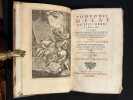
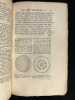
Frontispice gravé, une carte dépliante et nombreuses figures in-texte. Mela est le plus ancien géographe romain. Hormis le fait qu'il était originaire de la province de Bétique, dans la baie d'Algésiras, et qu'il écrivait aux alentours de 43, on ne sait rien de lui. En dehors des chapitres géographiques de l'Histoire naturelle de Pline l'Ancien (où Mela est cité comme une référence importante), le De situ orbis (ou De chorographia) est le seul traité sur le sujet en latin classique. La carte figure le monde selon Mela. Accident au ba du dos.
Macrobe (oeuvres complètes), Varron (De la langue latine). - Pomponius Méla (oeuvres complètes), avec la traduction en français, publiées sour la direction de M. Nisard. Collection des Auteurs Latins avec la traduction en français, publiée sur la direction de M. Nisard.
Paris, J. J. Dubochet, le Chevalier et Comp. 1845, 270x180mm, II- 709pages, demi-chagrin noir, dos à faux-nerfs, auteur, titre et ornementations dorés, tranches marbrées. Bon état.
édition bilingue: français - latin, texte sur deux colonnes, Pour un paiement via PayPal, veuillez nous en faire la demande et nous vous enverrons une facture PayPal
Pomponius Mela, traduit en français, sur l'édition d'Abraham Gronovius, le texte vis-à-vis la traduction.
Paris-Poitiers, 1804 492 p., 621 p., 471 p., 2 cartes dépliantes, demi-reliure (mors en mauvais état). 13 x 19,5
Occasion
GEOGRAPHIE DE POMPONIUS MELA / NOMENCLATURE DE VIBIUS SEQUESTER / COSMOGRAPHIE DE ETHICUS ISTER, PUBLIUS VICTOR
C. L. F. Panckoucke, Paris. 1843. In-8. Broché. Etat d'usage, Couv. convenable, Dos fané, Quelques rousseurs. Env. 400 pages (plusieurs paginations). Texte en latin et en français en regard. Etiquette de code sur la couverture. Quelques tampons de bibliothèque. Dos légèrement taché.. . . . Classification Dewey : 870-Littératures des langues italiques. Littérature latine
Seconde Série de la 'Bibliothèque Latine-Française', Traductions nouvelles des Auteurs latins avec le texte en regard. Trad. par Louis Baudet. Classification Dewey : 870-Littératures des langues italiques. Littérature latine
De situ orbis libri III. Cum notis integris Hermolai Barbari ... Accedunt Petri Joannis Nunnesii Epistola de Patria Pomponii Melae, & Adnotata in prooemium, atque duo priora Capita Libri I. Et Jacobi Perizonii Adnotationes ad Libri I. Capita septemdecim.
Leiden, Samuel Luchtmans et filius, 1748. 8vo (200 x 130 mm). Mit gest. Frontispiz, 1 gest. und mehrfach gefalteten Weltkarte sowie 43 Kupfern im Text. [10] Bl., 545 S., 1 Bl. (Zwischentitel), 547-1081 S., [27] Bl. Pergamentband d. Z.
The first latin work on geography, here edited by the Dutch philologist Abraham Gronovius (1695-1775). The Spaniard Pomponius Mela wrote his description of the world (known as De chorographia or De situ orbis) about AD 44. It remained influential until the Reanaissance and its voyages of explorations. This Leiden edition also contains the commentraries of Pedro Juan Nuñez and Jacob Perizon. - Few notes by an old hand in the first fly-leaf. - Contemporary vellum, with ms. title on head of spine. Provenance: Bookplate of the Viennese economist Franz PollackParnau (1903-1981).
De Chorographia libri tres.. Ad librorum manu scriptorum fidem edidit notisque criticis illustravit Gustavus Parthey
Berlin, Friedrich Nicolai, 1867 in-8, XXXII-247 pp., avec un tableau dépliant, index, cartonnage Bradel vert, titre poussé au dos et sur le plat supérieur, tranches mouchetées de bleu (reliure de l'éditeur). Quelques rousseurs, mais bon exemplaire.
Bonne édition du plus ancien des géographes romains, dont le traité fut écrit vraisemblablement peu après le règne d'Auguste et qui, dans sa sécheresse toute classique, donne un bon tableau de ce que les Anciens connaissaient de leur monde et de ce qui l'environnait.Gustav Parthey (178-1872), issu d'une famille de la bourgeoisie berlinoise la plus en vue, travailla surtout comme historien de l'art, mais donna aussi quelques éditions de textes anciens.Envoi autographe de l'auteur au duc de Luynes, daté de janvier 1853, sur les premières gardes. - - VENTE PAR CORRESPONDANCE UNIQUEMENT
NOMENCLATURE DE VIBIUS SEQUESTER / COSMOGRAPHIE DE ETHICUS ISTER. PUBLIUS VICTOR.
C.L.F. PANCKOUCKE / BIBLIOTHEQUE LATINE-FRANCAISE. 1843. In-8. Broché. Etat d'usage, Couv. légèrement passée, Dos fané, Quelques rousseurs. 224 + 67 + 87 + 63 pages. Bandes de papier kraft collées en bordure des plats. Tampons de bibliothèque.. . . . Classification Dewey : 870-Littératures des langues italiques. Littérature latine
Seconde série de la bibliothèque latine-française. Classification Dewey : 870-Littératures des langues italiques. Littérature latine
De situ orbis libri III ad veterum exemplarium sidem castigati.
Lugd.-Batavorum. Luchtmanniana, 1743. In-12, 143 pages.+ index. Pleine basane de l'époque, dos lisse orné. Charnière du premier plat fendue.
"Beau frontispice gravé. ""Une des sources les plus précieuses de la géographie ancienne"" (Larousse)."
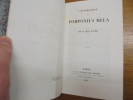
GEOGRAPHIE DE POMPONIUS MELA
C. L. F. Panckoucke, Paris. RO40200061: 1843. In-8. Relié demi chagrin vert (TBE). Quelques rousseurs. Env. 400 pages (3 ouvrages en 1 volume). Texte en latin et en français en regard. Titre doré au dos. . . . Classification Dewey : 870-Littératures des langues italiques. Littérature latine
Autres titres et auteurs disponibles ,envoi soigné.
De situ orbis
Lugduni Batavorum (Anvers), ex officina Luchtmanniana, 1743, in 12 de 143 - (80) pp. d'index in fine, joli front. gravé, rel. d'ép. plein velin ivoire, titre manuscrit d'ép. au dos, bel ex.
Pomponii Melae De situ orbis libri III. Cum notis integris Hermolai Barbari, Petri Joannis Olivarii, Fredenandi Nonii Pintani, Petri Ciacconii, Andreae Schotti, Isaaci Vossii, et Jacobi Gronovii. Accedunt Petri Joannis Nunnesii epistola de patria Pomponii Melae, & adnotate (sic!) in prooemium, atque quo priora capita libri I, et Jacobi Perizonii adnotata ad Libri I, capita septemdecim, curante Abrahamo Gronovio. Editio tertia.
Leiden, (Lugduni Batavorum), Apud Samuelem et Johannem Luchtmans, 1782.
8vo. (I, frontispiece),(XX),1081 (recte 1083),(54 index),(1 blank) p. Folding map. Vellum. 21.5 cm 'Prize copy' (Ref: STCN ppn 238030504; Schweiger 2,611/12; Ebert 13634; Graesse 5,403; Brunet 4,801; Dibdin 2,356; Spoelder p. 669, Schiedam 6) (Details: Prize copy, including the manuscript prize for Gerhardus Gelenius Brons. Back gilt. Boards with blind double fillet borders and gilt corner pieces, & the gilt coat of arms of the city of Schiedam. Engraved frontispiece by H. van der Mey and F. Bleyswyck, it depicts a cartographer busy drawing a map; in the foreground 2 nymps, one handles instruments of the cartographer, the other inspects archaeological remains. Numerous engraved illustrations in the text. The folding map of the world is after A.P. Bertius. The first 320 pages contain the text and commentary. The rest of the book is filled with the annotations of earlier important scholars) (Condition: Vellum age tanned. All 4 decorative silk fastening ribbons gone. Tiny bookseller's label on the front pastedown.) (Note: Pomponius Mela, a geographer from the South of Spain, wrote in 43/44 AD. under Claudius the first surviving work on geography in Latin. Pomponius is foremost a writer: distances, directions and other useful information for sailors or travellers is lacking. His work was meant for a educated and curious Roman public. It was known in the Middle Ages, and in the following centuries he was read at school. The Dutch scholar Jacobus Gronovius, 1645-1716, lived in the shadow of his famous father Johannes Fredericus Gronovius, professor Greek of the Unverstiy of Leiden till his death in 1671. His son Jacobus was appointed professor of History and Greek in 1679. He is best known for the 13 volume set 'Thesaurus Antiquitatum Graecarum' which he edited (1697-1702). This industrious scholar produced editions of Tacitus, Gellius, Herodotus, Polybius, Livius, Ammianus, Harpocration and Stephanus Byzantinus, and the 'editio princeps' of Manetho. Gronovius' first edition of Mela Pomponius is of 1685. He published a revised edition with commentary in 1696. Abraham Gronovius, 1695-1775, the son of Jacobus Gronovius produced in 1722 a new 'Variorum' edition of Mela Pomponius, based on the edition of his father. In 1748 Abraham Gronovius published a second and augmented edition of this work. About this second edition Abraham tells us in the preface, that the Luchtman brothers asked him to produce a new 'Variorum' edition, and that he based his edition again of that of his father. 'In ipso Pomponii Melae contextu constituendo Paternam editionem secutus sum, nisi venustiores ac nitidiores codicum MS. lectiones me alio vocarent'. (Lectori p. *3 verso/*4 recto of this 1782 edition) He consulted 11 manuscripts, including one of his one. He also added notes from earlier important editions. Jacobus Perizonius and Carolus Andreas Duker also gladly send him their own unpublished annotations. (Idem, p. *5 recto) This Mela Pomponius edition of 1782, called the third edition, is a reissue of the second edition of 1748. The preface of 1748 is repeated in this 1782 edition. Abraham Gronovius was librarian at Leyden University, from 1741 until his death. He produced editions of the 'Historiae Philippicae' of Justinus, and two editions of Aelianus. He showed interest in geographical matters. He published at Leyden in 1739 his 'Varia Geographica', and in 1752 a school edition of Mela which offers a Latin text only) (Provenance: The manuscript prize is awarded to young 'Gerhardo Gelinio Brons', on the occasion of his promotion from the 3rd to the 2nd grade for his diligence. The date is September 4, 1783, and signed by the 'curatores' of the 'Schola Latina' at Schiedam, C.J. Bosschaert, W. Jager, Jacobus van Eijk, and the Rector Johannes van Laar. Ger(h)ardus Gelenius Brons, age 17, enrolled as a student at the University of Leiden in 1785. He died in Schiedam in 1847. On the front flyleaf a small green label 'Wm Strong, bookseller, (3) Clare Street, Bristol'. William Strong died in 1846)(Collation: pi1, *8, 2*2; A-4B8 (leaf 4B8 verso, last page, blank. Leaf chi1 (title-page of part 2) bound between gathering P & Q)) (Photographs at request)
Cosmographia, sive de situ orbis.
Venice, Erhard Ratdolt, 18 Juillet 1482. 1482 1 vol. in-8° (218 x 158 mm) de : [1] f. (dont carte du monde gravée et rehaussée en frontispice), [46] ff. (Titre en rouge, grandes et petites lettrines gravées sur bois). Nombreuses annotations manuscrites d'époque à l'encre brune dans les marges. Plein vélin ancien, tranche-fils traversant les coiffes, traces de lacets et de titrage à l'encre brune. (Salissures et défauts d'usage).
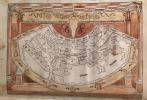
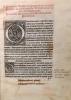
Première édition illustrée du tout premier ouvrage latin consacré à la géographie, seule édition incunable à contenir les deux traités du célèbre géographe romain. Pomponius Mela, qui écrivait aux alentours de 43, est le plus ancien géographe romain connu. Il donna une description qui couvre le monde connu des Gréco-Romains. On ne sait rien de lui, sinon son nom et son lieu de naissance qu'il indique lui-même, la petite ville de Tingentera ou Cigentera dans la province de Bétique, dans la baie d'Algésiras. On date sa vie de la période de l'empereur Claude par déduction des indications géographiques qu'il donne dans ses ouvrages : la désignation de la ville d'Afrique romaine sous le nom de Césarée, nom que lui donna Juba II sous Auguste ainsi que la référence qu'il fait à Cornélius Népos, écrivain décédé sous le règne d'Auguste. Le triomphe qui fait suite à la conquête de la Bretagne en 424, ne peut être que celui de Claude en vu de la remarque précédente. Pomponius Mela est lauteur qui présente le tableau le plus complet de létat de la géographie vers le milieu du Ier siècle de lère chrétienne. Son présent ouvrage est écrit dans un style typiquement latin et agrémenté çà et là de métaphores. En dehors des chapitres géographiques de l'Histoire naturelle de Pline l'Ancien (où Mela est cité comme une référence importante), le De situ orbis est le seul traité sur le sujet en latin classique. La carte du monde reliée en frontispice, gravée sur bois, d'inspiration Ptolémaïque, fut la seconde carte à être imprimée en Italie (Campbell p.119). Elle montre l'Europe, l'Asie et la partie nord de l'Afrique, avec le Nil représenté avec comme sources dans deux lacs, l'un directement sur l'équateur, et l'autre juste au sud de celui-ci. Ces lacs se sont recoupés avec ceux que l'on appelle maintenant le lac Albert et le Victoria Nyanza, montrant que leur emplacement était supposé, sinon connu des géographes, au moins quatre siècles avant leur découverte tardive. Au sud, des rivières qui montent des montagnes et s'écoulent dans ces lacs, le Niger en Afrique de l'Ouest sont également représentées. Cette carte est aussi la première à représenter la connaissance portugaise de lépoque de la côte ouest de l'Afrique qui conduit six ans plus tard au franchissement du Cap de Bonne-Espérance. Campbell suggère que l'imprimeur de l'édition, Erhard Ratdolt, pourrait avoir été le cartographe, puisque ceci et sa carte T-O de 1480 sont les deux premières cartes de gravure sur bois imprimées en Italie. Cette carte sera copiée pour une édition de Salamanque ainsi que pour la Chronique de Nuremberg de Schedel. Première édition de la traduction en vers de Priscianus du De situ orbis de Dionysius; lédition de Ratdolt est la seule édition incunable à contenir les deux traités géographiques. Lexemplaire présente de nombreuses annotations manuscrites contemporaines dans ses larges marges. Bel exemplaire de cet ouvrage de toute rareté. 1 vol. 8vo (218 x 158 mm) of: [1] f. (including engraved and enhanced world map as frontispiece), [46] ff. (Title in red, large and small initials engraved on wood). Numerous period handwritten annotations in brown ink in the margins. Full old vellum, thread cutting through the caps, traces of laces and titling in brown ink. (Dirt and defects of use). First illustrated edition of the very first Latin work devoted to geography, the only incunable edition to contain the two treatises of the famous Roman geographer. Pomponius Mela, who wrote around 43, is the oldest known Roman geographer. He gave a description that covers the known world of the Greco-Romans. Nothing is known of him, except his name and place of birth which he indicates himself, the small town of Tingentera or Cigentera in the province of Betic, in the bay of Algeciras. His life is dated from the period of the Emperor Claudius by deduction of the geographical indications he gives in his works: the designation of the city of Roman Africa under the name of Caesarea, name given by Juba II under Augustus. the reference he makes to Cornelius Nepos, a writer who died in the reign of Augustus. The triumph that follows the conquest of Brittany, which can only be that of Claude seen the previous remark and dates from 424. Mela is the author who presents the most complete picture of the state of geography in the middle of the first century of the Christian era. His present work is written in a typical Latin style and embellished with metaphors. Apart from the geographical chapters of the Natural History of Pline the Elder (where Mela is cited as an important reference), De situ orbis is the only treatise on the subject in classical Latin. The modified Ptolemaic map of the World was the second map to be printed in Italy (Campbell p.119). It shows Europe, Asia and the northern part of Africa, with the Nile represented with taking sources in two lakes, one directly on the equator, and the other just south of it. These lakes intersected with those now known as Lake Albert and Victoria Nyanza, showing that their location was supposed, if not known to geographers, at least four centuries before their belated discovery. To the south, rivers that rise mountains and flow into these lakes, Niger in West Africa is also represented. It is also the first map to represent the Portuguese knowledge of the time of the west coast of Africa which leads six years later to cross the Cape of Good Hope. Campbell suggests that the publisher, Erhard Ratdolt, might have been the cartographer. This map will be copied for an edition of Salamanca as well as for Schedel's Nuremberg Chronicle. First edition of Priscianus' translation of Dionysius's De situ orbis; the Ratdolt edition is the only incunable edition to contain the two geographical treatises. The copy has many contemporary handwritten annotations in its large margins. Fine copy of this book of any rarity.


Phone number : 06 81 35 73 35
Pomponii Melae De situ orbis libri III. Cum notis integris Hermolai Barbari, Petri Joannis Olivarii, Fredenandi Nonii Pintiani, Petri Ciacconii, Andreae Schotti, Isaci Vossii, & Jacobi Gronovii. Accedunt Julii Honorii oratoris Excerpta Cosmographiae. Cosmographia falso Aethicum auctorem praeferens, cum variis lectionibus ex MS. Ravennatis Anonymi Geographia, ex MS. Leidensis suppleta, curante Abrahamo Gronovio.
Leiden (Lugduni Batavorum), Ex officina Samuelis Luchtmans, 1722.


8vo. (LXXX),811,(36 index),(1 blank) p., frontispiece, folding map. Vellum 21 cm Prize copy (Ref: STCN ppn 238632024; Schweiger 2,611; Brunet 4,801; Dibdin 2,356; Graesse 5,402/403; Ebert 13632; Spoelder p. 683, Utrecht 3) (Details: Prize copy of the 'Gymnasium Hieronymianum' at Utrecht, without the prize. Gilt coat of arms of Utrecht within gilt borders on both boards. 6 thongs laced through the joints. The frontispiece, designed by H. van der My and etched by F. Bleyswyck, depicts a cartographer drawing a map of the world, in the foreground 2 women, one is a cartographer inspecting a map with rule and compass, the other is an archaeologist busy inspecting ancient treasures. Title printed in red and black. The folding map of the earth according to Mela at the beginning of the text is by 'P. Bertius, christianissimi regis geographus'. Engraved text illustrations of coins. 1 full page illustration of 2 sculptured scenes from reliefs 'in hortis Mattheis' (p. 117) The first 304 pages contain the text and commentary. The rest of the book is filled with the annotations of earlier important scholars, especially Isaac Vossius. His observationes fill the pages 316-606. At the end we find Julius Honorius' 'Excerpta quae ad Cosmographiam pertinent' (p. 685-702), the 'Cosmographia antehac temere Aetico adscripta' (p. 703-733), and the 'Ravennatis Anonymi Geographiae libri quinque' (737-811)) (Condition: Binding slightly soiled. Prize gone. All four ties gone. Name on the front flyleaf. Prize removed) (Note: Pomponius Mela, a geographer from the South of Spain, wrote in 43/44 under Claudius the first surviving work on geography in Latin. Pomponius is foremost a writer: distances, directions and other useful information for sailors or travellers is lacking. His work was meant for the educated and curious Roman public. The work was known in the Middle Ages, and in the following centuries he was read at school. The Dutch classical scholar Abraham Gronovius, 1695-1775, acted as librarian at Leyden University from 1741 until his death. He edited editions of the 'Historiae Philippicae' of Justinus, and two editions of Aelianus. He showed interest in geographical matters, and published at Leiden in 1739 his 'Varia Geographica'. He based this new 'Variorum' edition of the geographer Mela Pomponius on an edition which was previously published in 1696 by his father Jacobus Gronovius, 1645-1716, who was professor Greek of the Unverstiy of Leiden) (Provenance: On the front flyleaf in ink: 'Ex praemiis P.G. v. Poolsum 1731'. We found a Petrus Georgius van Poolsum, born in Utrecht in 1718, who became minister of the protestant church of Doorn in 1741. He died in 1772. Does the inscription mean that young Van Poolsum, age 13, received this prize in 1731? This seems possible, for he has the right age and was from Utrecht. Spoelder signals 3 copies of prizes with this type of coat of arms; they were awarded between 1689 and 1711) (Collation: pi1, *-5*8; A-3G8 (leaf 3G8 verso blank) (Photographs on request)
De situ orbis libri tres, accuratissime emendati.
Paris, Vascosan, 1551.
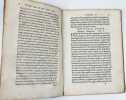
Belle impression de Michel Vascosan, en caractères italiques et grandes capitales à fond criblé. Vélin de la reliure fripé, petite déchirure dans marge du titre sans manque. Edition assez rare. Bon exemplaire. /// In-4 de 75, (1) pp. Vélin. (Reliure de l'époque.) ////

