 Write to the booksellers
10353 books for « peter l j »Edit
-
Type
Autographs (1)
Books (10230)
Engravings (1)
Magazines (7)
Music sheets (101)
New books (10)
Old papers (1)
Photographs (1)
Postcards (1)
Posters (3)
Records (1)
-
Latest
Last 24h (14)
Last 3 days (5)
Last month (90)
Last week (23)
-
Language
Danish (1)
Dutch (46)
English (72)
French (10024)
German (23)
Italian (2)
Latin (2)
Norwegian (1)
Portuguese (2)
Russian (183)
Spanish (1)
-
Century
16th (2)
17th (14)
18th (82)
19th (143)
20th (4811)
21st (953)
-
Countries
Belgium (1065)
Brazil (1)
Canada (54)
China (4)
Côte d'Ivoire (36)
Denmark (169)
France (7313)
Greece (4)
Netherlands (1)
Switzerland (1487)
United Kingdom (35)
United States of America (188)
-
Syndicate
ALAC (49)
CLAM (85)
CLAQ (14)
CNE (2)
ILAB (4966)
NVVA (327)
SLACES (327)
SLAM (4149)
SNCAO (2)
Topics
- Alps (34)
- Anticipation (46)
- Archaeology (79)
- Architecture (248)
- Army (24)
- Astronomy (27)
- Austria (27)
- Autographs (23)
- Aviation (44)
- Belgium (74)
- Biography (62)
- Cheyney peter (312)
- Children’s books (121)
- China (32)
- Christianity (21)
- Cinema (65)
- Comic strip (75)
- Contemporary look (37)
- Cooking (33)
- Detective novels (150)
- Drawings (34)
- Economics (63)
- Egypt (21)
- England (36)
- English (183)
- English literature (24)
- Ethnology (25)
- Europe (33)
- Fantastic (33)
- Fashion (23)
- Fine arts (168)
- First edition (62)
- Geography (50)
- Geology (26)
- German literature (33)
- Germanic languages (291)
- Germany (97)
- Greece (25)
- Hackney (32)
- Helvética (282)
- History (499)
- Industrial arts & crafts - fine arts (63)
- Italian (36)
- Italy (22)
- Kolosimo peter (34)
- Latin (22)
- Law (73)
- Leisure (21)
- Linguistics (26)
- Literature (380)
- Mayle peter (66)
- Medicine (75)
- Military arts (21)
- Motor vehicle (47)
- Music (28)
- Navy (36)
- Newspapers press (26)
- O'donnell peter (22)
- Ornithology (24)
- Painters (38)
- Painting (26)
- Painting (67)
- Paris (21)
- Philology (25)
- Philosophy (134)
- Photography (172)
- Poetry (41)
- Police (44)
- Policy (42)
- Psychology (52)
- Public sale (23)
- Rabe peter (26)
- Randa peter (212)
- Religions (103)
- Review (36)
- Russia (23)
- Science fiction (76)
- Sciences (117)
- Scores (118)
- Sculpture (32)
- Sociology (24)
- Songs (100)
- Sports (27)
- Spying (76)
- Switzerland (269)
- Tea (45)
- Theatre (83)
- Theology (67)
- Townsend peter (45)
- Translation (37)
- Travel (23)
- United kingdom (29)
- Ustinov peter (40)
- Various (66)
- War (129)
- Zurich (25)
The Stones
Amsterdam : The Guv'nors of R&B, 1971. PUBLICATION PIRATE SUR LES ROLLING STONES
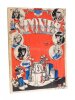
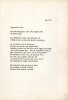
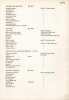
In-4° (266 x 197 mm), broché, couverture illustrée, 51 pp. Intéressante publication produite par « The Guv'nors of R& B », qui distribua des vinyles pirates des albums de The Rolling Stones. Rédigée en néerlandais et illustrée de 3 reproductions photographiques, dont 2 à pleine page (pochette de Beggar's Banquet et portrait de Brian Jones), cette publication comprend une liste des albums, EP et démos produits par les Stones avant mai 1971 ainsi que les paroles de leurs chansons (en anglais). Ne sont omis que les textes de « The Wild Colonial Boy », « Con le mie lacrime » (reprise en italien de « As Tears Go by »), « Say it Again » et « Let it Rock ». Couverture illustrée par l'auteur de bande dessinée néerlandais Peter Pontiac (1951-2015), avec les portraits de Mick Jagger, Charlie Watts, Keith Richards, Bill Wyman et Mick Taylor. Brian Jones, mort 2 ans plus tôt, apparaît dans le médaillon en haut à droite sur un fond de ciel étoilé, jouant de la lyre. Les vers de Shelley lus par Mick Jagger à la mort de Brian Jones sont reproduits à la p. 42. Provenance : Deux tampons humides non identifiés au verso de la dernière page: en violet les initiales "JL" inscrites dans un cercle, et une étoile rose à cinq branches. CCFR (21/10/2026) : Nous n'avons trouvé aucun exemplaire dans les fonds publics catalogués en France (BnF, CCFr). Frottements, petite tache sur la couverture.


TRAVELS IN TARTARY. ONE'S COMPANY AND NEWS FROM TARTARY.
LONDON. THE REPRINT SOCIETY. 1941. IN-12 DE 603 PAGES, RELIURE DE L'EDITEUR PERCALINE ROUGE, TITRE EN BLANC SUR DOS LISSE. ILLUSTRE DE 2 CARTES SUR LES PAGES DE GARDE. BON EXEMPLAIRE.
ALEXANDER THE GREAT.
LONDON. WEINDEN FELO AND NICOLSON. 1970. IN-8 CARRE DE 272 PAGES, RELIURE DE L’EDITEUR PERCALINE BLEUE, TITRE EN BLANC SUR DOS LISSE ,SOUS JAQUETTE ILLUSTREE EN COULEURS. ILLUSTRE DE 150 FIGURES EN NOIR ET DE 48 PLANCHES HORS-TEXTE EN COULEURS. INDEX, BIBLIOGRAPHIES. CARTES. CACHETS DE BIBLIOTHEQUE, PETITS DEFAUTS, SINON BON EXEMPLAIRE.
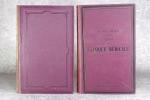
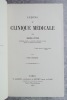
LECONS DE CLINIQUE MEDICALE.
PARIS. P. ASSELIN, SUCCESSEUR DE BECHET JEUNE ET LABE. 1875-1879. 2 TOMES EN 2 VOLUMES IN-8(15 X 23 X 11 CENTIMETRES ENVIRON) DE (6) + XIV + 824 + 4 + 32 ET XV + 829 PAGES, RELIURE DE L'EDITEUR A LA BRADEL PLEINE PERCALINE ROUILLE, PLATS ET DOS ENCADRES DE FILETS A FROID, TITRE DORE SUR DOS LISSE. AVEC DE PETITES DIFFERENCES DE RELIURE, LE TOME SECOND ETANT PARU QUATRE ANNEES APRES LE TOME PREMIER. UN DOS PALI, SINON BON EXEMPLAIRE.
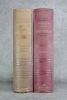
Pre-Christian Religions of the North. History and Structures 4 vols.
, Brepols, 2020 Hardback, 4 vols, lxviii + 2122 pages, Size:156 x 234 mm, Illustrations:297 b/w, 3 tables b/w., Language: English. *NEW ISBN 9782503574899.
Summary The product of an international interdisciplinary team, the History and Structures strand of the Pre-Christian Religion of the North series aims to approach the subject by giving equal weight to archaeological and textual sources, taking into consideration recent theories on religion within all the disciplines that are needed in order to gain a comprehensive view of the religious history and world view of pre-Christian Scandinavia from the perspective of the beginning of the twenty-first century. Volume I presents the basic premises of the study and a consideration of the sources: memory and oral tradition, written sources, religious vocabulary, place names and personal names, archaeology, and images. Volume II treats the social, geographical, and historical contexts in which the religion was practiced and through which it can be understood. This volume also includes communication between worlds, primarily through various ritual structures. Volume III explores conceptual frameworks: the cosmos and collective supernatural beings (notions regarding the cosmos and regarding such collective supernatural beings as the norns, valkyries, giants, and dwarfs) and also gods and goddesses (including rr, inn, Freyr, Freyja, and many others). Volume IV describes the process of Christianization in the Nordic region and also includes a bibliography and indices for the entire four-volume work. TABLE OF CONTENTS Volume 1. Introductory and Sources Jens Peter Schj dt, John Lindow, Anders Andr n, Preface & Introduction Jens Peter Schj dt, Theoretical Considerations Pernille Hermann, Memory, Oral Tradition, and Sources John Lindow, Written Sources John Lindow, Language: Religious Vocabulary Per Vikstrand, Language: Placenames and Personal Names Anders Andr n, Archaeology Anders Andr n, Images Terry Gunnell, Folklore Anders Andr n, The Spatial and Temporal Frame John Lindow, The Linguistic Frame Jens Peter Schj dt, Continuity and Break: Indo-European Jens Peter Schj dt, Continuity and Break: Germanic Rudolf Simek, Encounters: Roman Matthias Egeler, Encounters: Celtic Leszek P. S?upecki, Encounters: Slavic Thomas Dubois, Encounters: Baltic Thomas Dubois, Encounters: S mi Thomas Dubois, Encounters: Balto-Finnic Volume 2. Contexts and Communication between Worlds Anders Andr n, Historical and Social Contexts Stefan Brink, Laws and Assemblies John Lindow, Ethics Judy Quinn, Gender Jens Peter Schj dt, Kings and Rulers Jens Peter Schj dt, Warrior Bands Jens Peter Schj dt, Various Ways of Communicating Stephen A. Mitchell, Magic and Religion Torun Zachrisson & Anders Andr n, Ritual Space Andreas Nordberg, Ritual Time and Time Reckoning Olof Sundqvist, Cultic Leaders and Religious Specialists Jens Peter Schj dt, Crisis Rituals Jens Peter Schj dt, Cyclical Rituals Jens Peter Schj dt, Passage Rituals Neil Price, Death Ritual and Mortuary Behaviour John Lindow & Anders Andr n, Worlds of the Dead John Lindow, Fate John Lindow & Jens Peter Schj dt, The Divine, the Human and In Between Volume 3. Conceptual Frameworks: Cosmos and Collective Supernatural Beings, Gods and Goddesses Mathias Nordvig, Cosmogony Mathias Nordvig, Cosmology Anders Hultg rd, Cosmic Eschatology: Ragnar k John Lindow, Vanir and sir John Lindow, rr Jens Peter Schj dt, inn Olof Sundqvist, Freyr Jens Peter Schj dt, Loki Ingunn sd sard ttir, Freyja John Lindow, Baldr John Lindow, Nj?r r John Lindow, T r Anders Andr n, Ullr Sebastian C llen, Heimdallr Ingunn sd sard ttir, Frigg Jens Peter Schj dt, Hoenir John Lindow, Ska i John Lindow & Jens Peter Schj dt, Minor Gods and Goddesses Anders Andr n, Divine Twins Anders Andr n, Sun and Moon Rudolf Simek, Matronae John Lindow, D sir Karen Bek-Pedersen, Norns Judy Quinn, Valkyries Margaret Clunies Ross, Giants Terry Gunnell, Dvergar (Dwarfs) Terry Gunnell, lfar (Elves) Volume 4. The Christianization Process, Bibliography, General Indices Michael H. Gelting, The Christianization of Denmark S bj rg Walaker Nordeide, The Christianization of Norway J n Vi ar Sigur sson, The Christianization of the North Atlantic Bertil Nilsson, The Christianization of Sweden Tuomas Heikkil , Christianization of Finland H kan Rydving, The Christianization of the S mi Primary & Secondary Sources - General Indices
Beyond the End of the World. Photographs, Diaries, Notes, Sketches, and Collages; Phantasmagoria, Metamorphoses, Natural Horrors, and Prehistoric Memories: Last Voices of a Lost Africa
New York Universe 1999 In-8 Broché, couverture illustrée
Edition originale de ce catalogue d'exposition organisée par Peter T. Tunney. Préface de Salvatore Carrubba. Texte de Owen Edwards et nombreuses photos et photomontages en couleurs de Peter Beard. Sur le premier rabat photo originale en couleurs représentant la gaçade de la galerie, et montée en page de garde, l'invitation illustrée dont les bords sont déchirés certainement par Peter Beard. Ces interventions originales de l'artiste sont attestées par trois tampons « Authentic Hog Ranch Product », et "C. Peter Beard 1999 VINTAGE photographs". JOINT l'invitation à l'exposition de l'artiste à Paris Chez Kamel Mennour (décembre 1999 - février 2000). Très bon 0
"je leur souhaite toutes les voluptés depuis les plus hautes jusqu'aux plus grossières" Lettre autographe signée adressée à René Peter
s. l. mardi (25 octobre 1904) | 12.60 x 20.40 cm | 12 pages sur 3 bifeuillets
Lettre autographe signée de Marcel Proust,adressée à René Peter. Douze pages rédigées à l'encre noire sur troisbifeuillets de papier blanc bordé de noir. Déchirures aux extrémitéslelong des plis des bifeuillets, n'affectant pas le texte. Publiée dans Kolb, IV, n°168. Très longue lettre de Proust, pleine de sous-entendus, au dramaturge René Peter. Vantant le succès de ce dernier, Proust fait la sublime confession de sa propre vanité d'écrivain et de ses ambitions littéraires. Il laisse subtilement transparaître sa jalousie pour la maîtresse de Peter et déclare également sa dévotion absolue à Reynaldo Hahn. Il s'agit d'une des premières missives qu'il envoie à Peter, son ami d'enfance, après avoir récemment repris contact avec lui. * Proust, éternellement accablé de maux, reste reclus et s'excuse d'avoir manqué la répétition de la nouvelle pièce de Peter, Le Chiffon. La comédie en trois actes de Peter sur une musique de Reynaldo Hahn, créée à l'Athénée le mois suivant, connaîtra un franc succès et une soixantaine de représentations avant la fin de l'année. Le jeune Proust se remet à l'opinion dithyrambique de Hahn qui avait assisté aux répétitions, et lamissive se mue en une déclaration d'amour au compositeur et à son jugement impeccable : "Reynaldo m'a dit que votre pièce était délicieuse et ravissante, ce qui n'est pas tout à fait la même chose, qu'il y avait ri et pleuré comme il ne rit et pleure jamais au théâtre et que la langue était exquise. Cela j'en étais certain. Mais ne connaissant rien de vous, je ne pouvais savoir si vous aviez le génie dramatique. J'en suis certain maintenant car si je ne connais pas de juge aussi sévère, aussi ridiculement sévère que Reynaldo, je n'en connais pas non plus qui ait plus de goût. De sorte que sa sévérité habituelle, sa perspicacité foncière, donnent à son enthousiasme une valeur très grande à mes yeux". Dans un enchevêtrement caractéristique d'aveu et de déni, Proust cache à peine ses ambitions et sa quête de reconnaissance. Il appelle de tous ses vux les mêmes lauriers qu'il place sur la tête de Peter : «votre pauvre et charmante mère qui comme tous ceux qui aiment et qui ont vécu, la vie meurtrissant toutes nos tendresses, a tant souffert, assiste à ce grand bonheur, à ces premiers rayons de la gloire sur votre front charmant, que Vauvenargues dit plus doux que le soleil levant. Je n'en parle que par citation, ne les ayant jamais connus moi-même !» Il finira même par instiller sa vocation littéraire dans le parcours du narrateur de La Recherche, sa formation d'homme de lettres davantage marquée par les déceptions que par les «rayons de la gloire» tant attendus par Proust lui-même. Elle culmine cependant dans le Temps retrouvé par une épiphanie: le narrateur sait maintenant quoi écrire et, surtout, comment l'écrire. La lettre marque les débuts du trio Proust-Peter-Hahn dont la complicité était telle qu'ils formeront un vocabulaire spécial dont eux seuls avaient le secret. Le fleuve de mots de cette lettre illustre parfaitement cet indéniable lien entre désir et admiration intellectuelle : «Car je tiens aussi au succès, je suis extrêmement matériel dans mes vux pour ceux que j'aime et je leur souhaite toutes les voluptés depuis les plus hautes jusqu'aux plus grossières». Malgré ces démonstrations de générosité, l'écrivain ne peut cependant masquer une certaine jalousie envers Robert Danceny, fictif co-auteur du Chiffon qui n'était autre que la maîtresse de Peter, Mme Dansaërt. Proust lui fait élégamment mais explicitement référence : «Cela me rend heureux de penser que la charmante femme dont on m'assure que c'est elle qui se cache sous le nom masculin de votre collaborateur, sera de moitié dans votre uvre. Je ne dis pas de votre succès, car collaboratrice ou non, elle eût toujours par le cur partagé votre succès, ayant je crois pour vous une amitié profonde». Typique d'un Proust transposant ses désirs à travers la fiction, l'écrivain formera dans les
Ensemble de plaquettes de la revue Hourglass éditée par Peter Wood.
Nous avons en très bel état : Collectif, Curiouser & Curiouser, [les Surréalistes et leurs amis en Grande-Bretagne] Paris, Hourglass, 1995, 14,5 x 21 cm, agr., n.p. [18], E.O. Plaquette éditée à l'occasion de l'exposition « Curiouser & Curiouser, les Surréalistes et leurs amis en Grande-Bretagne » de l'Espace UVA à Paris, organisée par Peter Wood en 1995 et qui rassembla de nombreux surréalistes anglais. Georges Lem, Eglantine aigre Paris, Hourglass, 1993, 14,5 x 21 cm, agr., 30 pp., E.O., numéroté 116/150 Max Hague, Swimming, peintures, dessins, assemblages Paris, Hourglass, s.d. [1994], 14,5 x 21 cm, agr., n.p. [4] Plaquette éditée à l'occasion de l'exposition qui s'est tenu du 25 octobre au 1er novembre [1994] à l'Espace UVA à Paris, organisée par Peter Wood. Joyce Mansour, Floating Islands Paris, Hourglass, 1992, 15 x 21 cm, br., 50 pp., E.O. Traduction de Guy Flandre et Peter Wood de ce texte de Joyce Mansour publié initialement par Gallimard en 1973 in Histoires nocives: Jules César - Iles flottantes. Le nôtre, un des 100 exemplaires. Joyce Mansour, Julius Caesar Paris, Hourglass, 1991, 15 x 20 cm, br., 50 pp., E.O. Traduction de Peter Wood de ce texte de Joyce Mansour publié initialement par Gallimard en 1973 in Histoires nocives: Jules César - Iles flottantes. Le nôtre, un des 150 exemplaires. Farid Lariby, Hâter l'exigenceParis, Hourglass, s.d., 15 x 21 cm, agr., n.p. [16], E.O., 24/150[Michel Lequenne, Hélène Lariby], Hommage à Farid Lariby 1937-1990, 30 octobre-10 novembre 1992Paris, Hourglass, s.d. [1992], 15 x 21 cm, agr., n.p. [6]Guy Girard, Insula Pomorum Paris, Hourglass, 1990, 15 x 21 cm, agr., n.p. [24], E.O., 19/100 Première traduction des poèmes de Guy Girard en anglais par Peter Wood, Guy Flandre et Guy Girard. Envoi à Guy Ducornet : « pour Guy Ducornet, ces poèmes traduits, en cette langue du pays des allers et retours vers l'île des pommes, avec amitié, Guy Girard, le 3 avril 2006. » Marianne van Hirtum, Proteus volens suivi de Le fantôme du quai Anatole Paris, Hourglass, 1991, 15 x 21 cm, agr., n.p. [18], E.O., 54/250 Marianne van Hirtum, Peintures, dessins, objets Paris, Hourglass, s.d., 15 x 21 cm, agr., n.p. [8] Plaquette éditée à l'occasion de l'exposition qui s'est tenu du 4 au 13 novembre 1991 à l'Espace UVA à Paris, organisée par Peter Wood. Marianne van Hirtum, John the Pelican Paris, Hourglass, 1990, 15,5 x 21 cm, agr., n.p. [22], E.O., 77/150 Première traduction des poèmes de Marianne van Hirtum en anglais par Peter Wood et Guy Flandre. [André Bernard, Guy Bodson, Cassio, Gwen et Sol Diez, Georges Lem], Les Minutes du Sablier Paris, Hourglass, s.d., 14,5 x 21 cm, agr., n.p. [18]
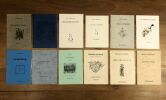
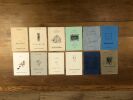
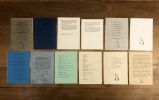
Peter van Straaten : 11 delige set boekjes (zie beschrijving)
, Van Gennep, 1991 Hardcovers, 11 delige set boekjes met het beste van Peter van Straaten ! In Prima Staat ! 190 x 130 mm. Titels : / Huwelijk & Relatie / Reizen & Trekken / Trouw & Ontrouw / Mens & Bedrijf / Min & Onmin / Kunst & Cultuur / Zaken & Werk / Vrouwen & Mannen / Lijf & Leed / Eten & Drinken / Ouders & Kinderen.....Tekeningen in de welbekende stijl van Van Straaten met zwarte humor. ISBN 9789060129104.
Peter van Straaten 1935-2016, TEKENAAR, CARTOONIST, SCHRIJVER Zijn werk is geliefd en veelomvattend: van politieke prenten, cartoons en strips, toneelstukken, erotische tekeningen tot vele bundels met proza. De carri re van Peter van Straaten beslaat meer dan een halve eeuw, waarin hij duizenden tekeningen maakte voor landelijke- en regionale dagbladen, weekbladen en boeken, alsook theater- en filmaffiches. Zijn werk is vele malen in boekvorm verschenen en jaarlijks, sinds 1994 tot heden, worden zijn tekeningen gebundeld in Peter?s Zeurkalender. Het werk van Peter van Straaten werd veelvuldig bekroond. Hij ontving onder meer de Gouden Ganzenveer in 2006 en in 2010 werd hem de Jacobus van Looy-prijs toegekend, een prijs voor dubbeltalenten. In 2011 ontving Van Straaten een eredoctoraat aan de Rijksuniversiteit Leiden. Peter won vijf keer de Inktspotprijs, de laatste keer in 2016.
Peter Rogiers, overzicht van het oeuvre van beeldhouwer Peter Rogiers
, Kannibaal, 2016 Hardcover, 29 x 27 cm, 160 pag. Quadrichromie, Tweetalige editie Nederlands-English.*NIEUW ISBN 9789492081643.
Indrukwekkend overzicht van het oeuvre van beeldhouwer Peter Rogiers Peter Rogiers is een van de bekendste Belgische beeldhouwers, wiens werk wereldwijd geexposeerd wordt en deel uitmaakt van tal van museumcollecties. Hij had onlangs soloshows in Berlijn, Parijs, Brussel, Antwerpen, New York en Los Angeles, en zijn werk werd opgenomen in de prestigieuze Louis Vuitton Building in Los Angeles. Als eerste kunstenaar ooit krijgt hij in 2016 voor de tweede keer, na vijftien jaar, een retrospectieve tentoonstelling in het Middelheimmuseum. In deze publicatie wordt een uitgebreide selectie van zijn werk sinds de jaren negentig getoond, afgewisseld met foto?s van zijn indrukwekkende installatieclusters in het Antwerpse openluchtmuseum. Rogiers beschouwt zichzelf als een figuratieve kunstenaar die verder werkt in de sculptuurtraditie en zo een plaats heeft in de kunstgeschiedenis, meer dan dat hij in zijn werk wil verwijzen naar de hedendaagse maatschappelijke context. In het verleden toonde Rogiers onconventionele, hybride sculpturen in polyurethaan, en recentelijk experimenteerde hij met vormen in aluminium, die door kunstcritica Lilly Wei in het magazine Art in America als echte highlights werden geprezen: ?Hoewel Peter Rogiers? sculpturen op het eerste gezicht alarmerend zijn, hebben ze ook fabuleuze kwaliteiten die elk gevoel van kwaadwilligheid tenietdoen. Ze bestaan uit gelijke delen barok, futurisme, surrealisme en kitsch, en ze belichamen zowel mimetische als verzonnen elementen. Op een ironische manier ontwricht Rogiers de integriteit van het figuratieve, door gezichten en ledematen (als dat is wat ze zijn) op onverwachte plaatsen te laten opduiken.? In samenwerking met het Middelheimmuseum, waar de grote retrospectieve van Peter Rogiers loopt van 21 mei tot 18 september 2016, en Tim Van Laere Gallery, Antwerpen.
Charley's Space
- broché - Hatje Cantz Publishers - Bonnefantenmuseum, Maastricht / Carré d'Art, Musée d'art contemporain de Nîmes - 2003 - In-4 (28 x 25 cm) broché, sous jaquette de l'éditeur - 143 pages - Nombreuses reproductions en couleurs - ISBN : 90-72251-33-4 / 3-7757-1333-6 - Titre complet : Peter Doig. Charley's Space - Textes de Paula van den Bosch et Catherine Grenier - Préfaces d'Alexander van Grevenstein et Jean-Paul Fournier - Catalogue publié à l'occasion de l'exposition Peter Doig. Charley's Space, présentée au Bonnefantenmuseum, Maastricht, du 11 mai au 7 septembre 2003, puis au Carré d'Art, Musée d'art contemporain de Nîmes, du 9 octobre 2003 au 4 janvier 2004
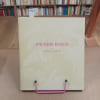
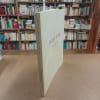
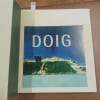
Bon état - Avec l'affiche de l'exposition
Leon Lemahieu, Peter Aerts. Concept Ibert Pauwels, Peter Aerts Graphic design Ibert Pauwels. Photography Yannick Milpas
Reference : 67726
Peter Aerts Transit Zone
, , 2025 Hardback, 100 pages, 32 (hoogte) x 23.8 Dutch (NL) ed. ISBN 9789083459318.
Published on the occasion of the exhibition Transit Zone by Peter Aerts, for Ceramic Brussels 2025, 22-25 January 2025 Concept Ibert Pauwels, Peter Aerts Graphic design Ibert Pauwels. Text Leon Lemahieu, Peter Aerts. Also including texts by Daniel Moore, Thom Yorke, Anastasia, Henry Miller. Photography Yannick Milpas
Peter Cheyney - Laura Cheyney - Pierre Dac - Georges Vialetay - Le Commissaire Jules Belin.
Reference : 18172
(1949)
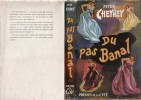
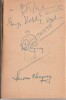
Du Pas Banal. ( Avec jaquette, carte postale éditeur et 5 autographes signés par Peter Cheyney, de son épouse Lauretta Singer Groves, signée Laura Cheyney, de Georges Vialetay, du Commissaire Jules Belin et de Pierre Dac, signée Peter Dac ).
Editions Presses de la Cité 1949. In-12 cartonnage éditeur souple de 224 pages au format 12,5 x 19 cm. Couverture avec titre imprimé. Dos carré. Complet de la superbe jaquette illustrée. Cette dernière est en état magnifique, sans restaurations au verso. Plats et intérieur parfait. Exemplaire non coupé. Recueil de nouvelles, traduites par J. Weil. Rare édition originale, surtout dans un tel état de fraicheur, proche du neuf. Exceptionnel exemplaire enrichi de 5 autographes signés par Peter Cheyney, de son épouse Lauretta Singer Groves, signée Laura Cheyney, de Georges Vialetay, du Commissaire Jules Belin et de Pierre Dac, signée Peter Dac. Le nom du destinataire est illisible. Il est joint une très rare carte postale Editeur, au format 8,7 x 14 cm, avec au recto une photo en noir de Peter Cheyney et au verso un texte composé uniquement par des titres de romans de l'auteur, publiés aux Presses de la Cité. A noter que Pierre Dac, une des voix de la France Libre à Londres en 1943-1944 à la B.B.C, dans l’émission " Les Français parlent aux Français ", avait rencontré Peter Cheyney qui était à Londres à cette époque, en tant que formateur, dans les Services Secrets anglais. Magnifique lot.
Vente exclusivement par correspondance. Le libraire ne reçoit, exceptionnellement que sur rendez-vous. Il est préférable de téléphoner avant tout déplacement.Forfait de port pour un livre 10 € sauf si épaisseur supérieure à 3 cm ou valeur supérieure ou égale à 100 €, dans ce cas expédition obligatoire au tarif Colissimo en vigueur. A partir de 2 livres envoi en colissimo obligatoire. Port à la charge de l'acheteur pour le reste du monde.Les Chèques ne sont plus acceptés.Pour destinations extra-planétaire s'adresser à la NASA.Membre du Syndicat Lusitanien Amateurs Morues
Correspondance d’édition.
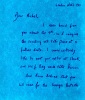
26 lettres et cartes postales manuscrites signées adressées à Michel Bulteau, écrites à l’encre violette entre octobre 1994 et avril 1998 sur papiers de couleurs : projets de traductions et publications en France, évocations littéraires, artistiques, pécuniaires, mélancoliques… Quelques extraits, 16-X-94 : « Dear Michel, I think you and I have very similar tastes in music, literature, art, decadence – and life itself. I shall send you some of my books. Is there anyone in French publishing who would be interested in my book about Lou Reed ‘Waiting for the Man’ – which Picador will publish here in November ? » 20-XI-94 : « I want to thank you so very much for the Baron Corvo books, your essay and the marvelously explicit Venetian letters. I feel we are already good friends, and I’m looking forward to the time when we can meet. (…) I don’t know if you could encourage Du Rocher to look at my very individual book about Rimbaud, and perhaps at my homocratic novel ‘Isidore’ which is about another of my heroes : Lautréamont, our legendary Ducasse. And by the way I love Corvo’s exotic style and eccentricities. We share very similar tastes in our pantheon of the stars. I find it so hard to exist from writing. I’m hugely prolific, and I make almost no money. It’s terrible. But we do it for love of the imagination and to proclaim the great, the bizarre, the beautiful. Thank you for being. With love and starlight, Jeremy. » 28-XII-94 : « Here is the gift of my Lou Reed book for you, how I wish we could find a French publisher for it, and that you could be the translator. End of the year blues. I always find Christmas/new year particularly melancholy, so much work done, sadness accumulated – but still there’s a brilliance attached to the moment, and I’m always working on new books, pushing the imagination beyond frontiers. I send you gold stars ». S. d. : « I would be so grateful if you would try Du Rocher with ‘Isidore’. It is an extraordinary beautiful and unusual novel, and I don’t think there are any other novels on Lautréamont. Life would have been so much easier for me if I had been born French, all my heroes are the anarchic French poets. The wild imagination, vibrant with images. » 1-II-95 : « I hope all is well with you. There are little tints of spring in the air, and I have pink hyacinths in my room. Their languid scent Is intoxicating. My book about Lou Reed is handled by agents. If they prove problematic, I would sell the book personally to a French publisher, so that you could translate it. I’m desperate for some money at present. Surely some French publisher would wish a book on Lou Reed. I’m currently writing a book about Marc Almond, called ‘The Last Star’. He’s my favorite torch singer. » 23-I-96 : « I’m working on a novel about Elvis Presley, ‘Heartbreak Hotel’, and I’ve also been performing and recording with David J, who used to be in ‘Bauhaus’. I will send you some tapes. Is there any new of ‘Isidore’ ? Peter Owen’s very disappointed not to have heard. Please do let him know. We should do a reading in Paris, you and I, at a venue where we could use our respective musicians. Let’s think about it. Much love and starlight, Jeremy. » 28-I-96 : « How I know that topology of hallucinated madness – it fuels both our works – but the suffering is huge. Buddhist chanting helps me through the intimate hells. I went through a terrible breakdown in 1990. As your work is close to Michaux’s, I imagine you suffer deeply. » 3-III-96 : « Wonderful to receive your letter, and I haven’t forgotten ‘Flowers’ (de Michel Bulteau, un livre consacré à Warhol). I’m going to work at finding a publisher for you here. An independent. We may be able to interest Peter Owen in your work. He likes you a lot, and is coming back to Paris in May. » 15-VI-97 : « I’m busy working on new poems, essays, fiction, etc. The usual galaxy of creative energies. And I’m sure you’re writing too, working the imagination towards apocalypse. » ‘Invention d’Isidore Ducasse’ est finalement paru aux Éditions de la Différence en 1996. On joint 9 lettres tapuscrites signées de l’éditeur anglais Peter Owen sur papiers à entête, contemporaines à ces projets de publications. 5-IV-95 : « Jeremy Reed has advised me of your interest in ‘Isidore’ and that your publishers La Difference want to buy it. I am awfully pleased that you wish to take on this exceptional author. » Puis, 12-IX-96 : « Sorry we missed – I got your message that you could be late but I wonder if you went to the La Nouvelle Agence office ? Anyhow, I am sorry I missed you. La Difference have not paid the advance. Jeremy is upset. Mary and I are very annoyed. They are, of course, illegal if they try to publish without the advance. Could you explain this to them and of course, if they do not pay none of us will ever want to deal with them again. The whole thing is very bad publishing practice and it has gone on so long ! Thank you for your help. Sincerely, Peter Owen. » Bon état.
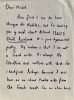

Projekt: DO-IT-YOURSELF-MONTAGE. - Typoskriptmanuskript.
(Mai/Juni 1967) 21 x 29 cm. 2 Blatt.
Interessantes nie realisiertes Projekt der Konzeptkunst. - Peter Roehr (1944 - 1968) studierte nach einer Ausbildung als Werbemaler von 1962 - 1966 an der Wiesbadener Werkkunstschule Malerei. 1964 lernte er den Galeristen und Sammler Paul Maenz kennen, mit dem er 1967 die wegweisende Ausstellung "Serielle Formationen" in Frankfurt organisierte. 1968 eröffneten die beiden unter dem Namen "Pudding-Explosion" den ersten Hippieladen in Deutschland. Roehr starb am 22. August 1968 an Krebs. Sein Archiv wurde 2011 von Paul Maenz dem Museum für Moderne Kunst Frankfurt übergeben. Das Manuskript ist die logische Weiterführung der seriellen Produktion Roehrs auf eine weitere Stufe. "Die Absicht ist, ein Päckchen mit Einzelteilen zu verkaufen, die, nach der beigelegten Anweisung benutzt, eine Montage von Peter Roehr ergeben." Das Konzept beschreibt bis ins kleinste Detail das Projekt. Inhalt: 40 Elemente (Etiketten, gestanzte Papp-Buchstaben u. a.). - Gebrauchsanweisung: Foto-Strip. - Verpackung: 3 verschiedene Typen. - Kosten: Verkaufspreis unter DM 30.--. Auf jeden Fall ... ist das Angebot mit 29.80 DM zu machen. - Produktion und Vertrieb: edition et, Versandartikel. - Auflage: 100 Exemplare. - Gestaltung: Paul Maenz. Im Archiv von Peter Roehr befindet sich eine leicht abweichende Fassung zu der hier angebotenen (Archiv Peter Roehr 2015/1293BI1). - Mit Mittelfalz. Ich danke Frau Nadine Hahn vom Peter Roehr Archiv für Ihre Auskunft).
propos Peter Benoit, Op stap met een groot Antwerpenaar.
, pandora, 2011 Paperback with flaps, 210x115mm, 144p, throughout colour illustrations, Dutch (NL) edition . . ISBN 978905325308313.
met een kortingsbon ter waarde van ? 10 voor aankoop CD Peter Benoit !!! Peter Benoit werd voor de muziek wat Hendrik Conscience voor de literatuur betekende: de man die zijn volk leerde zingen. Maar Benoits betekenis is in Vlaanderen nauwelijks nog bekend. De gids A Propos Peter Benoit wil hierin verandering brengen. Auteur Patrick Verhoeven neemt u in de voetsporen van Benoit mee door Antwerpen, de stad waar de toondichter zijn grootste muzikale triomfen kende, maar ook bittere tegenslagen en ontgoochelingen te incasseren had. De hedendaagse beleving van Benoit wordt niet vergeten en er wordt kritisch gekeken naar de manier waarop vandaag in de stad met zijn erfgoed wordt omgegaan. De rijk geillustreerde wandelgids neemt de lezer tenslotte mee op uitstapjes naar de Antwerpse Kempen, de Leiestreek, Brussel en Parijs, plaatsen die ook een belangrijke rol hebben gespeeld in het leven van Benoit. Verschijnt als eerste in een nieuwe reeks wandelgidsen rond historische Antwerpse figuren.
Walker Peter Walker P. M. B Walker Peter M.B. Walker P. M. B Walker Peter M.B
Reference : 233770
(1989)
ISBN : 1852961538
Chambers Biology Dictionary
Chambers 1989 336 pages in8. 1989. Broché. 336 pages. en anglais
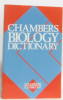
proche du neuf
Vive les illusions !
Christian Bourgois, 2008. In-8 br. Traduit par A. Weber. Entretiens enregistrés en 2002. E.O. S.P.
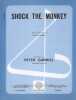
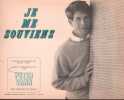
Peter,Sue et Marc - Reber Peter - Martinetti Nella,Reber Peter,Zuckowski Rolf
Reference : 110848
(1981)
Partition de la chanson : Io senza te ( me without you / Ich ohne dich ) Chanson représentant la Suisse au Grand Prix Eurovision 1981
Intersong 1981
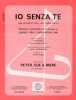
Très bon état Format Coquille Piano
Peter Buggenhout: Umleitung
, Skulpturenpark Waldfrieden & Walther K nig, 2025 Hardcover, 128 pages, color illustrations, 30 x 24cm, text German/English * new. ISBN 9783753308395.
This catalogue is published on the occasion of the exhibition Peter Buggenhout: umleitung at the Skulpturenpark Waldfrieden. The publication on the work of the Belgian artist Peter Buggenhout (b. 1963) is divided into two parts: The first part is dedicated to the current exhibition ?Peter Buggenhout: umleitung? at the Skulpturenpark Waldfrieden in Wuppertal. The publication presents impressive photographs of the nine expansive objects that Buggenhout has created from discarded materials such as plastic film, scrap metal, textile fabric and organic substances. A storyboard shows the creation and installation of the work ?Babel Variations II?. The second part provides a comprehensive overview of Buggenhout?s significant in situ works ? both indoor and outdoor installations. This section sheds light on the development of his artistic work over the years and presents his monumental works
Catalogue des oeuvres de Peter Klasen exposées au Studio Santandrea de Milan
Studio Santandrea | Milano 1976 | 16 x 24 cm | agrafé
Edition originale du catalogue des oeuvres de Peter Klasen exposées au Studio Santandrea de Milan en 1976. Agréable exemplaire illustré de reproductions d'oeuvres de Peter Klasen. Texte de Franck Venaille. Envoi autographe signé de Peter Klasen à l'historien d'art Bernard Teyssèdre. - Photographies et détails sur www.Edition-Originale.com -
[Günter Brus, Kurt Kern, Dominik Steiger, Valie Export et Peter Weibel] - Günter Brus, Kurt Kern, Dominik Steiger, Valie Export et Peter Weibel
Reference : 015556
(1972)
DIE SCHASTROMMEL, 7 - Organ der osterr Exilregierung
Bolzano Die Schastrommel 1972 In-4 Broché, couverture illustrée Edition originale
Revue des actionnistes viennois en exil. Couverture sérigraphiée en couleurs. Textes, illustrations et photographies de Kurt Kern, Dominik Steiger, Valie Export et Peter Weibel. Tirage à 500 exemplaires. >Bel exemplaire Très bon 0
UNE GRAVURE : "COUR LEROUX, RUE St SIMILIEN", par Peter Hawke, Tirée de l'HISTOIRE DE NANTES d'Ange GUÉPIN, 1839 Nantes Prosper Sebire, libraire et C. Mellinet imprimeur Editeurs,
Nantes Prosper Sebire, libraire et C. Mellinet 1839 une gravure sur cuivre gravée en noir , format : 17 x 26 cm, Titrée "COUR LEROUX, RUE St SIMILIEN", par Peter HAWKE, Tirée de l'HISTOIRE DE NANTES d'Ange GUEPIN, 1839 Nantes Prosper Sebire, libraire et C. Mellinet imprimeur Editeurs,
belle gravure .... RARE ..... en trés bon état (very good condition). en trés bon état

