 Write to the booksellers
2797 books for « lambert »Edit
-
Type
Autograph (3)
Book (2722)
Magazine (17)
Music sheets (48)
New book (1)
Old papers (1)
Photographs (3)
Posters (2)
-
Latest
Last 24h (1)
Last 3 days (5)
Last month (20)
Last week (8)
-
Language
Dutch (3)
English (2)
French (2792)
-
Century
17th (4)
18th (80)
19th (161)
20th (1217)
21st (218)
-
Countries
Belgium (213)
Brazil (1)
Canada (19)
China (1)
Côte d'Ivoire (11)
Denmark (28)
France (2312)
Germany (11)
Greece (1)
Netherlands (1)
Switzerland (197)
United Kingdom (2)
-
Syndicate
ALAC (19)
CLAM (10)
CLAQ (1)
CNE (3)
ILAB (1262)
NVVA (19)
SLACES (19)
SLAM (1178)
SNCAO (30)
Topics
- Adam (32)
- Archaeology (21)
- Architecture (28)
- Army (10)
- Autographs (43)
- Belgium (24)
- Bibliography (12)
- Bibliothèques (9)
- Biography (18)
- Brittany (18)
- Brussels (14)
- Catholicism (10)
- Children’s books (53)
- China (13)
- Christianity (16)
- Collaboration (13)
- Comic strip (16)
- Cooking (31)
- Culinary art (13)
- Dauphiné (9)
- Dedication (26)
- Early printed books (13)
- Economics (19)
- Education (22)
- Education - morals (16)
- Egypt (11)
- Ethnology (12)
- Fine arts (39)
- First edition (28)
- Fishing (11)
- Folklore (9)
- Geography (17)
- Geology (9)
- Hackney (9)
- Helvética (12)
- History (123)
- Lambert andré (27)
- Lambert bernard (17)
- Lambert christophe (24)
- Lambert david (13)
- Lambert denis-clair (9)
- Lambert elie (31)
- Lambert fernand (19)
- Lambert gilles (30)
- Lambert gustave (10)
- Lambert jacques (12)
- Lambert jean (38)
- Lambert jean-clarence (36)
- Lambert lucien (10)
- Lambert marc (26)
- Lambert michel (10)
- Lambert paul (16)
- Lambert pierre (9)
- Languedoc (10)
- Law (23)
- Literature (130)
- Magazine (29)
- Manuscripts (15)
- Medicine (21)
- Motor vehicle (9)
- Mountaineering climbing (18)
- Music (9)
- Navy (12)
- Newspapers press (53)
- Painters (13)
- Painting (17)
- Paris (34)
- Philosophy (22)
- Photography (11)
- Poetry (56)
- Policy (13)
- Provence (28)
- Psychiatry neurology (9)
- Psychology (12)
- Regionalism (21)
- Religions (32)
- Review (32)
- Reviews (33)
- Saint lambert (88)
- Sciences (16)
- Scores (59)
- Sociology (10)
- Songs (49)
- Swerts lambert (15)
- Switzerland (17)
- Tales (11)
- Teaching (9)
- Theatre (31)
- Theology (13)
- Travel (18)
- United states (9)
- Various (18)
- Wallonia (11)
- War (31)
- Women (the) (24)
Guide agréé par l'Office National de la Chasse: Manuel officiel de l'examen de chasse
Marc lambert 1981 239 pages in8. 1981. broché. 239 pages. Le 'Manuel officiel de l'examen de chasse' de Marc Lambert est le seul guide agréé par l'Office National de la Chasse. Depuis sa publication il a formé ou contribué à former environ 500 000 chasseurs représentant près de 30% des porteurs actuels de permis et est considéré comme le livre de référence pour toute une génération de jeunes chasseurs
État correct intérieur propre
Histoire des Guerres de Religion en Provence (1530-1598) - tome 1er
Chantemerle éditeur 1972 479 pages in8. 1972. broché. 479 pages. Cet ouvrage de Gustave Lambert réédité par Chantemerle en 1972 retrace l'histoire des guerres de religion en Provence entre 1530 et 1598. Il s'agit d'une réimpression de l'édition originale de Toulon (1868-1870) en deux volumes qui constitue une référence pour l'étude des conflits religieux et du protestantisme dans cette région

intérieur trés propre
Amérique latine : structures sociales et institutions politiques
Presses Universitaires de France 1963 448 pages in12. 1963. broché. 448 pages. Ouvrage académique de Jacques Lambert analysant les structures sociales et les institutions politiques de l'Amérique latine. Le livre aborde notamment les partis populistes ainsi que le rôle des étudiants et des militaires dans le paysage politique de la région
Bon état
Gide familier
JULLIARD 1958 203 pages in8. 1958. Broché avec jaquette. 203 pages. Témoignage intime et lucide de Jean Lambert sur les dernières années de la vie d'André Gide basé sur sa relation proche avec l'écrivain. Le livre se caractérise par sa franchise et sa bonne foi
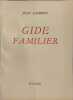
État correct jaquette très abimée (déchirée) dos de l'ouvrage en mauvais état intérieur correct
La légende des gènes : Anatomie d'un mythe moderne
Dunod 2006 307 pages 15x23x2cm. 2006. Broché. 307 pages. Cet ouvrage retrace l'histoire de la génétique et de ses découvreurs en analysant comment se sont constitués les grands principes de la biologie moderne. L'auteur Gérard Lambert docteur en médecine et journaliste scientifique examine la mise en place du mythe moderne des gènes en confrontant les promesses du séquençage du génome humain aux résultats concrets et en remettant en cause la suprématie attribuée aux gènes à travers l'étude des OGM clones et animaux transgéniques
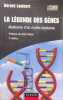
Bon état
Beurdeley Michel Lambert-Brouillet M.-Th. Inconnu
Reference : 6366
(1984)
ISBN : 2719102121
L'eunuque aux trois joyaux. collectionneur et esthetes chinois (Editions Vilo)
Office du livre / Vilo 1984 239 pages IN4. 1984. cartonnage editeur avec jaquette. 239 pages. Ouvrage d'art et d'histoire culturelle consacré aux collectionneurs et esthètes chinois richement illustré avec 176 reproductions en couleur et noir et blanc. Publié en 1984 il s'agit d'une édition de qualité en français sur le thème de l'art et de la collection en Chine
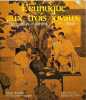
Très bon état
Organisations . mouvements et . unites de l' etat francais /. vichy 1940-44
Grancher 1992 266 pages in8. 1992. Broché avec jaquette. 266 pages. Cet ouvrage de référence documente de manière précise et illustrée l'histoire des mouvements milices et organisations civiles et militaires créés sous le régime de Vichy entre 1940 et 1944. Il retrace les tentatives de l'extrême droite française de fonder une France à son image et évoque le parcours de ces structures qui ont sombré à l'arrivée des Alliés
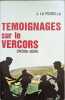
Bon état
MONGOLISME 82
MARDAGA PIERRE 1998 217 pages 15x1 8x21 4cm. 1998. Broché. 217 pages.
Bon état tâche sur les tranches intérieur propre
Questions et réponses sur le Mongolism
MALOINE S.A. ÉDITEUR 1982 159 pages in8. 1982. broché. 159 pages. Ouvrage de type questions-réponses sur le mongolisme (trisomie 21) probablement destiné à un public non spécialiste ou aux familles. Les extraits disponibles ne permettent pas de décrire précisément le contenu


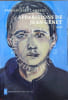
Apparitions de Jean Genet
Impressions nouvelles 2018 110 pages 14 4x20 8x1 2cm. 2018. broché. 110 pages.
Record a l'himalaya / préface de maurice herzog
ÉDITIONS FRANCE EMPIRE 1955 315 pages in8. 1955. reliure éditeur demi basane dos à nerfs. 315 pages.

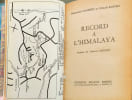
dos et coiffes légèrement usagés intérieur propre
La corde était coupée
Éditions robert laffont 1971 230 pages in8. 1971. Broché couverture rempliée. 230 pages.
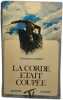
Bon état
Tornade sur halmahera
Librairie Jules Tallandier 1980 216 pages in8. 1980. Reliure editeur cartonnée. 216 pages.
Bon état
La societe de la peur
Plon 2005 192 pages in8. 2005. broché. 192 pages.
Bon état qq traces de bic dans le texte
Anthologie 6e livre de l'élève
Magnard 1990 189 pages 24 2x19 4x1 4cm. 1990. broché. 189 pages.
Bon état
Belgique) Colloque International De Langue Française Sur "Langage Et Arriération Mentale" (1981 : Liège J.-A. (Jean-Adolphe) Rondal Jean-Luc Lambert H. H Chipman
Reference : 12816
(1995)
ISBN : 2870091508
Psycholinguistique et handicap mental
Mardaga 1995 244 pages in8. 1995. Broché. 244 pages. Cet ouvrage collectif issu d'un colloque international tenu à Liège en 1981 explore comment les personnes handicapées mentales (enfants adolescents adultes) communiquent et utilisent le langage. Il aborde les problèmes rencontrés et les perspectives de recherche dans ce domaine
Bon état
Opération Hazalah
Hachette Littérature 1972 189 pages in8. 1972. Broché couverture rempliée. 189 pages.
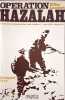
Bon état
Esthétique navale: 1830-2010
Editions du Gerfaut 2009 87 pages 25 8x1 4x30 2cm. 2009. Relié. 87 pages.


Soyez vous aussi astrologue
DERVY-LIVRES 1978 204 pages collection LA ROUE CELESTE. in8. 1978. broché. 204 pages.
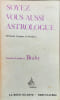
Bon état couverture légèrement usagée intérieur propre
Dictionnaire des dieux et des mythes égyptiens
Le grand livre du mois 2002 242 pages in8. 2002. Broché. 242 pages.
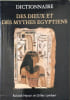
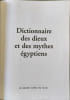
Très bon état
Observations sur quelques dimensions du monde intellectual.
(Berlin, Haude et Spencer, 1770). 4to. No wrappers, as issued in ""Memoires de l'Academie Royale des Sciences et Belles Lettres"", tome XIX. Pp. 421-438. Very nice and clean.
The rare first printing of one of the few of Lambert's philosophical works that appeared within his life-time. This is one of the three philosophical papers that he published in ""Nova acta Eruditorum"", which are of varying philosophical content.The present work played a significant role in the rediscovery within philosophy of the concept of the ""sublime"", the foundational concept which was so famously treated by Kant in his third Critique (of Judgment). Neither the idea of the beautiful nor of the sublime was novel in the 18th century, as the distinction between the two had already been made in ancient philosophy. However, for several centuries, aesthetics had been dominated by the question of the beautiful, and it was only around Kant's and Lambert's time that the sublime had become a topic of interest again - this time primarily as the sublime in nature. When Lambert thus discusses the sublime in the present article, it is probable that his conception of it can have influenced Kant and his exposition in the ""Critique of Judgment"", which appeared a couple of decades later. ""Kant himself recognized Lambert as a philosopher of the highest qualities"" and he expected much from his critical attitude. He had drafted a dedication of the ""Critique of Pure Reason"" to Lambert, but Lambert's untimely death prevented its inclusion.Lambert's place in the history of philosophy, however, should not be seen only in its relation to Kant. The genesis of his philosophical ideas dates from a time when Kant's major works had yet to be conceived. It was the philosophical doctrines of Leibniz, Christian Wolff, and Locke that exerted the more important influence - insofar as one can speak of influence with a self-taught and wayward man such as Lambert... The two main aspects of Lambert's philosophy, the analytic and the constructive were both strongly shaped by mathematical notions"" hence logic played an important part in his philosophical writing. Following Leibnitz' ideas, Lambert early tried to create and ""ars characteristic conbinatoria"", or a logical or conceptual calculus. He investigated the conditions to which scientific knowledge must be subjected if it is to enjoy the same degree of exactness and evidence as mathematical knowledge..."" (D.S.B. VII:597).

Neues Organon oder Gedanken über die Erforschung und Bezeichnung des Wahren und dessen Unterscheidung vom Irrtum und Schein. 2 Bde. - [COINING ""PHENOMENOLOGY""]
Leipzig, Johann Wendler, 1764. 8vo. Non-uniformely bound. Vol 1: Completely uncut in the original cardboard-binding. Some wear to capitals and hinges. Internally a bit of minor occasional brownspotting. (18), 592 pp. Vol 2: 19th century marbled paper-binding with red gilt title-label to spine. Wear to extremities. Only light occasional brownspotting. (2), 435, (1).
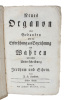
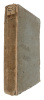
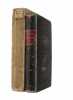
The very rare first edition of Lambert's seminal main philosophical work, the work which coined the term ""phenomenology"". ""Neues Organon"" is a work of breakthrough that came to, directly or indirectly, influence almost all later philosophy, also that of Kant.Today, Johann Heinrich Lambert arguably mostly remembered as one of the greatest mathematicians and logicians of his time. However, a true polymath, he also played a dominant role in the development of 18th century philosophy, primarily with his philosophical magnum opus ""Neues Organon"", in which he set out to provide a better methodology for philosophy, with the aid of mathematics. As such, he is considered a path-breaker of Rationalism and one of the most important predecessors of Kant, who knew him well and admired him greatly"" the two corresponded frequently. ""Kant himself recognized Lambert as a philosopher of the highest qualities"" and he expected much from his critical attitude. He had drafted a dedication of the ""Critique of Pure Reason"" to Lambert, but Lambert's untimely death prevented its inclusion.Lambert's place in the history of philosophy, however, should not be seen only in its relation to Kant. The genesis of his philosophical ideas dates from a time when Kant's major works had yet to be conceived. It was the philosophical doctrines of Leibniz, Christian Wolff, and Locke that exerted the more important influence - insofar as one can speak of influence with a self-taught and wayward man such as Lambert... The two main aspects of Lambert's philosophy, the analytic and the constructive were both strongly shaped by mathematical notions"" hence logic played an important part in his philosophical writing. Following Leibnitz' ideas, Lambert early tried to create an ""ars characteristic conbinatoria"", or a logical or conceptual calculus. He investigated the conditions to which scientific knowledge must be subjected if it is to enjoy the same degree of exactness and evidence as mathematical knowledge... In ""Neues Organon"" he next developed the idea of a characteristic language of symbols to avoid ambiguities of everyday language"" and finally, in the most original part of his work called """"Phänomenologie,"" he discussed appearance and gave rules for distinguishing false (or subjective) appearance from a true (or objective) one that is not susceptible to sensory illusions."" (D.S.B. VII:597).
Cosmologische Briefe über die Einrichtung des Weltbaues. - [PRE-ESTABLISHING THE BASIC FEATURES OF THE UNIVERSE]
Augspurg, Eberhard Kletts Wittib., 1761. Contemporary white-dyed sheepskin. Spine with a bit of surface wear, old hand-written paper-label to spine. XXVIII, 317 pp. A stamp inside front free end-paper. Light browning, scattered marginal brownspots, but in general a fine copy. A few leaves in ""Vorrede"" misbound.
The scarce first edition of Lambert's sensational ""Cosmological Letters"", his most important astronomical work, in which he to a large extent fore-shadowed the documentation of the basic features of the universe that Hershel later carried out.The work became very popular and was translated into French, Russian, and English, and it was later re-written and published as ""Systeme du Monde"" in Berlin, 1770. ""Of special interest among Lambert's astronomical writings - apart from applications of his physical doctrines - are his famous Cosmologische Briefe über die Einrichtung des Weltbaues"" (Augsburg, 1761).Not familiar with the similar ideas of Thomas Wright (1750) and with Kant's ""Allgemeine Naturgeschichte und Theorie des Himmels"" (1755), Lambert had the idea that what appears as the Milky Way might be the visual effect of a lens-shaped universe. On this basis he elaborated a theory according to which the thousand of stars surrounding the sun constituted a system. Moreover he considered the Milky Way as a large number of such systems, that is, a system of higher order…"" the ""Cosmologische Briefe was a great sensation and was translated into French, Russian, and English. Only when William Hershel systematically examined the heavens telescopically and discovered numerous nebulae and ""telescopic milky-ways"" did it become obvious that Lambert's description was not mere science fiction but to a large extent a bold vision of the basic features of the universe"" (Scriba in D.S.B. VII:598). Kant's mentor (Martin Knutzen) died in 1755, three years before the pre-critical project unfolded. But Kant still had the chance of meeting kindred spirits. One of these was the great philosopher and mathematician Johann Heinrich Lambert, whom he admired a great deal. Finally he had encountered a thinker who appreciated both the scientific and metaphysical perspective, who worried about their tensions, and who was searching for a truce. In his ""Cosmologische Briefe…"" (Cosmological Letters on the establishment of the universe), Lambert worked on the same topic as Kant had worked on in his earlier Universal Natural History. The tasks and results of both works resemble each other, in so far as they were both proposals of integrating Newtonian physics into a larger framework, and they both contained a theory of the dynamic constitution of the universe. Furthermore, as Kant's scientific works should be viewed under the perspective of his general philosophical outlook, so must Lambert's work in physics and astronomy be seen in relation to his general philosophical outlook and his perpetual quest for introducing mathematical exactness into the sciences. ""Lambert's efforts to improve communication and collaboration in astronomy were noteworthy. He promoted the publication of astronomical journals and founded ""Berliner astronomisches Jahrbuch oder Ephemeriden"". Many of the articles that he contributed to it were not published until after his death... He also favored the founding of the Berlin observatory. These suggestions, in line with Leibniz' far-reaching plans for international cooperation of scientific societies, inaugurated a new period of scientific teamwork."" (D.S.B., VII:598).

