 Write to the booksellers
190 books for « l p hartley »Edit
-
Type
Books (188)
Music sheets (2)
-
Language
English (1)
Finnish (1)
French (188)
-
Century
18th (3)
19th (2)
20th (118)
21st (3)
-
Countries
Belgium (9)
Canada (2)
Côte d'Ivoire (1)
Denmark (2)
France (164)
Switzerland (12)
-
Syndicate
ALAC (1)
CLAQ (1)
ILAB (94)
NVVA (1)
SLACES (1)
SLAM (88)
Topics
- Applied arts (1)
- Architecture (1)
- Biology (2)
- Bouissounouse janine (1)
- Ceramic (1)
- Chemistry (2)
- Cinema (1)
- Contact sports (1)
- Death (1)
- Dedication (1)
- Detective novels (12)
- England (4)
- English (2)
- English literature (3)
- Exhibition catalogue (1)
- Finances (1)
- Flora (3)
- Foreign literature (2)
- Games toys (1)
- Gastronomy (1)
- Geography (1)
- Great britain (1)
- Hartley howard (8)
- Helvética (1)
- History (7)
- Horse (1)
- Horse riding (1)
- Indians red indians (1)
- Kahnweiler daniel-henry (1)
- Linguistics (1)
- Literature (18)
- Mathematics (1)
- Mexico mayas (1)
- Miller (1)
- Motor vehicle (1)
- Neurology (1)
- News (4)
- Philosophy (2)
- Poles (4)
- Policy (4)
- Psychiatry neurology (2)
- Psychology (1)
- Quebec (1)
- Religions (1)
- Review (1)
- Sciences (1)
- Scores (2)
- Scotland (1)
- Sicard (1)
- Simone (2)
- Songs (2)
- Sports (2)
- Spying (2)
- Switzerland (1)
- Tea (1)
- Theatre (3)
- United kingdom (4)
- Various (2)
- Version (1)
- War (1)
- Witch (2)
De l'homme, de ses facultés physiques et intellectuelles, de ses devoirs et de ses espérances. Ouvrage traduit de l'anglais avec des notes explicatives de R.A. SICARD -- 2 VOLUMES (COMPLETE SET) -- BEL EXEMPLAIRE
P;, Ducauroy, 1802, 2 volumes in 8 reliés en demi-basane rouge, dos ornés de filets dorés (reliures de l'époque), (quelques rousseurs), T.1 : 10pp., 402pp., T.2 : (2), 430pp.
---- EDITION ORIGINALE de cette traduction de l'ouvrage de HARTLEY par l'Abbé SICARD, successeur de l'ABBE DE L'EPEE à la tête de l'institut des sourds-muets ---- BEL EXEMPLAIRE ---- "THE FOUNTAINHEAD OF SOMME THE MOST IMPORTANT IDEAS IN PSYCHOLOGICAL, BIOLOGICAL AND SOCIOLOGICAL THOUTHT". (DSB) ---- "HARTELY wrote one important work, Observations on man, his frame, his duty and his expectation... The first volume of Observations is a tour de force which considers every significant topic in neurophysiology and human and comparative psychology, explained in terms of the development of complex ideas and habits from simple sensations and their repeated juxtapositions in experience. Mental associations were paralleled by vibrations of particles in the nervous system that persisted in the form of smaller 'vibratuncles' which provided the physical basis for memory... The significance of Hartley's work did not lie in any new empirical findings but in a set of assumptions and a framework for approaching the phenomena of life and mind. In the century following the publication of Observations, the work came to be seen as the fountainhead of some of the most important ideas in biological, psychological and social thought. Viewed in a narrow perspective, it was the first published work in english to use the term "psychology" in its modern sense. Hartley's principles provides the conceptual framework for the associationist tradition in modern psychology, including learning theory and psychoanalysis. His speculations about the physiology of the nervous system laid the foundations for the dominant sensory-motor interpretation of neuro-physiology and the experimental localization of functions in the cerebral cortex. It is misleading, however, to separate the psycholo-physiological from the more general aspects of Hartley's influence. His book is the central document in the history of attempts to apply the categories of science to the study of man and society... Considered conceptually, Hartley's was the first systematic elaboration of the explanatory principle that came to play an analogous role in the biological and human sciences to the concept of gravity or attraction in the physicochemical sciences. His unification of sensation, motion, association, and vibrations in a coherent mechanistic theory of experience and behavior provided the grounds for the secularization of the concepts of adaptation and utility... Erasmus Darwin used Hartley's mechanisms as the basis for his theory of evolution and for his system of medical classification in Zoonomia... Müller drew on Hartley's motor theory of learning, which was by then gaining support from findings in experimental neurophysiology. A. Bain integrated Hartley's sensory-motor physiology with the mainstream of the english tradition of associationist psychology. Théories of evolution also drew on Hartleian mechanisms. Thus, Spencer's evolutionary theory extended associationist learning theory from the experience of the individual to that of the race. J. Hughlings Jackson applied these conceptions to the physiology and pathology of the brain, while David Ferrier applied them to the experimental localization of cerebral functions...". (DSB VI p. 139) ---- Zilboorg pp. 192, 282, 397 - Norman N° 1003 english ed. - Hunter & Macalpine pp. 379/382 - MacHenry**2584/G2
The history of Sandford and Merton - corrected and revised by Cecil Hartley - a new edition with illustrations
Goerge routledge and sons 1890 in12. 1890. Relié.
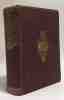
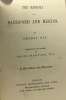
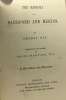
charnière fortement fragilisée couverture frottée dorures sur tranche livre jauni
Explication physique des sens, des idées et des mouvemens tant volontaires qu'involontaires - Traduit de l'anglais par M. l'Abbé Jurain -- PREMIERE EDITON FRANCAISE -- 2 VOLUMES (COMPLETE SET) -- BON EXEMPLAIRE
Reims, Delaistre, 1755, 2 volumes in 8 reliés en plein veau moucheté, dos orné de fers dorés, tranches rouges, (reliures de l'époque), (une coiffe légèrement émoussée, petit travail de vers à la partie inférieure du dos au tome 1), T.1 : 36pp., 502pp., T.2 : 8pp., (1), 474pp., (6)
---- PREMIERE EDITION FRANCAISE ---- BON EXEMPLAIRE ---- "THE FOUNTAINHEAD OF SOMME THE MOST IMPORTANT IDEAS IN PSYCHOLOGICAL, BIOLOGICAL AND SOCIOLOGICAL THOUTHT". (DSB) ---- "HARTELY wrote one important work, Observations on man, his frame, his duty and his expectation... The first volume of Observations is a tour de force which considers every significant topic in neurophysiology and human and comparative psychology, explained in terms of the development of complex ideas and habits from simple sensations and their repeated juxtapositions in experience. Mental associations were paralleled by vibrations of particles in the nervous system that persisted in the form of smaller 'vibratuncles' which provided the physical basis for memory... The significance of Hartley's work did not lie in any new empirical findings but in a set of assumptions and a framework for approaching the phenomena of life and mind. In the century following the publication of Observations, the work came to be seen as the fountainhead of some of the most important ideas in biological, psychological and social thought. Viewed in a narrow perspective, it was the first published work in english to use the term "psychology" in its modern sense. Hartley's principles provides the conceptual framework for the associationist tradition in modern psychology, including learning theory and psychoanalysis. His speculations about the physiology of the nervous system laid the foundations for the dominant sensory-motor interpretation of neuro-physiology and the experimental localization of functions in the cerebral cortex. It is misleading, however, to separate the psycholo-physiological from the more general aspects of Hartley's influence. His book is the central document in the history of attempts to apply the categories of science to the study of man and society... Considered conceptually, Hartley's was the first systematic elaboration of the explanatory principle that came to play an analogous role in the biological and human sciences to the concept of gravity or attraction in the physicochemical sciences. His unification of sensation, motion, association, and vibrations in a coherent mechanistic theory of experience and behavior provided the grounds for the secularization of the concepts of adaptation and utility... Erasmus Darwin used Hartley's mechanisms as the basis for his theory of evolution and for his system of medical classification in Zoonomia... Müller drew on Hartley's motor theory of learning, which was by then gaining support from findings in experimental neurophysiology. A. Bain integrated Hartley's sensory-motor physiology with the mainstream of the english tradition of associationist psychology. Théories of evolution also drew on Hartleian mechanisms. Thus, Spencer's evolutionary theory extended associationist learning theory from the experience of the individual to that of the race. J. Hughlings Jackson applied these conceptions to the physiology and pathology of the brain, while David Ferrier applied them to the experimental localization of cerebral functions...". (DSB VI p. 139) ---- Zilboorg pp. 192, 282, 397 - Norman N° 1003 english ed. - Hunter & Macalpine pp. 379/382 - MacHenry**2583/ARM2D-8125/ARB5-5561/ARB4
A view of the Present Evidence for and against Mrs Stephens's Medicines, As a Solvent for the Stone. Containing A Hundred and Fifty-five Cases. With some experiments and observations.
London S. Harding, J. Robinson, and J. Roberts. 1739
First edition. A collection of evidence concerning a medicine provided by Mrs Stephens. Hartley is a supporter of this medicine, and in this work, put forward his case that it was both safe and effective. The first part of the work was previously published as a pamphlet in 1738. This received some criticism and rebuttals, so he here produced further cases and a re-affirmed conclusion. Contemporary full leather, with gilt dentelles to the boards and gilt decoration to the spine. Leather label with titles. The work has suffered water staining to the front board (doesn't affect the inside of the book). The spine is quite rubbed, and with cracking to the top edge, and the label. A little chipping to the top of the spine. The leather is a little brittle following the water damage. Marbled end papers. The title page also has staining to the edges, but is substantially sound. The rest of the book is in good condition, with a little marking / darkening only. There is a nicely written paragraph of manuscript in French to the front end paper. This is outlining where various papers have appeared in French translation. The contemporary French manuscript note on the front endpaper points to early continental interest in Hartley's work. Joanna Stephens spent roughly fifteen years developing a stone-dissolving remedy, ultimately a mixture of calcined eggshells and snail shells, soap, herbs and honey, as an alternative to lithotomy, the brutal and often fatal surgical alternative of the day. After building a reputation through published testimonials, she offered to make her secret formula public in exchange for £5,000, an enormous sum. A private subscription fell well short, so Parliament itself stepped in: a panel of trustees, including the Archbishop of Canterbury, tested the remedy on patients over several months, and in June 1739 Parliament agreed the evidence was convincing enough to pay her the full £5,000 from public funds. An extraordinary and unprecedented act of the state purchasing a medical secret for the public good. David Hartley (17051757) was a Yorkshire-born physician who practised in Bury St Edmunds, London and Bath, and who suffered severely from bladder stones for most of his adult life, which is precisely why he became personally invested in Stephens's remedy, which gave him some relief. He is better known today for his philosophical work "Observations on Man" (1749), which founded associationist psychology and had a lasting influence on later thinkers. Samuel Taylor Coleridge was such an admirer that he named his own son Hartley after him. This work is particularly interesting as it was produced to promote the private subscription, including a list of the early subscribers. It was only after that subscription fell short that Parliament stepped in. vii, 204 [iii]. pages. 19cm x 12cm. OCLC: 14328263. Despite quite a number of library holdings, there are no copies of this work available for sale at the time of cataloguing.

La Belle Courtisane
Champs-élysées 1967 in12. 1967. Broché.
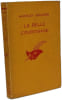
Bon état bords un peu frottés intérieur propre
The Meaning of Money
John murray 1919 in8. 1919. Relié cartonné.


etat correct interieure jauni couverture un peu tache
Structure and activity of enzymes - Federation of European Biochemical Societies Symposium No. 1 held in London on 24th March 1964
Academic Press / London and New York 1964 in8. 1964. Cartonné.
Bon Etat de conservation coin supérieur du faux-tire découpé étiquette sur la 3e de couverture intérieur propre par ailleurs
L'Angleterre - une autocritique
Seuil 1964 in8. 1964. Broché.
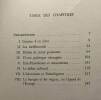
rousseurs sur tranche et dans les plats intérieurs couverture ternie intérieur propre par ailleurs
Le messager - The go-between (édition en français)
Le club français du livre 1971 in8. 1971. Cartonné.

Bon état (BE) intérieur frais
Dernier rendez-vous
Presses de la cité / un mystère 1954 221 pages poche. 1954. Broché. 221 pages.
Extérieur défraichi texte légèrement jauni marges plus jaunissantes
L'angleterre une autocritique
Seuil 1964 266 pages in8. 1964. Broché. 266 pages.
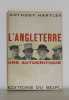
Etat Correct pages légèrement jaunies
La méprise
Presses de la Cité 1973 254 pages in8. 1973. Broché. 254 pages.
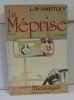
Etat Correct pages uniformément jaunies aspect sali
Recueil d'expériences et d'observations sur la pierre, et en particulier sur les effets des remèdes de Mademoiselle Stephens, pour dissoudre la pierre
Paris, Piget, 1740, in-8, [4]-382-[2] pp, 1 pl, Basane havane, dos à nerfs fleuronné et pièce de titre rouge, tranches rouges, Première édition française, complète en un volume (l'édition de 1743 est en deux vol.). L'ouvrage, traduit de David Hartley (1705-1757) par Sauveur-François Morand (1697-1773), a paru originellement en anglais en 1739 à Londres (A View of the Present Evidence for and Against Mrs. Stephens's Medicines, as a Solvent for the Stone). La planche, gravée sur cuivre par Brunet, représente des calculs d'après un dessin fait de mémoire par William Cheselden et envoyé à Morand. David Hartley, médecin et philosophe, rend compte ici d'un remède souverain pour la pierre, de la composition d'une certaine Joanna Stephens, en cherchant à réunir les preuves pour et contre et en faisant état de ses propres expériences. Il relate ainsi 155 cas et parvient à la conclusion que traitement est sans danger et efficace, en permettant la dissolution des calculs par l'urine. Il encourage ainsi la collecte de 5000 livres sterling pour la révélation et la publication de sa composition (p. 306 et suiv.). Cette proposition fit débat et l'engagea dans une controverse avec le Dr John Rutty, qui démontrait au contraire que le remède en question, fait de coquilles d'oeufs et de feuilles de savon calcinées, ne pouvait faire preuve d'efficacité. La planche est déreliée. Épidermures, mors fendillés. Couverture rigide
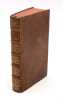
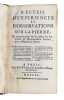
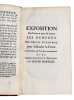
Bon [4]-382-[2] pp., 1 pl.

Recueil d'experiences et d'observations sur la pierre, et en particulier sur les effets des remèdes de Mademoiselle Stephens, pour dissoudre la pierre
Paris, Piget, 1740, in-8, [4]-382-[2] pp, 1 pl, Basane havane, dos à nerfs fleuronné et pièce de titre rouge, tranches rouges, Première édition française, complète en un volume (l'édition de 1743 est en deux vol.). L'ouvrage, traduit de David Hartley (1705-1757) par Sauveur-François Morand (1697-1773), a paru originellement en anglais en 1739 à Londres (A View of the Present Evidence for and Against Mrs. Stephens's Medicines, as a Solvent for the Stone). La planche, gravée sur cuivre par Brunet, représente des calculs d'après un dessin fait de mémoire par William Cheselden et envoyé à Morand. David Hartley, médecin et philosophe, rend compte ici d'un remède souverain pour la pierre, de la composition d'une certaine Joanna Stephens, en cherchant à réunir les preuves pour et contre et en faisant état de ses propres expériences. Il relate ainsi 155 cas et parvient à la conclusion que traitement est sans danger et efficace, en permettant la dissolution des calculs par l'urine. Il encourage ainsi la collecte de 5000 livres sterling pour la révélation et la publication de sa composition (p. 306 et suiv.). Cette proposition fit débat et l'engagea dans une controverse avec le Dr John Rutty, qui démontrait au contraire que le remède en question, fait de coquilles d'oeufs et de feuilles de savon calcinées, ne pouvait faire preuve d'efficacité. Fortes épidermures sur les plats. Bel état intérieur. Couverture rigide
Bon [4]-382-[2] pp., 1 pl.
The Royal society its origins and founders : . Edited by Sir Harold Hartley
Royal society Broch D'occasion tr¿s bon tat 01/01/1960 276 pages
LA CREVETTE ET L'ANEMONE
Hachette 1954 livre roman 18,5*12 254 pages les meilleurs romans étrangers
bon broché avec jaquette ----------> Pour bénéficier du tarif de livraison le plus avantageux, pour la France et certains pays d'Europe, les livres seront expédiés par Mondial Relay. Merci de m'indiquer un point relais Mondial Relay lors de votre commande
Ecorchée Hartley, Adèle and Zachayus, Michèle
PHOTOS SUR DEMANDE
Merci de nous contacter à l'avance si vous souhaitez consulter une référence dans notre boutique à Authon-du-Perche.
Le royaume des chevaux [Hardcover] Hartley Edwards, Elwyn and Sabathé, Philippe
France loisirs Format 26x28cm - 144 pages.
Merci de nous contacter à l'avance si vous souhaitez consulter une référence dans notre boutique à Authon-du-Perche.
La Sorcière
1936 N° 217 - petit in-8 cartonnage éditeur avec sa jaquette illustrée par Jean Bernard (Poste de Police) - 1936 - 244 pages - Ed. Librairie des Champs-Elysées - coll. Le Masque
jaquette abimée avec manque mais le premier plat est en bon état
Le Chauffeur est à vos ordres. Traduit de l'anglais par Denise Meunier.
Pairs, Librairie Plon, Feux Croisé Ames et Terres étrangères, 1959. Un volume in-8, broché, 244 pp.
Édition orginale de la traduction. Un des 40 exemplaires numérotés sur papier d'Alfa seul tirage en grand papier. Ex N° 11 en parfait état,* Leslie Poles Hartley, né le 30 décembre 1895 à Whittlesey et mort le 13 décembre 1972 à Londres, est un écrivain britannique du XXe siècle, réputé pour ses romans et nouvelles. Fait commandeur de l'ordre de l'Empire britannique, il reste aujourd'hui principalement connu pour son roman The Go-Between adapté au cinéma en 1970 par Harold Pinter, et réalisé par Joseph Losey, le film ayant obtenu la Palme d'or au festival de Cannes.
Chassé-croisé. Traduit de l'anglais par Madame E. R. Blanchet.
Pairs, Librairie Plon, Feux Croisé Ames et Terres étrangères, 1958. Un volume in-8, broché, 295 pp.
Édition orginale de la traduction. Un des 40 exemplaires numérotés sur papier d'Alfa seul tirage en grand papier. Ex N° 11 en parfait état,* Leslie Poles Hartley, né le 30 décembre 1895 à Whittlesey et mort le 13 décembre 1972 à Londres, est un écrivain britannique du XXe siècle, réputé pour ses romans et nouvelles. Fait commandeur de l'ordre de l'Empire britannique, il reste aujourd'hui principalement connu pour son roman The Go-Between adapté au cinéma en 1970 par Harold Pinter, et réalisé par Joseph Losey, le film ayant obtenu la Palme d'or au festival de Cannes.
Recueil d’expériences et d’observations sur la pierre, et en particulier sur les effets des remèdes de Mademoiselle Stephens, pour dissoudre la pierre.
A Paris, chez Piget, 1740. In/12 reliure plein veau moucheté, dos à nerfs à fleurons dorés, pièces de titres rouges, tranches rouges, bandeaux, culs de lampes, 382 pages. Petit manque en coiffe supérieure, mais très belle fraîcheur cependant. Rousseurs éparses.
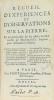
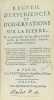
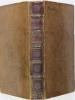
Hartley (1705-17578), médecin et philosophe anglais. Il étudia la médecine et la philosophie à l’Université de Cambridge, puis exerça successivement la profession de médecin à Londres et Bath. Son fils (1729-1813) devint membre du Parlement , se prononça en faveur de l’abolition de l’esclavage et fut un des plénipotentiaires chargés de mettre un terme à la guerre entre l’Angleterre et les Etats-Unis. Barbier t. 4.

