Write to the booksellers
1276 books for « hamilton a »Edit
-
Type
Books (1261)
Magazines (1)
Music sheets (9)
New books (1)
Photographs (3)
Posters (1)
-
Latest
Last month (19)
Last week (6)
-
Language
English (8)
French (1268)
-
Century
18th (31)
19th (127)
20th (505)
21st (144)
-
Countries
Belgium (87)
Brazil (1)
Canada (6)
China (2)
Côte d’Ivoire (1)
Denmark (8)
France (1068)
Germany (1)
Netherlands (3)
Switzerland (97)
United Kingdom (2)
-
Syndicate
ALAC (5)
CLAM (2)
CLAQ (1)
ILAB (588)
NVVA (9)
SLACES (9)
SLAM (547)
SNCAO (1)
Topics
- Africa (4)
- Anticipation (12)
- Architecture (7)
- Autographs (4)
- Bachaumont (5)
- Bibliophilism (3)
- Biography (13)
- Carpenter (4)
- Children’s books (9)
- China (4)
- Cinema (8)
- Civilisation (4)
- Curiosa (14)
- Dance & ballet (6)
- Dancing (4)
- Denmark (3)
- Detective novels (20)
- Dictionaries (5)
- Doisneau robert (8)
- Early printed books (6)
- England (12)
- English (90)
- English literature (6)
- Engraving (books about) (3)
- Entomology (3)
- Erotic (7)
- Fantastic (8)
- Fine arts (19)
- First edition (31)
- Flechier (4)
- French literature (4)
- Geography (5)
- Geology (3)
- Germanic languages (3)
- Great britain (4)
- Greece (7)
- Greek (4)
- Hamilton edmond (18)
- History (65)
- Hugo victor (26)
- Industrial arts & crafts - fine arts (3)
- Ireland (4)
- Iron (22)
- Italian (3)
- Japan (5)
- Lefranc de pompignan (4)
- Legends (4)
- Linguistics (3)
- Literature (108)
- Manuscripts (3)
- Memories (24)
- Military arts (3)
- Mythology (6)
- Navy (5)
- Newspapers press (5)
- North america (4)
- Painting (5)
- Paris (3)
- Parny (3)
- Perrault charles (8)
- Philosophy (7)
- Photography (51)
- Poetry (7)
- Policy (3)
- Posters (4)
- Psychology (3)
- Racine jean (5)
- Railway (15)
- Regnard (5)
- Reliure (5)
- Review (4)
- Rome (3)
- Russia (3)
- Ruth (3)
- Saint- pierre jacques henri bernardin de (3)
- Science fiction (20)
- Sciences (4)
- Scores (10)
- Songs (9)
- Spying (8)
- Surrealism (4)
- Tales (14)
- Tea (7)
- Translation (15)
- Travel (9)
- United kingdom (11)
- United states (8)
- Various (17)
- Voltaire (5)
- Walt disney (4)
- War (18)
- Wash tint (4)
- Wildlife (4)
- Women (the) (4)
- Xviii th century (5)
- Youth (4)
The Genetical Evolution of Social Behaviour, I (+) The Genetical Evolution of Social Behaviour, II. - [HAMILTON'S RULE]
London, Academic Press, 1964. 8vo. In the original grey printed wrappers. In ""Journal of Theoretical Biology"", Volume 7, Number 1, July 1964. Entire issue offered. A very fine and clean copy. Pp. 1-16"" Pp. 17-52. [Entire volume: 170, (2) pp.].
First printing of Hamilton's two seminal publications, perhaps the most important in evolutionary biology in the 20th century, on altruism in relation to kin selection. Hamilton is, primarily because of the present publication, widely regarded as being one of the most influential theoretical biologists of the twentieth century. ""Hamilton's principal achievement was so thoroughly to revise the language of evolutionary biology that it has become nearly impossible to speak in evolutionary explanations except in terms of the self-interest of the organism or gene."" (DSB)Hamilton's rule: k> 1/r, a gene causing an organism to benefit relatives at the expense of its own reproduction will be selected and increase in a population if the benefit to the ""altruist"" outweighs the discounted relationship, or as Hamilton himself described it: ""a gene causing altruistic behavior towards brothers and sisters will be selected only if the behavior and the circumstances are generally such that the gain is more than twice the loss" for half-brothers it must be more than four times the loss" and so on. To put the matter more vividly, an animal acting on this principle would sacrifice its life if it could thereby save more than two brothers, but not for less."" (DSB). Due to the complexity and advanced mathematics the paper was rejected twice until it was accepted by the reviewer's an it was not until the mid 1970ies that his theory became widely know and cited: ""Hamilton wrote up the theory of inclusive fitness in two versions. One was a lengthy, fully mathematical treatment that unified understanding of a considerable body of case studies of altruistic behaviors that Hamilton drew from the scientific literature, the fruit of his graduate research. The second was a short, mostly verbal abstract of the whole, containing only the mathematical relation of Hamilton's rule and some general, theoretical remarks on its applicability. He met difficulty in publishing both. The first he submitted to the Journal of Theoretical Biology, where it spent considerable time in the reviewing process"" ultimately the referee (John Maynard Smith, a mathematical biologist of similar interests) asked that it be split into two parts. After the revisions and splitting called for by the referee for the Journal of Theoretical Biology, that journal published ""The Genetical Evolution of Social Behaviour,"" parts 1 and 2, in 1964. The first part of the paper contained the mathematical arguments culminating in the derivation of Hamilton's rule"" its arguments were almost exclusively cast in the language and methodology of modern population genetics. The second part hearkened back in its methodology to Darwin's, as Hamilton used the theory of inclusive fitness to explain a diverse array of social traits recorded in the biological literature, including alarm calling, mutual grooming, the fusion of colony organisms, and postreproductive behavior in cryptic (camouflaged) moth species compared with that of aposematic species (bad-tasting with vivid warning colors). In each case, Hamilton argued that his theory of inclusive fitness could coherently explain the evolution of phenomena that had been disparate in the literature as aspects of a single principle at work, Fisher's fundamental theorem of natural selection, mandating the maximization of favorable genes under selection.Hamilton's influence began to grow among evolutionary biologists as the few who had read and understood the import of his papers worked to bring him from his initial scientific and social isolation into the networks of scientists interested in evolution and behavior. Wilson, for example, invited Hamilton to lecture at Harvard University in 1969, en route to a Smithsonian Institution conference on ""Man and Beast"" that brought together specialists from various fields to discuss the impact of recent biological work on understandings of human nature""From about 1974, citations of Hamilton's 1964 papers in the scientific literature began an exponential rise, reaching some four thousand total in the Institute for Scientific Information (ISI) Web of Science database by 2007, making ""The Genetical Evolution of Social Behaviour"" the most-cited paper ever published in the Journal of Theoretical Biology. Hamilton's principal achievement was so thoroughly to revise the language of evolutionary biology that it has become nearly impossible to speak in evolutionary explanations except in terms of the self-interest of the organism or gene."" (DSB)

Alexander Hamilton: Writings (LOA #129) (Library of America Founders Collection Band 4)
Library of America 2001 1108 pages 12 954x3 302x20 066cm. 2001. Cartonné jaquette. 1108 pages.
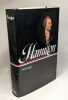

Comme neuf avec sa jaquette intérieur propre bonne tenue
La danse. Envoi autographe signé de Charles Murland.
Paris, Robert Laffont octobre 1972, in-4, relié sous jaquette éditeur, np. Edition originale. Marques du temps sur la jaquette. Intérieur bon.
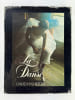
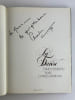

Détails historiques des tremblemens de terre arrivés en Italie depuis le 5 février jusqu'en mai 1783. Par MM. le chevalier Hamilton (...) & le Marquis Hippolyte
Paris, Théophile Barrois le jeune, 1783, in-8, 75 pp, Demi-veau de l'époque, dos lisse orné de fleurons entrecroisés, pièce de titre, Première édition française, très rare. La traduction a été procurée par le polyglotte Jean-Baptiste Lefebvre de Villebrune, à partir de deux lettres lues devant la Royal Society de Londres, puis publiées dans le volume 73 des Philosophical Transactions*. - La première lettre, traduite de l'anglais, avait été adressée par William Hamilton (1730-1803), célèbre collectionneur d'antiquités, volcanologue amateur et diplomate écossais, au botaniste et président de la Royal Society, Joseph Banks (1743-1820). L'auteur y décrit les effets des séismes de février et mai 1783, qui dévastèrent la Calabre. - La seconde, traduite de l'italien, avait été adressé par le maquis Francesco Ippolito, natif de Catanzaro, à Hamilton. Cette plaquette compte parmi les nombreuses publications dues à William Hamilton sur les volcans de l'Italie du sud. Hamilton est aussi bien célèbre pour sa vie privée, en particulier pour le scandale qu'avait provoqué, dans la société anglaise, l'adultère consenti de son épouse Emma Hamilton avec l'amiral Nelson. DSB VI, 84. Reliure usée. Petites taches d'encre anciennes, sinon bon état intérieur. * "An Account of the Earthquakes Which Happened in Italy, from February to May 1783. By Sir William Hamilton (...); in a Letter to Sir Joseph Banks"; "Account of the earthquake which happened in Calabria, March 28, 1783. In a letter from Count Francesco Ippolito to Sir William Hamilton". Philosophical Transactions of the Royal Society of London, Vol. 73, 1783, pp. 169-208 et 209-216. Couverture rigide
Bon 75 pp.

Les loups des étoiles.
Paris, Editions Opta. Club du Livre d'anticipation. “Les classiques de la science-fiction N°12, 1968, in-8, reliure toilée, 387 pages. Bon état. 1/4000. Dos insolé, présentant deux tâches.


Arthur Rackham, l'enchanteur bien-aimé.
Quimper Corentin 1995, in-4, broché, 199p. Très bon état. Bibliographie. Index. Abondante iconographie en couleurs et n/b. isbn: 2909771245


L'illusion fasciste. Les intellectuels et le fascisme 1919-1945
Paris, Gallimard, 1973, in-8, broché, 332 pages. Plis au dos. Bon état.

Les rois des étoiles. Retour aux étoiles.
Paris, Editions Opta. Club du Livre d'anticipation. “Les classiques de la science-fiction N°12, 1968, 387 pages. Bon état. 1/4000. Reliure toilée


Roger Dean. Text by Dominy Hamilton and Carlo Capalbo. Introduction by Donald Lehmkuhl.
Reference : 24534
(1975)
Roger Dean. Views .
Paris, Dragon's World Book - Paper Tiger, 1975, in-4 (30x31cm), broché, 155 pages. Bon état.


Un été à Saint-Tropez
Paris, Filipacchi , novembre 1982, in-4, relié, jaquette éditeur, 118p. Edition originale française. Très bon état.
Rossmoyne
Paris, Hachette, 1895, in-8, reliure plein papier muette, 369 pages. Manques en coiffe.


HAMILTON, WILLIAM ROWAN. - THE GENERAL PRINCIPLE OF LEAST ACTION - HAMILTON' S PRINCIPLE.
Reference : 42329
(1834)
On a general Method in Dynamics" by which the Study of the Motions of all free Systems of attracting or repelling Points is reduced to the Search and Differentiation of one central Relation, or characteristic Function. Received April 1, - Read April 1...
London, Richard Taylor, 1834-35. 4to. No wrappers as extracted from ""Philosophical Transactions"" 1834 - Part II. and 1835 - Part I. Both titlepages to the volumes present.Pp. (2),247-308 a. (2),95-144. Both papers clean and fine.
First appearance of these two groundbreaking papers in which Hamilton carries further the dynamics of Lagrange by expressing the kinetic energy in terms of the momenta and the co-ordinates of a system, and discovers how to transform the Lagrangian equations into a set of differential equations of the first order for the determination of of the motion. The Hamilton principle is also called The Principle of ""Least Action"". The Hamilton Principle as stated in the papers offered here ""was the first of his two great ""discoveries"". he second was the quaternions, which he discovered...1843 nd towhich he devoted most of his efforts during the remaining 22 years of his life.""(DSB).Maupertouis, Euler, and Lagrange introduced the principle of ""Least Action"" covering the science of dynamics, and now Hamilton brought the principle into a form which was capable of expressing all the laws of Newtonian science in a representation as minimum-problems, that is, all gravitational, dynamical and electrical laws could be represented as minimum problems. In 1925 Heisenberg, Born and Jordan showed, that the Hamilton equations are still valid in quantum theoryAlthough formulated originally for classical mechanics, Hamilton's principle also applies to classical fields such as the electromagnetic and gravitational fields, and has even been extended to quantum mechanics, quantum field theory, relativity and criticality theories. Its influence is so profound and far reaching that many scientists regard it as the most powerful single principle in mathematocal physics and place it at the pinnacle of physical science.
On Quaternions" or on a new System of Imaginaries in Algebra. - [MAKING THE GENERAL THEORY OF RELATIVITY POSSIBLE]
London, Richard and John Taylor, 1844. Contemp. hcalf. Gilt lettering to spine ""Philosophical Magazine"" - Vol. XXV. In: ""The London, Edinburgh, and Dublin Philosophical Magazine and Journal of Science. Conducted by David Brewster et al."". Vol. XXV. A stamp to titlepage and a few other pages. Entire volume offered (July-December 1844). VIII,552 pp., textillustr. Hamilton's paper: pp. 10-13, 141-145 and 241-246.


First printing of this landmark paper in which Hamilton published his creation of a new algebra of quaternions (a noncommunicative algebra), a turning point in the development of mathematics and a discovery which made possible the creation of the general theory of relativity. His algebra was later to form the basis of quantum mechanics and for the proper understanding of the atom.""Gauss had treated imaginary numbers in combination with real ones as representing points on a plane and showed the methods by which such complex numbers could be manipulated. Hamilton tried to extend this to threee dimensions and found himself unable to work out a self-consistent method of multiplication, until it occurred to him that the cummutative law of multiplication need not necessarily hold. It is taken for granted that A times B is equal to B times A... and this is an example of what seems to be an eternal and inescapable truth. Hamilton, however, showed that he could built up a logical algebra for his quaternions only when B times A was not made to equal - A times B. This seems against common sense but, like Lobachevski, Hamilton showed that the truth is relative and depends on the axioms you choose to accept.""(Asimov).The creation of quaternions is one of the famous moments in the history of mathematics. ""The quaternions came to Hamilton in one of those flashes of understanding that occasionally occur after long deliberation on a problem. He was walking into Dublin on 16 October 1843 along the Royal Canal to preside at a meeting of the Royal Irish Academy, when the discovery came to him. As he described it, ""An electric circuit seemed to close.""18 He immediately scratched the formula for quaternion multiplication on the stone of a bridge over the canal. His reaction must have been in part a desire to commemorate a discovery of capital importance, but it was also a reflection of his working habits. Hamilton was an inveterate scribbler. His manuscripts are full of jottings made on walks and in carriages. He carried books, pencils, and paper everywhere he went. According to his son he would scribble on his fingernails and even on his hard-boiled egg at breakfast if there was no paper handy.""(DSB).Hamilton later developed his invention in his book from 1853 ""Lectures on Quaternions"" - see PMM: 334 and Grattan-Guiness ""Landmark Writings in Western Mathematics 1640-1940"", pp. 460 ff.In this volume other importent papers by Gassiot, Sylvester, Joule, Draper.
Les Univers de Damon Knight.
Paris, Editions Opta. Club du Livre d'anticipation. Les classiques de la science-fiction N°60, 1976, in-8, reliure toilée sous jaquette, 485 pages. Jaquette insolée. Bon état.


Robert Doisneau. Rétrospective. Musée Carnavalet - Histoire de Paris.
Paris, Paris Musée. Hoebeke, 1995, in-4, Broché, 126 pages. Bon état.

La danse
Paris, Laffont, 1972, Relié-Jaquette éditeur, Edition originale. Ex-dono à l'ancien propriétaire au stylo sur la contre-garde. Bon état.
Alfred Stieglitz. Photographs & Writings.
Washington, Bulfinch Press. Little, Brown and Company, 1999, Relié jaquette éditeur, 246 pages. Bon état.
Souvenirs.
Paris, Robert Laffont, 1975, in-4 à l'italienne, Relié-Jaquette éditeur, 120 pages. Très bon état. Edition originale.
La danse.
Paris, Laffont, 1972, Relié-Jaquette éditeur, non paginé. Jaquette frottée au dos. Bon état.
La danse.
Paris, Laffont, 1972, Relié-Jaquette éditeur, Edition originale. Jaquette frottée. Intérieur bon.
Histoire de Fleur d'épine. Conte de Hamilton illustré par Marie Howet.
Bruxelles Jean Malvaux 1983 Un très bel exemplaire de cette première édition « Thus ». Les illustrations ont été créées à l'origine en 1927. Reliure souple. Texte calligraphié par Danielle Royen, illustré d'une couverture et de 47 illustrations en pleine page réalisées par Howet. Édition limitée à 400 exemplaires numérotés sur papier « bouffant » de la Koninklijke Nederlandse Papierfabriek, dont 50 exemplaires « hors commerce ». Cet exemplaire n'est ni numéroté ni signé, il s'agit donc peut-être de l'un des 50 exemplaires « hors commerce ». Publié à l'origine en 1730, ce conte d'Antoine Hamilton (1646 ?-1720) est une imitation / suite des contes des Mille et Une Nuits, l'histoire étant racontée par Dinarzade, la sur de Shéhérazade. La couverture souple est en très bon état, sans taches. Quelques minuscules traces sur la couverture uniquement. Le livre est désormais recouvert d'une housse de protection amovible de qualité archive. L'intérieur est propre et soigné sur toute sa longueur. Un bel exemplaire de ce livre rare en édition limitée. 131, [1] pages. In-4° oblong. 300 × 400 mm (11Ÿ × 15Ÿ pouces). Conforme à FirstSearch / WorldCat : OCLC : 1400923194. Hamilton, d'origine irlandaise, a écrit cet ouvrage au XVIIIe siècle pour se moquer de l'engouement pour les Mille et Une Nuits : une princesse dont le regard tue tout homme qui la regarde. Marie Howet, la peintre belge lauréate du Prix de Rome qui aimait l'île d'Achill, l'a illustré, et il a été publié à 400 exemplaires en 1983, l'année précédant sa mort. Il s'agit d'une parodie des Mille et Une Nuits datant du XVIIIe siècle, écrite par un courtisan d'origine irlandaise et illustrée par une expressionniste belge qui aimait l'Irlande. Antoine Hamilton (1646 ?1720) est surtout connu pour les Mémoires du comte de Grammont. Il a écrit ce conte en partie pour amuser Henrietta Bulkley, sur de la duchesse de Berwick, à laquelle il était très attaché. Marie Howet (18971984) était une peintre expressionniste belge. Ce fut son dernier ouvrage publié.
A lovely copy of this First Edition Thus. The illustrations were originally created in 1927. Softback. Text drawn in calligraphy by Danielle Royen, illustrated with a cover and 47 full page illustrations by Howet. Limited edition of 400 copies numbered on bouffant from the Koninklijke Nederlandse Papierfabriek including 50 hors Commerce. This copy is without number and is not signed - so is possibly one of the 50 hors commerce copies. Originally published in 1730, this tale by Antoine Hamilton (1646?-1720) is an imitation / successor to the tales of the Thousand and One Nights, the story being told by Dinarzade, the sister of Scheherazade. Soft covers are in very good, clean condition. A couple of tiny marks to the cover only. Now covered in removable archival protective wrap. Internally clean and tidy throughout. A lovely copy of this scarce limited edition book. 131, [1] pages. Oblong 4to. 300 by 400mm (11Ÿ by 15Ÿ inches). Conforms to FirstSearch / WorldCat: OCLC: 1400923194. Hamilton, Irish-born, wrote this in the 1700s to mock the craze for the Arabian Nights: a princess whose eyes kill any man who looks at her. Marie Howet, the Belgian Prix de Rome painter who loved Achill Island, illustrated it, and it was published in 400 copies in 1983, the year before she died. This is an 18th-century spoof of the Arabian Nights by an Irish-born courtier, illustrated by a Belgian expressionist who loved Ireland. Antoine Hamilton (1646?1720) is best known for the Mémoires du comte de Grammont. He wrote this tale partly to amuse Henrietta Bulkley, sister of the Duchess of Berwick, to whom he was much attached. Marie Howet (18971984) was a Belgian expressionist painter. This was her last book to be published. .
A Princeton Girl , Just from London ; Bessie "Stroke at Vassar" ; Monte-Carlo Girl ; A Quiet Game ; Florodora.
1902 6 lithographies couleurs 18 x 14 cm, 1902, menus manuscrits au verso de 5 des 6 lithographies.
Hamilton King (1871-1952) fut le créateur d'un style d'illustration de belles jeunes femmes strictement contemporain des "Gibson Girls". La popularité de l'artiste, de ses cartes postales et couvertures de revue en la période fin de siècle américaine, fut telle qu'on parlait bientôt de "Hamilton King Girls". Ces "girls" avaient souvent pour modèles les jeunes femmes d'une génération pionnière, celles qui intégraient les universités américaines à la fin du XIXe siècle, ou qui voyageaient déjà dans le monde comme les héroines des romans d'Henry James. C'est ainsi que parmi nos images nous trouvons "A Princeton Girl", "A Monte-Carlo Girl", et une "Girl Just From London". Depuis 1965, The Society of Illustrators aux U.S.A. décerne chaque année un prix Hamilton King aux meilleures illustrations de l'année. Les cartes Hamilton King de grand format presque carré comme les nôtres sont peu courantes. Au verso de 5 de ces belles lithographies, a été griffonné, en allemand, des menus datés des années trente. La date d'émission de ces cartes est datée de 1902. Petites usures marginales, deux petites inscriptions à l'encre, bel état d'ensemble de ces cartes qui témoignent avec un charme certain d'un moment de transition de la société américaine.