 Write to the booksellers
1757 books for « camus w »Edit
-
Type
Book (1734)
Magazine (4)
Music sheets (18)
Posters (1)
-
Latest
Last 24h (2)
Last 3 days (3)
Last month (76)
Last week (7)
-
Language
French (1725)
Russian (32)
-
Century
16th (1)
17th (11)
18th (29)
19th (60)
20th (819)
21st (129)
-
Countries
Belgium (93)
Canada (13)
Côte d'Ivoire (3)
Denmark (12)
France (1430)
Germany (7)
Greece (1)
Netherlands (1)
Switzerland (165)
United States of America (32)
-
Syndicate
ALAC (11)
CLAM (9)
ILAB (681)
NVVA (11)
SLACES (10)
SLAM (630)
SNCAO (6)
Topics
- Algeria (16)
- Alps (6)
- Archaeology (5)
- Architecture (8)
- Army (9)
- Autographs (14)
- Bibliography (6)
- Bibliophilism (4)
- Biography (11)
- Botany (6)
- Caillois roger (4)
- Camus albert (1580)
- Catholicism (8)
- Children’s books (17)
- Christ (the) (10)
- Christianity (7)
- Cocteau jean (4)
- Comic strip (5)
- Death (5)
- Dedication (6)
- Demonology (6)
- Early printed books (4)
- Encyclopaedia (4)
- Engraving (books about) (21)
- Essays (11)
- Ethnology (6)
- Europe (4)
- Existentialism (4)
- Faulkner william (7)
- Fine arts (8)
- First edition (96)
- French literature (29)
- Gallimard (25)
- Gard (12)
- Geography (7)
- Guide books (5)
- Hackney (6)
- History (28)
- Humanism (5)
- Iconography (5)
- Illustrated books (5)
- Koestler arthur (5)
- Law (9)
- Literary criticism (6)
- Literary studies (4)
- Literature (20)
- Maghreb (4)
- Maghreb pc (4)
- Malraux andré (6)
- Manuscripts (9)
- Maria theresa (15)
- Martin du gard roger (4)
- Mathematics (6)
- Medicine (13)
- Military arts (13)
- Mountaineering climbing (6)
- Naturalist (4)
- Newspaper (4)
- Newspapers press (15)
- Paris (16)
- Philosophy (38)
- Photography (27)
- Plague (7)
- Pléiade & album de la (37)
- Poetry (17)
- Poitou (5)
- Policy (14)
- Prassinos (8)
- Psychology (5)
- Reading vocabulary (4)
- Regionalism (12)
- Religions (14)
- Review (14)
- Reviews (13)
- Revolution 1789 (4)
- Sciences (8)
- Scores (19)
- Short stories (10)
- Sociology (4)
- Songs (18)
- Surrealism (7)
- Teaching (5)
- Theatre (50)
- Theology (8)
- Travel (5)
- Various (5)
- War (7)
- Wilde oscar (6)
- Witchcraft (13)
Le style d'Albert Camus. Thèse présentée à la Faculté de Lettres de l'Université de Francfort sur le Main en vue de l'obtention du doctorat de lettres.
1961 - Tapuscrit original sur pelure, A4. Agrafé, dos de toile verte. 7 ff. n. ch. - 225 folio. Envoi autographe de l'auteur.
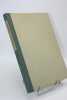
Tapuscrit préalable à l'édition de la thèse qui sera éditée par la Johann-Wolfgang-Goethe-Universität à Frankfurt am Main en 1963. 197 pp.La thèse s'inscrit dans la tradition, instituée par Charles Bailly, de la stylistique générale, dans laquelle les faits d'expression conduisent au facteur psychologique de l'énonciateur, courant précurseur de la stylistique énonciative.A travers une étude minutieuse du lexique et de la syntaxe dans l'oeuvre de Camus, l'auteur s'attache à décrire comment une utilisation polyphonique de plusieurs styles, mais inscrite dans un certain classicisme, sert le propos de Camus, expression d'une pensée des rapports entre la conscience et les actes, l'individu et le politique.

L'été.
Paris Gallimard 1954 Prassinos in Les Essais LXVIII. Un volume in-12 cartonnage de l'éditeur beige, d'après la maquette de Mario Prassinos (Huret, 97), 189 pages. Dos légèrement bruni, néanmoins bel exemplaire, l'un des 1050 (le n° 858) sur vélin labeur des papeteries Navarre de Voiron, édition en partie originale.
La librairie est ouverte du mardi au samedi de 9h30 à 12h30 et de 13h30 à 19h00. Commandes par courriel ou téléphone. Envoi rapide, emballage soigné.


Actuelles I, II et III.
Paris Gallimard 1950-1958 Prassinos Trois volumes in-12 cartonnage de l'éditeur beige et toile bleue pour le dernier, d'après les maquettes de Mario Prassinos (Huret, 90-92), 270, 186 et 212 pages. Bel ensemble sur vélin des papeteries Navarre de Voiron (n°1087/1050 pour le tome I, n°443/700 pour le tome II et n°397/1050 pour le tome III), édition en partie originale.
La librairie est ouverte du mardi au samedi de 9h30 à 12h30 et de 13h30 à 19h00. Commandes par courriel ou téléphone. Envoi rapide, emballage soigné.
Noces.
Paris Marcel Lubineau 1959 Un volume in-4 broché sous couverture rempliée et emboîtage beige, titre doré, illustrations de Jacques Houplain. Bel exemplaire, non coupé, l'un des 425 sur vélin de Rives (le n°159), emboîtage légèrement bruni en tête et rousseurs sur la chemise.
La librairie est ouverte du mardi au samedi de 9h30 à 12h30 et de 13h30 à 19h00. Commandes par courriel ou téléphone. Envoi rapide, emballage soigné.
Cadrans solaires de Paris.
1997 Paris, CNRS, 1997. Un volume in-8 broché, couverture illustrée, 223 pages, illustrations en n&b. Très bon état.
La librairie est ouverte du mardi au samedi de 9h30 à 12h30 et de 13h30 à 19h00. Commandes par courriel ou téléphone. Envoi rapide, emballage soigné.
Abdeker, ou l'art de conserver la Beauté.
Amsterdam, Les Libraires Associés, 1774 ; 2 tomes en 1 vol. in-12. 135pp. - 128pp. Basane marbrée de l'époque, dos lisse ornéde petits fers, filets etroulettes dorés, pièce de titre de maroquin rouge, filets dorés sur les coupes, tranches marbrées. Deux coins émoussés. Bon exemplaire.
L'auteur a recours à une fiction amoureuse (l'amour d'un médecin pour une femme du harem) pour transmettre aux lecteurs un savoir hygiénique et cosmétique. Abdeker prodigue donc ses conseils, remèdes et recettes à la belle Fatmé, formant ainsi un recueil de pommades, huiles, poudres, savons, pastilles, onguent, infusion, décoction, talc, ... toutes dédiées à la beauté du corps. La première édition de ce texte à paru en 1754, rééditée en 1756 avec une augmentation de deux parties. Ces deux suppléments furent jugés sans intérêt littéraire et médical et ne furent pas repris dans cette 3ème édition de 1774. Antoine Le Camus, en dehors de ses qualités de poète, était bien médecin, il exerça à Paris jusqu'au début de l'anné 1772 où il mourut à l'âge de 50 ans. (Cf. la belle pésentation de ce texte par Alexandre WENGER en préface de la réédition de 2008 chez Jérôme Millon).
Quéant (Olivier) (publié sous la direction de), Camus, Barrault, Dussane, Green, Kemp, Cocteau, Maulnier,
Reference : 1789
(1953)
Théâtre de France III.
1953 1953 Publications de France, Paris, 1953. 1 volume in-4 cartonné avec jaquette. Bon état
La librairie est ouverte du mardi au samedi de 9h30 à 12h30 et de 13h30 à 19h00. Commandes par courriel ou téléphone. Envoi rapide, emballage soigné. La librairie est ouverte du mardi au samedi de 9h30 à 12h30 et de 13h30 à 19h00. Commandes par courriel ou téléphone. Envoi rapide, emballage soigné.
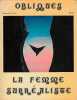
Obliques n° 14-15 : La Femme Surréaliste
Revue Obliques n° 14-15, 1977, 352 pp., broché, déchirures nsur la quatrième de couverture et les dernières 4 pages (les pages publicitaires), état assez correct.
Le mythe de Sisyphe,
Gallimard, Folio Essais, 2000, 187 pp., poche, légères traces d'usage, tranches brunies, état très correct.
L'iconographie des idées.
Paris, Société des écrivains, 2003 ; in-8, broché. 60 pp.-1 f.
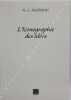
Edition originale. L'autrice (1932-2022), installée à Néris-Les-Bains, était aussi artiste peintre et toute son oeuvre est inspirée par le sentiment religieux. Elle était aussi une moniale franciscaine indépendante.
Lettres à un ami allemand.
Lausanne, Jean Marguerat, 1946 ; in-16 (19 x 12,2 cm), broché. 81 pp.-3 ff. Couverture rempliée, très bon état.
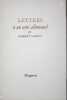
Ces quatre lettres ont été écrites et publiées dans la clandestinité en 1943 et 1944 dans la "Revue Libre", les "Cahiers de la Libération" et "Liberté". Elles ont été réunies en volume pour la première fois en 1945 par Gallimard.
Cours de Mathématiques. Première partie. Elémens d'arithmétique - Seconde partie. Elémens de Géometrie, théorique et pratique.
Paris, Ballard, 1764 ; 2 vol. in-8. VIII-2ff. non chiffrés-480 pp. - 1 planche. / Titre-VI-568 pp. - 25 plancheshors-texte. Basane vert bronze, dos à nerfs ornés, pièces de tiitre en maroquin rouge, pièces de tomaison en veau blond, encadrement de roulette dorée sur les plats du tome 1, même roulette à froid sur le tome 2, filets dorés sur les coupes, tranches marbrées. Coins émoussés et dos légèrement décolorés, si non bel exemplaire. Vignette ex-libris "Henriette Durat" sur les contreplats et ex-libris manuscrits de la même "Mlle Henriette de Durat 1801" sur les titres.
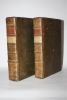
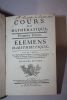
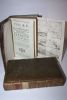
Mention de troisième édition (la première en 1749 et 1750 pour les deux premières parties, une troisième partie, "Eléméns de mécanique statique" sera publiée en deux volumes en 1751-1752). L'ouvrage provient de la bibliothèque de Marie Marguerite Henriette de DURAT, fille (d'un second lit) de Jean François de DURAT 1736-1830 (Comte de Durat, Gouverneur de l'Ile de La Grenade, Chevalier de Saint louis) et de Constance de DURAT (1745-), mariée en 1803 à Pierre Marie Victorin MOURINS d'ARFEUILLE. Ce dernier avait hérité de son père du chateau et de l'Hôtel d'Arfeuille à Felletin (Creuse), où il vivait avec son épouse Henriette, née de Durat, érudite et passionnée de sciences, élève de Jean-Baptiste Delambre à l'Académie royale des sciences. Elle réunissait dans son salon de l'Hôtel d'Arfeuille (l'actuelle mairie de Felletin) les notables de la région. Henriette, en avance sur son temps, était une féministe convaincue." (Delphine Méritet, Histoire creusoise, N° 6 Felletin. La Montagne 05/02/12)L'Hôtel d'Arfeuille à Felletin : "Cet hôtel, datant vraisemblablement de la deuxième moitié du 18e siècle, aurait été acquis et restauré par le comte Yves d'Arfeuille et son épouse Charlotte-Mayeule du Buisson de Mouzon, vers 1775, pour leur servir de résidence d'hiver ; des aménagements intérieurs furent réalisés au cours des années suivantes, à l'initiative de leur fils le comte Victorin d'Arfeuille et son épouse Henriette de Durat ; cette dernière, très érudite, passionnée par les sciences, finançant de nombreuses sociétés savantes, réunissant dans son salon les notables de la région, aménagea au rez-de-chaussée (bureau du maire actuel) une très importante bibliothèque dont subsiste aujourd'hui un élément daté 1790 (une armoire à deux corps, intégrée dans le lambris de revêtement). L'édifice est devenu la mairie de Felletin. (https://www.pop.culture.gouv.fr/notice/merimee/IA23000315)
De la montagne au désert. Récits dascensions et Correspondance.
P., Ch. Delagrave (Imp. Auxerroise - J. Pigelet), s.d. [1912] ; in-8, br. -XV-312pp.-1f.-1pl.h.t. Ex-libris manuscrit biffé sur le titre. Très bon état.
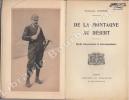
Edition originale (publiée en 1912, cf Perret N°812). Portrait de lauteur en frontispice et photographie d'une ascension de l'arête du Grand Charnoz. ASCENSIONS : Dans le Tyrol et dans les Dolomites / En Oisans / Le Weisshorn / La Croix de Belledonne / La Grande Maison / LAiguille du Goléon / LAiguille des Charmoz / La Dent du Géant / une Chasse aux Chamois. CORRESPONDANCE : Lettres de Leysin 1ère et 2ème années / Lettres de Biskra / Lettres de Grasse.
La Peste.
P., Imprimerie Nationale, Sauret, 1962 ; 2 volumes in 4, brochés.226pp.-2ff. - 197pp.-1f. Couvertures rempliées illustrées protégées par un rhodoid, sous emboîtage de toile écrue de l'éditeur. Parfait état.
![La Peste.. CAMUS (Albert) - [EDY-LEGRAND].](https://static.livre-rare-book.com/pictures/AIS/11099_1_thumb.jpg)
![La Peste.. CAMUS (Albert) - [EDY-LEGRAND].](https://static.livre-rare-book.com/pictures/AIS/11099_2_thumb.jpg)
Edition tirée à 10 000 exemplaires sur vélin Crèvecoeur Arjomari, illustrée de 41 gouaches pleines pages reproduites en noir et en couleurs, et deux grandes compositions en couleurs pour les couvertures.
La dévotion de la croix. pi|ece en trois journées. Texte francais d'Albert Camus. - [PRESENTATION-COPY FROM CAMUS]
(Paris) Gallimard, 1953. 8vo. Bound uncut with the original printed wrappers in an exquisite full red morrocco binding with quadruple gilt lines over boards and spie and gilt lettering to spine (bound by Henning Jensen and gilt by Hagel Olsen). Top edge red. Gilt super ex libris to inside of front board. A splendid, near min copy in a wonderful, elegant binding. 169, (4).
First edition - nr. 3140 out of 3265 numbered copies, on alfama Marais (preceded by 65 copies on Lafuma Navarre) - signed presentation-copy from Camus, of his translation of an early 17th century historical play by the Spanish dramatist Pedro Calderón de la Barca (1600-1681), La dévotion de la croix (ES: La devoción de la cruz" EN: Devotion to the Cross). ""A keynote of Calderon’s tragic view of life is his deep-seated realization that a man can be responsible through his own wrongdoing for the wrongdoing of another. This realization probably derives from Calderón’s own family experience. In La devoción de la cruz (c. 1625"" Devotion to the Cross) [...], the heart of the tragedy lies in the fact that the greatest sinner is also the most sinned against—in that others, before he was born, had begun to dig his grave"" (Parker 2026). The play was translated for the Festival D'Angers – founded in 1950 and still existing today as Festival D'Anjou – of which he was an artistic director in 1953 and again in 1957, where he selected another Spanish play, The Knight from Olmedo, by Lope de Vega, the predecessor of Calderon. Camus translated this particular piece upon the request of the actor Marcel Herrand (1897-1953), who passed away before the festival took place (see foreword written by Camus, p. 11). The stark tradegy was performed in June 1953, starring Maria Casarès, who had assisted Camus in the translation, Serge Reggiani, Paul Oettly and Jean Marchat (Lottman: 524-25), and was a success: ""Camus' adaptations received national press attention, and locally the press would say that the Calderón work was so perfectly performed it could never again be played on an ordinary theater stage."" (Lottman: 525)After WWII, Albert Camus (1913-1960) became, as a novelist and playwright, moralist and political theorist, ""the spokesman of his own generation and the mentor of the next, not only in France but also in Europe and eventually the world"" (Cruickshank 2026). The presentation-inscription reads: ""à Sylvester | pour son salut | et avec la fidèle et | cordiale pensée | d'Albert Camus"". Sources and further reading: Aronson, Ronald. (Winter 2022 Edition). Albert Camus. In Edward N. Zalta & Uri Nodelman (eds.), The Stanford Encyclopedia of Philosophy. https://plato.stanford.edu/archives/win2022/entries/camus/ Cruickshank, J. (2026, July 31). Albert Camus. Encyclopedia Britannica. https://www.britannica.com/biography/Albert-Camus Lottman, H. R. (1979). Albert Camus: A biography. Weidenfeld & Nicolson. Parker, A.A. (2026, May 21). Pedro Calderón de la Barca. Encyclopedia Britannica. https://www.britannica.com/biography/Pedro-Calderon-de-la-Barca Todd, O. (1998). Albert Camus: A life (B. Ivry, Trans.). Vintage. Zaretsky, Robert (4 March 2018). 'No Longer the Person I Was': The Dazzling Correspondence of Albert Camus and Maria Casarès. Los Angeles Review of Books. Retrieved 04 September 2026.
Le chevalier d'Olmedo. comédie dramatique en trios journées. Texte francais d' Albert Camus. - [PRESENTATION-COPY]
(Paris) Gallimard, 1957. 8vo. Bound uncut with the original printed wrappers in an exquisite full red morrocco binding with quadruple gilt lines over boards and spie and gilt lettering to spine (bound by Henning Jensen and gilt by Hagel Olsen). Top edge red. Gilt super ex libris to inside of front board. A splendid, near mint copy in a wonderful, elegant binding.
First edition - nr. 3089 out of 3265 numbered copies, on alfa Libert (preceded by 65 copies on Lafuma Navarre) - wonderful presentation-copy from Camus to Jean Marchat, of Camus' translation of an early 17th century historical play by the Spanish dramatist Lope de Vega (1562-1635), Le chevalier d'Olmedo (ES: El caballero de Olmedo" EN: The Knight from Olmedo). ""For his historical plays Vega ransacked the medieval chronicle, the romancero, and popular legend and song for heroic themes, chosen for the most part as throwing into relief some aspect either of the national character or of that social solidarity on which contemporary Spain’s greatness rested. The conception of the crown as fount of justice and bulwark of the humble against oppression inspires some of his finest plays. Peribáñez y el comendador de Ocaña (Peribáñez and the Commander of Ocaña), El mejor alcalde, el rey (The King, the Greatest Alcalde), and Fuente Ovejuna (All Citizens Are Soldiers) are still memorable and highly dramatic vindications of the inalienable rights of the individual, as is El caballero de Olmedo (The Knight from Olmedo) on a more exalted social plane."" (see britannica.com) Camus selected this play along with his own Caligula for the Festival D'Angers – founded in 1950 and still existing today as Festival D'Anjou – of which he was, together with Jean Marchat, artistic director in 1953, where he had translated the play La dévotion de la croix (EN: Devotion to the Cross), by Calderon de la Barca, who succeeded de Vega. Camus returned as artistic director again in 1957: ""For the month of June 1957, Camus had once more agreed to direct plays at the Festival D'Angers for the Théâtre des Mathurins. He told Maria Casarès that it was sheer baraka – Arabic for 'divine favor', but that baraka also meant seventy rehearsals [...]. He had gone over it line by line with Maria Casarès, and he was to spend the final weeks of that winter of 1957 polishing it"" (Lottman: 595). Starring the play were ""Michel Herbault in the title role, the knight who is murdered by his treacherous rival, Don Rodrigo, played by Jorris" Jean-Pierre Marielle" and Dominique Blanchar."" (Lottman: 597) After WWII, Albert Camus (1913-1960) became, as a novelist and playwright, moralist and political theorist, ""the spokesman of his own generation and the mentor of the next, not only in France but also in Europe and eventually the world"" (Cruickshank 2026).Jean Marchat (1902-1966) was a French actor and stage director, who had starred in the festival in 1953 in the Calderón play. Together with marcel Herrand, he was associate director of the Théâtre des Mathurins between 1939–1953. The presenation-inscription reads: ""pour toi, mon cher Jean / qui a présenté / à la cour d'Angers / avec l'affection de / ton vieil ami / Albert Camus"". Sources and further reading: Aronson, Ronald. (Winter 2022 Edition). Albert Camus. In Edward N. Zalta & Uri Nodelman (eds.), The Stanford Encyclopedia of Philosophy. https://plato.stanford.edu/archives/win2022/entries/camus/ Britannica Editors (2026, August 23). Lope de Vega. Encyclopedia Britannica. https://www.britannica.com/biography/Lope-de-Vega Cruickshank, J. (2026, July 31). Albert Camus. Encyclopedia Britannica. https://www.britannica.com/biography/Albert-Camus Lottman, H. R. (1979). Albert Camus: A biography. Weidenfeld & Nicolson. Todd, O. (1998). Albert Camus: A life (B. Ivry, Trans.). Vintage. Zaretsky, Robert (4 March 2018). 'No Longer the Person I Was': The Dazzling Correspondence of Albert Camus and Maria Casarès. Los Angeles Review of Books. Retrieved 04 September 2026.
Actuelles II. Chroniques 1943-1953 - [PRESENTATION-COPY]
(Paris) Gallimard (1953). 8vo. Uncut in the original printed wrappers. An excellent, fresh copy (evenly browned througfhout as always, due to the quality of the paper). 186, (1). Housed in an exquisite dark blue half morocco box with blue marbled paper and gilt lettering to spine (Henning Jensen). Gilt super ex libris to front board. Some browning to pages, otherwise neat and clean. In half calf box with marbled boards, gilt title to spine and gilt ex libris on the top. Some wear to edges. Signed copy dedicated to Jean Ballard (1893-1973).
First edition, presentation-copy, inscribed to Jean Ballard, of Camus' second collection (of three published betweeen 1950 and 1958) of chronicles. Camus started preparing this second volume in 1953, which brings togther articles, interviews, polemical letters, etc., dealing with world affairs since 1948, the cut-off point of the first volume. Actuelles II covers the troubling moments of the Cold War, from the Prague coup (1948) to Stalin's death (1953) (see Vanney). In this volume, he summed his hopes in a brief preface: ""The new world, true liberation, was not yet just around the corner, but nihilism was a thing of the past, and creation, always possible, now became more than ever necessary. A long section of Actuelles II looked backward [...]. But a final section, entitled 'Création et Liberté,' was an attempt to demonstrate the continuing need for art. 'It's not enough to criticize one's times, one must also try to give them a form, and a future.'"" (Lottman: 521) Camus completed the reading of the proofs in Thonon-les-Bains, ""at the last moment adding the speech he had recently delivered at Saint Etienne"". This speech was delivered in May 1953 at the Labor Exchange, where a group of labor organizations had called a meeting. Camus ""denounced threats to freedom in Western societies as well as Eastern ones, pleaded for freedom as the one good, the one heritage of the great revolutionary conquests of two centuries."" (Lottman: 522) Actuelles II is also strongly tied to his book-long essay L'homme révolté (EN: The Rebel), published in 1951. According to Vanney, ""The book's significance can be gauged, if necessary, by the sheer volume of commentary and criticism it generated from both the right and the left."" [own translation]. In 1952, Camus had written a defense of his work, but decided not to publish it, and instead prepared the current volume, of which seven out of sixteen texts revisit his controversial book. ""Since Camus had decided against publishing Défense de L’Homme révolt, written in the wake of these polemics, reading them becomes essential to understanding the nuances and interpretations he brings to his essay. Apart from an interview with Pierre Berger, they are presented in epistolary form and therefore should be read alongside the criticisms that prompted them."" ([own translation], see Vanney) After WWII, Albert Camus (1913-1960) became, as a novelist and playwright, moralist and political theorist, ""the spokesman of his own generation and the mentor of the next, not only in France but also in Europe and eventually the world"" (Cruickshank 2026). Jean Ballard (1893-1973) was a French actor, poet and editor. Between 1925-66, he ran the publisher Les Cahiers du Sud (“The Southern Notebooks”). Sources and further reading: Aronson, Ronald. (Winter 2022 Edition). Albert Camus. In Edward N. Zalta & Uri Nodelman (eds.), The Stanford Encyclopedia of Philosophy. https://plato.stanford.edu/archives/win2022/entries/camus/ Cruickshank, J. (2026, July 31). Albert Camus. Encyclopedia Britannica. https://www.britannica.com/biography/Albert-Camus Lottman, H. R. (1979). Albert Camus: A biography. Weidenfeld & Nicolson. Todd, O. (1998). Albert Camus: A life (B. Ivry, Trans.). Vintage. Vanney, Philippe. (n.d.). Actuelles II (1953). Société de Éstudes Camusiennes. https://www.etudes-camusiennes.fr/actuelles-ii-1953/
L'Été. Les essais LXVIII. - [PRESENTATION-COPY WITH A MOST SPLENDID PROVENANCE]
Paris, Gallimard, 1954. Uncut in the original printed wrappers. Excellent copy.
![L'Été. Les essais LXVIII. - [PRESENTATION-COPY WITH A MOST SPLENDID PROVENANCE]. "CAMUS, ALBERT.](https://static.livre-rare-book.com/pictures/LLX/58192_1_thumb.jpg)
![L'Été. Les essais LXVIII. - [PRESENTATION-COPY WITH A MOST SPLENDID PROVENANCE]. "CAMUS, ALBERT.](https://static.livre-rare-book.com/pictures/LLX/58192_2_thumb.jpg)
![L'Été. Les essais LXVIII. - [PRESENTATION-COPY WITH A MOST SPLENDID PROVENANCE]. "CAMUS, ALBERT.](https://static.livre-rare-book.com/pictures/LLX/58192_3_thumb.jpg)
First edition, Service de presse-copy, i.e. review-copy (""S.P"" to bottom of title-page and to verso of back wrapper), with an excellent presentation-inscription, of Camus' magnificent and highly influential collection of essays entitled ""Summer"". The copy is inscribed to Camus' close friend and ally in numerous respects, Jean Paulhan: ""a Jean Paulhan/ en affectueuse pensée/ Albert Camus"" on half-title. The famous French writer, literary critic and publisher Jean Paulhan (1884-1964) shared many things with Camus, with whom he grew very close. Not only did he participate actively in the publication of Camus' first books by Gallimard, was one of the first to see the true value of Camus' ""The Stranger"", he was also a confidante of Camus, who considered Paulhan one of the main reasons that he became a proper author. In a letter to Paulhan dated September 17, 1952, at the moment of break with Sartre, Camus writes: ""Ever since I (thanks to you) became what is called an author, I have not ceased to be astonished by my brethren. Sometimes, it is true, in the sense of admiration. Today it is in another sense."" (Depuis que je suis devenu (en peu grâce à vous) ce qu'on apelle écrivain, je n'ai pas cessé d'être étonné par mes confrères. Parfois dans le sens de l'admiration, il est vrai. Aujourd'hui c'est dans un autre sens.).Paulhan was an early and active member of the French Resistance, director of the literary magazine Nouvelle Revue Française (NRF) (from 1925 to 1940 and again from 1946 to 1968) and a great translator of Malagasy poetry, which attracted the interest of the likes of Guillaume Apollinaire and Paul Éluard. He also wrote numerous works of literary criticism, ""The Flowers of Tarbes, or Terror in Literature"" (1941) probably being the most famous, and he wrote several autobiographical short stories. After the war, Paulhan he founded ""Cahiers de la Pléiade"", and in 1953 he re-launched NRF.Interestingly, especially in connection with Camus' famous essays in ""L'été"", which are devoted entirely to his beloved Algiers, Paulhan was loudly against independence for Algeria. He caused great controversy by opposing independence and supporting the French military during the Algerian War. This not only caused public problems for him, it also cost him on the personal front, as for instance Maurice Blanchot denounced him. The essays in ""L'été"" are devoted to Algiers and represent a very personal side of Camus, who provides a marvelous poetic and humorous picture of the provincial simplicities of Oran and Algiers. For many Camus-devotees, ""L'Été"" constitutes one of the most beloved works, as it gives the feel of a certain intimacy with the author that few of his other works does. ""In ""Return to Tipasa"", perhaps the most confessional essay in ""Summer"", which dates from a long trip to Algeria in December 1952, Camus issues his now famous testimony of survival - ""In the depths of winter, I finally learned that within me lay an invincible summer"" (Hawes: Camus, A Romance, 2009, pp. 181-82).
L'Été. Les essais LXVIII. - [PRESENTATION-COPY]
Paris, Gallimard, 1954. Uncut in the original printed wrappers. A very nice copy housed in a beautiful brown half morocco box with gilt lettering to spine and gilt super ex-libris to front board.
![L'Été. Les essais LXVIII. - [PRESENTATION-COPY]. "CAMUS, ALBERT.](https://static.livre-rare-book.com/pictures/LLX/58313_1_thumb.jpg)
![L'Été. Les essais LXVIII. - [PRESENTATION-COPY]. "CAMUS, ALBERT.](https://static.livre-rare-book.com/pictures/LLX/58313_2_thumb.jpg)
![L'Été. Les essais LXVIII. - [PRESENTATION-COPY]. "CAMUS, ALBERT.](https://static.livre-rare-book.com/pictures/LLX/58313_3_thumb.jpg)
First edition, Service de presse-copy, i.e. review-copy (""S.P"" to bottom of title-page and to verso of back wrapper), of Camus' magnificent and highly influential collection of essays entitled ""Summer"", inscribed to the famous critic of literature and drama, the writer Guy Dumur (1921-1991): ""à Guy Dumur/ l'une des/ [ÉTÉ]s [ÉTÉ being printed an L' crossed out in front, with s added in Camus' hand]/ son vieil et fidele ami/ Albert Camus"" on half-title.The younger Guy Dumur was a close friend of Camus, who hired him to work on ""Combat"" with him. It is reported that he had a great talent for discovering new talent. Since childhood, he was extremely passionate about the theatre and came to work with all the great dramatic figures in Paris at the time. He is also famous for a number of well respected novels. The essays in ""L'été"" are devoted to Algiers and represent a very personal side of Camus, who provides a marvelous poetic and humorous picture of the provincial simplicities of Oran and Algiers. For many Camus-devotees, ""L'Été"" constitutes one of the most beloved works, as it gives the feel of a certain intimacy with the author that few of his other works does. ""In ""Return to Tipasa"", perhaps the most confessional essay in ""Summer"", which dates from a long trip to Algeria in December 1952, Camus issues his now famous testimony of survival - ""In the depths of winter, I finally learned that within me lay an invincible summer"" (Hawes: Camus, A Romance, 2009, pp. 181-82).
Camus, une passion algérienne.
S.l., Koutoubia, (2010). Un vol. au format in-8 étroit (228 x 138 mm) de 189 pp., broché, sous couverture à rabats rempliés.
![Camus, une passion algérienne.. BABEY (Stéphane) - [CAMUS (Albert)].](https://static.livre-rare-book.com/pictures/BLS/15766_1_thumb.jpg)
L'ouvrage s'agrémente de planches photographiques hors-texte. ''Cinquante ans après la mort d'Albert Camus, que reste-t-il de son oeuvre ? Par l'itinéraire qu'il nous propose entre l'Algérie d'hier et celle d'aujourd'hui, sur les lieux-mêmes où Camus se confronta à la condition humaine et aux drames de l'histoire, Stéphane Babey montre la force et la pertinence d'une pensée trop longtemps vouée à la vindicte et à l'incompréhension. D'Annaba où le destin de Camus rencontre celui de saint Augustin à Alger la blanche en passant par Oran la pestiférée, ce livre est un voyage au coeur de la passion algérienne qui anima Camus jusque dans l'exil. Sur les pas d'Albert Camus par le texte et par l'image.'' Excellente condition.
Richard Maguet 1896-1940
Galerie André Maurice, 1949, broch. in-8 (14 x 22,5), tirage à 300 exemplaires numérotés sur vélin du Marais (N° 132), non paginé (8 p.), une planche volante reproduisant un tableau du peintre, couverture à rabats, avec son carton d'invitation, bon état.
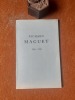
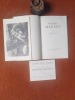
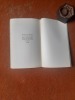
Texte inédit d'Albert Camus écrit à l'occasion de l'exposition rétrospective de Richard Maguet mort pour la France en 1940. C'est par Jean Grenier, qui présenta Camus à Maguet, et le peintre Marcel Damboise, dont il avait fait la connaissance en Algérie dans les années 30, que Camus s'intéressa aux peintures de Richard Maguet. Les deux peintres résidaient à la villa d'artistes d'Abd-el-Tif, alors que Camus était étudiant en philosophie, vers 1933, et avaient exposés ensemble. Camus avait longuement parlé de ce peintre dans une chronique d'Alger étudiant en 1942. Ce représentant de l'Ecole de Paris, fauché dans un bombardement le 16 juin 1940, à Sully-sur-Loire, sera honoré dès le lendemain par Jean Grenier dans un bel article paru dans Fontaine (n°15, septembre 1941)
La Dernière Fleur . Parabole en images traduite par Albert Camus
Camus, les Hommes et la fraternité Paris, Gallimard, (25 mars) 1952. 1 vol. (270 x 200 mm) non paginé. Cartonnage illustré de l'éditeur. Édition originale.
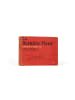
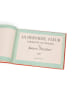
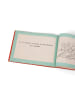
Rien d'étonnant à ce qu'Albert Camus traduise la Dernière fleur du conteur et dessinateur américain James Thurber... En effet, après la parution de L'Homme révolté et la fratricide polémique qui s'en suivit avec Jean-Paul Sartre, Camus est meurtri, dépressif et littérairement stérile ; il lui est donc plus facile de transcrire que d'écrire. Et puis, la parabole du « Mark Twain du XXe siècle » est une illustration de l'absurdité humaine : bâtisseur et destructeur, l'Homme ruine inexorablement son oeuvre civilisatrice par la guerre et le ravissant livre de Thurber est livre une merveilleuse parabole. Comment l'auteur du Mythe de Sisyphe serait-il resté insensible à ce message désabusé et détaché ? Sans compter qu'il fait écho à son article contemporain de la déclaration de la Seconde Guerre mondiale : « Nous savons qu'à une certaine extrémité du désespoir, l'indifférence surgit et avec elle le sens et le goût de la fatalité. (...) Tant d'efforts pour la paix, tant d'espoirs mis sur l'homme, tant d'années de lutte ont abouti à cet effondrement et à ce nouveau carnage! (...) C'est bien là peut-être l'extrémité de la révolte que de perdre sa foi dans l'humanité des hommes. Peut-être après cette guerre les arbres refleuriront encore, puisque le monde finit toujours par vaincre l'histoire. Mais ce jour-là, je ne sais combien d'hommes seront là pour les voir. » (Le Soir républicain, 17 septembre 1939). Bel exemplaire.
Le Premier homme.(tirage de tête numéroté).
In-8 (217 x 146 mm), broché, couverture blanche à rabats imprimée rouge et gris, 334, (2) pages. Paris, Gallimard, Cahiers Albert Camus 7, 1994.
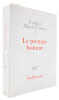
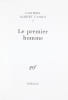

Edition originale, posthume, formant le tome VII des Cahiers Albert Camus. Un des 61 exemplaires de tête sur vergé blanc de Hollande (n° 34), premier papier, avant 71 exemplaires sur vélin pur chiffon de Lana.Partiellement autobiographique, ce roman inachevé constitue lultime projet littéraire et l'un des chefs-d'uvre d'Albert Camus. Le manuscrit se trouvait dans la sacoche de lécrivain lors de laccident qui lui coûta la vie, le 4 janvier 1960. Etabli et publié par sa fille Catherine Camus trente-quatre ans plus tard, le récit retrace, à travers le personnage de Jacques Cormery, lenfance algérienne de lauteur, la pauvreté familiale, la figure silencieuse de sa mère et la recherche dun père mort pendant la Première Guerre mondiale.Exemplaire de tirage de tête; tel que paru, complet de son signet numéroté, non coupé, à létat de neuf.
Camus - Genies et Realites
Librairie hachette 1969 in8. 1969. Broché. Le contenu fourni ne présente pas un livre unique intitulé 'camus' mais un ensemble de ressources disparates (articles pages web extraits) autour de l'écrivain Albert Camus et de son œuvre 'L'Étranger' sans décrire un ouvrage spécifique édité par Hachette
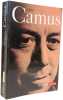
Très Bon Etat intérieur propre

