 Write to the booksellers
1906 books for « bloch m a »Edit
-
Type
Autograph (1)
Book (1857)
Magazine (10)
Music sheets (39)
-
Latest
Last month (54)
Last week (2)
-
Language
English (1)
French (1895)
Russian (11)
-
Century
18th (1)
19th (55)
20th (967)
21st (161)
-
Countries
Belgium (83)
Brazil (1)
Canada (12)
Côte d'Ivoire (3)
Denmark (17)
France (1651)
Netherlands (15)
Switzerland (113)
United States of America (12)
-
Syndicate
ALAC (12)
CLAM (4)
CLAQ (2)
ILAB (814)
NVVA (13)
SLACES (13)
SLAM (760)
SNCAO (1)
Topics
- 1900 (5)
- Abraham (6)
- Age (5)
- Archaeology (28)
- Architecture (7)
- Autographs (9)
- Bibliophilism (8)
- Biography (17)
- Bloch - laine françois (51)
- Bloch - michel jean (15)
- Bloch camille (6)
- Bloch jean richard (64)
- Bloch marc (26)
- Bloch morhange jacques (28)
- Bloch pierre (6)
- Bloch robert (84)
- Cendrars blaise (5)
- Children’s books (83)
- Civilisation (13)
- Cocteau jean (5)
- Comic strip (5)
- Dedication (10)
- Detective novels (9)
- Dictionaries (5)
- Economics (25)
- Education (21)
- Education - morals (13)
- Eluard paul (5)
- English (38)
- Ethic (7)
- Ethnology (8)
- Etymology (6)
- Europe (6)
- Exhibition (8)
- Fantastic (10)
- Fine arts (13)
- First edition (23)
- Flowers (5)
- Gallimard (10)
- Games toys (8)
- Geography (24)
- Geometry (5)
- Germanic languages (20)
- Germany (9)
- Glasswork (6)
- Grammar (6)
- Head edition (5)
- Hebraic literature (5)
- Helvética (5)
- History (127)
- Industrial arts & crafts - fine arts (10)
- Interior (5)
- Isaac (6)
- Italy (15)
- Judaism (judaica) (7)
- Laurencin marie (5)
- Law (9)
- Literature (161)
- Magazine (11)
- Medicine (12)
- Middle ages (8)
- Military arts (5)
- Music (5)
- Newspapers press (15)
- Painting (6)
- Paris (16)
- Philology (5)
- Philosophy (53)
- Photography (18)
- Physics (9)
- Picasso (12)
- Poetry (16)
- Policy (31)
- Psychology (25)
- Reading vocabulary (6)
- Religions (11)
- Review (24)
- Reviews (22)
- Rome (20)
- Science fiction (8)
- Sciences (7)
- Scores (33)
- Social sciences (9)
- Sociology (8)
- Songs (32)
- Spencer emile (7)
- Steinlen (5)
- Switzerland (5)
- Teaching (6)
- Theatre (10)
- Translation (5)
- Various (12)
- War (29)
- Weil simone (5)
- Youth (7)
Les origines de Rome
État : Bon état - Année : 1959 - Format : in 8° - Pages : 173pp - Editeur : Le Club français du Livre - Lieu d'édition : Paris - Type : Reliure toile éditeur - Divers : Edition hors-commerce tirée à 11000 exemplaires numérotés (n°3052). Couv légèrement insolée. - Commander rapidement : https://www.bons-livres.fr/livre/raymond-bloch/3884-les-origines-de-rome?lrb

Les origines de Rome ont toujours fasciné les historiens. Faire le tri entre la légende et l'histoire n'est pas chose facile. L'auteur de cet ouvrage de vulgarisation, simple mais précis, s'appuyant sur des sources irréfutables, s'efforce de faire le point sur l'état actuel (en 1959) des recherches dans ce domaine autour des grands thèmes qui ont fondé la civilisation romaine. Chacun connaît les travaux de Jérôme Carcopino sur la question. Travaux qui font encore référence. Il semble que tout ait été dit. Ce petit n'a pas vocation à ouvrir le débat, ni même à apporter des éléments nouveaux originaux. Il a été écrit pour offrir, à un large public, une synthèse et ˮfixer les points acquis, énoncer les problèmes, ouvrir des perspectivesˮ.
BLOCH (Etienne), avec la collaboration d'Alfredo Cruz-Ramirez.
Reference : 24302
(1997)
ISBN : 9782911167119
Marc Bloch, 1886-1944. Une biographie impossible / An Impossible Biography.
Limoges, Culture et Patrimoine en Limousin, 1997, in-4°, 152 pp, préface de Jacques Le Goff, abondamment illustré de près de 150 photos, gravures et fac-similés, broché, couv. illustrée à rabats, bon état. Texte bilingue en français et en anglais
Préface ; Repères chronologiques ; Généalogie de Marc Bloch et de Simonne Vidal ; L'enfance de Marc Bloch ; Les années de formation ; La guerre de 1914-1918 ; Strasbourg ; Paris ; La guerre de 1939-1940 ; Les années noires ; Fougères ; Marc Bloch et Simonne Vidal, un couple indissoluble ; L'œuvre ; Les archives de Marc Bloch ; Hommages à Marc Bloch ; Bibliographie. / Preface. Milestones. Genealogy of Marc Bloch and Simonne Vidal. Childhood. The formative years. World War I - 1914-1918. Strasbourg. Paris. World War II - 1939-1940. The dark years. Fougères. Marc Bloch and Simonne Vidal, an unseparable couple. Marc Bloch's writings. The Archives of Marc Bloch. Tributes to Marc Bloch. Bibliography of Marc Bloch. Désormais les frais d'envoi sont de 6 € seulement pour les livres jusqu'à 1 kg (colissimo suivi), pour la France métropolitaine.
Geist der Utopie. - [THE MAIN WORK OF GERMAN EXPRESSIONISM]
München und Leipzig, Duncker & Humblot, 1918. Lex 8vo. Uncut in the orig. dark grey-brown wrappers, printed in gold on front wrapper and spine. Spine and lettering thereupon faded. Some smaller nicks, creases and loss of paper to extremities. Minor loss to capitals and two smaller holes w. a bit of loss to hinges. Overall an excellent copy in the fragile wrappers, rarely seen in such fine condition. Internally some minor brownspotting throughout, due to the paper-quality. With the ownership signature of J.B. Dumont deted ""Sept. '21"" to title-page and his stamp on half-title. 445 pp.
The rare first edition of Bloch's first major work, ""The Spirit of Utopia"", an expressionalist main work, which attempts to unite Marxism with Jewish-Christian messianism.The hugely influential German philosopher Ernst Bloch (1885-1977) was born as the son of Jewish parents in Ludwigshafen. He studied philosophy, physics, German and music in Munich and Würzburg and later became a main figure in Neomarxism. His first book, ""Geist der Utopie"" was written while Bloch was in exile in Switzerland during the First World War, and in this seminal work we find the cornerstones of his later so influential philosophy. In the ""Spirit of Utopia"", Bloch unites Marxism Jewish-Christian messianism by the common utopian element of both views: Hope, and faith in the fact that the world will and can become a better place. Bloch here set out to defend the attempts of humankind throughout history to create a humane world order, against the determinist socialism that viewed socialism as the inevitable result of history. With Marx and with the love and morality of religion, Bloch places man (that thinks of the common good) at the centre of his thinking as well as the metaphysical ideas of that which is not yet, but which can become. And thus he creates the spirit of utopia, due to which man can make the world a better place. This massive work of art begins with the powerful words: ""What now? It is enough. Now we have to begin. Life has been put in our hands. In itself it has already become empty long ago. It staggers senselessly around, but we stand firm, and thus we want to be its Faustus and its ends."" (""Wie nun? Es ist genug. Nun haben wir zu beginnen. In unsere Hände ist das Leben gegeben. Für sich selber ist es längst schon leer geworden. Es taumelt sinnlos hin und her, aber wir stehen fest, und so wollen wir ihm seine Faust und seine Ziele werden."") (P.9).The work was viewed as attacking the traditional Marxism of the time, and thus it was very controversial but also became hugely influential in the development of social liberation. Bloch is now considered one of the most undogmatic Marxists of the past century, and he influenced later political and philosophical thinkers enormously. Adorno himself cited this text of Bloch as having been transformative for his intellectual life, and as stated on the wrapper of the English translation, ""When this work was first published, it had a profound effect on major thinkers and artists in Weimar Germany. A poetical philosophical treatise with unusual insights into culture and political commentary, Bloch' s book laid the groundwork for thinkers like Adorno and Benjamin."" (Jack Zipes, University of Minnesota).This rare highly expressionist work consists of 445 pages of non-dogmatic strongly expressionistic and very influential recipes on and analyses of how man does and should behave in the humane world. ""But in return, we paint like savages again, in the best sense, in the sense of the primordial, the restless, unconcerned, concerned. For this is more or less how the dancing-mask was carved. This is more or less how primitive man shaped his fetishes, if only the simple need to express oneself should again be the same"" (""Aber dafür malen wir auch wieder wie die Wilden, im besten Sinn des Frühen, Unruhigen und Barbarischen genommen. So ungefähr wurde auch die Tanzmaske geschnitzt, so ungefähr baute sich der primitive Mensch seinen Fetisch zurecht, sollte auch nichts als die Not des Aussprechenmüssens wieder dieselbe geworden sein.""). (P. 19).The work was much re-written, and the first editions differs from all later editions.

Geist der Utopie. - [THE MAIN WORK OF GERMAN EXPRESSIONISM]
München und Leipzig, Duncker & Humblot, 1918. Lex 8vo. Original dark grey-brown paper binding, printed in gold on front wrapper and spine. A tear across spine, crudely repaired with tape, also to front hinge. Apart from the spine, a fine and fresh copy. Old owner's name to title-page. 445 pp.
![Geist der Utopie. - [THE MAIN WORK OF GERMAN EXPRESSIONISM]. "BLOCH, ERNST.](https://static.livre-rare-book.com/pictures/LLX/49061_1_thumb.jpg)
![Geist der Utopie. - [THE MAIN WORK OF GERMAN EXPRESSIONISM]. "BLOCH, ERNST.](https://static.livre-rare-book.com/pictures/LLX/49061_2_thumb.jpg)
The rare first edition of Bloch's first major work, ""The Spirit of Utopia"", an expressionalist main work, which attempts to unite Marxism with Jewish-Christian messianism.The hugely influential German philosopher Ernst Bloch (1885-1977) was born as the son of Jewish parents in Ludwigshafen. He studied philosophy, physics, German and music in Munich and Würzburg and later became a main figure in Neomarxism. His first book, ""Geist der Utopie"" was written while Bloch was in exile in Switzerland during the First World War, and in this seminal work we find the cornerstones of his later so influential philosophy. In the ""Spirit of Utopia"", Bloch unites Marxism Jewish-Christian messianism by the common utopian element of both views: Hope, and faith in the fact that the world will and can become a better place. Bloch here set out to defend the attempts of humankind throughout history to create a humane world order, against the determinist socialism that viewed socialism as the inevitable result of history. With Marx and with the love and morality of religion, Bloch places man (that thinks of the common good) at the centre of his thinking as well as the metaphysical ideas of that which is not yet, but which can become. And thus he creates the spirit of utopia, due to which man can make the world a better place. This massive work of art begins with the powerful words: ""What now? It is enough. Now we have to begin. Life has been put in our hands. In itself it has already become empty long ago. It staggers senselessly around, but we stand firm, and thus we want to be its Faustus and its ends."" (""Wie nun? Es ist genug. Nun haben wir zu beginnen. In unsere Hände ist das Leben gegeben. Für sich selber ist es längst schon leer geworden. Es taumelt sinnlos hin und her, aber wir stehen fest, und so wollen wir ihm seine Faust und seine Ziele werden."") (P.9).The work was viewed as attacking the traditional Marxism of the time, and thus it was very controversial but also became hugely influential in the development of social liberation. Bloch is now considered one of the most undogmatic Marxists of the past century, and he influenced later political and philosophical thinkers enormously. Adorno himself cited this text of Bloch as having been transformative for his intellectual life, and as stated on the wrapper of the English translation, ""When this work was first published, it had a profound effect on major thinkers and artists in Weimar Germany. A poetical philosophical treatise with unusual insights into culture and political commentary, Bloch' s book laid the groundwork for thinkers like Adorno and Benjamin."" (Jack Zipes, University of Minnesota).This rare highly expressionist work consists of 445 pages of non-dogmatic strongly expressionistic and very influential recipes on and analyses of how man does and should behave in the humane world. ""But in return, we paint like savages again, in the best sense, in the sense of the primordial, the restless, unconcerned, concerned. For this is more or less how the dancing-mask was carved. This is more or less how primitive man shaped his fetishes, if only the simple need to express oneself should again be the same"" (""Aber dafür malen wir auch wieder wie die Wilden, im besten Sinn des Frühen, Unruhigen und Barbarischen genommen. So ungefähr wurde auch die Tanzmaske geschnitzt, so ungefähr baute sich der primitive Mensch seinen Fetisch zurecht, sollte auch nichts als die Not des Aussprechenmüssens wieder dieselbe geworden sein.""). (P. 19).The work was much re-written, and the first editions differs from all later editions.
Geist der Utopie. - [THE MAIN WORK OF GERMAN EXPRESSIONISM]
München und Leipzig, Duncker & Humblot, 1918. Lex 8vo. A bit later, nice, dark blue half cloth with gilt lettering to spine. Half-title mounted with a few marginal repairs, otherwise a very nice and clean copy. Owner's signature to totle-page. 445 pp.
![Geist der Utopie. - [THE MAIN WORK OF GERMAN EXPRESSIONISM]. "BLOCH, ERNST.](https://static.livre-rare-book.com/pictures/LLX/49149_1_thumb.jpg)
![Geist der Utopie. - [THE MAIN WORK OF GERMAN EXPRESSIONISM]. "BLOCH, ERNST.](https://static.livre-rare-book.com/pictures/LLX/49149_2_thumb.jpg)
The rare first edition of Bloch's first major work, ""The Spirit of Utopia"", an expressionalist main work, which attempts to unite Marxism with Jewish-Christian messianism.The hugely influential German philosopher Ernst Bloch (1885-1977) was born as the son of Jewish parents in Ludwigshafen. He studied philosophy, physics, German and music in Munich and Würzburg and later became a main figure in Neomarxism. His first book, ""Geist der Utopie"" was written while Bloch was in exile in Switzerland during the First World War, and in this seminal work we find the cornerstones of his later so influential philosophy. In the ""Spirit of Utopia"", Bloch unites Marxism Jewish-Christian messianism by the common utopian element of both views: Hope, and faith in the fact that the world will and can become a better place. Bloch here set out to defend the attempts of humankind throughout history to create a humane world order, against the determinist socialism that viewed socialism as the inevitable result of history. With Marx and with the love and morality of religion, Bloch places man (that thinks of the common good) at the centre of his thinking as well as the metaphysical ideas of that which is not yet, but which can become. And thus he creates the spirit of utopia, due to which man can make the world a better place. This massive work of art begins with the powerful words: ""What now? It is enough. Now we have to begin. Life has been put in our hands. In itself it has already become empty long ago. It staggers senselessly around, but we stand firm, and thus we want to be its Faustus and its ends."" (""Wie nun? Es ist genug. Nun haben wir zu beginnen. In unsere Hände ist das Leben gegeben. Für sich selber ist es längst schon leer geworden. Es taumelt sinnlos hin und her, aber wir stehen fest, und so wollen wir ihm seine Faust und seine Ziele werden."") (P.9).The work was viewed as attacking the traditional Marxism of the time, and thus it was very controversial but also became hugely influential in the development of social liberation. Bloch is now considered one of the most undogmatic Marxists of the past century, and he influenced later political and philosophical thinkers enormously. Adorno himself cited this text of Bloch as having been transformative for his intellectual life, and as stated on the wrapper of the English translation, ""When this work was first published, it had a profound effect on major thinkers and artists in Weimar Germany. A poetical philosophical treatise with unusual insights into culture and political commentary, Bloch' s book laid the groundwork for thinkers like Adorno and Benjamin."" (Jack Zipes, University of Minnesota).This rare highly expressionist work consists of 445 pages of non-dogmatic strongly expressionistic and very influential recipes on and analyses of how man does and should behave in the humane world. ""But in return, we paint like savages again, in the best sense, in the sense of the primordial, the restless, unconcerned, concerned. For this is more or less how the dancing-mask was carved. This is more or less how primitive man shaped his fetishes, if only the simple need to express oneself should again be the same"" (""Aber dafür malen wir auch wieder wie die Wilden, im besten Sinn des Frühen, Unruhigen und Barbarischen genommen. So ungefähr wurde auch die Tanzmaske geschnitzt, so ungefähr baute sich der primitive Mensch seinen Fetisch zurecht, sollte auch nichts als die Not des Aussprechenmüssens wieder dieselbe geworden sein.""). (P. 19).The work was much re-written, and the first editions differs from all later editions.
Marc Bloch (1886-1944) - Une biographie impossible
Culture & Patrimoine en Limousin (1997) - In-4 broché de 152 pages - Couverture illustrée à rabats - Abondamment illustré de près de 150 photos en noir et blanc, gravures et fac-similés - Texte bilingue en français et en anglais - Préface de Jacques Le Goff - Exemplaire en très bon état
Préface - Repères chronologiques - Généalogie de Marc Bloch et de Simonne Vidal - L'enfance de Marc Bloch - Les années de formation - La guerre de 1914-1918 - Strasbourg - Paris - La guerre de 1939-1940 - Les années noires - Fougères Marc Bloch et Simonne Vidal, un couple indissoluble - L'oeuvre - Les archives de Marc Bloch - Hommages à Marc Bloch - Bibliographie.
Still life of mushroom and fruit - Chez Mario
Paris Bloch-Laine 1992 Première édition. Une grande photographie en noir et blanc du célèbre photographe Jean-Louis Bloch-Lainé. Il s'agit peut-être d'une de ses épreuves originales pour l'un de ses livres culinaires, mais nous n'avons pas été en mesure de la localiser si c'est le cas. Elle est signée au dos, avec la mention "Chez Mario", qui pourrait être un restaurant ? L'image elle-même est propre et nette, mais le cadre blanc présente quelques taches. Ces taches pourraient être cachées par un montage. L'image est maintenant présentée sous un passe partout temporaire. L'image mesure 20 cm x 30 cm. La feuille mesure 30 cm x 41 cm. Jean-Louis Bloch-Lainé est un éminent photographe français célèbre pour ses photographies éditoriales, artistiques et documentaires. Sa longue carrière, qui s'étend du début des années 1960 à aujourd'hui, a influencé la culture visuelle française, tant dans le domaine de la mode que dans celui des beaux-arts. Il a commencé à travailler pour le magazine Elle en 1963. Il est particulièrement connu pour ses photographies culinaires.
First edition. A large black and white photograph by the celebrated photographer Jean-Louis Bloch-Lainé. This may be one of his original proofs for one of his culinary books, but we haven't been able to locate it if so. It is signed to the rear, with the note "Chez Mario" which may be a restaurant ? The image itself is clean and neat, but the white surround has some staining to it. This could be hidden with mounting. Now presented under a temporary passe partout. Image is 20cm x 30cm. Sheet is 30cm x 41cm. Jean-Louis Bloch-Lainé is a distinguished French photographer celebrated for his editorial, artistic, and documentary photography. His extensive career, spanning from the early 1960s onward, has influenced French visual culture in both fashion and fine art contexts. He began his work with Elle magazine in 1963. He is particularly known for his culinary photographs. .
Les Origines, la Gaule indépendante et la Gaule romaine.
Hachette et Cie, 1911, gr. in-8° carré, 456 pp, un frontispice sous serpente et 23 pl. de gravures hors texte, biblio, reliure demi-basane blonde, dos lisse orné de fers originaux et filets dorés, tête dorée (rel. de l'éditeur), dos lég. frotté, cuir du 2e plat lég. épidermé, bon état (Histoire de France illustrée depuis les origines jusqu'à la Révolution. Tome I - Deuxième partie, sous la direction d'Ernest Lavisse)
Par Gustave Bloch, le père de Marc Bloch, l'édition "illustrée" du volume sur la Gaule de l'Histoire de France depuis les origines jusqu'à la Révolution dirigée par Lavisse. — "... Les modestes proportions de ce livre ne l’empêchent pas d’être sur cette matière, à l’heure présente, le guide le plus complet, le mieux informé, le plus sûr. Ces pages si nourries, où chaque mot porte, où chaque phrase apparaît pleine de sens et grosse de faits comme l’esquisse et le résumé de tout un paragraphe, se lisent avec le plus vif intérêt et plaisent par leur forme même. Le style, nerveux et sobre, soutient sans cesse l’attention. Un heureux concours de rares qualités, plus rarement encore associées, méritera à ce volume un durable succès. L’ouvrage se divise tout naturellement en deux parties, d’inégale étendue. La première est consacrée aux Origines (p. 3-118) ; l’auteur y étudie d’abord les sociétés primitives et les peuples historiques de la Gaule (Livre premier), puis la civilisation de l’époque de l’indépendance et la conquête romaine (Livre II). A mesure qu’on s’éloigne de l’obscurité des premiers temps les documents se multiplient, le terrain est plus solide et mieux connu. Dans le chapitre II du livre premier, on appréciera particulièrement les pages où M. Bloch résume les traits principaux de la constitution et de la civilisation massaliotes ; au chapitre I du livre II, l’exposé des croyances religieuses des Gaulois et les doctrines druidiques ; au chapitre II, un récit vivant et dramatique des campagnes de César. La seconde partie, beaucoup plus considérable, est intitulée : la Gaule romaine (p. 121-451). Elle comprend trois livres. Dans l’histoire politique de la Gaule romaine jusqu’à Théodose, M. Bloch distingue deux grandes périodes, dont l’édit de Caracalla marque à peu près la séparation. Le troisième livre est une étude de la société gallo-romaine. (...) L’ouvrage est d’un maniement commode ; les sous-titres écrits en marge, par un heureux retour à une vieille coutume trop longtemps négligée, en facilitent la lecture et l’usage. En tête de chaque chapitre et subdivision de chapitre, on trouve une double bibliographie (sources, ouvrages à consulter) exacte et suffisamment complète, copieuse sans être inutilement surchargée. Le livre de M. Bloch n’est pas appelé seulement à instruire et intéresser le public lettré auquel il s’adresse ; il rendra de grands services à tous ceux qui voudront recourir aux documents eux-mêmes et leur en facilitera singulièrement l’accès et l’intelligence." (Maurice Besnier, Revue internationale de l'enseignement, 1901) Désormais les frais d'envoi sont de 6 € seulement pour les livres jusqu'à 1 kg (colissimo suivi), pour la France métropolitaine.
Das Prinzip Hoffnung. 3 Bde. - [THE PRINCIPLE OF HOPE - PRESENTATION-COPY]
Berlin, 1954-59. Lex 8vo. All three in the original blue full cloth bindings, in excellent condition, in- as well as ex-ternally. Some light pencil-underlinings. 477, (3) 512, (1)" 518, (1) pp. + Errata for vols. I+II laid loose in vol. With a five-line presentation-inscription to front free end-paper of volume 1, signed in full: ""Herrn Gehrke/ in freundlicher Gesinnung/ mit besten Wünschen/ 30.VIII.54/ Ernst Bloch"".
![Das Prinzip Hoffnung. 3 Bde. - [THE PRINCIPLE OF HOPE - PRESENTATION-COPY]. BLOCH, ERNST.](https://static.livre-rare-book.com/pictures/LLX/49060_1_thumb.jpg)
![Das Prinzip Hoffnung. 3 Bde. - [THE PRINCIPLE OF HOPE - PRESENTATION-COPY]. BLOCH, ERNST.](https://static.livre-rare-book.com/pictures/LLX/49060_2_thumb.jpg)
The scarce first edition of all three volumes, with signed and dated presentation-inscription (in the year of appearance), of Bloch's magnum opus, his seminal ""The Principle of Hope"", which constitutes his philosophy of concrete utopia. The hugely influential German philosopher Ernst Bloch (1885-1977) was born as the son of Jewish parents in Ludwigshafen. He studied philosophy, physics, German and music in Munich and Würzburg and later became a main figure in Neomarxism. As his first book, ""Geist der Utopie"" was written while in exile in Switzerland during the First World War, this his main work was written while in exile in America during the Second World War, between 1938 and 1947, and it appeared for the first time in the DDR between 1954 and 1959. ""The Principle of Hope"" is considered a philosophical-political piece of art, which consideres in both philosophical-scientific and humanistic ways the possibilities for a utopia, at the same time as it traces throughout history man's strivings for utopia. The world is presented as open to man - open for man to make it the place that enables us to live like proper human beings. ""Ernst Bloch's Principle of Hope is one of the key books of our century. Part philosophic speculation, part political treatise, part lyric vision, it is exercising a deepening influence on thought and on literature. . . . No political or theological appropriations of Bloch's leviathan can exhaust its visionary breadth."" (editorial review by George Steiner, the 1986 English language edition). As his ""Geist der Utopie"" begins with the powerful words: ""What now? It is enough. Now we have to begin. Life has been put in our hands. In itself it has already become empty long ago. It staggers senselessly around, but we stand firm, and thus we want to be its Faustus and its ends."", so his ""Das Prinzip Hoffnung"" begins with the equally powerful words: ""Who are we? Where do we come from? Where are we going? What do we expect? What awaits us? Many feel as nothing but confused. The ground rocks, they do not know why and from what. This their state is fear, if it becomes more defined, it is fear. Once, someone set out to learn fear."" (""""Wer sind wir? Wo kommen wir her? Wohin gehen wir? Was erwarten wir? Was erwartet uns? Viele fühlen sich nur als verwirrt. Der Boden wankt, sie wissen nicht warum und von was. Dieser ihr Zustand ist Angst, wird er bestimmter, so ist er Furcht. Einmal zog einer aus, das Fürchten zu lernen.""The conception of ""Prinzip Hoffnung"" has now, due to this work, become a frequently used saying, not only in Germany, but also in America and large parts of Europe, where ""The Pronciple of Hope"" is used in numerous political and economical discussions, most actually for instance in the climate debate. The influence of the work has been immense, and it has done much to re-create modern man's belief in the world today and our ability to do good.
[Bloch-Lainé] - Francois Mathey - Jean-Louis Bloch-Lainé - André Wogenscky - Antoine Kieffer et Karen Lombard & Françoise Choay
Reference : 007541
RUE VUE - ESPACEMENTS : essai sur l'évolution de l'espace urbain en France.
Paris Groupe de l'Immobilière-Constructions de Paris Draeger Frères Aulatd 0 2 volumes in-4 Cartonnages éditeur, étuis Edition originale
2 VOLUMES illustrés par Bloch-Lainé : RUE VUE. 1970. Textes de Francois Mathey, André Wogenscky. Mise en page de Antoine Kieffer et Karen Lombard. Photographies de Jean-Louis Bloch-Lainé en héliogravure. Cartonnage éditeur et étui. Un des 600 exemplaires nominatifs. 142pp. ----- ESPACEMENTS. 1969. Texte de Françoise Choay. Photographies de Jean-Louis Bloch-Lainé en héliogravure. Impression en accordéon sous couverture à rabat éditeur, et son étui illustré. unes 700 exemplaires nominatifs sur couché mat Job de Dujardin. Les 2 volumes en bel état. TRES BON ETAT 0
Le docteur Jacques charles Bloch 1889 1941 + envoi de Madeleine Charles Bloch
IMP. R. BUSSIERE, saint amand. 1946. In-8. Broché. Etat d'usage, Couv. convenable, Agrafes rouillées, Quelques rousseurs. 8 pages - envoi de Madeleine Charles Bloch sur le 1er contreplat, voir 2e photo. . . . Classification Dewey : 97.2-Dédicace, envoi
"""Ancien combattant de la Première Guerre mondiale, membre de la mission militaire française en Roumanie, titulaire de la Croix de guerre 14-18 et chevalier de la Légion d’Honneur (1928), Jacques Bloch fut interne des hôpitaux de Paris , promotion 1910, à l’Hôtel Dieu de Paris (IVe arr.), avant d’exercer comme chirurgien à l’Hospice d’Ivry-sur-Seine (Seine, Val-de-Marne) / médecin, chirurgien ; résistant Castille CND."" Classification Dewey : 97.2-Dédicace, envoi"

Handbuch der gesamten Sexualwissenschaft in Einzeldarstellungen, I-II. Die Prostitution. Mit einem Namen-, Länder-, Orts- und Sachregister
Berlin, Louis Marcus, 1912 - 1925 2 forts vol. in-8, XXXVI pp., 870 pp., un f. n. ch. ; VIII pp., 728 pp., toile orangée, têtes grises (reliure de l'éditeur).
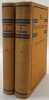
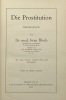
Ensemble très rare de tout ce qui a paru du premier traité (sur deux) de l'ambitieux projet élaboré par les deux médecins berlinois Iwan Bloch (1872-1922) et Magnus Hirschfeld (1868-1935), ce dernier étant davantage connu en raison des persécutions que lui infligèrent les Nationaux-socialistes. Pratiquant une approche basée sur le lien entre l’histoire de la culture et celle de la médecine, les deux hommes proposèrent le nouveau concept d’une science de la sexualité : Sexualwissenschaft ou "sexologie", dans la traduction française approximative. Et Bloch commença par une étude assez exhaustive de la prostitution (en tenant compte que seule la première partie du volume II fut livrée à l'impression, en raison de la mort prématurée de l'auteur) ; Hirschfeld devait donner ensuite son célèbre Die Homosexualität des Mannes und des Weibes (1914), ouvrage pionnier s'il en fut.Le propos nous paraît aujourd'hui évident, mais il était totalement novateur à l'époque de dépasser le cadre uniquement médical pour aborder le domaine de la sexualité dans son ensemble : "Une conception purement médicale de la vie sexuelle, même si elle constituera toujours le noyau de la sexologie, n’est pas suffisante pour rendre justice aux relations multiformes de la sexualité avec tous les domaines de la vie humaine. Afin d’apprécier toute l’importance de l’amour dans la vie individuelle et sociale et dans le développement culturel de l’humanité, il doit être inclus dans la science de l’homme en général, dans laquelle sont réunies toutes les autres sciences, biologie générale, anthropologie et ethnologie, philosophie et psychologie, la médecine, l’histoire de la littérature et celle de la culture dans leur ensemble" (in Das Sexualleben unserer Zeit in seinen Beziehungen zur modernen Kultur, paru dès 1906).Rappelons que, pour le public français, Iwan Bloch est plus connu par son nom de plume d'Eugen Dühren, sous lequel il publia des études sur Sade (1899) et Restif de La Bretonne (1906). C'est encore sous ce pseudonyme qu'il avait publié en 1904 le texte du manuscrit des Cent Vingt Journées de Sodome, alors considéré comme perdu,Au CCF, exemplaires seulement à Strasbourg, Lyon et BIUM (souvent pour un volume seul). - - VENTE PAR CORRESPONDANCE UNIQUEMENT - LIEN DE PAIEMENT, NOUS CONSULTER.
Une Révolution Du Xx° Siècle Les Journées De Mai 1968 [Paperback] Bloch-Michel (Jean)
poche en tres bon etat
Merci de nous contacter à l'avance si vous souhaitez consulter une référence dans notre boutique à Authon-du-Perche.
Vitale Bloch. Vermeer : . Suivi de l'Éloge de Thoré-Bürger. Traduit de l'italien par l'auteur avec le concours de Jacqueline Faure [Unknown Binding] Bloch, Vitale and Faure, Jacqueline
Broché bon état . Contenu propre . 1966. 57 pages . Vitale Bloch. Vermeer : . Suivi de l'Éloge de Thoré-Bürger. Traduit de l'italien par l'auteur avec le concours de Jacqueline Faure
Merci de nous contacter à l'avance si vous souhaitez consulter une référence dans notre boutique à Authon-du-Perche.
Apologie pour l'histoire ou Métier d'historien.
Armand Colin, 2019, gr. in-8°, 160 pp, préface de Jacques Le Goff, broché, couv. illustrée, bon état
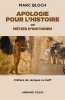
Cofondateur, en 1929, de la revue Annales, le grand historien Marc Bloch fut une des victimes de Klaus Barbie. Fusillé le 16 juin 1944 à Saint-Didier-de-Formans (Ain), près de Lyon, il laissait inachevé un ouvrage de méthodologie, Apologie pour l'histoire ou Métier d'historien – sous-titré dans son plan le plus ancien ou Comment et pourquoi travaille un historien –, qui fut publié en 1949 par Lucien Febvre. L’édition ici présentée de l’ouvrage posthume de Marc Bloch est celle que son fils aîné, Étienne Bloch, livrait il y a vingt-cinq ans : le texte y apparaît dans son intégralité et sans modification aucune. On découvre dans ces pages l’œuvre dans sa forme intégrale et cette œuvre prenant forme, le travail d’un homme la construisant et d’un historien affirmant l’intérêt de l’histoire, légitimant une science historique, définissant des pratiques, des objectifs, une éthique, son « métier ». On y redécouvrira aussi la modernité de cette réflexion, du regard porté sur l’histoire, cette « science en marche », cette « science des hommes dans le temps », grâce auquel se fonde l’espoir que « les sociétés consentiront enfin à organiser rationnellement, avec leur mémoire, leur connaissance d’elles-mêmes ». — « Ce livre inachevé est un acte complet d’histoire ». (Jacques Le Goff) Désormais les frais d'envoi sont de 6 € seulement pour les livres jusqu'à 1 kg (colissimo suivi), pour la France métropolitaine.
La vie Héroïque de Jacques Bloch dit " Borel", Franc-Tireur et Partisan français
sd Edité à compte d'auteur / Francs-tireurs et partisans (FTPF) - Sans date (Approx. 1945) - Petit in-4, broché - 72 pages
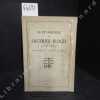
Bon état - Couverture légèrement défraichie (Menus frottements, rousseurs) - Rature au feutre en haut de la page de faux titre
L'Histoire, la Guerre, la Résistance. Edition établie par Annette Becker et Etienne Bloch.
Paris: Le grand livre du mois, 2006 in-8, 1094 pages. Bibliographie, index. Broché, très lég. marques d'usage, bon état. Sommaire: Ecrits de jeunesse - La Grande Guerre - Faire de l'Histoire - La Défaite, la Résistance - Le métier d'historien - Regards sur Marc Bloch.
L'Histoire, la Guerre, la Résistance. Edition établie par Annette Becker et Etienne Bloch. (Paris: Le grand livre du mois, 2006) [M.C.: Histoire]
BLOCH (Andréas), ENDERS (Axel), HANSTEEN (Nils) et UCHERMANN (Karl).
Reference : 19260
FRA NORGE.Akvareller af A. Bloch, Axel Ender, Nils Hansteen og Karl Uchermann.
Oslo, Abel's Kunstforlag, 1896, 1 sous chemise à rabats pleine percaline bleutée,illustrée d'un paysage norvégien avec au premier plan des chevaux attelés à un traineau, contreplats et rabats recouverts de papier à décors floraux. 10 aquarelles, par les peintres norvégiens Andréas Bloch, Axel Enders, Nils Hansteen, et Karl Uchermann, contrecollées sur planche bristol teinté, dans un encadrement, dimension: 16 x 21 hors cadre et 25 x 32 tout cadre, avec un planche de titre ;
Peintures romantiques norvégiennes (Paysages, animaux et scènes de vie), bien complet des planches.
[Marcel Bloch] - FEVAL, Paul (Rennes, 30/09/1816, Paris, 08/03/1887, Romancier et auteur dramatiqu)e - illustration de Marcel Bloch
Reference : 46836
(1878)
Contes de Bretagne de Paul FEVAL (Introduction Job-Misère -Le joli Château - Anne des Iles - La Femme Blanche des Marais)
1878 PARIS,Albin Michel S.D.- In-12 - Reliure postérieure pleine toile grise - Dos lisse, Pièce de titre en maroquin cerise - titre doré -Couverture illustrée de Marcel Bloch, conservée - 190 pages - Bon exemplaire
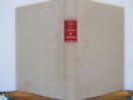
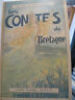
Cnformément à nos conditions générales de vente :Les frais de port sont affichés à titre indicatif. Il se peut que nous devions vous contacter pour vous informer du coût de laffranchissement supplémentaire en fonction du poids et du nombre de livres, surtout pour les envois internationaux Cependant vu l'augmentation des tarifs postaux à l'internationale, nous pouvons expédier les ouvrages en point relais MONDIAL RELAY pour les pays suivants : Allemagne, Autriche, Belgique, Espagne, Italie, Luxembourg, Pays-Bas, Pologne, et Portugal. Merci de nous indiquer en retour le point relais choisi ainsi que votre numéro de téléphone mobile & adresse Courriel pour assurer le suivi du colis.N'hésitez pas à nous interroger.In accordance with our general terms and conditions of sale:Shipping costs are displayed for informational purposes only. We may need to contact you to inform you of the additional postage costs depending on the weight and number of books, especially for international shipments.However, given the increase in international postal rates, we can ship books via Mondial Relay to the following countries: Germany, Austria, Belgium, Spain, Italy, Luxembourg, Netherlands, Poland, and Portugal. Please provide us with your chosen Mondial Relay point, as well as your mobile phone number and email address to ensure package tracking.Please feel free to contact us with any questions
REVUE : Europe n° 446 - juin 1966. Jean-Richard Bloch.
Revue mensuelle, Paris, à la revue, juin 1966, in-8, br., couv. photo en noir éd., 288 pp., très nb. photos en noir, Bibliographie, Sommaire, La vie et l'œuvre de Jean-Richard Bloch. Bon état
FORCES DU MONDE Drame écrit pour un musicien d' après une nouvelle du comte de Gobineau
Paris Les Cahiers de Paris Deuxième série 1927 Cahier VIII 1 vol. in - 8 broché ( 12 x 19 cm ) ( poids = 200 g ) 86 pp. , (3) ff. . Avec Avant-propos , et in fine , Table . Edition limitée à 1500 ex. . Un des 1425 ex. sur vélin d' alfa des papeteries Lafuma : n° 411 . Ex. non coupé . Broché sous couverture violette souple et rempliée . Très bon état .
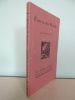
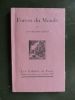
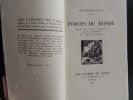
Forces du monde fut réédité sous le titre L' illustre magicien et réuni avec d' autres textes dans Offrande à la musique ( NRF , 1930 ) , chacun illustrant un épisode de l' entreprise musicale de Jean-Richard BLOCH ( 1884 -1947 ) , écrivain , dramaturge , journaliste et homme politique . On lit dans : Jean-Richard Bloch ou La musique comme utopie sociale ( L' actualité Poitou-Charentes , n° 49 , p. 77 ) : " LIllustre magicien (dabord intitulé Forces du monde dans Les Cahiers de Paris , en 1927 , mais seulement porté à la scène en 1937) est un livret lyrique datant de 1923 , adapté dune des Nouvelles asiatiques de Gobineau , auteur qui fascina notre écrivain . La musique en est due à Daniel Lazarus (1898-1964) , pianiste et compositeur français qui produisit beaucoup dans lentre-deux-guerres et eut une prédilection pour les ballets . Daniel Lazarus, chroniqueur musical de la revue Europe , porté à la direction musicale de lOpéra-Comique en 1937, partageait les idées de Bloch au sujet des rapports de la création avec le peuple (la vision sorélienne de la valeur sociale de lart) , et les reprendra dans son livre-testament , Accès à la musique (1960) . "
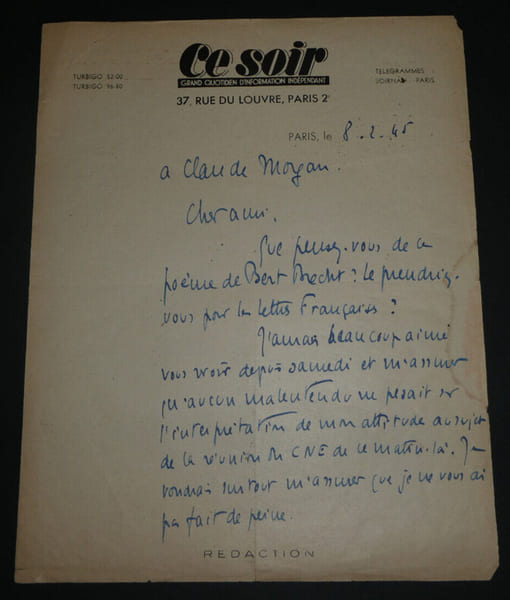
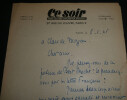
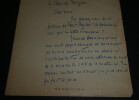
Jean-Richard BLOCH, LETTRE AUTOGRAPHE SIGNÉE A Claude NOYAU SUR Bert BRECHT 1945
Lettre autographe signée de Jean-Richard BLOCH adressée à Claude NOYAU en date du 8 février 1945 et sur papier à en-tête du quotidien "Ce soir". Dimensions : 21,4 X 27,2 cm. 1 page et demi. État : Voir photos pour plus de détails.
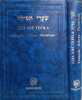
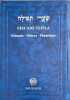
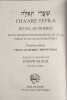
Cha'aré Tefil rituel de prières
BIBLIEUROPE 2017 481 pages in8. 2017. reliure editeur. 481 pages. Cha'aré Téfila est un rituel de prières en hébreu et français publié et annoté par le Grand Rabbin Joseph Bloch. Il est conçu pour l'instruction religieuse le culte public et le culte domestique suivant le rite ashkénaze. Cette édition publiée par Biblieurope se distingue par son indépendance vis-à-vis des éditions Roedelheim traditionnelles
Très bon état
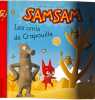
Samsam Les amis de Crapouille
Bayard Jeunesse Sans date. SamSam est un petit héros en cape rouge qui explore l'espace à bord de sa SamSoucoupe. Ses aventures créées par l'illustrateur Serge Bloch transposent la vie quotidienne des enfants dans un univers fantastique et poétique abordant leurs peurs doutes et réflexions
Bon état
...Et Cie [ ... Et Compagnie ]
Illustrations de Berthold Mahn, un des 350 exemplaires sur vélin de Rives numérotés (n° 163), 1 vol. fort et grand in-8 reliure demi-chagrin noir, dos à 5 nerfs, Éditions Mornay, Paris, 1930, 439 pp.
![...Et Cie [ ... Et Compagnie ]. BLOCH, Jean Richard](https://static.livre-rare-book.com/pictures/CDL/70962_thumb.jpg)
![...Et Cie [ ... Et Compagnie ]. BLOCH, Jean Richard](https://static.livre-rare-book.com/pictures/CDL/70962_2_thumb.jpg)
![...Et Cie [ ... Et Compagnie ]. BLOCH, Jean Richard](https://static.livre-rare-book.com/pictures/CDL/70962_3_thumb.jpg)
Agrégé d'histoire et beau-frère d'André Maurois, Jean-Richard Bloch (1884-1947) sera blessé à 3 reprises pendant la Première Guerre Mondiale. D'abord paru en 1917 (le texte avait été rédigé de 1911 à 1914) puis remanié en 1925, ce roman s'interroge sur la question de savoir s'il est possible d'être tout ensemble "français, bourgeois et juif". Jean-Richard Bloch y relate les aventures d'une famille d'industriels juifs choisissant de quitter l'Alsace en 1871 et venant remonter leur filature en Normandie. Bon exemplaire

