Write to the booksellers
Sauvy Alfred
La population
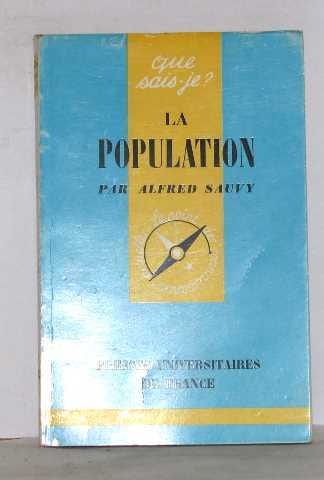
Presses universitaires de france 1964 128 pages in16. 1964. Cartonné. 128 pages.
Reference : 129527
ISBN : 9782225823374
Etat Correct
Bookseller's contact details
Un Autre Monde
M. Emmanuel Arnaiz
07.69.73.87.31
Payment mode
Sale conditions
Conformes aux usages de la librairie ancienne.
5 book(s) with the same title
Alger 1847. Cri de la population civile.
Montpellier : Castel et Virenque (impr. L. Cristin), 1848. « LES FRANÇAIS EN ALGÉRIE SONT DIFFAMÉS ET RUINÉS »
In-8° (225 x 143 mm), [1] f., 110 pp., [1] f., broché, couverture imprimée. Édition originale de cette lettre ouverte adressée aux membres de la Chambre des Pairs et à la Chambre des députés pour la défense de la population civile française établie à Alger. Envoi autographe signé au premier plat de couverture : « offert à M. Deraud (?) par l'auteur / Montagne » Membre de la Commission algérienne, Montagne dénonce la situation « déplorable » des colons français établis en Algérie durant les premières décennies de la conquête ( « Les Français en Algérie sont diffamés et ruinés ; depuis dix-sept années je suis le témoin et la victime, comme les autres, des erreurs funestes que je me suis cru obligé de mettre au jour. », p. 4). Montagne regrette en effet que le gouvernement français néglige la population civile au profit de l'armée (improductive et tyrannique) et d'une mission de « civilisation » des arabes musulmans qu'il juge vaine. Il demande en conséquence l'extension de l'application de la loi fondamentale de l'état français aux colons établis en Algérie - et particulièrement l'accès au pouvoir de décision politique et à la propriété privée. « [C]'était une entreprise téméraire que de vouloir improviser la soumission et la civilisation des Arabes, leur fusion avec les Français ; les écrivains qui ont propagé cette utopie, ne s'amenderont jamais assez pour réparer le mal qu'ils ont fait. La presque totalité de cette population est nomade, ses richesses sont ses troupeaux ; son industrie c'est le pillage et la rapine ; son caractère, la duplicité ; son tempérament, la cruauté. [...] Le jour où on a reconnu le chef qu'ils ont accepté et où on a fait un traité avec lui, on a coûté à la France de grands trésors et des flots de sang ; il fallait méconnaître, mépriser cette autorité nouvelle, alors faible et chancelante et entretenir le fractionnement. » (pp. 12-13). Bibliographie : Tailliart 2643 ; Playfair 1392. CCFR : 1 seul exemplaire en bibliothèque : Aix-en-Provence. Quelques manques de papier à la couverture qui présente des rousseurs. Quelques rousseurs légères au bloc texte.


Histoire de la Population mondiale de 1700 à 1948.
Paris, Éditions Domat Montchrestien, 1949 ; grand in-8 (143 x 222 mm), 800 pp., broché, couverture illustrée. Sommaire: Préface de Alfred SAUVY, p.9./ Avant-propos, p.13./ Introduction, p.17. – 1re partie: L’essor de la population au siècle des Lumières, p.43. – 2e partie: L’apogée de la population européenne au siècle du Libéralisme, p.163. – 3e partie: Évolution démographique hors d’Europe, p.323. – 4e partie: La crise de la population européenne de 1919 à 1948, p.575. – Conclusion, p.756./ Orientation bibliographique, p. 769./ Table des cartes et des graphiques, p.785./ Table des illustrations, p.789./ Table des matières, p.791. Illustré de 4 cartes, 45 graphiques et 40 illustrations.
Saggio Politico sopra le vicissitudini inevitabili delle società civili. - [THE FIRST FORMULATION OF THE MALTHUSIAN THEORY OF POPULATION ]
Vienna, Ignazio Alberti, 1791. 4to. Magnificent contemporary full mottled calf with richly gilt spine. gilt ornamental borders to boards and large oval centre-pieces, each encircled by a floriated gilt border, inside which a female figures of polished calf, in Roman style - presumably predicting Minerva (the goddess of wisdom and war) on the front and Juventas (the goddess of youth) on the back board. All edges of boards gilt and inner gilt dentelles. All edges gilt. Bound by G.F. Kraus of Vienna, with gold-stamped binder's signature to inside of back board. A bit of wear (mostly coming from the acid used to mottle the calf in the 18th century). A magnificent copy that is also internally in splendid condition. It is printed on thick, heavy paper and with wide margins. There's an elegant stamp to the title-page, a crowned monogram that we have not been able to identify.
Exceedingly scarce first edition - in a stunning binding - of the groundbreaking main work by Antonio Giuliani, in which he formulates his political and economic system, presenting his theory of population growth, which antedates Malthus' ""Essay on Population"" by seven years.This influential work actually constitutes the forerunner and the first formulation of The Malthusian theory of population and population growth, which had an immense impact on not only politics, economics and social sciences, but also on natural sciences. For instance both Darwin and Wallace considered the theory of population growth a main source in their development of the theory of natural selection.Malthus does not explicitly reference the work, but it is very likely that he read it. It was published in both Italian, German, and French - and apparently also in English as ""A Political Essay on the Unavoidable Revolution incident to Civil Societies"" (Molini, Paris, London, 1791) (see Watt: Bibliotheca Britannica) seven years before Malthus published his work, and it was reviewed in England the following year, where it was met with great critique - like some years later Mathus' ""Essay on Population"" would be too. ""At a time when the science of politics is undergoing such extensive discussions, and when the improvement of our knowledge in the art of governing is sought practically, as well as in theory, this writer steps forward, and tells us that our reasoning is vain, and that our exertions are fruitless: that human wisdom and political fagacity neither impede nor hasten the fate of societies: that ministers and statesmen, who suppose that they govern the world, are mistaken, for the world governs itself: that there is a propelling force, of which politicians are ignorant, that drives all civil societies to their destruction" and that, from the excess of their strength, arises their decay: - in fact, that all our pretended knowledge is useless, if not hurtful and that the science of legislation is like that of physic its pretensions are quackeries, and its progress is marked with an increase of mischiefs, as a greater number of persons die since the art of healing has been practised. The mystery which our politician has developed amounts to this: that every country arrives in time to such a degree of population, that the produce of the ground is not sufficient to supply the wants of the inhabitants: the consequence necessarily is, that the nation is starved to death. - All the light, says he, that the most profound meditation on the nature of social bodies can furnith, must be reduced to this proposition, that there exists two classes of men, which ought to be exactly balanced: the one is the productive class, which furnishes the food by which life is sustained: the other is the consuming class, which exists only by the favour of the former. It is incontrovertible, then, that an equilibrium should be preserved between these two bodies and that societies can flourish only while it remains unaltered. This fortunate state is of short duration: men multiply, without any law being provided to proportion their increase to their means of subsistence.This is the ground-work of our author's system, of which he afterward unfolds several parts. The inhabitants of cities, the monarch, the noble, the magistrate, the priest, the merchant, the soldier, the courtier, the man of letters, the artist, and all those whose industry and talents are employed in a thousand various manners, form the consuming class, and are, in fact, a heavy load, pressing down the farmers or cultivators of the ground, who are the productive class. ...In order to shew the danger resulting to society from an excess of population, and from the extension of commerce, (for this is also a doctrine held by our author,) he should have proved that there were more persons in existence than could have their wants supplied by the culture of the earth...He sees nothing but the approach of ruin in the increase of mankind and the catastrophe of the tragedy must long since have been finished, had not Providence ordained that man, wanting, as in the case of other animals, a variety of different species to prey on his life, should take into his hands the work of thinning the world and, by fighting, one against another, keep population within bounds" while, by destroying, from time to time, the superfluous number, he should make room for the entrance of fresh generations. - Hence, then, the utility and absolute necessity of wars!...Such is the ground-work and basis of Signor Guiliani's system: the superstructure is as perishable as the foundation is rotten: he has erected his house on the sand.""(Contemporary review of the original and the French translation, in: The Monthly Review, Vol. IX, London, 1792, pp. 559-562). The work outlines a well-rounded system of politics and economics, at the core of which we have the theory of population growth.""An important contribution to the history of political philosophy is made by two small works recently disinterred by Croce and composed 1791 and 1793 by an Italian of Trieste, Antonio de Guiliani, an Austrian subject who studied with an alert and unprejudiced mind the political and economic vicissitudes of Europe in the period between the enlightened despotism of Joseph II and the outbreak of the French Revolution. From his first writing, ""Saggio politico sopra le vicissitudini inevitabili delle societa civili,"" Guiliani, who in his youth had shared in the generous illusions of illuministic rationalism, already appears disillusioned, as if he no longer believed in the power of reason to regulate and guide the course of human events. According to him, man believes that everything is guided by reason because he reasons on everything that happens. On the contrary, the forces that govern the interweaving of events are much more elemental and natural, and politicians are rather passive instruments than active artificers of the course of history. There is an elemental principle of life that regulates the life and death of social groups. This principle is as much hidden from politicians as the principle that animates living species in concealed from physicians. Man falls sick and dies despite the efforts of much vaunted science"" and societies languish and die in spite of the efforts of politics and legislation. This principle consists in the fact that there exist two classes which ought to balance one another - the class that produces economic goods, and the class of consumers that only exists by virtue of the former, and which corresponds to a certain extent with the ""sterile"" class of physiocrats. As long as the two classes balance, society has a prosperous and harmonious life, and these conditions are usually found in the less progressive phases of an historical period when the mass of production sufficiently covers consumption. But in the periods that are generally considered most progressive, when population is rapidly increasing and great urban agglomerations begin to appear, Giuliani is on the contrary inclined to note a beginning of decadence and dissolution. ""The equilibrium of the two classes begins insensibly to alter"" men multiply without any restraining law to regulate the increase of population according to the means of subsistence. Instead the politicians hail with satisfaction the increase of population and do not perceive that in nature the various living species are balanced by mutual destruction, while man, with whom no other animal can enter into competition, is condemned to regulate his species himself, and to be the author of his own destruction."" Hence revolutions, wars, commercial rivalries, and all those vicissitudes of human history that are usually named from their apparent causes, though they have at the same time a hidden reason disguised in the undeviating order of nature. The English reader will easily recognize here the characteristic traits of the doctrine of Malthus, but it is Malthusian doctrine ""avant la lettre"", as it antedates by seven years the famous ""Essay on Population"". There are wanting in Giuliani the mathematical determination of the two series, arithmetical and geometrical (which is anyway the most arbitrary part of the ""Essay"" of Malthus), and the council of moral restraint. Nevertheless, both authors are equally alive to the complex consequences resulting from the disproportion between population and the means of subsistence, and both have, as Croce says, ""the merit of having considered not only the paradisiacal aspect of ""crescite et multiplicamini"", that of placid, increasing, and idyllic prosperity, but the demonic and revolutionary aspect as well."" ... Finally we may note the characteristic that Giuliani, like Mathus, deduces from his economic principle a political attitude that is not only conservative but to some degree reactionary."" (Guido de Ruggiero: Philosophy in Italy. In: Philosophy, Vol. 9, No. 34. (Apr. 1934), pp. 215-17).We have been able to locate only four copies of the true first edition (namely that in Italian, printed in Vienna) on OCLC and no copies at auctions whatsoever.Einaudi: 2603.
An Essay on the Principle of Population or, a View of its Past and Present Effects on Human Happiness" with an Inquiry into our Prospects Respecting the Future Removal or Mitigation of the Evils which it Occations. A New Edition, very much Enlarged. - [THE MAIN WORK ON POPULATION]
London, Printed for J. Johnson, by T. Bensley, 1803. Large 4to. Later brown hcalf with four raised bands, single gilt lines and red leather title-label to spine. First three and last 14 leaves a bit brownspotted, title-page and last two leaves marginally repaired at hinge, otherwise a very nice, clean, and solid copy. VIII, (4), 610 pp.
The Great Quarto-edition of Malthus' milestone work, the first and most influential book on population. Although being the second edition, after the anonymously printed first of 1798, it is so significantly altered, revised, and expanded that it is considered a new work rather than a new edition. Malthus himself also thought of it as such. It is nearly four times the length of the 1798 essay, the title has been changed (the title of the first: ""An Essay on the Principle of Population, as it Affects the Future Improvement of Society with Remarks on the Speculation of Mr. Godwin, M. Condorcet, and Other Writers""), and it is published with Mathus' name as the author, not anonymously. All later editions were minor revisions of this heavily expanded and altered second one. ""In the course of this inquiry, I found that much more had been done, than I had been aware of, when I first published the essay. The poverty and misery arising from a too rapid increase of population, had been distinctly seen, and the most violent remedies proposed, so long ago as the times of Plato and Aristotle. And of late years, the subject had been treated in such a manner, by some of the French economists, occasionally by Montesquieu, and, among our own writers, by Dr. Franklin, Sir James Steuart, Mr. Arthur Young, and Mr. Townsend, as to create a natural surprise, that it had not excited more of the publick attention"" (Preface to the second edition, p. IV). The controversial views, because of which the work became so influential, are most provocative and eyeopening in the second edition, in which Malthus for instance for the first time advocates moral restraint (meaning sexual abstinence and late marriage) and elaborately explains his comparison between the increase of population and food. ""The ""Essay"" was highly influential in the progress of thought in the early nineteenth-century Europe.... ""Parson"" Malthus, as Cobbett dubbed him, was for many, a monster and his views were often grossly misinterpreted... But his influence on social policy, whether for good or evil, was considerable. The Malthusian theory of population came at the right time to harden the existing feeling against the Poor Laws and Malthus was a leading spirit behind the Poor Law Amendment Act of 1834."" (PMM 251). Thomas Robert Malthus (1766-1834), called the ""enfant terrible"" of the economists, was an English demographer, statistician and political economist, who is best known for his groundbreaking views on population growth, presented in his ""Essays on the Principle of Population"", which is based on his own prediction that population would outrun food supply, causing poverty and starvation. Among other things this caused the legislation, which lowered the population of the poor in England. Malthus actually turned political, economic, and social thought upside down with this work, which has caused him to be considered one of the 100 most influential persons in history (Hart, The 100: A Ranking of the most Influential Persons in History, 1978). Malthus was, naturally, condemned by Marx and Engels, and opposed by the socialists universally, but the work had an enormous impact on not only politics, economics, and social sciences, but also on natural sciences. For instance, both Darwin and Wallace considered Malthus a main source in their development of the theory of natural selection, considering him a great philosopher and his Essay on Population one of the most important books ever. ""Malthus’s idea of man’s ""Struggle for existence"" had decisive influence on Charles Darwin and the theory of evolution. Other scientists related this idea to plants and animals which helped to define a piece of the evolutionary puzzle. This struggle for existence of all creatures is the catalyst by which natural selection produces the ""survival of the fittest""... Thanks to Malthus, Darwin recognised the significance of intraspecies competition between populations of the same species (e.g. the lamb and the lamb), not just interspecies competition between species (e.g. the lion and the lamb). Malthusian population thinking also explained how an incipient species could become a full-blown species in a very short timeframe."" The second edition must be considered the most important of all the editions. This is far more a work on the problems of over-population than it is a response to Godwin and Condorcet on their works (whic is the main concern of the first edition). ""Not so much shocked by his own conclusions, in his ""Essay on Population"" (first ed. 1798), as driven by a naturally inquiring mind, he travelled for three years through Europe gleaning statistics and then published a second edition (1803)."" (Catlin, A History of the Political Philosophers, 1939, p. 377). PMM 251 (first edition).
Essai sur le principe de population
« One of the founders of modern economics » (PMM). Très rare troisième édition française du chef-d’œuvre de Malthus. Bel exemplaire conservé broché, tel que paru. 4 tomes en 4 volumes in-8 de : I/ XXIX et 434 pp.; II/ (2) ff., 420 pp., (2) pp.; III/ (2) ff., 384 pp., (3) pp. ; IV/ (2) ff., 374 pp., (3) pp. Brochure de l’éditeur, exemplaire non rogné, tel que paru. Etui. 215 x 138 mm. Malthus, Thomas Robert. Essai sur le principe de population, Ou Exposé des effets passés et présens de l’action de cette cause sur le bonheur du genre humain ; suivi de quelques recherches relatives à l’espérance de guérir ou d’adoucir les maux qu’elle entraîne. Genève, Paris, Abraham Cherbuliez, 1830. Très rare troisième édition française du plus important ouvrage de Malthus qui influencera profondément la théorie de l’évolution de Darwin. Pierre Prévost avait entrepris de traduire l’ouvrage fondamental de Malthus en 1809 en se basant sur l’édition de 1807. Malthus l’ayant encouragé à réviser sa traduction, il entreprit de retraduire l’ouvrage en se reposant cette fois sur la cinquième édition datant de 1817. Thomas Robert Malthus (1766-1834), called “l’enfant terrible” of the economists, was an English demographer, statistician and political economist, who is best known for his groundbreaking views on population growth, presented in his "Essays on the Principle of Population". Malthus actually turned political, economic and social thought upside down with this work, which has caused him to be considered one of the 100 most influential persons in history (Hart, The 100: A Ranking of the most Influential Persons in History, 1978). He was condemned by Marx and Engels, and opposed by the socialists universally, but the work was of immense impact on not only politics, economics, social sciences but also on natural sciences. “Later in the “Origin of Species” Darwin wrote that the struggle for existence "is the doctrine of Malthus applied with manifold force to the whole animal and vegetable kingdoms; for in this case there can be no artificial increase of food, and no prudential restraint from marriage". « One of the most controversial figures in the history of economics, Malthus achieved fame chiefly from the population doctrine that is now closely linked with his name. Contrary to late-18th century views that it was possible to improve people’s living standards, Malthus held that any such improvements would cause the population to grow and thereby reverse these gains…» (Pressman, 29, 32). « Thomas Robert Malthus (1766-1834) was one of the founders of modern economics. The central idea of the essay, and the hub of Malthusian theory, was a simple one. The population of a community, Malthus suggested, increases geometrically, while food supplies increase only arithmetically. If the natural increase in population occurs the food supply becomes insufficient and the size of the population is checked by “misery”, that is the poorest sections of the community suffer disease and famine. The socialists universally opposed him, Marx and Engels condemned his theories and the conservatives never fully accepted his ideas. But his influence on social policy was considerable. Darwin acknowledged Malthus as a source of the idea of “the struggle for existence” » (PMM, 251). « Malthus’s law”, that population increases at a greater rate than the means of subsistence, was one of the first and is still one of the most widely debated of modern economic theories. The work aroused a storm of controversy since Malthus held that checks on the growth of population would be necessary, a theory which is still not finally extinguished. Malthus has exercised a strong influence, not merely in economics, but in the whole realm of social theory » (PMM, 393). « In his autobiography, Darwin credits his reading of Thomas Robert Malthus’s An essay on the principle of Population with providing the key insight into the causal mechanism of evolution. The views of Malthus (1766-1834) had a profound effect on the political and legal thinking of England. Darwin applied Malthus’s conceptual framework of “a struggle”, developed by Malthus as a framework for understanding human economic and social structures, to the organic world » (P. Thompson, Issues in Evolutionary Ethics). Séduisant exemplaire à toutes marges, entièrement non rogné, conservé dans ses brochures d’éditeur, tel que paru.