 Write to the booksellers
FERNANDEZ Otto
Union N°1
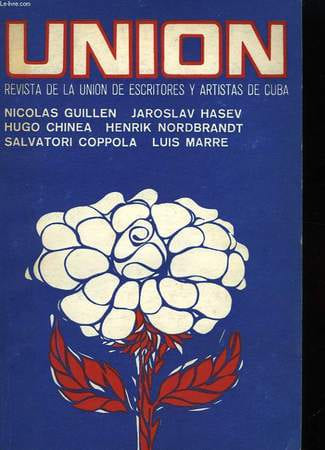
URSELIA DIAZ BAEZ. 1983. In-8. Broché. Très bon état, Couv. convenable, Dos satisfaisant, Intérieur frais. 187 pages. Quelques illustrations en noir et blanc, dans le texte. Ouvrage en espagnol.. . . . Classification Dewey : 460-Langues espagnole et portugaise
Reference : RO80044819
Revista de la union de escritores y artistas de Cuba. Nicolas Guille, Jaroslav Hasev, Hugo Chinea, Henrik Nordbrandt, Salv. Coppola, Luis Marre. Classification Dewey : 460-Langues espagnole et portugaise
Bookseller's contact details
Le-livre.fr / Le Village du Livre
ZI de Laubardemont
33910 Sablons
France
05 57 411 411
Payment mode


Sale conditions
Les ouvrages sont expédiés à réception du règlement, les cartes bleues, chèques , virements bancaires et mandats cash sont acceptés. Les frais de port pour la France métropolitaine sont forfaitaire : 6 euros pour le premier livre , 2 euros par livre supplémentaire , à partir de 49.50 euros les frais d'envoi sont de 8€ pour le premier livre et 2€ par livre supplémentaire . Pour le reste du monde, un forfait, selon le nombre d'ouvrages commandés sera appliqué. Tous nos envois sont effectués en courrier ou Colissimo suivi quotidiennement.
5 book(s) with the same title
Le Catalogue - Librairie le Trait d'Union (n°92, Mai 2007)
Librairie Le Trait d'Union Dos carré collé 2007 In-8 (15 x 21 cm), dos carré collé, couverture illustrée en couleur, catalogue de vente n°92 de Mai 2007 de la librairie Le Trait d'Union ; petites marques d'usage sur la couverture, bon état. Livraison a domicile (La Poste) ou en Mondial Relay sur simple demande.


Association bretonne et Union régionaliste bretonne, tome 80 (3e série) (comptes rendus, procès-verbaux, mémoires)
Les presses Bretonnes, Saint-Brieuc Association bretonne et union régionaliste bretonne Broché 1972 In-8 (16.5x25 cm), broché, 93 pages, comptes rendus, procès-verbaux, mémoires du bulletin de l'Association Bretonne et Union régionaliste bretonne, tome 80, troisième série, contient le 89e congrès à Auray, les 25, 26 et 27 juin 1971, illustrations et photographies en noir et blanc dans le texte ; coiffes frottées, dos et plats jaunis, mors frottés, intérieur frais, assez bon état. Livraison a domicile (La Poste) ou en Mondial Relay sur simple demande.
Ciné-Union.
Limoges, Lucien Souny, octobre 1989, EDITION ORIGINALE, in-4, cartonnage couv. photo en noir éd., photos en noir sur gardes,144 pp., papier glacé, très nb. photos, plans, publicités et documents anciens en noir, Table des matières, Ce livre retrace l'histoire de la salle "ciné-Union" de limoges. Il s'agissait, en 1881, d'une simple coopérative ouvrière, mais après quelques années devient un vrai centre de culture pour des milliers de limougeauds. Très belle iconographie ancienne. RARE Très bon état
La terre nantaise, organe hebdomadaire de l'union des syndicats agricole de la Loire-Inférieure 1940 - 1941
Nantes (impression : impr. à Saint-Nazaire) Journal 1940 "Rare réunion de 2 années du Journal : La Terre nantaise organe hebdomadaire d'informations et de défense agricoles paraissant le samedi [""puis"" organe hebdomadaire de l'Union des syndicats agricoles de la Loire-Inférieure, de la Coopérative agricole de Nantes, de la Coopérative de Saint-Mars-la-Jaille et de la Coopérative vinicole de la région nantaise relié demi toile noire, 41,5 * 59,5, ensemble de numéros de la septième année comprenant du numéro 1 au numéro 24 fin de cette publication (les 4 et 5 sont en lambeaux (Du 3 janvier au 13 juin) puis le titre change ainsi que le format et devient le bulletin de l'union des syndicats agricole de la Loire-Inférieure et des régions limitrophes. Les numéros 1 à 20 sont sur un petit format et vont du 10 août au 21 décembre 1940 (Pendant juin et juillet et les mois suivants, il y a eu des problèmes important d'approvisionnement de papier en France). Puis le numéro 21 grand format conclus la première année de ce nouveau titre. La seconde année commance avec le numéro numéro 1 du 4 janvier 1941 au numéro 52 du 27 décembre 1941 ; mis à part les numéro 4 et 5 de 1940 qui sont en morceaux l'ensemble est en bon état. Livraison a domicile (La Poste) ou en Mondial Relay sur simple demande."
L'Union médicale (nouvelle série, tome deuxième - 2e trimestre 1859)
Paris, aux bureaux de l'Union Médicale Relié 1859 "In-8 (17 x 25,5 cm), reliure demi-chagrin, 628 pages, n°39 (2 avril 1859) à 77 (30 juin 1859) de la revue ""L'Union médicale"" ; coins et bord inférieur des plats frottés, par ailleurs bon état. Livraison a domicile (La Poste) ou en Mondial Relay sur simple demande."

