 Write to the booksellers
HEINEMANN Henri Photographie de Michel Fraignier.
La course.
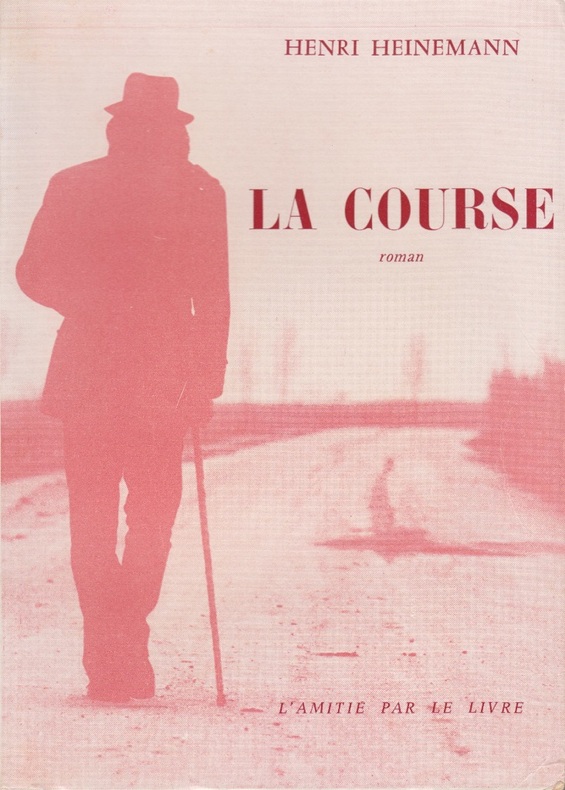
Couverture souple. Broché. 238 pages.
Reference : 105071
Livre. Présentation de Suzanne Prou. Photographie de Michel Fraignier. Editions l'Amitié par le livre, 1978.
Bookseller's contact details
Librairie et Cætera
Mme Sophie ROSIERE
+33 (0) 5 56 88 08 45
Payment mode
Sale conditions
Envoi par la Poste à réception du paiement. Paiement par virement, chèque ou CB (Stripe) PAS DE PAIEMENT SUR LE SITE. Je vous enverrai les informations de paiement en validant votre commande. EXPEDITIONS du lundi au vendredi en courrier ordinaire ou suivi, sous étuis recyclables et/ou réutilisés. Les livres sont nettoyés, réparés si besoin, et couverts de papier cristal. FRAIS D'EXPEDITION : Pour un livre standard (moins de 500g): FRANCE : de 4,50 à 6,70€ en courrier suivi. Vers l'étranger, Jusqu'en juillet prochain, les frais de port indiqués sont en courrier ordinaire SANS SUIVI. Envoi suivi sur demande. EUROPE : 1 à 1,50€ au tarif économique livres et brochures AUTRES PAYS : 2 à 3€ au tarif économique livres et brochures. A compter de Juillet 2025, le tarif économique pour l'étranger n'existera plus. Tous les tarifs postaux sont consultables ici : http://www.librairie-et-caetera.fr/2021/01/tarifs-postaux-2021.html RETOUR : Conformément à la législation sur la vente à distance, vous disposez d'un droit de retour des ouvrages pendant 14 jours. Les frais de port restent à votre charge lorsqu'il s'agit d'une erreur de commande de votre part et à notre charge si le livre n'est pas conforme à notre description.
5 book(s) with the same title
Cours de dessin. 1re Partie, Modèles d'après la bosse. 29 original lithographs (from a total of 70) from the first part of the Drawing Course ('Cours de dessin').
Paris, Goupil & Cie Editeurs, no date (1868)
< This course taught Vincent van Gogh how to draw human figures> Loose-leaf plates on grey paper with the original white/grey paper backing. Dimensions: 44 x 59 cm. All plates are numbered. The following plates from the first series (Première partie) are on offer here: 1, 2, 5, 7, 9-12, 15-17, 19-22, 24-26, 28-29, 32, 36, 40, 42, 46, 49, 52-53, 56. Details: All plates have a small printed colophon in a frame, with the general title, the part number and title, the plate number and the publishers name. In fine print at the bottom of the sheets the name of the printer Lemercier in Paris is mentioned on most plates. 27 plates also have a small blind stamp of the firm Goupil in the lower margin. See for this stamp the French database 'marquesdecollections', stamp no. L.1090. Condition: Mosts lithos are in rather good condition. The plates have evidently been used, a few have tiny pinholes. Some of them have been folded, showing creases. Most of the plates are frayed and worn at the edges, with a few small tears and dog-ears. Several plates are foxed or spotted. Four plates are in lesser condition: plate 2 has large folds, the lower corners are damaged and there is foxing; plate 26 has two long creases and a large tear; plate 36 has a crease, a damaged corner and a tear of six cm.; plate 56 is almost torn through the middle. Note: The beautiful plates of the famous Drawing Course (Cours de dessin) by Bargue and Gérome were made for beginning students of drawing schools and art academies to copy. In this way they could become familiar with the principles of contour, light, and shade, and at the same time develop an appreciation for 'good taste' by looking at examples of great art. The drawings of the first part of the course were made after plaster casts of famous classical and renaissance statues. The series starts with simple forms of isolated body-parts and then offers images of gradually increasing complexity. To help the student to manage the essential forms of a head or torso, many plates are divided into two parts. A schematic outline with straight lines and angles stands beside the finished drawing. The plates of the drawing course are now hard to find. Of the original publication of 197 loose-leaf lithography plates, divided into three parts, there are only a few complete sets known. Our collection is a part of the first volume: 'Modèles d'après la bosse' (Models after casts), which consisted of 70 plates. It was published in 1868. The second series, completed in 1870, was: 'Modèles d'après les Maîtres de toutes les époques et de toutes les écoles' (Models after masters of all periods and all schools). The third series, completed in 1873, was: 'Exercices au fusain pour préparer à l'étude de l'académie d'après nature' (Charcoal exercises in preparation for drawing the academic nude). The first two sections were meant for schools for design and decorative arts. The third section with live models was used only in art academies. There were no instructions published with the plates, that was left to the teachers in the schools. It was common practice in the schools to start with copying prints and drawing from plaster casts of classical statues. As a second stage, students copied old masters. In the art academies, they then went on to live models. This training was part of the tradition of 19th century neoclassicsm. The imitation of nature was the only goal for artists. Objects and human bodies should be drawn and painted meticulously. Works of art were both realistic and idealistic, following the concept of 'good taste'. In France, this resulted in smooth and finished works, influenced by the standards of the French 'Académie des Beaux-Arts'. This so-called 'Academic Art' came under criticism at the end of the 19th century when the concept of art changed radically. The Drawing Course is the last great document of the 19th century tradition of art education. It was widely used in France and England. Vincent van Gogh writes about it in his letters, he has worked through the whole course at least once. Van Gogh worked very hard on this course because he hoped to gain some income with the sale of his drawings. In a sketchbook owned by the Van Gogh Museum in Amsterdam there are several pencil drawings made after Bargue's plates. Nowadays, the didactic and artistic quality of the course is greatly admired by both amateur and professional artists. The firm Goupil & Cie was an important publisher of original prints and art reproductions in Paris. They hired skilled engravers and lithographers and used the latest techniques. The firm also developed into a renowned art dealer. The 'Cours de dessin' sold very well for Goupil, and loose plates were still sold until the firm was dissolved around 1920. Charles Bargue (1826-1883) was a French draughtsman, lithographer and painter who has left a small number of paintings. Jean-Léon Gérome (1824-1904) was a French painter and sculptor, an esteemed representative of academic art. The main source for information on the course is: G.M. Ackerman. Charles Bargue with the collaboration of Jean-Léon Gérôme, Drawing Course. Paris, ACR, 2017 (first edition 2003). A copy of this book is added.
Reference : alb5c23cf3973aaf8e2
Jiang Liping. (Jiang Liping) HSK Standard Course 6A HSK Standard Course 6A Work
Jiang Liping. (Jiang Liping) HSK Standard Course 6A HSK Standard Course 6A Workbook HSK Standard Course 6A Teachers Book. In Russian (ask us if in doubt)/Jiang Liping. (Tszyan Lipin) HSK Standard Course 6A HSK Standard Course 6A Workbook HSK Standard Course 6A Teachers Book. Standard HSK 6A Course Standard HSK 6A Workbook Teachers Book for Standard HSK 6A Beijing University. 2015. 232 60 172 p. We have thousands of titles and often several copies of each title may be available. Please feel free to contact us for a detailed description of the copies available. SKUalb5c23cf3973aaf8e2
Les derniers corsaires de la Manche (Petite Course)
Editions Ouest-France Malicorne sur Sarthe, 72, Pays de la Loire, France 1994 Book condition, Etat : Bon broché, sous couverture imprimée éditeur bleue, illustrée d'un tableau en couleurs du corsaire L'Intrépide grand In-8 1 vol. - 171 pages
quelques figures dans le texte en noir et blanc, principalement des bateaux 1ere édition, 1994 Contents, Chapitres : Introduction : Réalités et mythes - Origines de la course - Les règles de la course - La Petite Course, un bon placement - La Petite Course avant l'embargo - De dangereux petits navires - Visages de corsaires, capitaine, chirurgien - La levée de l'embargo - Un navire de bonne prise - Heurs et malheurs de la Petite Course au temps du Directoire - Le blocus continental et la fin de la Petite Course - Bilan de la Petite Course - Les derniers corsaires - Conclusion - Annexes, bibliographie, index - René Blémus, né à Équeurdreville en 1927, est un historien de la Manche. - N'ayant pu se présenter au concours d'entrée de l'école normale le 6 juin 1944, il entame une carrière de géographe en Afrique, comme technicien à l'Institut géographique national (IGN). De retour en France, il fait ses études supérieures à Caen et Paris, et devient professeur de géographie et d'histoire, notamment au Lycée Victor-Grignard de Cherbourg, dont il devient proviseur. Auteur d'ouvrages historiques, il entre à la Société nationale académique de Cherbourg en 1983. (source : Wikimanche) une note à l'encre sur la première page (livre offert), sinon bon état, couverture propre, intérieur frais et propre - NB : Cet ouvrage couvre principalement la période de 1793 à la fin de l'Empire, vingt années environ
Reference : alb125b80cbf3e2c181
Diller A. Keyboard Harmony Course Harmony Course Book 3. In English (ask us if i
Diller A. Keyboard Harmony Course Harmony Course Book 3. In English (ask us if in doubt)/Diller A. Keyboard Harmony Course Kurs garmonii Kniga 3. Diller A. Keyboard Harmony Course Harmony Course Book 3. We have thousands of titles and often several copies of each title may be available. Please feel free to contact us for a detailed description of the copies available. SKUalb125b80cbf3e2c181
Reference : alb125b80cbf3e2c591
Diller A. Keyboard Harmony Course Harmony Course Book 4. In English (ask us if i
Diller A. Keyboard Harmony Course Harmony Course Book 4. In English (ask us if in doubt)/Diller A. Keyboard Harmony Course Kurs garmonii Kniga 4. Diller A. Keyboard Harmony Course Harmony Course Book 4. We have thousands of titles and often several copies of each title may be available. Please feel free to contact us for a detailed description of the copies available. SKUalb125b80cbf3e2c591

