 Write to the booksellers
Bernheim -Emmanuèle Bernheim
Sa femme
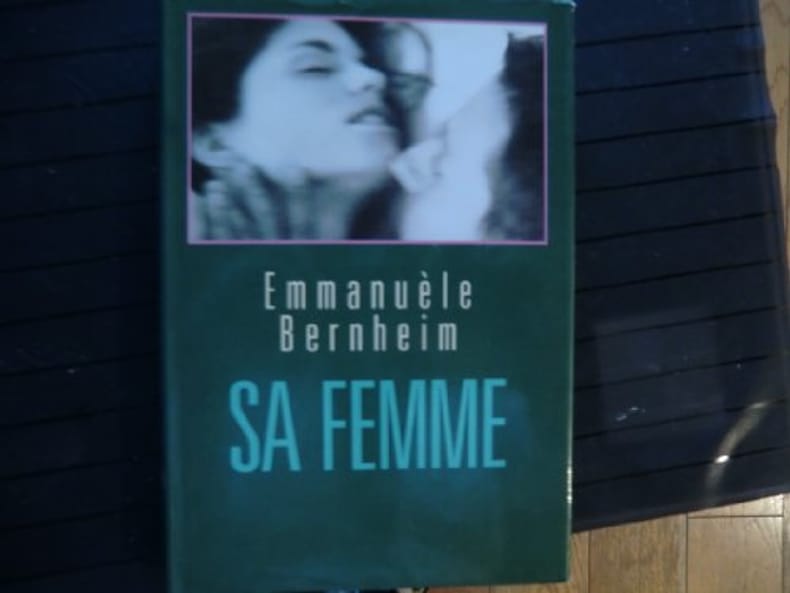
France Loisirs 1994 21x14x2cm. 1994. Broché.
Reference : 63628
ISBN : 9782724278118
MERCI DE LIRE JUSQU'A LA FIN!! Edition francaise. l'articlea la première page coupée dans le coin peut présenter de légères marques de lecture et/ou de stockage mais reste en bon état. Envoi rapide et soigné dans enveloppe à bulles depuis
Bookseller's contact details
Démons et Merveilles
M. Christophe Ravignot
contact@demons-et-merveilles.com
07 54 32 44 40
Payment mode

Sale conditions
Rapidité d'envoi Tous nos articles sont expédiés le jour même de la confirmation de la commande Soin de l'emballage Un soin particulier est apporté à l'emballage, vos objets voyagent en toute sécurité. A votre écoute Si toutefois un incident devait survenir lors de l'acheminement de votre paquet, n'hésitez pas à nous contacter, nous mettrons tout en oeuvre pour vous satisfaire, en vous proposant un retour, un remboursement ou toute autre soluton à votre convenance. Professionnalisme Les livres que nous vendons sont pour la plupart des livres anciens, nous tâchons d'être le plus objectif possible quant à leur état.
5 book(s) with the same title
L'onneste femme, divisée en trois parties. Reveue, corrigée et augmentée en cette quatriesme edition. - [RARE FEMINIST WORK]
Paris, Le Gras & Bobin, 1658. 8vo. In contemporary half calf with four raised bands and gilt lettering and ornamentation to spine. Wear to extremities. Spine-ends chipped. Previous owner's name to title-page. Frontispiece slightly miscoloured and last leaves with dampstain in margin, otherwise internally nice. (22), 335, (50), 252 pp.
The rare fourth edition of Du Bosc’s highly popular and influential feminist work, being the first major theorizations of ‘honnêteté’ for women. “The seventeenth-century French ideology of honnêteté—a then emerging code of conduct related to sociability, urbanity, and politeness—transformed elite French society from a military class to a cultural aristocracy. Women played a key role in this social transformation as both practitioners and enforcers of these new conventions. Whereas critics have studied the honnête homme as the embodiment of this new secular social ideal, research into the philosophy shaping the honnête femme has been scant at best. Jacques Du Bosc’s L’Honnête femme: he Respectable Woman in Society and the New Collection of Letters and Responses by Contemporary Women, the first major theorizations of honnêteté for women, provide valuable insights into the honnête femme for current students and scholars. In these works, Du Bosc proposes what he calls in part three of L’Honnête femme a comprehensive “science for women.” His honnête femme is a purely social being free from domestic cares. hus, Du Bosc focuses his treatise exclusively on the development of women’s “intelligence” and “moral judgment.” He proposes a way for elite women to perfect the self for social interaction through the practices of reading, relection, and conversation. In appealing to women’s reason, Du Bosc does not “prescribe laws” for women, as most writers of the period did, but reasons with them, examining the pros and cons of all aspects of social life. Following Montaigne and Marie de Gournay and anticipating Descartes, Du Bosc argues for women’s equality with men based on their shared reason and virtue. As he writes in L’Honnête femme, “Reason and virtue, even though they are of one species, belong to two sexes. Women cannot renounce this science without renouncing a privilege and an advantage, that they possess as we do, as their birthright.” Through his principles of honnêteté, Du Bosc makes powerful claims for women to participate as equal members of the new cultural elite” (Nell & Wolfgang, L’ Honnête Femme: he Respectable Woman in Society and the New Collection of Letters and Responses by Contemporary Womend). All editions are rare, we have not been able to trace a single copy of this fouth edition in the trade.

L'homme-femme. Réponse a M. Henri d'Ideville. - [COINING ""FEMINIST"" - PRESENTATION-COPY - ONE OF 25 NUMBERED COPIES ON HOLLANDE]
Paris, Michel Lévy Frères, 1872. Lex 8vo (24,8 x 16 cm). Bound uncut and with the original front wrapper in a nice early/mid 19th century green half morocco binding with five raised bands and gilt lettering to spine. Very light wear to edges and to raised bands. Front wrapper a little dusty and partly mounted on a piece of paper. Two small nicks to outer blank margin and with handwritten pencil-annotation to blank top as well as pencil-inderlining of the author, title, and year and with the publisher information lightly crossed out, also in pencil (all indicating layout-corrections, perhaps for following issues). A nice and clean copy. (4), 177 pp. 4-line Handwritten presentation-inscription to half-title, ""à Regnière"", dated 12 Febryary 1873 and signed ""A Dumas.""
Scarce first printing – presentation-copy and one of 31 large paper copies, being no. 20 of 25 numbered copies on Hollande (out of a total of 31 numbered copies - 1 on vélin, 5 on Chine, and 25 on Hollande) - of the seminal work that coined the word ""feminist"", to refer to liberated women. Written as a response to an article by Henry d’Ideville, where he poses the question “should the adulterous woman be killed?”, Dumas’ l’Homme-Femme (“The Man-Woman”), which advocates the right of a man to kill his adulterous wife (something legal under the Napoleon Civil Code of 1804) stirred intense controversy across Europe and became an instant bestseller, with 50,000 copies sold in 3 weeks, 49 reprints, and several subsequent translations. “The feminists (excuse this neologism) say .... all the evil rises from the fact that we will not allow that woman is the equal of man”, Dumas writes in the present work, coining the word “feminist” and at the same time indicating a lack of sympathy with the emerging women’s rights battle. Generally, he saw life ""as a battle between the woman and the man"", although his views on the subject were nor black and white. In spite of his reactionary views, he did respect what women might become, and even helped a few gifted young women to achieve their intellectual potential. ""The words feminism and feminist are used today throughout the Western world to connote the ideas that advocate the emancipation of women, the movements that have attempted to realize it, and the individuals who support these goals. Few people in the English-speaking world realize, however, that the origin of these terms can be traced to nineteenth-century French political discourse. The earliest origins of the French word “féminisme” and its derivatives are still obscure. Their roots should be traceable to the political agitation of the 1830s, during which time the related words socialisme and individualisme made their appearance in the political vocabulary of French-speaking peoples. … The term “féministe” has a less problematic history. The Robert dictionary gives the date as 1872 and attributes first usage to the French playwright and essayist, Alexandre Dumas fils. This usage can be verified" indeed, the word does appear in Dumas's L'Homme-femme (1872).” (Karen Offe, On the French Origin of the Words Feminism and Feminist, pp. 45-47). “In his work, Dumas probably coined the term “feminists” for the first time to refer to people who claimed 'that women are equal to men, and should be given the same education and rights as men.” (Bayerische Staatsbibliothek München). The few numbered copies of this seminal work are extremely rare. We have not been able to trace a single copy apart from the present, neither at auction nor in libraries. The normal issue is in 12mo and significantly smaller than the 31 copies on large paper. The first issue of that is not common either.
La Femme au dix-huitième siècle.
1887 Paris, Firmin-Didot et Cie, 1887.
1 volume in-4, non rogné (29 x 23,5 cm), bradel demi-maroquin bleu marine à coins (reliure de l’époque, signée par Champs-Stroobants), dos lisse orné d’un fer fleuri doré, des auteurs et du titre dorés, tête dorée, couverture conservée, 3 ex-libris contrecollés sur le contreplat et la seconde garde colorée et un ex-libris manuscrit sur un feuillet de garde, notes et commentaires manuscrits au crayon noir in texte, [4]-iii-1 bl.-402 pages (complet). Légers frottements aux coiffes et aux mors, coins émoussés, quelques décolorations en regard des planches sans gravité. Bon état.Nouvelle édition, revue, augmentée et illustrée de 58 reproductions en héliogravure hors texte par Dujardin, dont 42 planches et 6 à double page hors texte en noir, et 10 planches hors texte en couleurs, toutes avec serpentes légendées.Tirage à 100 exemplaires sur papier vélin, (n°141).Provenance :Des bibliothèques d’André Barrier (1870-1954), Président au tribunal civil de la Seine, Parisien de Paris, Président à la cour de Paris et Président des Cent Bibliophiles avec ses ex-libris imprimé et manuscrit, de Serge Barrier, et de Marcelle Léonardon avec leur ex-libris.

Les Intrigues de Molière et celles de sa femme, ou La Fameuse Comédienne.
1877 Paris, Isidore Liseux, 1877.
1 volume grand in-8 (21,5 x 13,5 cm), demi maroquin noir à coins (reliure de l’époque), dos à nerfs avec titre doré, filet à froid en bordures, tranche de tête dorée, titre en rouge et noir, xxii-[2]-247-[1] pages (complet). Coins frottés. Bon état. Nouvelle édition, avec un portrait en frontispice d’Armande Béjart, en double état. Le tirage de cette édition a été limité, entre autres, à 200 exemplaires sur grand papier de Hollande, format in-8° carré, avec deux épreuves du portrait (avant et avec la lettre), numérotés 11 à 210 (exemplaire n°195). Charles-Louis Livet (1828-1897) est un administrateur, philologue et historien de la littérature. Spécialiste de Molière et de son théâtre, il lui consacre divers ouvrages. Celui-ci a la particularité d’également porter sur sa célèbre épouse, Armande Béjart. Agréable exemplaire.
Anatole France et la femme.
1924 Paris, Éditions Baudinière, s.d. [1924].
1 volume in-8 (18 x 11,5 cm), demi chagrin fauve (reliure signée J. Van West), couverture et dos conservés, dos à nerfs orné, tranche de tête ornée, 252-[4] pages (complet). Bon état. ÉDITION ORIGINALE. Marie Hollebecque (1881-1957), épouse Lahy, est une essayiste, dramaturge et pédagogue française. Elle s’intéresse ici aux liens unissant l’auteur Anatole France (1844-1924) aux femmes, et de façon plus générale à l’amour, et sa représentation des femmes au sein de sa propre œuvre. Bon exemplaire.

