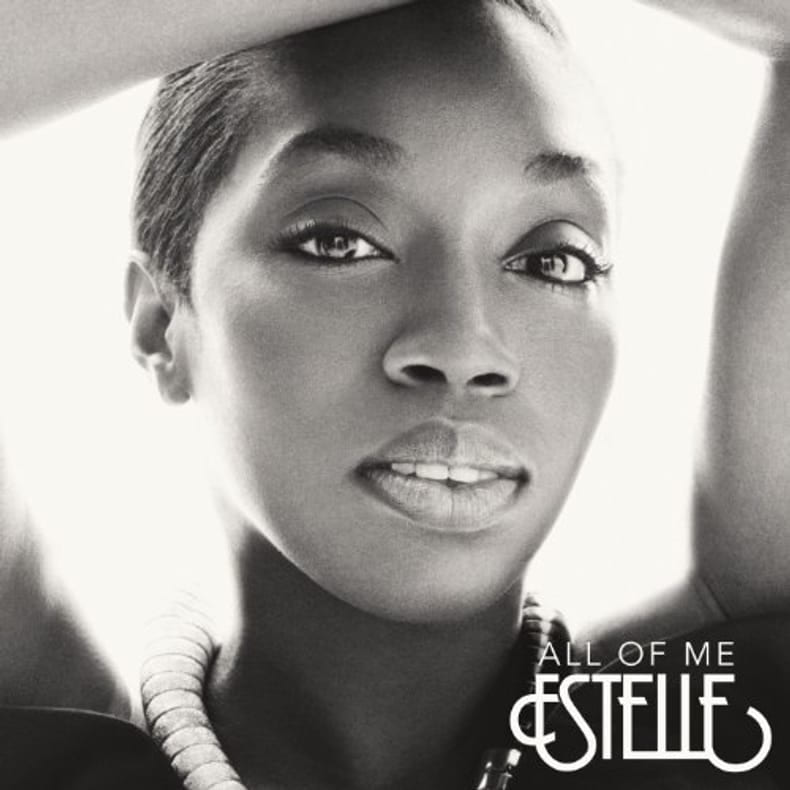
‎Estelle Estelle William Roberts Warren Zavala Vincent Jr Montana Tyler Reynolds T. Richardson S Marshall Ray Angry Mischa Chillak Mike Snoddy Matthew Bronson John Legend Joe Henderson Jeymes Samuel Jerry Duplessis Jean Wyclef James P‎
‎All Of Me‎

‎Atlantic 2012 14x12x1cm. 2012. CD.‎

Reference : 29993
ISBN : 0075678958397


‎French édition - expédié soigneusement dans une enveloppe à bulles depuis la France‎

€5.00 (€5.00 )
Bookseller's contact details

Démons et Merveilles
M. Christophe Ravignot

contact@demons-et-merveilles.com

07 54 32 44 40

Contact bookseller

Payment mode
Cheque
Transfer
Others
Sale conditions

Rapidité d'envoi Tous nos articles sont expédiés le jour même de la confirmation de la commande Soin de l'emballage Un soin particulier est apporté à l'emballage, vos objets voyagent en toute sécurité. A votre écoute Si toutefois un incident devait survenir lors de l'acheminement de votre paquet, n'hésitez pas à nous contacter, nous mettrons tout en oeuvre pour vous satisfaire, en vous proposant un retour, un remboursement ou toute autre soluton à votre convenance. Professionnalisme Les livres que nous vendons sont pour la plupart des livres anciens, nous tâchons d'être le plus objectif possible quant à leur état.

Contact bookseller about this book

Enter these characters to validate your form.
*
Send

5 book(s) with the same title

‎VIGNOLA (Giacomo Barozzi da)‎

Reference : 4697

(1851)

‎Li cinque ordini di architettura di Giacomo Barozzi da, intagliati da Constantino Gianni, e ridotti a migliore e piu' facile lezione per uso degli architetti pittori e disegnatori e specialmente per servire di modello all' insegnamento nelle pubbliche scuole e nelle academie. Quarta edizione di questa tipografia‎

‎Milano, Per Borroni et Scotti successori a Vincenzo Ferrario, 1851. 325 g In-8, demi basane havane, dos lisse orné, x-36 pp., 1 ff., 31 planches. Un ancien propriétaire a personnalisé l'exemplaire en y ajoutant un feuillet illustré où est inscrit ''Il premio di disegno a Nicolas Ionghi 1857''. Usures et frottements sur la reliure, petites mouillures angulaires. . (Catégories : Architecture, )‎


Phone number : 06 17 93 27 81

EUR80.00 (€80.00 )

‎ANDERSEN, HANS CHRISTIAN.‎

Reference : 58519

(1822)

‎A truly splendid and unique collection of 23 Hans Christian Andersen-items that together tell the true story of Andersen's life and sheds light on all aspects of his life and work. The collection is divided into the following (full descriptions belo... - [MAGNIFICENT HANS CHRISTIAN ANDERSEN-COLLECTION]‎

‎(1822) - 1872. ‎


‎With the present Hans Christian Andersen-collection, we have aimed not at an exhaustive collection of ALL of his many writings nor at a LARGE collection, but at an exquisite, chosen collection that tells us the true story of Andersen's life. A collection that enlightens us about both the author and the man Hans Christian Andersen and that sheds light on all aspects of his life and work. A collection that epitomizes quality, scope, and importance, not merely numbers of items nor works that are not particularly important in his life's work. Every one of the 23 items in the present collection has been carefully chosen to represent a certain Aspect of Hans Christian Andersen at a certain time of his life, in an attempt to get as close to the great fairy tale author as possible. The items basically span his entire career - from his first book, published at the age of 17 (and only known in about 10 copies) to an original manuscript poem by the ageing author at the age of 67. The 23 carefully chosen and unique items cover his earliest publications that are of extreme scarcity, his three seminal fairy tale cycles that catapulted him into fame and created the genre of the fairy tale, for which he is now famous world-wide, five magnificent presentation-copies (among them an absolutely magnificent copy of his very first fairy tale, one of the best presentation-copies known) that each give us an insight into the poet Andersen and into his circle of friends, six splendid original letters that are all different in style and content and written from all over the world (among them one of the extremely rare letters known by him written in English, in Latin hand), an original manuscript, which is an extreme scarcity on private hands and something one may never come by again, two books from Andersen's own library, which is extremely rare to find, as only 75 such books are known and almost all of them are in institutional holdings, and finally the three main translations that ensured his fame in the rest of the world: the most important translations into German, English, and French respectively. The collection is divided into the following seven categories, and below follows a short preview and introduction to each. Upon request, a document with full, elaborate descriptions of each item will be provided. 1. Debuts/earliest publications (see also 3.1.)2. The three fairy tale collections/cycles3. Presentation-copies (see also: 2.3.)4. Letters5. Manuscript6. Books from Andersen's library7. The three main translations1. Debuts/earliest publications1.1. Ungdoms-Forsøg / Gjenfærdet ved Palnatokes Grav, en Original Fortælling" og Alfsol, en original Tragoedie. Ungdoms=Forsøg. Kjöbenhavn, [1822]. The extremely rare first printing of Hans Christian Andersen's first book - with facsimiles of the title-page, the contents-leaf and a further four leaves. The book is exceedingly rare. A title-issue appeared in 1827. No more than about ten copies in all of both the first issue and the title-issue are known to exist - only a couple of them are known in private collections, and less than a handful of copies are known outside of Denmark. The present publication, his first book, is of immense importance to Andersen's life and work and is arguably THE most important piece of Anderseniana. 1.2. Ved min Velgører Provst Gutfelds Død. Slagelse, 1823.The extremely rare first printing of the 1823-issues of this slightly obscure newspaper, which contains Hans Christian Andersen's third publication. This exceedingly rare piece of Anderseniana was published when the master of the fairy tale genre was merely 17 years old, namely in February 1823. The present publication constitutes one of the two pieces of publication that are at the epicentre of the coming-to-be of the greatest poet and author to emerge from Danish soil. This little piece is a heartfelt, almost perfectly stylized poem that constitutes an obituary of Hans Christian Andersen's early benefactor, Gutfeld, who was responsible for Collin accepting to be Andersen's benefactor. It was due to Gutfeld and his belief in Andersen that he made it on into the world and was taken seriously enough - at the mere age of 17 - to later be allowed to follow his heart and his life dream - that of writing.1.3. Fodreise fra Holmens Canal til Østpynten af Amager i Aarene 1828 og 1829. Kjöbenhavn, 1829. The rare first edition of Hans Christian Andersen's debut novel, ""Journey on Foot"", here in the extremely scarce original printed wrappers. Andersen himself considered this book his debut and refers to it as ""my first publication"". It came to play a tremendous role in the development of his writing and constitutes one of his most important works. It is the first piece of Andersen that yields any success and the first work for which he gained any recognition. ""It is a well-known fact that Hans Christian Andersen made his début as a writer three times during his youth. The first time he published a book was in 1822, when ""Youthful Attempts"" came out... He was 17 years old, penniless and in need for help, but the main part of the circulation ended up in the paper mill... The second time he made his début was in 1829, when he published ""Journey on Foot from Holmen's Canal to the Eastern Point of Amager"", a book which can hardly be classified as a travel book.. it seems a subtle and humorous arabesque and a literary satire. This book was published in the year after he had left grammar-school and was qualifying for the entrance examination to academic studies at the university. It can rightly be regarded as a key, which enables us to understand the entire development of his later production...2. The three fairy tale-collections2.1. Eventyr fortalte for Børn. (1.-3. Hefte) + Eventyr fortalte for Børn. Ny Samling (1.-3. Hefte). 2 Bind. Kjöbenhavn, 1835-1847. A lovely set of this exceedingly rare collection of Andersen's earliest fairy tales. This legendary fairy tale-collection that created the fairy tale-genre and brought Andersen international fame, consists in six parts that together make up two volumes. As with most of the other few existing copies, the present set is a mixture of issues and likewise has certain wants concerning title-pages, half-titles and tables of contents. ""During Andersen's lifetime 162 of his Fairy Tales were published, but the scarcest and most difficult to obtain are these six little pamphlets. We do not know exactly how many, or how few, copies were printed, but we do know that no copy with all the title pages and tables of contents has ever been offered for sale.""2.2. Nye Eventyr. 2 Bind (5 samlinger). Kjøbenhavn, 1844 - 48.First edition of Hans Christian Andersen's seminal second collection of fairy tales - the publication that made him internationally famous - with all five collections in first issue, also the first, which is of the utmost rarity. It is in this legendary first collection that we find the first printing of ""The Ugly Duckling""(not as is indicated in PMM in his first). The rarity of the first issue of volume 1, collection 1 is legendary. It was published on November 11th 1843 (dated 1844 on the title-page) in a very small number, probably due to the poor sales of Andersen's first fairy tale collection. Against all belief, this first collection sold out within a few days, catapulting Andersen into worldwide fame, and a second issue was published already on December 21st 1843. Thus, only very few copies of the first issue exist, and almost all collections of the ""New fairy Tales"" are bound with the second issue or the third of 1847, meaning that they do not contain the actual first printing of ""The Ugly Duckling"", ""The Nightingale"", ""The Angel"", and ""The Sweethearts"". 2.3. Nye Eventyr og Historier. 3 Series, 10 collections. Kjøbenhavn, 1858-1872.A splendid fully complete copy of Andersen's third fairy tale collection, WITH ALL 10 ISSUES IN FIRST EDITIONS, FIRST ISSUES, ALL IN THE ORIGINAL PRINTED WRAPPERS, AND ONE OF THEM WITH A SIGNED PRESENTATION-INSCRIPTION BY ANDERSEN - WITH 39 FAIRY TALES IN THEIR FIRST PRINTINGS. It is highly uncommon to find all ten issues of the series together, let alone in the original printed wrappers, each of which is a scarcity on their own. To our knowledge, only one other such set exists in a private collection, and that is in far from as fine condition as the present, where all but one of the issues (which does not have the back wrapper) are fully complete with the spines, exactly as issued. 3. Presentation-copies3.1. Digte. Kjöbenhavn, 1830.THE RARE FIRST EDITION - PRESENTATION-COPY, IN THE EXCEEDINGLY SCARCE ORIGINAL PRINTED WRAPPERS - OF ANDERSEN'S THIRD BOOK, CONTAINING HIS FIRST FAIRY TALE. The magnificent presentation-inscription - hitherto unknown and unregistered - is arguably one of the most important Andersen-presentations known to exist. It is inscribed to Henriette Collin, the then fiancée, later wife, of his closest and most important friend, who was more like a brother to him, Edvard Collin. It is one of the very early Andersen-presentations known. This first published collection of Andersen's poetry constitutes Andersen's third published book (at the age of 24) and contains, at the end, the first printing of any of his fairy tales, being also his very first fairy tale ""The Ghost"" (or ""The Spectre""). This is the first time that Andersen uses the term ""Eventyr"" (fairy tale), the term which came to denote the genre for which he received world-wide fame as one of the most important writers of all time. 3.2. Nye Eventyr. Tredie Samling. Kjøbenhavn, 1845.An excellent presentation-copy of the first edition of the third ""collection"" of Andersen's second fairy tale-collection, containing five of his best fairy tales in the first printing - among them the cherished tales ""The Red Shoes"" and ""The Shepherdess and the Chimney-Sweep "". Inscribed copies of Andersen's fairy tales are very rare and extremely sought-after. But the present presentation-copy is even more interesting, as it is inscribed to a fellow author of tales for children - ""The poet Kaalund/ in kind remembrance/ of our first meeting/ the 29th of April 1845/ from the [NEW FAIRY TALES] (the printed half title) 's author."" -in the collection of Andersen's fairy tales that appeared almost simultaneously with Kaalund's renowned ""Tales for Children"" (""Fabler for Børn""). 3.3. Historier. Anden Samling. Kjøbenhavn, 1853.First edition, in splendid condition, with the original printed wrappers, of the second part of Andersen's ""Story""-collection, containing first printings of four of his famous fairy-tales. With a lovely, poetical presentation-inscription to Frederikke Larcher, signed ""H.C. Andersen"", translated as thus: ""I put my bouquet on the board of the stage/ you yourself make the impression of a fresh bouquet"". Frederikke Larcher was a stage actress, and Andersen might have given the little book as a gift upon her last performance.3.4. Nye Eventyr og Historier. Anden Række (første samling). Kjøbenhavn, 1861.An excellent copy, in the original printed, illustrated wrappers, of the separately published first part of the second series of ""Nye Eventyr og Historier"", with a lovely presentation-inscription to the title-page, translating thus ""The splendid, the spirited,/ Mrs. Agentinde Renck/ send this bouquet of stories/ from my garden of poetry this spring/ Most heartfelt and respectfully/ H.C. Andersen."" This splendid volume contains first printings of one of Andersen's most famous, most beloved and most frequently recounted fairy-tales/stories: ""What the Old Man does is Always Right"". Apart from that masterpiece of moral story-telling, the present publication contains five other of Andersen's great stories in first printings.3.5. Da Spanierne var her. Originalt romantisk Lystspil i tre Acter. Kjøbenhavn (Copenhagen), 1865. An excellent copy of the first edition of Andersen's famed play, in the scarce original binding and with a magnificent presentation-inscription to Rudolph Kranold, who at the time was director of the Royal Theatre in Copenhagen. His short reign here (until 1866) coincides exactly with the work on and premiere of one of the plays that was very closest to Andersen's heart, namely ""When the Spanish were Here"", which premiered at the Royal Theatre on April 6, 1865. Reading Andersen's diaries allows us to actually follow the play the entire way through to the stage. It is evident, both from his diaries and from the present presentation-inscription, that the play meant a lot to Andersen. As the inscription indicates, he's anxious that the play not be taken down again and he clearly asks Kranold to take good care of this play that is close to his heart. 4. Letters4.1. Autographed letter, signed in full (""Hans Christian Andersen""), in English, for the Scottish author William Hurton. Dated ""Copenhagen 2 October 1851"".The present letter is of the utmost interest, as it is written in English (in Andersen's own hand!) and also in Latin letters, as opposed the gothic handwriting that Andersen usually uses. Letters and inscriptions in Andersen's Latin hand are of the utmost scarcity. Out of the few known letters in Andersen's hand, we have even fewer letters by him written in English. He made an exception for William Hurton, to whom a few letters have been preserved, demonstrating his reverence for this Scottishman so fascinated by Andersen himself. Almost all of these letters are in institutional holdings, and the present one on private hands is a true scarcity. 4.2. Autographed letter, signed ""H. C. Andersen"", for Frederik Bøgh. Dated ""Basnæs ved Skjelskjør/ den 3 Juli 1862"". 4 pages.This very lengthy letter from Andersen to Frederik Bøgh is interesting in several respects. First of all, Andersen here mentions several of his works: new songs for the revised version of his opera ""The Raven"", proofreading and numerous comments for the ""new edition of Fairy Tales and Stories"", and a brand new fairy tale: ""Finally, I have written a new fairy tale: ""Snowdrop""."" Furthermore, Andersen talks about his health and problems he has with his eye as well as the weather and his impending travel plans. It is clear from the letter that he is very close to his young student friend Bøgh. 4.3. Autographed letter, signed ""H. C. Andersen"", for Frederik Bøgh. Dated ""Tanger I Marokko/ den 8 Nov: 1862."".An absolutely splendid letter with rare observations about Moroccan culture, the people, how they dress and behave, the food, the landscape, etc. It is clear that Tanger, with its ""wild, romantic nature"", its palm trees, its wilderness, the wild boars and hyenas, is very far from the coldness of the North. Andersen's fascination with the ""half naked men"" and women in horrible dress, with the bare headed Moorish Jews in kaftans, ""the naked brown kids that screamed and roared"", and the slaves that carry goods, leaps from the pages of the letter and paint a picture of a place that to a Dane in 1862 must seem oddly fascinating and so different. There is no doubt that this rich culture served as direct inspiration for Andersen's story-writing. 4.4. Autographed letter, signed ""H. C. Andersen"", for Frederik Bøgh. Dated ""Toledo den 6 December 1862"".A splendid letter from Toledo, which Andersen paints so clearly as only he can. ""Toledo is a dead city, but with the life of poetry"", he writes, after having described in detail, to his dear friend back home, the ruins and the melancholy that is Toledo. 4.5. Autographed letter, signed ""H. C. Andersen"", for ""Kjære William"" (i.e. William Melchior). Dated "" Frijsenborg den 27 August/ 1868. "". A lovely, cheerful birthday letter for the young birthday boy William Melchior, who was turning 7 years old. The letter is utterly charming and describes the journey of the birthday letter itself, flying over land and sea, from Jutland to Copenhagen. The letter not only portrays the ease with which Andersen communicates with children, it also constitutes a miniature version of beloved Andersen-stories such as ""Little Tuk"" and ""A Piece of Pearl String"". 4.6. Autographed letter, signed ""H. C. Andersen"", for Frederik Bøgh. Dated "" den 9 Maj 1873"".This Beautiful little letter for Nicolai Bøgh bears witness to the heartfelt bond that Andersen felt towards his young friend. This little gem of a letter is very poetical - most of it is almost like a poem, describing the sun coming through the clouds and liking the clouds to snow and the heaven to Paradise. Furthermore, Andersen mentions his friends' illness, liking him to a bird that needs to be free. Bøgh had fallen ill the previous year, from an illness that would eventually kill him 9 years later, at the mere age of 45. 5. Manuscript5.1. Original handwritten and signed manuscript for a poem entitled ""Stormfloden"" (i.e. The Storm or The Storm Surge). November (22nd), 1872. 1 1/2 handwritten pp.Original manuscripts by Andersen are of the utmost scarcity, and only very few are known on private hands. The present is the manuscript for a poem that Andersen wrote just a couple of years before he died and which was published as the preface to a ""Christmas Present"" by Vilhelm Gregersen in December 1872, just a few weeks after Andersen wrote it. The poem is very dramatic and doomsday-like, but has an uplifting an upbuilding ending. It is inspired by the dramatic storm or storm surge that hit Copenhagen on November 13th, 1872.6. Books from Andersen's Library6.1. F. ANDERSEN, C.J. HANSEN, J.P.E. HARTMANN, P. HEISE and A. WINDING. Ni Fleerstemmige Mandssange. Udgivne af Foreningen ""Fremtiden"". Kjöbenhavn, 1866.Hans Christian Andersen's own copy, with his ownership signature to the bottom of the front wrapper, of this pamphlet of ""Nine Polyphonic Male Songs"". The pamphlet contains nine lovely songs written by the greatest Danish authors of the period, set to music by the most famous Danish musicians of the period. Andersen's contribution is the song ""Hun har mig glemt"" (She Has me Forgotten), which he had printed for the first time in 1854, but in a different version, with different wording. Here, it is set to music by F. Andersen. 6.2. G.h. [GEORG EMIL BETZONICH]. En Kjærligheds-Historie. Fortælling. Kjøbenhavn, 1862.A truly rare example of a book that has belonged to Andersen, with a long presentation-inscription from the author to Hans Christian Andersen to front free end-paper, dated on Andersen's 58th birthday. The author of the novel Georg Emil Betzonich (1829 - 1901) is not a famous author today, nor was he very famous at the time. It is interesting, however, that Andersen kept his book in his library. The book passed to Edvard Collin, who inherited Andersen's entire estate, when Andersen died in 1875, and also Collin kept it. It was sold at the auction of his belongings in 1886.7. The three main Translations7.1. Jugendleben und Träume eines Italienischen Dichters. Nacch H.C. Andersens Dänischen Original: Improvisatoren. Ins Deutsche übertragen von L. Kruse. 2 Theile. Hamburg, August Campe, 1835.The very rare first edition of the first German translation of Andersen's first novel, ""Improvisatoren"", being the first of Andersen's books to be translated into any foreign language. It is fair to say that no other translation before or after was as important to Andersen as the present. Before the work even appeared, Andersen had a list of recipients for the German translation. Among these was Adalbert Chamisso, to whom he wrote in April 1835: ""Here I send you my Italian son" he speaks the German language, so your family can also understand him. I wish that in the great Germany people will be aware of my book and that I may deserve that awareness. That Kruse is introducing me as an author of novels should be somewhat of a recommendation"… For making such an effort of being known outside of little Denmark, I think, I cannot be blamed."" 7.2. Danish Fairy Legends and Tales. (Translated by Caroline Peachey). London, William Pickering (Chiswick), 1846.The very rare first edition - ANDERSEN'S CLOSE FRIEND HENRIETTE SCAVENIUS' (BORN MOLTKE) COPY - of this highly important Andersen-translation, which contains the very first appearance in English of some of Andersen's most famous and beloved fairy tales: ""The Emperor's New Clothes, ""The Nightingale"", ""The Wild Swans"", ""The Buck-Wheat"" and ""The Dustman"", and for the first time we here find the titles ""The Ugly Duckling"" (previously called ""The Ugly Duck"") and ""The Real Princess"" (previously called ""The Princess and the Peas"").7.3. Contes pour les enfants. Traduit du Danois par V. Caralp. Illustrations à deux teintes par Derancourt. Paris, Morizot, (1848).Extremely scarce first edition of the first translations of any of Hans Christian Andersen's fairy tales to appear in French. This first French Andersen-collection constitutes the introduction of Hans Christian Andersen's works in French literature, the introduction of the fairy-tale-genre in France, and a cornerstone in the history French children's literature. ‎

Logo ILAB

Phone number : +45 33 155 335

DKK2,200,000.00 (€294,448.31 )

‎KIERKEGAARD, SØREN.‎

Reference : 62938

(1843)

‎To opbyggelige Taler af S. Kierkegaard + Tre opbyggelige Taler af S. Kierkegaard. + Fire opbyggelige Taler af S. Kierkegaard + To opbyggelige Taler. Af S. Kierkegaard. + Tre opbyggelige Taler af S. Kierkegaard. + Fire opbyggelige Taler af S. Kierkegaard. - [MIGNIFICENT COLLECTION OF ALL THE UPBUILDING DISCOURSES IN THE ORIGINAL PAMPHLETS]‎

‎Kjøbenhavn, Trykt i Bianco Lunos Bogtrykkeri, 1843 + Kjøbenhavn, Philipsen, 1843 + Kjøbenhavn, Philipsen, 1844. All six publications, i.e. all Eighteen upbuilding Discourses separately published, all in the exact same formats, all being 8vo, and all but one being in the original wrappers. 52 pp. + 62 (+ 1 blank leaf) pp. + 84 pp. + 59 pp. (without the blank leaf between the title-page and the preface) + 70 (+ 1 blank leaf pp.) + 111 pp. Two upb., 1843: Completely uncut in the original blank blue wrappers with just the tiniest loss of paper to the spine and a small tear to back wrapper. Otherwise near mint. Also internally unusually fresh. Three upb., 1843: Completely uncut in newer blank wrappers. A few small ink spots to margin of the first leaves, and owner’s signature (Thea Hoffmann) to title-page. Printed on fine vellum-paper, which is completely fresh and white. Four upb., 1843: Completely uncut in the original printed blue wrappers with the text of the title-page repeated inside a frame to front board, printed author and title to spine, and the printing year within the same repeated frame to the back wrapper. Wrappers almost loose from block, but preserved in their entirety, also the spine, which has some cracks, but is not missing any of the printing. Internally completely fresh.Two upb., 1844: Completely uncut in the original printed green wrappers with the text of the title-page repeated inside a frame to front board, and the printing year within the same repeated frame to the back board. Remains of the printed author and title to spine. Wrappers loose, but preserved in their entirety. The spine, however, is cracked and the printed author and title not preserved. A bit browned and brownspotted. Three upb., 1844: Completely uncut in the original printed light brown wrappers with the text of the title page repeated inside a frame to front board, printed author and title to spine, and a vignette depicting a Bible within the same repeated frame to the back wrapper. An absolutely splendid, fresh, and clean copy with just a little edge wear. Four upb., 1844: Completely uncut and unopened in the original printed light brown wrappers with the text of the title-page repeated inside a frame to front board, printed author and title to spine, and a vignette depicting a Bible within the same repeated frame to the back wrapper. Spine with a bit of wear and small lack of paper. Printing on the spine almost entirely preserved. Some brownspotting, but an excellent copy. With the ownership signature of Grønvold to top of front wrapper and to title-page.‎


‎A magnificent collection of the first printings of all eighteen upbuilding discourses in the six separate publications, as they originally appeared, all of them uncut and all but one in the incredibly scarce original wrappers, the sixth being on special vellum-paper. Kierkegaard's Upbuilding (or Edifying) Discourses were published over the course of two years, in 1843 and 1844. In all, 18 Upbuilding Discourses were published, divided over six publications, namely: Two Upbuilding Discourses from 1843, Three Upbuilding Discourses from 1843, Four Upbuilding Discourses from 1843, Two Upbuilding Discourses from 1844, Three Upbuilding Discourses from 1844, Four Upbuilding Discourses from 1844. Each of these publications accompanied one of the main pseudonymous works, beginning with Either-Or in 1843. As opposed to his major philosophical works, the religious upbuilding discourses actually bear the name of the author on the title-page. Of course, this was by no means incidental. While the pseudonymous works could raise the question of the religiousness of the author, the parallelly written religious discourses stress the fact that we are dealing with an author, who was religious from the very beginning – an essential fact that Kierkegaard wished to stress for those interested in his authorship. In his journals, Kierkegaard clearly states that the religious discourses are as significant in his oeuvre as a whole as are the larger pseudonymous works, “I began with “Either-Or” and two upbuilding discourses...” he says, and explains that he intended the upbuilding, the religious, to advance, and that he wanted to show “that the writer was not an aesthetic author who in the course of time grew older and for that reason became religious”. (Journals, IX A 227). He was religious all along, also during all of the major philosophical publications that were not written in his name. The fact that every major pseudonymous work – up until Concluding Unscientific Postscript appeared and revealed the identity of the real author – was accompanied by one of these small Upbuilding Discourses, bears testament to the pivotal role they play in Kierkegaard’s philosophical development. The separately published Upbuilding Discourses appeared in original wrappers, some of them blank, some of them printed, repeating the printing from the title-page within a printed frame. In May 1845, the publisher Philipsen buys the remainder issues of all six Discourse-publications, has a joint title-page printed along with a contents-leaf and now issues all six Discourse-publications together under the title Eighteen Upbuilding Discourses. Kierkegaard had agreed to the idea of the collected Eighteen Upbuilding Discourses, but it was not his intended project with them. Therefore, he wished for the book not to be reviewed, and he naturally did not give away any copies of the Eighteen Upbuilding Discourses, only the individual publications. In all, seven presentation-copies of the different Upbuilding Discourses are registered, all being for either Heiberg or Nielsen. Himmelstrup 45, 57, 58, 60, 61, 73.‎

Logo ILAB

Phone number : +45 33 155 335

DKK35,000.00 (€4,684.40 )

‎KIERKEGAARD, SØREN.‎

Reference : 62942

(1843)

‎Sexten opbyggelige Taler af S. Kierkegaard. - [THE SCARCEST OF ALL OF KIERKEGAARD'S BOOKS]‎

‎Kjøbenhavn, Philipsen, 1843-45. 8vo. (4) + 62 + 84 + 59 (including the blank leaf between the title-page and the preface!) + 70 + 111 pp. Nice contemporary brown half calf with quadruple gilt lines to spine and gilt Gothic lettering. A bit of wear to corners and along hinges, but a lovely, fine, and tight copy. Tape residue to inside of back board. Pencil-annotation to inside of back board and old owner’s name to front free end-paper. Brownspotting.‎


‎A lovely copy of this incredibly scarce Kierkegaard-title, which is without doubt the most difficult of them all to get hold of, being the rarest of all of his books. Kierkegaard’s Upbuilding (or Edifying) Discourses were published over the course of two years, in 1843 and 1844. In all, 18 Upbuilding Discourses were published, divided over six publications, namely: Two Upbuilding Discourses from 1843 Three Upbuilding Discourses from 1843 Four Upbuilding Discourses from 1843 Two Upbuilding Discourses from 1844 Three Upbuilding Discourses from 1844 Four Upbuilding Discourses from 1844 Each of these publications accompanied one of the main pseudonymous works, beginning with Either-Or in 1843. As opposed to his major philosophical works, the religious upbuilding discourses actually bear the name of the author on the title-page. Of course, this was by no means incidental. While the pseudonymous works could raise the question of the religiousness of the author, the parallelly written religious discourses stress the fact that we are dealing with an author, who was religious from the very beginning – an essential fact that Kierkegaard wished to stress for those interested in his authorship. In his journals, Kierkegaard clearly states that the religious discourses are as significant in his oeuvre as a whole as are the larger pseudonymous works, “I began with “Either-Or” and two upbuilding discourses...” he says, and explains that he intended the upbuilding, the religious, to advance, and that he wanted to show “that the writer was not an aesthetic author who in the course of time grew older and for that reason became religious”. (Journals, IX A 227). He was religious all along, also during all of the major philosophical publications that were not written in his name. The fact that every major pseudonymous work – up until Concluding Unscientific Postscript appeared and revealed the identity of the real author – was accompanied by one of these small Upbuilding Discourses, bears testament to the pivotal role they play in Kierkegaard’s philosophical development. Furthermore, while Kierkegaard could not present anyone with copies of his pseudonymous works (as explained above), he could indeed give away presentation-copies of his accompanying Upbuilding Discourses, which he then did. The Upbuilding Discourses are particularly interesting in several regards, one being that it is in the course of the printing of these that Kierkegaard changes his publisher. Ever since Kierkegaard had chosen to publish his first book himself, he had had his books on commission with the leading Copenhagen publisher Reitzel (the sole exception being his thesis, the Irony). That was also the case with Two Upbuilding Discourses from 1843. But for some reason, the following five publications of Upbuilding Discourses did not appear with Reitzel, but with P.G. Philipsen instead. We do not know the exact reason for this change in publishers, as the commission was exactly the same for the two. Whereas Two Upbuilding Discourses from 1843 had sold relatively well, the Three and Four Upbuilding Discourses from 1843 did not sell well. A mere 102 and 104 copies respectively out of a commission issue of 300 were sold. In an attempt at making money on these discourses in spite of the poor sales numbers, Philipsen offers to buy the unsold copies of Two Upbuilding Discourses from 1843, buys a sales issue of 300 copies of the Two Upbuilding Discourses from 1844, and makes the same agreement with Kierkegaard for the following two Discourse-publications. Sales numbers are still poor, however, and in the spring of 1845, only ca 100 copies of each of the 1844 Discourse publications have been sold. The printing issue of each was about 500, and Philipsen’s sales issue 300 thus, both Philipsen and Kierkegaard had large numbers of each Discourse-publication left, and in May 1845, they make a new deal. Philipsen buys the remainder issues of all six Discourse-publications, including the 278 copies of Two Upbuilding Discourses from 1843 from Reitzel. Philipsen has a joint title-page printed, along with a contents-leaf, and now issues the seminal Kierkegaard-publication that is no. 85 in the bibliography (Himmelstrup), namely Eighteen Upbuilding Discourses – all six publications, constituting all eighteen Upbuilding Discourses collected in one book. Seeing that there were 278 copies left of the Two Upbuilding Discourses from 1843, a maximum of 278 copies of Eighteen Upbuilding Discourses can have been made, making it one of the scarcest Kierkegaard-books. The actual number is certainly lower than 278, though, probably quite a bit lower, seeing that Philipsen continued to sell the separate publications, all copies of which he then evidently did not include in the Eighteen Upbuilding Discourses. The individual pamphlets, of course, are even scarcer, with a maximum of 232 copies of Two Upbuilding Discourses from 1843 and somewhere between 100 and 150 copies of the others. We know from the Erindringsbog fra Bianco Luno 1844 that Kierkegaard had 506 copies of Four Upbuilding Discourses 1844 printed, six of them on fine paper for presentation. Seeing that we have already established the clear thread of identity throughout all six publications, we must assume that the other pamphlets were printed in the same numbers. And we have the record of the remainder issues that Philipsen buys in 1845, which lets us conclude of the Upbuilding Discourses, that, by that time, 222 copies of Two 1843 139 copies of Three 1843 130 copies of Four 1843 120 copies of Two 1844 92 copies of Three 1844 96 copies of Four 1844 were sold out of the total number of original issues. In other words, these are extremely scarce. Not least in the original wrappers or bindings. The scarcest Kierkegaard-title that exists, however, will be found in the continuation of the printing history of the Upbuilding Discourses. It is the mythically rare title of Sixteen Upbuilding Discourses, which Philipsen issued in 1852, when the Two Upbuilding Discourses had been sold out and it was no longer possible to collect Eighteen Upbuilding Discourses. Thus, Philipsen had yet another title-page printed, this time with Sixteen Upbuilding Discourses as the title and the year 1843-45 on it, along with a new index-leaf he issued this, the scarcest of all Kierkegaard-titles, in March 1852. “It is not known how large the issue was, but it cannot have been more than 83, seeing that that was what was left of Three Upbuilding Discourses from 1843.” (Tekstspejle p. 54, translated from Danish). The idea of the Eighteen Upbuilding Discourses (let alone the Sixteen) was not Kierkegaard’s. He had agreed to the Eighteen, but it was not his intended project with the Upbuilding Discourses. Therefore, he wished for the book not to be reviewed, and he naturally did not give away any copies of the Eighteen Upbuilding Discourses, and of course not the Sixteen either, only the individual pamphlets. In all, seven presentation-copies of the different Upbuilding Discourses are registered, all being for either Heiberg or Nielsen. Curiously, neither Eighteen nor Sixteen Upbuilding Discourses were to be found in Kierkegaard’s book collection after his death. All the individual pamphlets were, however, along with a copy of the first nine Upbuilding Discourses – i.e. the three publications from 1843 – bound together. For more on the conundrum of the actual number of copies of the Upbuilding Discourses, see the Preface by Flemming Chr. Nielsen in Girsel’s Kierkegaard-catalogue, p. 19.‎

Logo ILAB

Phone number : +45 33 155 335

DKK30,000.00 (€4,015.20 )

‎BARTHOLIN, THOMAS (Edt.) - STENO, NICOLAUS [NIELS STEENSEN] et al.‎

Reference : 53613

(1673)

‎Acta Medica & Philosophica Hafniensia. Ann. 1671&16721673 1674.1675.1676." 1677.1678. 1679. Cum aeneis figuris/Figuris aeneis illustrata. 5 vols (all). - [ONE OF THE FIRST MEDICAL PERIODICALS]‎

‎Copenhagen, Peter Haubold, 1673-80. 4to. A very nice recent full calf pastiche binding with four raised bands and gilt red title-label to spine. blindstamped borders to boards. Old owner's inscription (""Sven Borgh/Lund 1840"") to title-page. A very nice and clean copy with only a bit of brownspotting and some evenly browned leaves. A tear (with no loss) to one leaf and one leaf (vol. V, L3) with a neat marginal restoration, far from affacting text. The following two leaves with minor loss to blank upper margin (far from affecting text). The large double-page folded plate with Stensen's lymphatic glands (vol. II, p. 240) with a neat restoration to verso, no loss. Annotations and corrections in the same early, neat hand throughout. Woodcut vignettes and initials. All four title-pages (part III & IV have a joint title-page) printed in red and black. (16), 316" (20), 376 (16), 174, 216" (8), 342 pp. With ab. 60 woodcut illustrations in the text, many of them quite large, two of them full-page, and all 62 engraved plates (of which two are on a folded leaf), four of which are folded. A truly excellent, fully complete copy with all five volumes and all 62 plates.‎


‎The very rare first edition of all five volumes of Bartholin's groundbreaking medical journal, which constitutes the first scientific periodical in Scandinavia and one of the very first medical periodicals in the world. Thomas Bartholin (1616-1680) was one of the leading physicians of his time, now remembered, among many other things, as the discoverer of the lymphatic system. He ""was the most celebrated physician of his period in Denmark and perhaps in all of Europe"". (Kronick, p. 81). He is considered ""a typical representative of the ""Curiosi naturae"" of the 17th century with all their learning, diligence and insatiable spirit of curiosity... He belonged with all his heart to the learned period, and yet he made an anatomical-physiological discovery of high mark when he found, and demonstrated, a hitherto entirely unknown vascular system in animals, and later in man - the lymphatic."" (Meisen, p. 25). He was a hugely influential and extremely productive man. Apart from his seminal discovery of the lymphatic system, he wrote a number of highly influential treatises, published a series of very influential anatomical papers, published his vast correspondence with other scientists, which has the character of a scientific archive at a time when there were not yet periodicals of natural science, provided us with the most extensive information about medicine in Denmark and about the conditions of the physicians, called attention to the significance of pathological anatomy, etc., etc., and ""[y]et the greatest importance is to be attached to his ""Acta medica philosophica Hafniensia"", in 5 volumes, that was published from 1673 to 1680, when he died. It is a scientific periodical, wide in its scope, one of the first of its kind."" (Meisen, p. 28). ""The Copenhagen biologists, under the quickening influence of Thomas Bartholin, produced five volumes of transactions known as the Acta medica et philosophica Hafniensia, which is now very rare."" (Hagenströmer)The leading contributors to the periodical, besides Bartholin himself, was the great Niels Steensen (Steno), Holger Jacobsen (Jacobaeus), Caspar Bartholin, Ole Borch (Borrichius), Ole Worm, Simon Paulli, Johan Rohde, Caspar Kölichen, etc., but the contributions were not confined to Danes or Scandinavians. For instance, the English anatomist Edward Tyson (1650-1708) also published here, as did several other internationally famous physicians and scientists. Interestingly, the ""Acta Hafniensia"", as it is known, has a great focus on the odd and curious, the astounding and marvelous, the unnatural and abnormal. Thorndike claims that ""Monsters and freaks of nature receive perhaps the most attention."" (vol. VIII, p. 234). However, the journal was far from limited to this. ""Thomas Bartholin describes the male mandrill illustrated by three anatomical plates (Male genitalia) and a figure of the entire animal, which had died of disease in the Royal Menagerie. Holger Jacobsen describes the scorpion, the salamander, snakes, several birds, the heron and the parrot (based on dissections and figures by Steno). He also investigated the fascinating and unique anatomical puzzle of the tongue of the black woodpecker (with plate). He gives an exceptionally interesting account of the mole cricket, Gryllotalpa, which is important as being one of the first in which the elongated segmental heart of insects is described and figured. This memoir is a commendable piece of zootomical research, and it is all the more outstanding because the subject of it was an invertebrate (Cole). The most outstanding contributions in the entire periodical, however, are the 12 by Niels Steensen (Steno), which are all printed here for the first time. Steensen was the most gifted of Bartholin's disciples, and when he returned to Denmark in 1672, he immediately took up anatomical demonstrations and dissections, the fruits of which he published here, in the first three volumes of the ""Acta Hafniensia"". His contributions constitute important finds in the fields of The Brain, The Heart, The Muscles and General Embryology. ""Steno's dissections of the muscles of the eagle, Aquila (1673) is one of the most remarkable essays in zootomy published up to his time, and it is perhaps more detailed and reliable than almost any other."" (Cole). (Gosch 24).In the paper ""Embryo monsto affinis Parisiis dissectus"" (Gosch 15), we have the first known description of the ""tetralogy of Fallot"" (Garrison & Morton no 2726.1). ""Bartholin was the most celebrated physician of his period in Denmark and perhaps in all of Europe. He was professor of anatomy at the University of Copenhagen and later became Dean of its Medical Faculty. The publication seems also to have associated with the activities of a scientific society, although there seems to be little evidence for Neuberger's statement that the ""Acta"" were the proceedings of this society. The preface to the translation of the ""Acta"" which are included in the ""Collection Académique"" gives the following account of its origins: ""The Academy of Copenhagen was founded by Frederick III, who was aware how much glory it brought to him and to Denmark by encouraging the sciences and by attracting and holding scientists in his kingdom. One finds little to clarify the history of this academy, even in the five published volumes. The editing of the memoirs was principally under the care of Bartholin, the first Dane to publish medical observations. His aim was first to make a collection which embraced all parts of science"" but, deterred by the immensity of the task, he limited himself to the different parts of medicine and to those observations that were offered to him. His sponsor was Count Griffenfeld, the grand chancellor of Denmark, who obtained an edict enjoining all Danish physicians to render exact correspondence with the Dean of the Faculty of Copenhagen and to inform him of all singularities in medicine and natural history observed in different parts of the kingdom. Bartholin had great hopes for this collection and one can truly find in the five volumes which he published many discoveries which would have been lost or perhaps not have existed if this correspondence had not brought them to light and encouraged him."" The ""Acta"" consisted primarily in short original observations on medical and natural scientific subjects, although it also contained a few abstracts of books."" (Kronick p. 81). Waller: 712 (listing only 39 plates)Wellcome: II, p. 108 (listing 61 plates)Gosch: III, pp 58-59 & I, pp. 137-38Hagströmer Library has only vols. I-IVBartholin papers: Gosch: Bartholin 30-43Steensen-papers: Gosch: Steno 15-26" Garrison&Morton: 2726.1Cole, F.J.: A History of Comparative Anatomy, pp 369-93Thorndike: History of Magic and Experimental Science, vol. VIII, Chapter 30Kronick, David A.: A History of Scientific and Technical Periodical 1665-1790, p. 57 & pp. 80-82Meisen: Prominent Danish Scientists through the Ages, pp. 25-28‎

Logo ILAB

Phone number : +45 33 155 335

DKK85,000.00 (€11,376.41 )
Get it on Google Play Get it on AppStore
The item was added to your cart
You have just added :

-

There are/is 0 item(s) in your cart.
Total : €0.00
(without shipping fees)
What can I do with a user account ?

What can I do with a user account ?

  • All your searches are memorised in your history which allows you to find and redo anterior searches.
  • You may manage a list of your favourite, regular searches.
  • Your preferences (language, search parameters, etc.) are memorised.
  • You may send your search results on your e-mail address without having to fill in each time you need it.
  • Get in touch with booksellers, order books and see previous orders.
  • Publish Events related to books.

And much more that you will discover browsing Livre Rare Book !