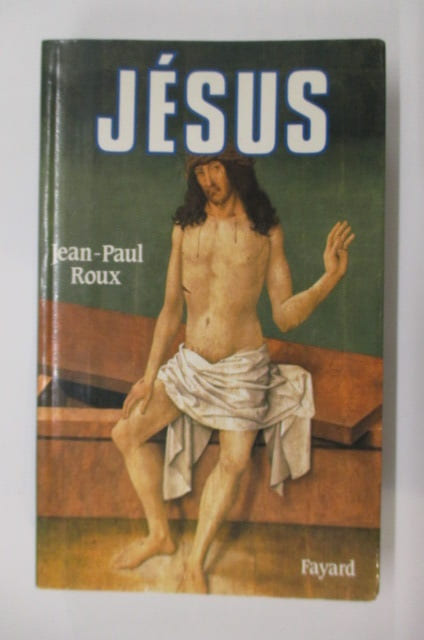
1993 / 527 pages. Broché. Editions Fayard.
Reference : REL393M
Très bon état.
Librairie du Levant
M. Yannick RENAUD
15 rue Marengo
64100 Bayonne
France
+33 5 59 03 69 40
We accept payments in € by bank transfers, remote Credit Card, Paypal or checks. Checks made payable to and addressed to: Librairie du Levant 15 rue Marengo 64100 Bayonne France Bank transfers to: Banque Courtois, 1 pl du Réduit 64100 Bayonne / RIB / 10268 02696 62711600200 13 / IBAN / FR76 1026 8026 9662 7116 0020 013 / SWIFT BIC / COURFR2T PAYPAL via the address: librairiedulevant@orange.fr For any remote payment by Credit Card, informations communicated are automatically deleted as soon as payment is made and validated. Shipping upon receipt of payment. Member of the Syndicat des Libraires Anciens et Modernes (SLAM) and of the International League of Antiquarian Booksellers (ILAB), our sales are made according to the customs of the profession. All our books and objetcs are guaranteed to conform to the description which appears in each sheet; if, as a result of an error or an oversight, this was not the case, order will be taken back (within fifteen days) and reimbursed (including the costs of redirection), provided that it is returned in the same condition as the purchase. For obvious technical reasons (format, colors, cropping, viewing angle, etc.), the photographs presented on this site are not contractual. Our prices are in Euros, packaging included. Shipments, made under the responsibility of the buyers, are made by Colissimo Post, registered with insured value from € 50 and up to € 5,000 (delivery against signature, package tracking and insured value); for works less than 50 €, shipments are made by registered letter; works whose value exceeds € 5,000 must be sent by special carrier with insured value and delivery against signature. For any shipment outside mainland France, shipping and insurance costs remain the responsibility of the customer. Shipments are made under the same conditions set out above. Possibility to collect the orders on site. Do not hesitate to keep up to date with our news, finds, curiosities, catalogs and various thematic lists by leaving your contact details by email at librairiedulevant@orange.fr
Beyrouth, Société britannique et étrangère de diffusion des Saintes Ecritures, 1864. 1864 1 vol in-8° (200 x 130 mm) de: 444 pp. Imprimées en arabe dans un double encadrement. Basane brune de l'époque signée "Watkins binder" (étiquette au verso du 1er plat) , dos lisse titré à l'or en arabe.
Rare exemplaire de cet évangile en arabe publié à Beyrouth par la Société britannique et étrangère pour la diffusion des Saintes Écritures. La coexistence de larabe avec dautres langues savantes, liturgiques ou anciennes (le turc ottoman, le latin, le copte et le grec), souligne les interactions culturelles et religieuses. Cette pluralité linguistique montre les dynamiques de traduction, dérudition, mais aussi de coexistence confessionnelle, notamment dans les milieux chrétiens orientaux. Les thématiques sont variées, allant de textes religieux (exégèse, liturgie, prières) à des ouvrages savants dans les domaines de la grammaire, de la rhétorique ou de la géographie. Ce corpus constitue un témoignage précieux sur lhistoire du livre arabe et multilingue, et sur les circulations et échanges intellectuels entre les espaces culturels méditerranéens et orientaux. La majorité des ouvrages publiés traitent du domaine religieux : bible, prière, critique et interprétation. La diffusion des textes religieux dans différentes langues par les soins de la Société biblique britannique et étrangère reflète les interactions linguistiques et culturelles complexes entre communautés musulmanes et chrétiennes, témoignage précieux non seulement de la diffusion du christianisme en milieu ottoman, mais aussi de la coexistence et du dialogue entre différentes langues et cultures. Notre évangile débute par la généalogie du Christ, suivie de Matthieu 2:19-25: « Avant que Joseph et Marie habitent ensemble, on découvrit qu'il était enceinte par l'action du Saint-Esprit. Joseph, homme juste, ne voulant pas la déshonorer publiquement, projeta de la répudier secrètement. Mais tandis qu'il réfléchissait à cela, un ange du Seigneur lui apparut en songe et lui dit : « Joseph, fils de David, n'aie pas peur de prendre Marie pour femme, car l'enfant qu'elle porte vient de l'Esprit » Bel exemplaire conservé dans sa reliure dorigine signée "Watkins binder". 1 volume, in-8° (200 x 130 mm): 444 pp. Printed in Arabic within a double border. Contemporary brown sheepskin binding signed Watkins binder (label on the inside of the front cover), plain spine with title in gold lettering in Arabic. A rare copy of this Arabic Gospel published in Beirut by the British and Foreign Bible Society. The coexistence of Arabic with other scholarly, liturgical, or ancient languages (Ottoman Turkish, Latin, Coptic, and Greek) highlights cultural and religious interactions. This linguistic diversity reflects the dynamics of translation and scholarship, as well as interfaith coexistence, particularly within Eastern Christian communities. The themes are varied, ranging from religious texts (exegesis, liturgy, prayers) to scholarly works in the fields of grammar, rhetoric, and geography. This corpus constitutes a valuable record of the history of the Arabic and multilingual book, as well as of intellectual circulation and exchange between Mediterranean and Eastern cultural spheres. The majority of the published works deal with religious topics: the Bible, prayer, criticism, and interpretation. The dissemination of religious texts in various languages by the British and Foreign Bible Society reflects the complex linguistic and cultural interactions between Muslim and Christian communities, serving as a valuable record not only of the spread of Christianity in the Ottoman world but also of the coexistence and dialogue between different languages and cultures. Our Gospel begins with the genealogy of Christ, followed by Matthew 2:1925: Before Joseph and Mary lived together, it was discovered that she was pregnant by the Holy Spirit. Joseph, being a righteous man and not wanting to expose her to public disgrace, planned to divorce her quietly. But while he was considering this, an angel of the Lord appeared to him in a dream and said, Joseph, son of David, do not be afraid to take Mary as your wife, for the child she carries is from the Spirit A beautiful copy preserved in its original binding signed Watkins binder.
Londres, Richard Watts, 1839. 1839 1 vol in-8° (215 x 170 mm) de: [1] f de titre, 468 pp., numerotation et nombreuses annotations au crayon. (rares taches). Plein veau brun de l'époque, dos lisse titré à l'or, plats ornés d'un décor à froid. (mors faibles, pites cassures).
Rare exemplaire de cette édition avec texte bilingue Copte-arabe des 4 évangiles due à Richard Mavor Watts. William Mavor Watts (17971874) est un imprimeur de Londres qui était spécialisé dans les polices non romaines et l'impression de la Bible. Il était capable de composer des textes dans presque toutes les langues et de réaliser un travail d'une qualité artistique irréprochable. Les fonds de caractères qu'il possédait, permettant l'impression d'ouvrages dans presque toutes les langues connues, auraient fait honneur aux académies les plus riches et les plus savantes. Les précieuses matrices des nombreux caractères typographiques, couvrant presque toutes les langues écrites connues au monde et produites par M. Watts avec beaucoup dassiduité et à grands frais, ont été préservées. Certains de ces caractères ont été gravés sous la supervision personnelle déminents spécialistes des langues orientales, classiques et missionnaires, et sont largement utilisés par la Société biblique britannique et étrangère pour la diffusion des Saintes Écritures dans le monde entier. Il existe plus de deux cents de ces langues, sans compter les différents dialectes Swatow, Pwo-karen, Lepcha, Kinika, Nupe, Bullom, Batta, Lifu, Tchuwash, Tukudh, Wuch, Ossète La coexistence de larabe avec dautres langues savantes, liturgiques ou anciennes (le turc ottoman, le latin, le copte et le grec), souligne les interactions culturelles et religieuses. Cette pluralité linguistique montre les dynamiques de traduction, dérudition, mais aussi de coexistence confessionnelle, notamment dans les milieux chrétiens orientaux. Les thématiques sont variées, allant de textes religieux (exégèse, liturgie, prières) à des ouvrages savants dans les domaines de la grammaire, de la rhétorique ou de la géographie. Ce corpus constitue un témoignage précieux sur lhistoire du livre arabe et multilingue, et sur les circulations et échanges intellectuels entre les espaces culturels méditerranéens et orientaux. La majorité des ouvrages publiés traitent du domaine religieux : bible, prière, critique et interprétation. La diffusion des textes religieux dans différentes langues par les soins de la Société biblique britannique et étrangère reflète les interactions linguistiques et culturelles complexes entre communautés musulmanes et chrétiennes, témoignage précieux non seulement de la diffusion du christianisme en milieu ottoman, mais aussi de la coexistence et du dialogue entre différentes langues et cultures. On doit à William Watts plusieurs publications de textes religieux en arabe et en copte : La Bible, Londres, 1844 ; Le livre du Nouveau Testament, Rome, 1833. Et la présente édition bilingue en copte et en arabe des évangiles datée de 1839. Notre exemplaire présente une numérotation au crayon ainsi que de nombreuses annotations au crayon. Bel exemplaire conservé dans sa reliure dorigine. 1 vol. 8vo (215 x 170 mm): [1] title page, 468 pp., paginated and with numerous pencil annotations. (A few spots). Full brown calfskin of the period, smooth spine with gold lettering, covers decorated with blind-stamped designs. (Weak joints, minor tears). A rare copy of this edition of the four Gospels in Coptic-Arabic bilingual text, produced by Richard Mavor Watts. William Mavor Watts (17971874) was a London printer who specialized in non-Roman typefaces and Bible printing. He was capable of setting texts in almost any language and producing work of impeccable artistic quality. The type collections he possessed, enabling the printing of works in nearly every known language, would have done credit to the richest and most learned academies. The precious matrices of the numerous typefaces, covering nearly every known written language in the world and produced by Mr. Watts with great diligence and at great expense, have been preserved. Some of these typefaces were engraved under the personal supervision of eminent specialists in Oriental, classical, and missionary languages, and are widely used by the British and Foreign Bible Society for the dissemination of the Holy Scriptures throughout the world. There are more than two hundred of these languages, not counting the various dialects Swatow, Pwo-karen, Lepcha, Kinika, Nupe, Bullom, Batta, Lifu, Tchuwash, Tukudh, Wuch, Ossetian The coexistence of Arabic with other scholarly, liturgical, or ancient languages (Ottoman Turkish, Latin, Coptic, and Greek) highlights cultural and religious interactions. This linguistic diversity reflects the dynamics of translation and scholarship, as well as interfaith coexistence, particularly within Eastern Christian communities. The themes are varied, ranging from religious texts (exegesis, liturgy, prayers) to scholarly works in the fields of grammar, rhetoric, and geography. This corpus constitutes a valuable record of the history of the Arabic and multilingual book, as well as of intellectual circulation and exchange between Mediterranean and Eastern cultural spheres. The majority of the published works deal with religious topics: the Bible, prayer, criticism, and interpretation. The dissemination of religious texts in various languages by the British and Foreign Bible Society reflects the complex linguistic and cultural interactions between Muslim and Christian communities, serving as a valuable record not only of the spread of Christianity in the Ottoman world but also of the coexistence and dialogue between different languages and cultures. William Watts is responsible for several publications of religious texts in Arabic and Coptic: The Bible, London, 1844; The Book of the New Testament, Rome, 1833; and this bilingual edition of the Gospels in Coptic and Arabic, dated 1839. Our copy bears pencil numbering as well as numerous pencil annotations. A fine copy preserved in its original binding.
Phone number : 06 81 35 73 35
Paris L'Autre Rive - Berg International 1984 In-5 (h. 24 cm.) 174 pp. couverture souple à rabats.
Très bon état. Libraire membre du S.L.A.M. (Syndicat national de la Librairie Ancienne et Moderne) et de la L.I.L.A. (Ligue Internationale de la Librairie Ancienne). N'hésitez pas à prendre contact par mail pour des photographies et des détails supplémentaires, pour des recherches ou des estimations de livres anciens et rares.
, Brepols, 2024 Paperback, 300 pages, Size:156 x 234 mm, Language: English. ISBN 9782503602561.
Summary This collection of essays aims to offer a multi-disciplinary approach to nineteenth and early twentieth century scholarship on Jesus and early Christianity, which illustrates the width and depth of the questions that critical reflections on the historical Jesus raised in and beyond the field of liberal theology. More precisely, it focuses on Jesus scholarship as practiced in various disciplines and fields that engaged with the academic study of religion. On the other hand, this volume aims for a comprehensive, multi-perspectivist historicization of this scholarship, considering the full range of religious, cultural, racial, political, and national dynamics that hosted the many controversies over the historical Jesus. Divided into five sections, the eleven essays in this book are organized according to guiding themes and a loose chronological structure. The first section revisits the roots of the Forschung in Liberal-Protestant Germany, and especially focuses on the maturation of historical-critical consciousness in the work of Reimarus (and his predecessors), Schleiermacher and Strauss. The second section is concerned with the rise of the ?oriental Jesus? against the background of the making of the academic, non-theological study of religion as a scientific discipline. The third section explores how themes related to the historical Jesus and the rise of Christianity were treated among different academic disciplines from the early second half of the nineteenth century onwards. The fourth section explores how the historical Jesus was at the same time further explored by the biblical scholars and theologians who integrated new comparative methods in their research. The fifth section, finally, highlights the cultural-political appropriations that were made of scholarly writings on Jesus, which not rarely constituted the bricks with which radical political movements built their houses. TABLE OF CONTENTS Introduction (Cristiana Facchini & Annelies Lannoy) Section 1: Disentangling the Jesus of History from the Christ of Faith 1. Reimarus' Dangerous Idea: Launching a Historical Research of Christian Origins in the German Enlightenment (Fernando Bermejo-Rubio) 2. Betwixt and Between: Fr. Schleiermacher's and D. Fr. Strauss's Contributions to the Paradigm of the 'Historical Jesus' in Early Nineteenth Century Theology as Prototypes of Post-Enlightenment Christology and Jesus Research (Eckart David Schmidt) Section 2: The Historical Jesus between Academic Scholarship and Public Debate 3. 'One Cannot Be a Good Historian and a Good Controversialist at the Same Time': The Politics of Historiography in Renan's Histoire des Origines du Christianisme from Jesus to Paul, 1863-1869 (Robert D. Priest) 4. An Eastern Story: Claude Reignier Conder and the Oriental Jesus (Michael Ledger-Lomas) Section 3: Jesus at the Crossroads of Disciplines 5. Early Christianity in the Framework of Roman Religion: Georg Wissowa (Elisabeth Begemann & J rg R pke) 6. The Passion as Purim Sacrifice: Jesus and Comparative Religion in the Dialogue between James G. Frazer and Salomon Reinach (Annelies Lannoy) 7. The Sociological Gospel of Shailer Mathews (1863-1941) (C. J. T. Talar) Section 4: The Comparative Jesus in Liberal Theology 8. 'Religionizing' History, or 'Historicizing' Religion? Johann G. Droysen's Hellenismus in Wilhelm Bousset's Works on Jesus and Early Christianity (Luca Arcari) 9. Danish Contributions to the Life of Jesus Literature (Mogens M ller) Section 5: Cultural Mythmaking on Jesus 10. Enlisting Religion: Franz Overbeck's Criticism of the Socialist and Nationalist Mythmaking on Jesus and Early Christianity (Emiliano Rubens Urciuoli) 11. The Historical Jesus at the Battlefield: Scholarship and Politics in Italy, 1900s-1920s (Cristiana Facchini) Names Index
Fayard, 1996 - Deux Volumes non séparés, 237 et 540 pages, couvertures ill souples, bel ensemble in octavo broché.
Jésus est une figure majeure de l'humanité. Il a changé la face du monde. Mis à mort et rejeté siècle après siècle, il inquiète encore la conscience culturelle des hommes. Il attire et il fait peur. On souhaite à la fois le connaître et s'en débarrasser. Le succès de tant de best-sellers qui réduisent ou caricaturent Jésus s'explique ainsi. lls gagnent sur les deux versants de cette inquiétude latente .: ils " font connaître " Jésus et nous en débarrassent. Eternel problème depuis 2000 ans.Inutile de polémiquer, dit l'abbé Laurentin. Cela ne fait qu'augmenter leur publicité. Il s'agit moins de défendre Jésus que de le manifester. Il s'agit moins de démontrer que de le montrer.D'où cette vie de Jésus pas comme les autres : non pas des discussions, des dissertations, des-jugements surlésus, mais Jésus tel qu'en lui-même.Cette vie fera lire intégralement les quatre Evangiles : textes merveilleux qui restent le best-seller numéro un, depuis l'invention de l'imprimerie, vendu à des dizaines de millions d'exemplaires par ans cette vie authentique de Jésus est un récit suivi, dans l'ordre chronologique, éclairé pas à pas par les données archéologiques, topographiques, sociales, culturelles, politiques, théologiques aussi, qui précisent le corps du récit avec un éclairage intérieur qui fait pénétrer l'intimité de Dieu fait homme.Justifications et preuves sont rassemblées dans le deuxième volume .Cette vie se veut authentique selon l'histoire et selon l'intégrité de Jésus dont on sa-acharne à escamoter la quatrième dimension. C'est pour- quoi le titre nest pas Jésus ( un autre Jésus parmi tant de Jésus de comédie fabriqués par les hommes. Une lecture bien éclairée des Evangiles permet de saisir cliniquement la psychologie humaine et la dimension transcendante plus discrète, mais essentielle de Jésus Sauveur.Ce volume, dune conception entièrement nouvelle, révolutionnaire, sera discuté. attaqué. .. Impossible d'écrire une vie de Jésus, prétend le courant réducteur. - Très bon état Règlement immédiat par PAYPAL : paypal.me/Artlink Virements acceptés par EBAN/BIC. Pour les envois internationaux, il est préférable de vous renseigner au préalable auprès de nous afin de connaître les frais de ports effectifs. Les envois se font uniquement en point relais MONDIAL RELAY pour les pays suivants : Allemagne, Autriche, Belgique, Espagne, Italie, Luxembourg, Pays-Bas, Pologne, et Portugal. Merci de nous indiquer en retour le point relais choisi ainsi que votre numéro de téléphone mobile pour assurer le suivi du colis. . Une participation peut être demandée ponctuellement pour un envoi trop pondéreux. PRIX expédition FRANCE 5,00 = 1kg. Votre versement est bloqué jusqu'à confirmation de bonne réception et conformité. CONTACT 7j/7 - librairie@gmail.com 0685628422. FRANCO DE PORT dès 30 euros d'achats en France.